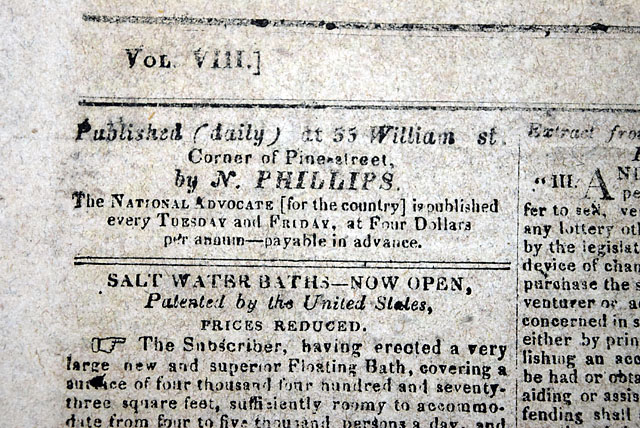
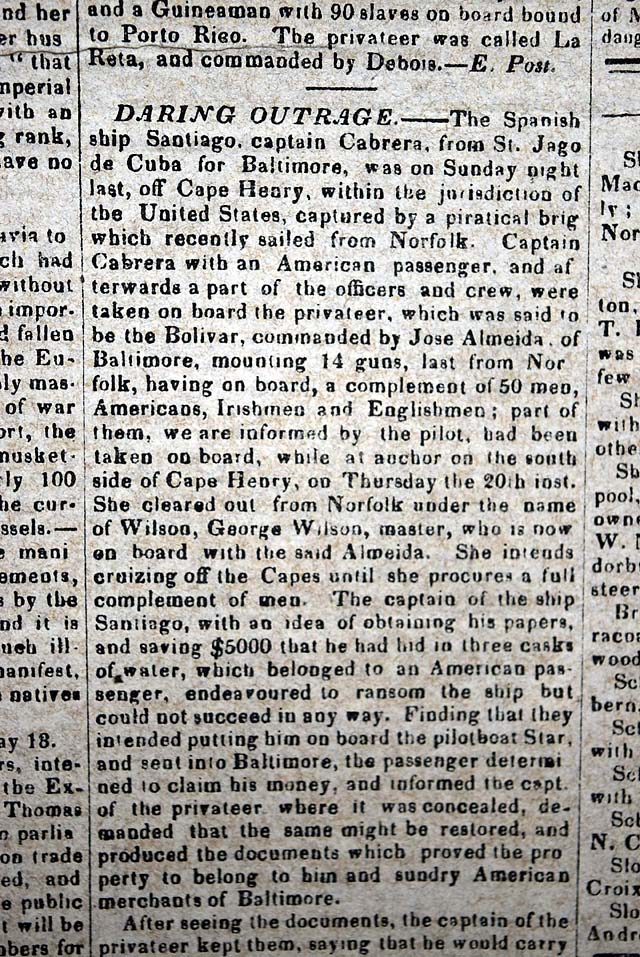
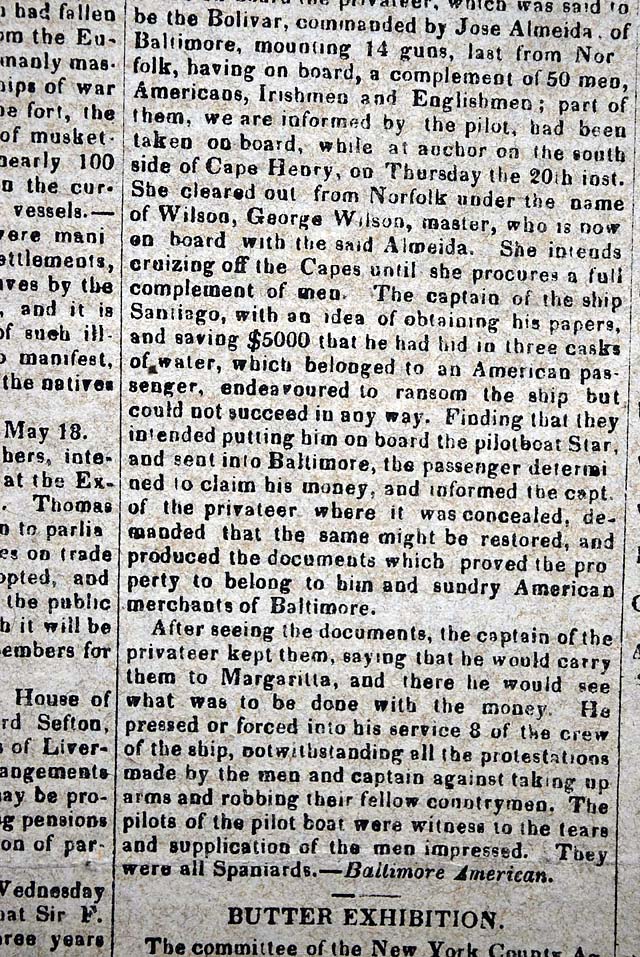
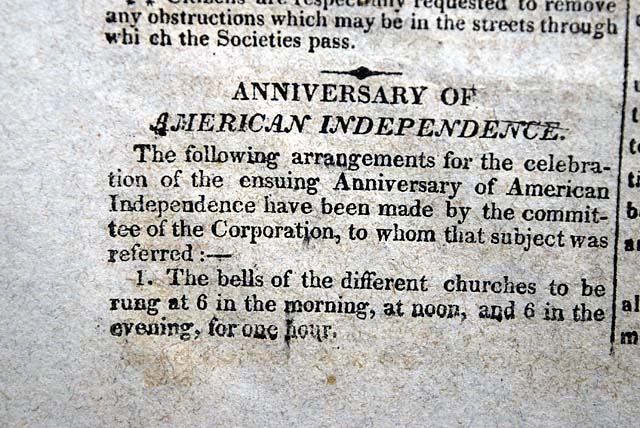
Pirates capture ship... circus advertisement... Published by Naphtali Phillips, a prominent Jewish-American of the era...
Item # 727802
·
Sorry, but this item is no longer available. Please be in touch at info@rarenewspapers.com if you would like to be placed on a want list or are interested in a potential alternate issue.
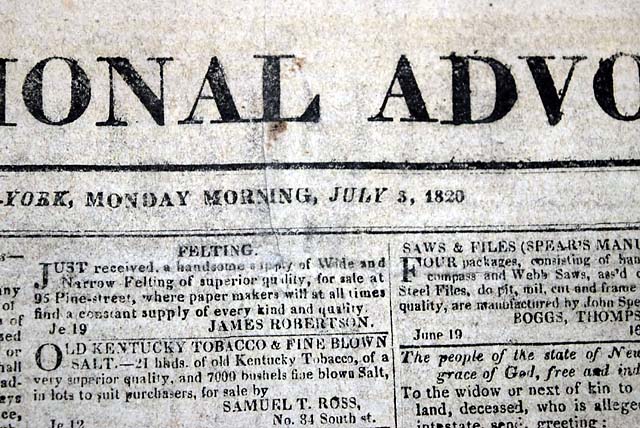
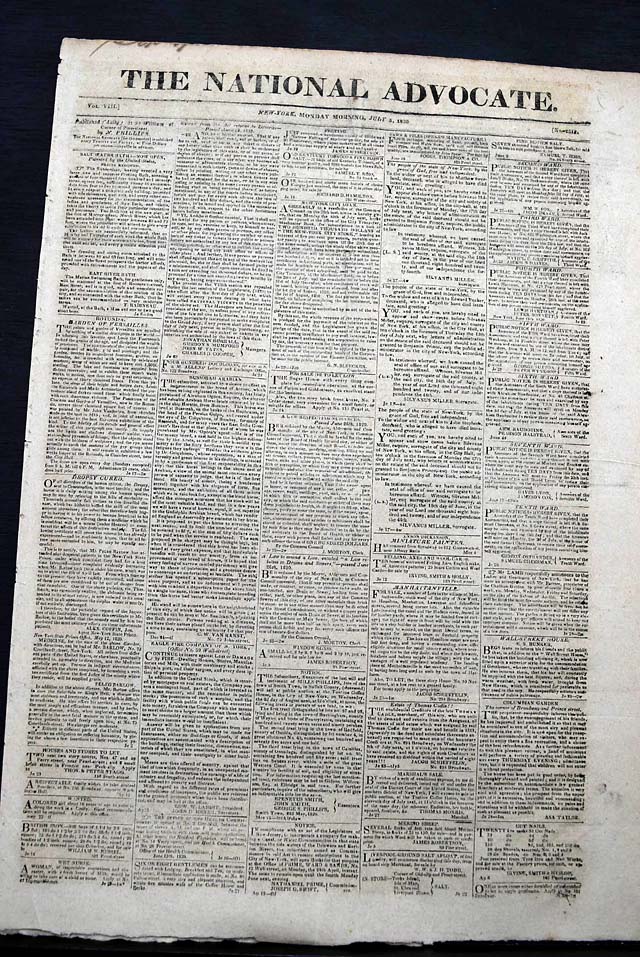
NATIONAL ADVOCATE, New York, July 3, 1820
* Jewish newspaper publisher Naphtali Phillips
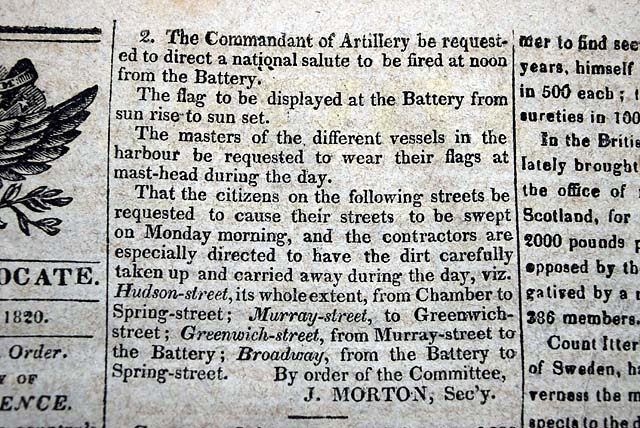
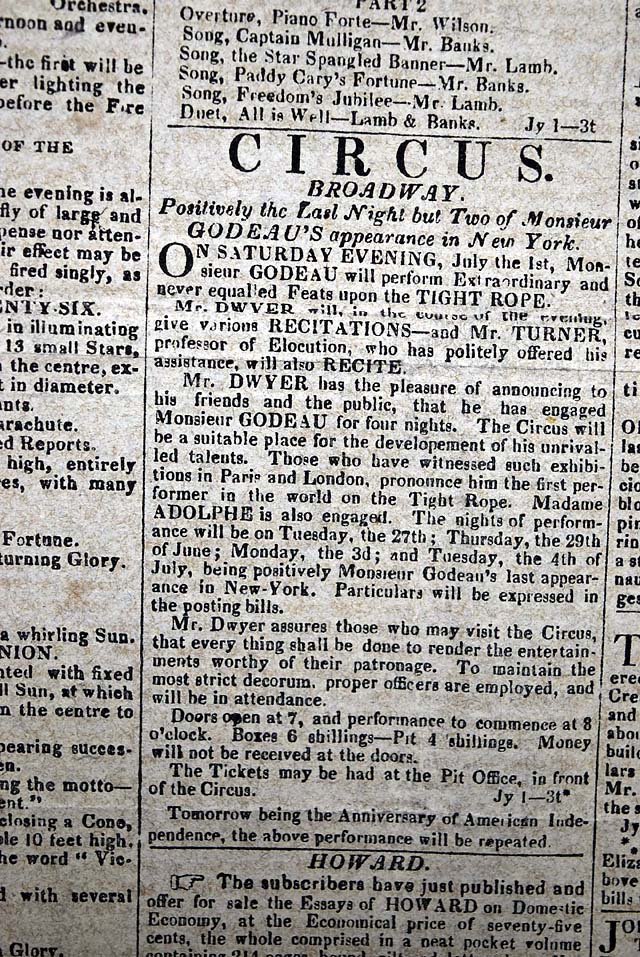
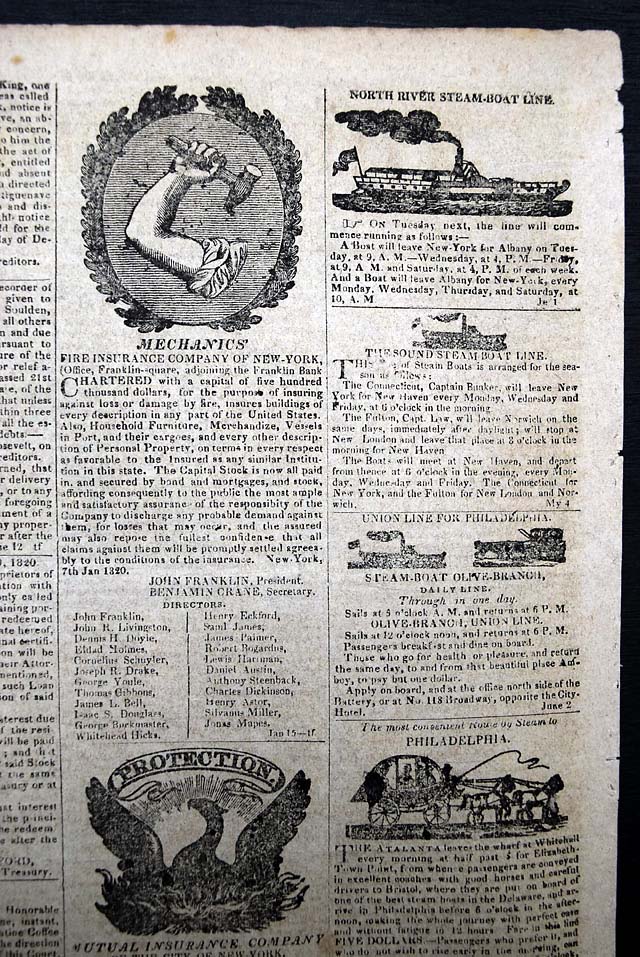
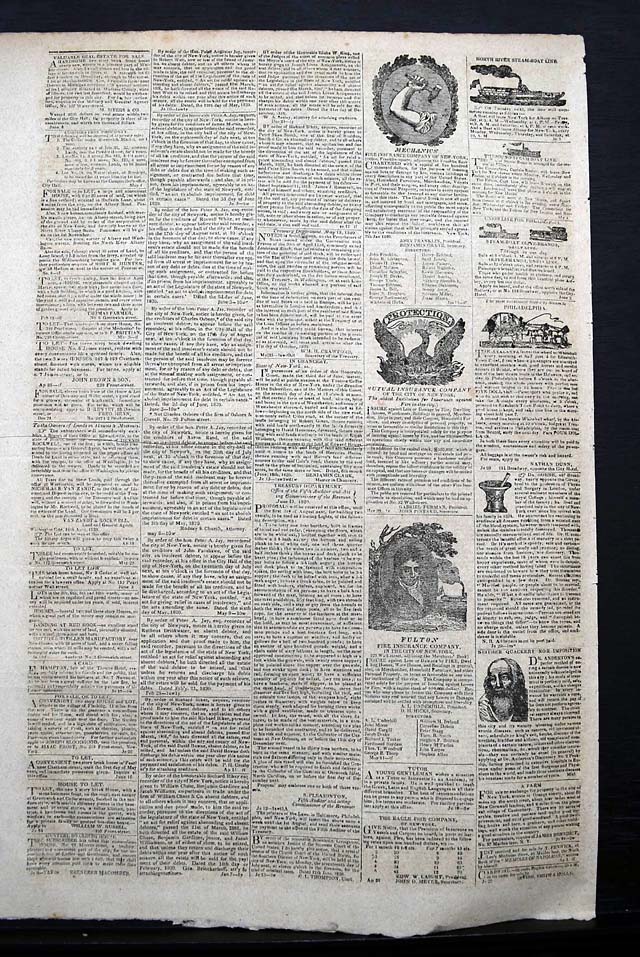
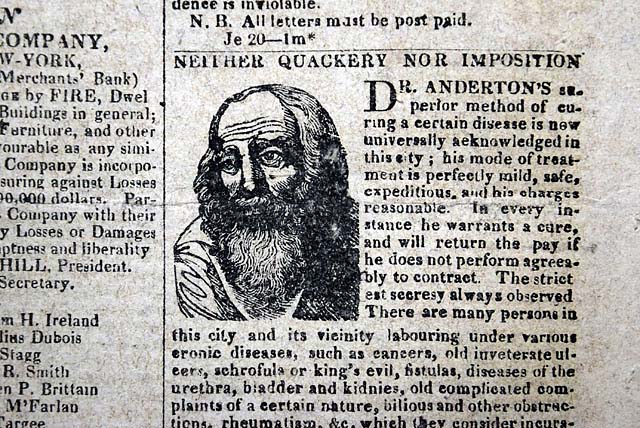
"Daring Outrage" on pg. 2 describes the capture of a ship off Cape Henry by a "piratical brig". Another article in the same page focuses on the anniversary of American independence. Pg. 3 has an ad for a "Circus" on Broadway with details about "Monsieur Godreau", a tight- rope walker. Multiple illustrated ads are also present.
The desirability of this issue is amplified by its publisher, Naphtali Phillips, a prominent Jewish-American journalist of the early Republic who famously pulled the very first printed copy of Washington's Farewell Address off the press in 1796. He was also married to the daughter of Moses Seixas—the famed leader of Newport’s Touro Synagogue whose historic 1790 letter to George Washington prompted the President's immortal declaration that the U.S. government "gives to bigotry no sanction."
Complete with 4 pages, both leaves have a very small hole in unrelated content, otherwise good.
Background: The significance of Naphtali Phillips’s life and career lies in his role as a vital bridge between the founding era of the United States and the institutionalization of American Jewish identity. By successfully embedding himself within the upper echelons of New York's political landscape through his leadership of the National Advocate and his high-ranking involvement with Tammany Hall, Phillips shattered contemporary European precedents that barred Jews from public influence, proving that religious minorities could actively shape mainstream American political discourse. Concurrently, his half-century of stewardship over historic congregations like Mikveh Israel and Shearith Israel demonstrated that full civic assimilation did not require the sacrifice of religious tradition. By fiercely preserving traditional Sephardic customs while anchoring his community to the burgeoning American republic, Phillips helped pioneer a distinct model of American pluralism, establishing a blueprint for how minority groups could retain their cultural heritage while asserting their full rights and duties as citizens.
* Jewish newspaper publisher Naphtali Phillips
"Daring Outrage" on pg. 2 describes the capture of a ship off Cape Henry by a "piratical brig". Another article in the same page focuses on the anniversary of American independence. Pg. 3 has an ad for a "Circus" on Broadway with details about "Monsieur Godreau", a tight- rope walker. Multiple illustrated ads are also present.
The desirability of this issue is amplified by its publisher, Naphtali Phillips, a prominent Jewish-American journalist of the early Republic who famously pulled the very first printed copy of Washington's Farewell Address off the press in 1796. He was also married to the daughter of Moses Seixas—the famed leader of Newport’s Touro Synagogue whose historic 1790 letter to George Washington prompted the President's immortal declaration that the U.S. government "gives to bigotry no sanction."
Complete with 4 pages, both leaves have a very small hole in unrelated content, otherwise good.
Background: The significance of Naphtali Phillips’s life and career lies in his role as a vital bridge between the founding era of the United States and the institutionalization of American Jewish identity. By successfully embedding himself within the upper echelons of New York's political landscape through his leadership of the National Advocate and his high-ranking involvement with Tammany Hall, Phillips shattered contemporary European precedents that barred Jews from public influence, proving that religious minorities could actively shape mainstream American political discourse. Concurrently, his half-century of stewardship over historic congregations like Mikveh Israel and Shearith Israel demonstrated that full civic assimilation did not require the sacrifice of religious tradition. By fiercely preserving traditional Sephardic customs while anchoring his community to the burgeoning American republic, Phillips helped pioneer a distinct model of American pluralism, establishing a blueprint for how minority groups could retain their cultural heritage while asserting their full rights and duties as citizens.
Category: Pre-Civil War
No Longer Available
100% Authentic: Original printing, never a reproduction.
Other issues you may like
§ related
Damaged lot from the War of 1812... Published by Naphtali Phillips, a prominent Jewish-American of the era...
THE NATIONAL ADVOCATE, New York, 1814 Here is a lot of 10 issues from during the War of 1812 era, each issue having reports on the war. All issues have...
Nov 1814
$65
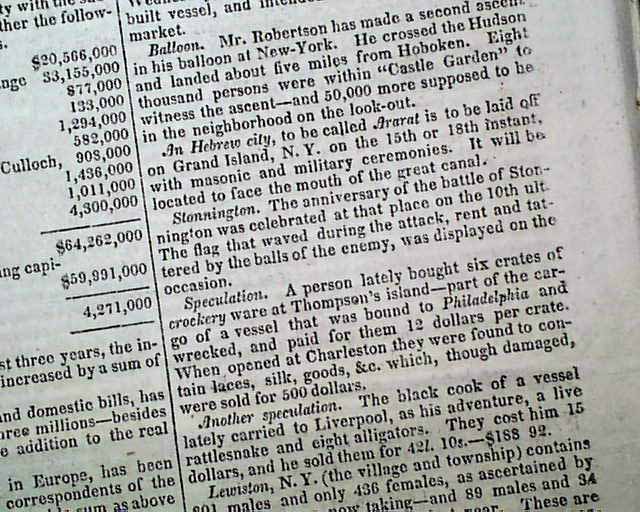
Creating a Jewish city in the Niagara River...
NILES' WEEKLY REGISTER, Baltimore, Sept. 10, 1825 One of the brief articles on the back page reads in its entirety: "An Hebrew city, to be called Ararat is...
Sep 1825
$42
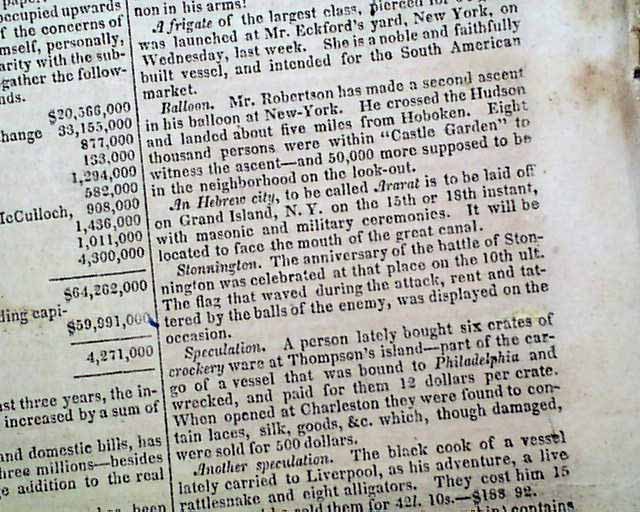
Creating a Jewish city in the Niagara River...
NILES' WEEKLY REGISTER, Baltimore, Sept. 10, 1825
* Hebrew city to be established
* Grand Island, New York
* Jews - Jewish - Judaica
One of the...
* Hebrew city to be established
* Grand Island, New York
* Jews - Jewish - Judaica
One of the...
Sep 1825
$47
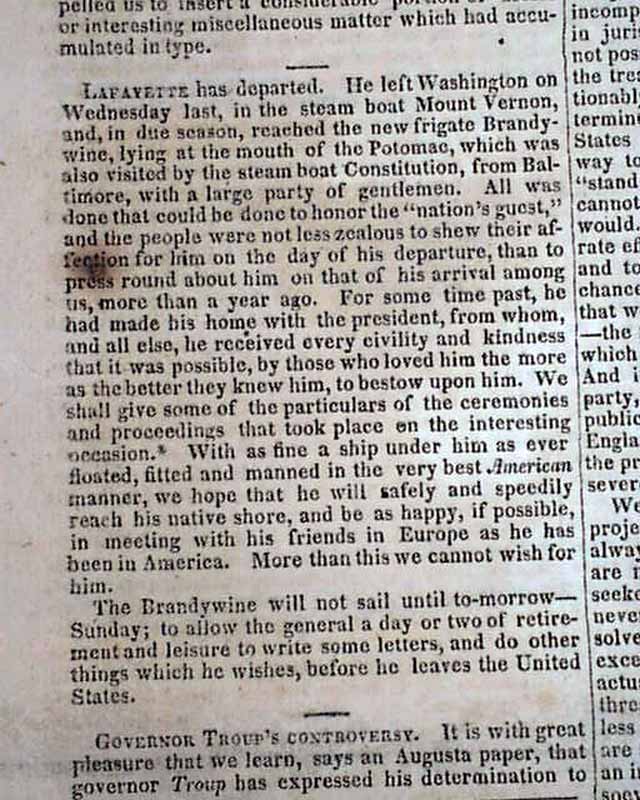
Creating a Jewish city in the Niagara River...
NILES' WEEKLY REGISTER, Baltimore, Sept. 10, 1825
* Hebrew city to be established
* Grand Island, New York
* Jews - Jewish - Judaica
One of the...
* Hebrew city to be established
* Grand Island, New York
* Jews - Jewish - Judaica
One of the...
Sep 1825
$42