
Item # 727796
·
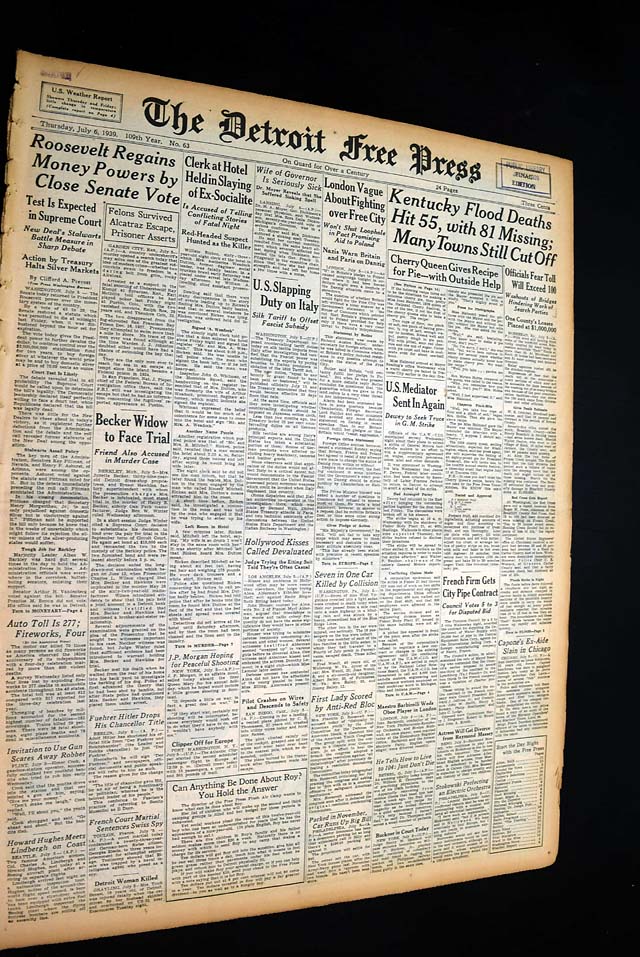
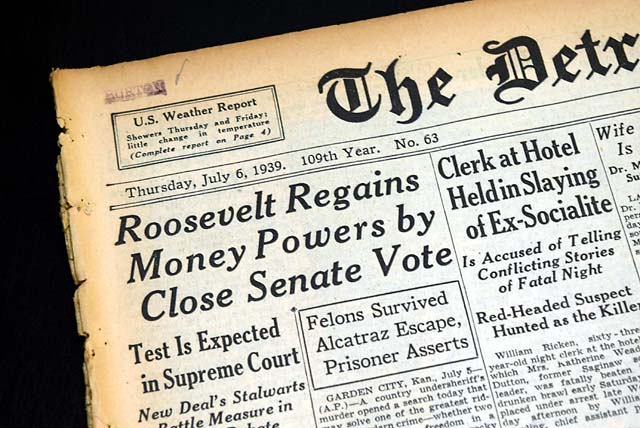
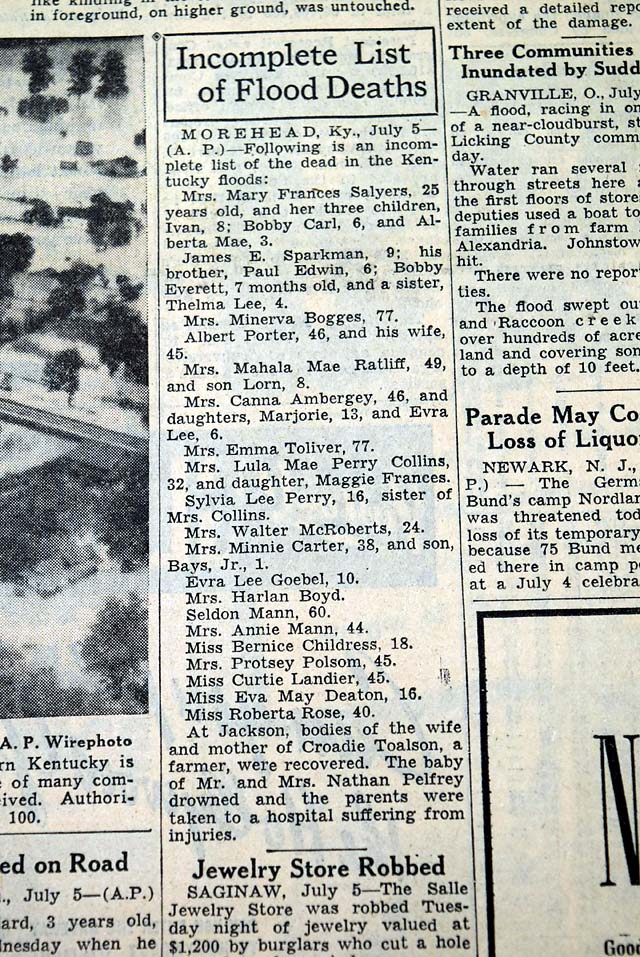
THE DETROIT FREE PRESS, July 6, 1939
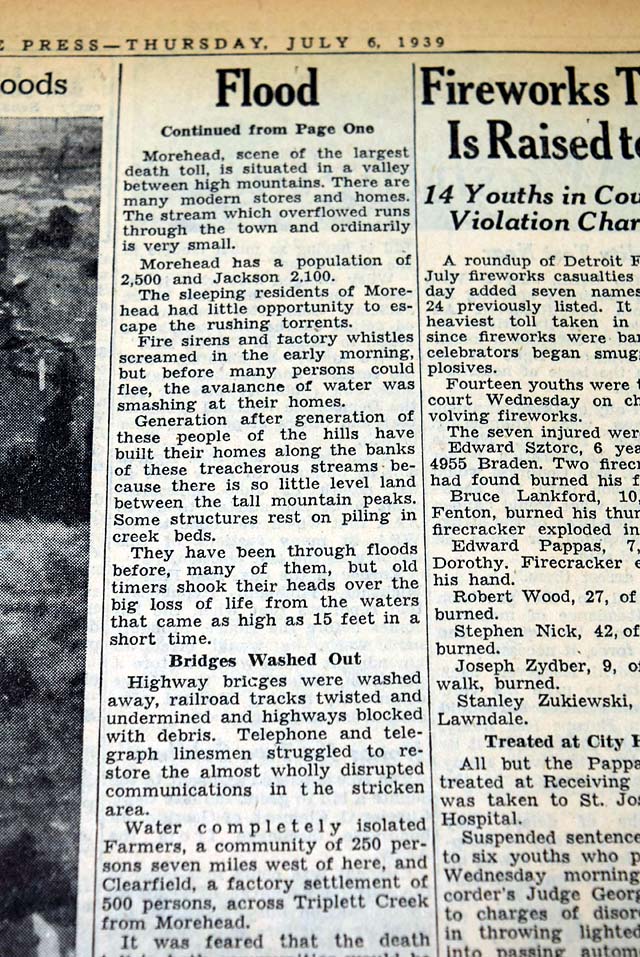
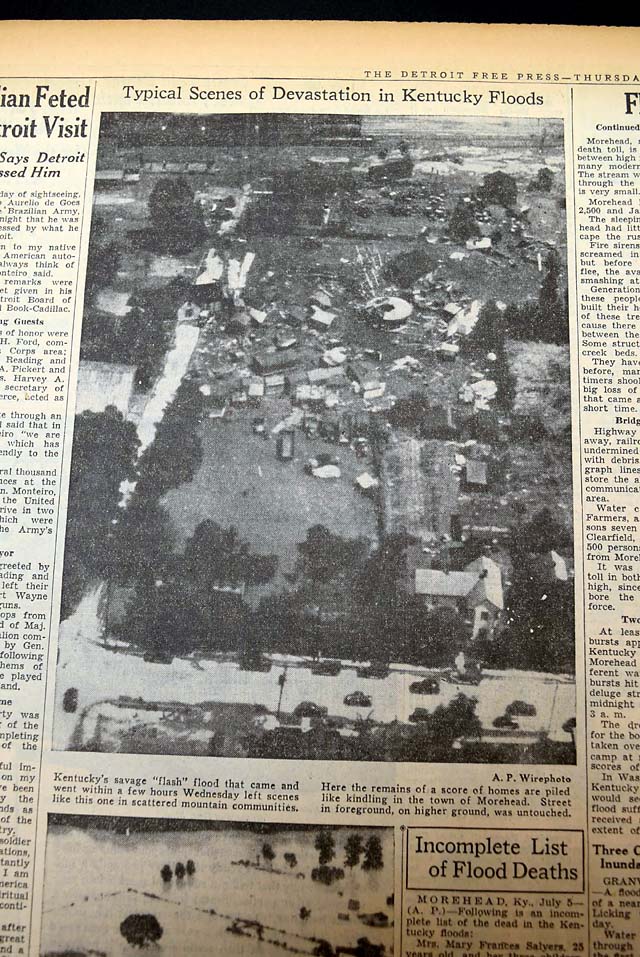
* 1939 Morehead Flood - Rowan County
* Frozen Creek Flood - Breathitt Co., Kentucky
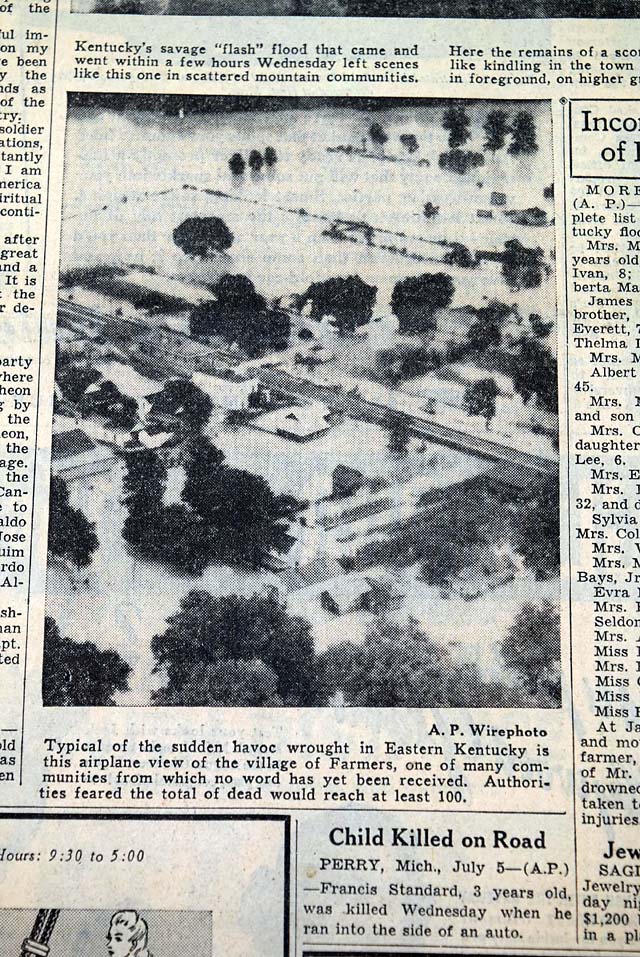
* The Flash Flood Disaster of 1939
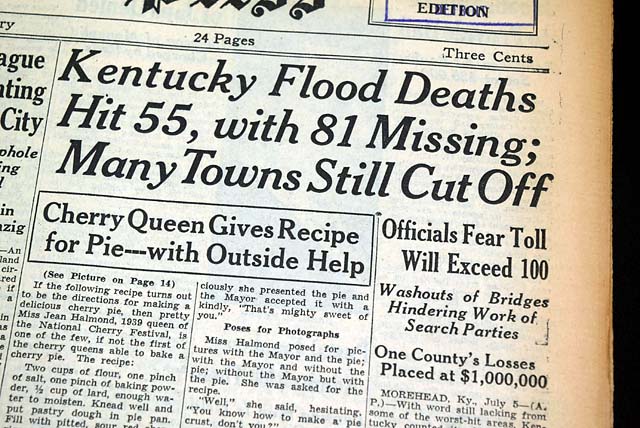
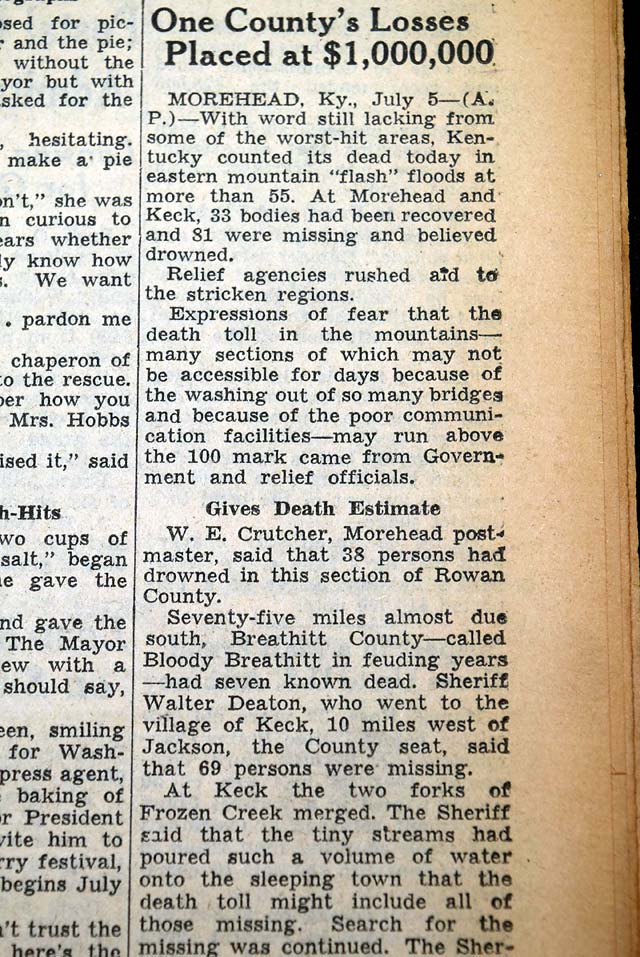
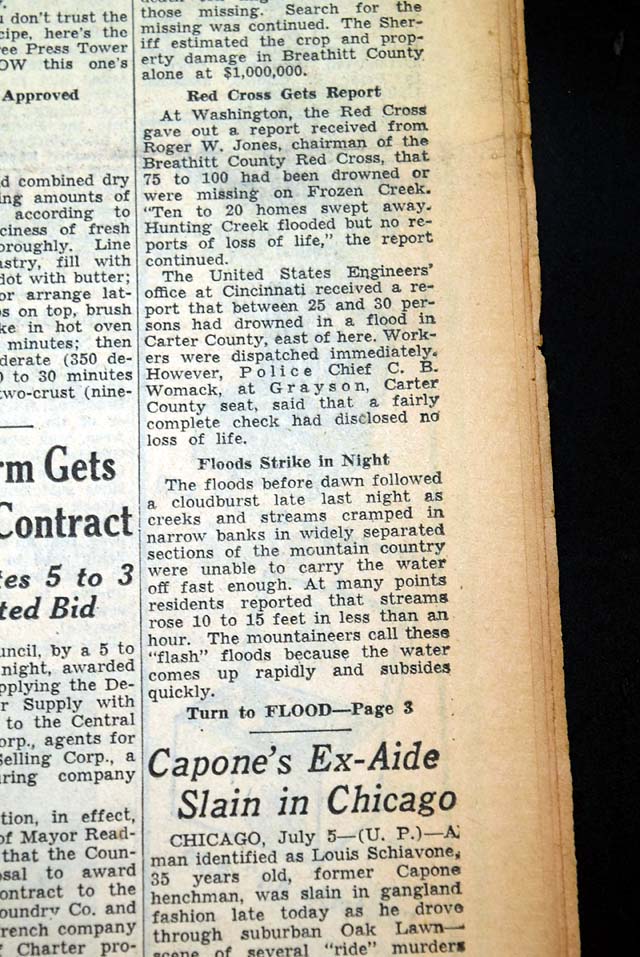
The top of the front page has a three column headline: "Kentucky Flood Deaths Hit 55, with 81 Missing; Many Towns Still Cut Off" with subheads. (see images)
Complete with all 24 pages, light toning and and a little wear at the margins, generally very nice.
Background: The significance of the July 1939 Eastern Kentucky flash flood lies not only in its devastating human toll—making it one of the deadliest localized weather disasters in the state's history—but also in how it exposed the extreme vulnerability of Appalachian communities to sudden, topographic climate risks. The tragedy underscored the lethal combination of narrow mountain valleys and inadequate infrastructure, as the absence of early warning systems and reliable communication networks left residents entirely helpless against a midnight wall of water. In the aftermath, the disaster fundamentally altered the regional landscape, wiping out entire multi-generational family lines, decimating landmark institutions like the Kentucky Mountain Bible Institute, and permanently reshaping the town of Morehead through a massive, multi-million-dollar economic setback. Ultimately, the 1939 flood served as a stark, historical wake-up call that underscored the critical need for modernized weather forecasting, improved rural infrastructure, and robust flood-control measures in the Appalachian plateau, leaving behind a legacy of resilience and grief that is still commemorated by local communities today.
* 1939 Morehead Flood - Rowan County
* Frozen Creek Flood - Breathitt Co., Kentucky
* The Flash Flood Disaster of 1939
The top of the front page has a three column headline: "Kentucky Flood Deaths Hit 55, with 81 Missing; Many Towns Still Cut Off" with subheads. (see images)
Complete with all 24 pages, light toning and and a little wear at the margins, generally very nice.
Background: The significance of the July 1939 Eastern Kentucky flash flood lies not only in its devastating human toll—making it one of the deadliest localized weather disasters in the state's history—but also in how it exposed the extreme vulnerability of Appalachian communities to sudden, topographic climate risks. The tragedy underscored the lethal combination of narrow mountain valleys and inadequate infrastructure, as the absence of early warning systems and reliable communication networks left residents entirely helpless against a midnight wall of water. In the aftermath, the disaster fundamentally altered the regional landscape, wiping out entire multi-generational family lines, decimating landmark institutions like the Kentucky Mountain Bible Institute, and permanently reshaping the town of Morehead through a massive, multi-million-dollar economic setback. Ultimately, the 1939 flood served as a stark, historical wake-up call that underscored the critical need for modernized weather forecasting, improved rural infrastructure, and robust flood-control measures in the Appalachian plateau, leaving behind a legacy of resilience and grief that is still commemorated by local communities today.
Category: The 20th Century
Price
$48
100% Authentic: Original printing, never a reproduction.
Other issues you may like
§ related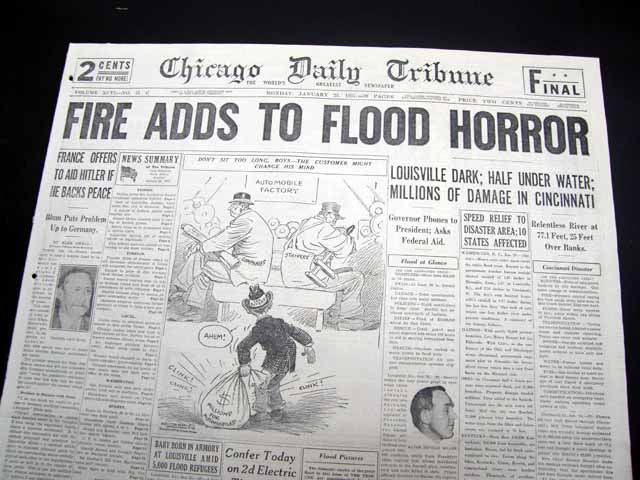
Ohio River Flood of 1937... Louisville, Kentucky...
CHICAGO DAILY TRIBUNE, Jan. 26, 1937
* Ohio River Flood of 1937
* Great Depression era
* Louisville, Kentucky photos
The front page has a nice...
* Ohio River Flood of 1937
* Great Depression era
* Louisville, Kentucky photos
The front page has a nice...
Jan 1937
$52
Ohio River flood of 1937...
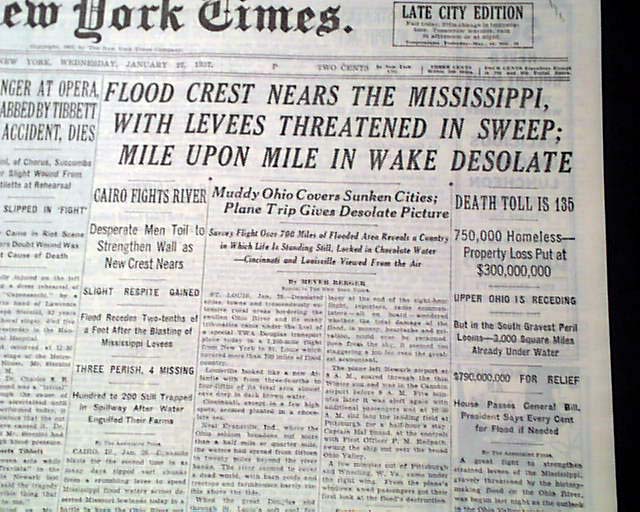
THE NEW YORK TIMES, January 27, 1937
* Ohio River flood of 1937
* Cairo, Illinois - Great Depression era
The top of the front page has a four column...
* Ohio River flood of 1937
* Cairo, Illinois - Great Depression era
The top of the front page has a four column...
Jan 1937
$40
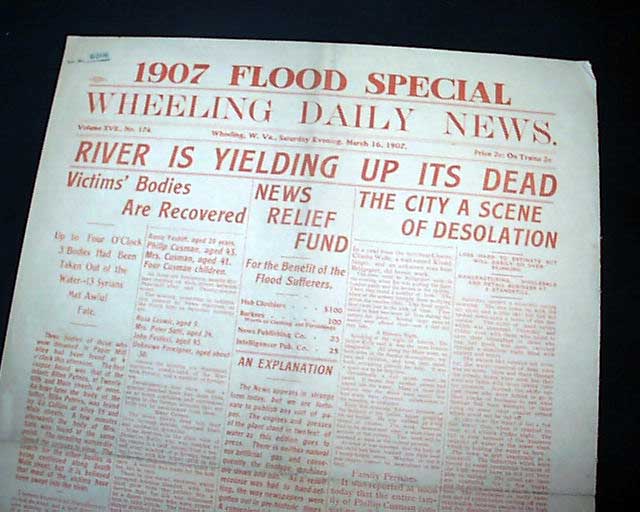
The "Flood Special" printed entirely in red ink...
WHEELING DAILY NEWS, West Virginia, March 16, 1907 Printed above the masthead is: "1907 FLOOD SPECIAL" with the banner headline noting: "RIVER IS YIELDING...
Mar 1907
$86
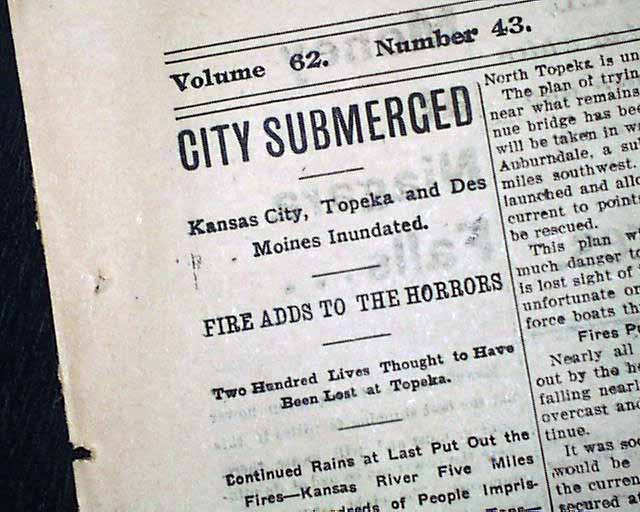
Flood of 1903..... Kansas... Missouri...
ALLEGHENY COUNTY REPORTER, Wellsville, New York, June 2, 1903
* Flood of 1903
* Midwest region
This 8 page newspaper has one column headlines on the...
* Flood of 1903
* Midwest region
This 8 page newspaper has one column headlines on the...
Jun 1903
$23