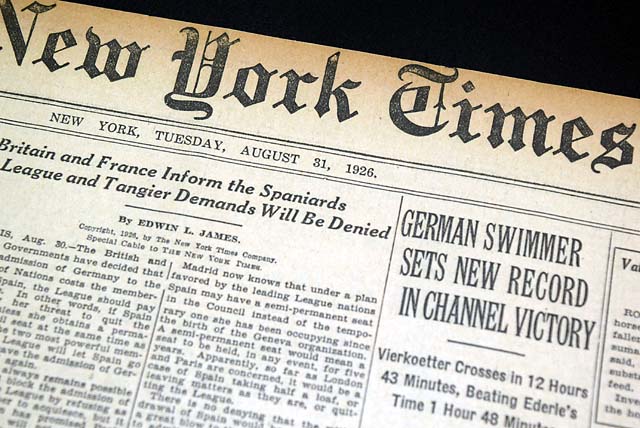
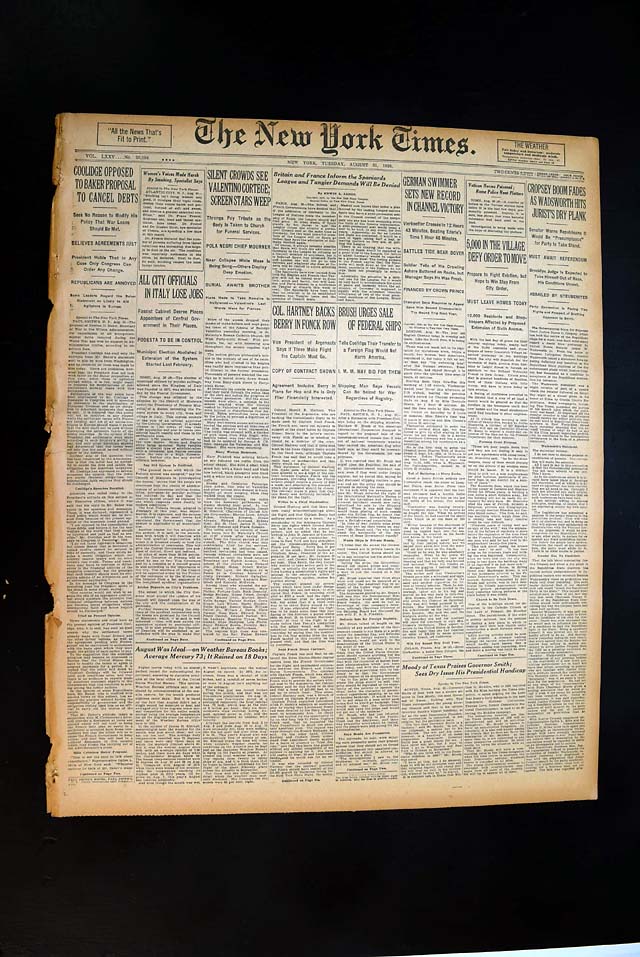
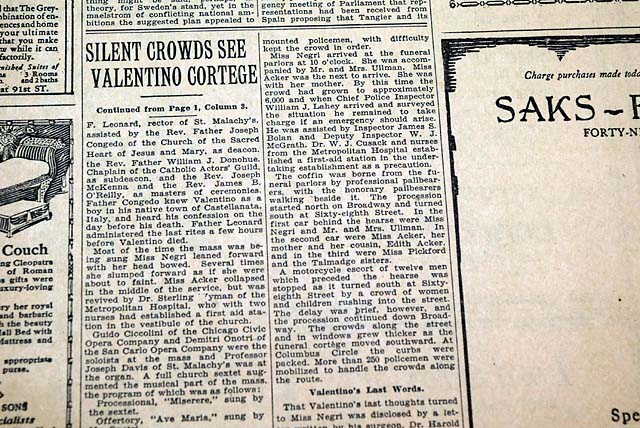
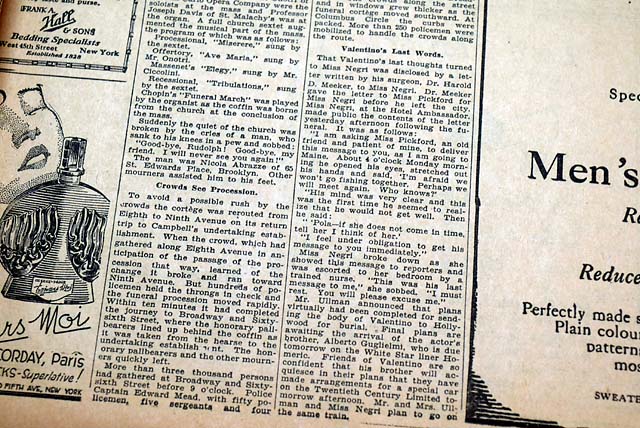
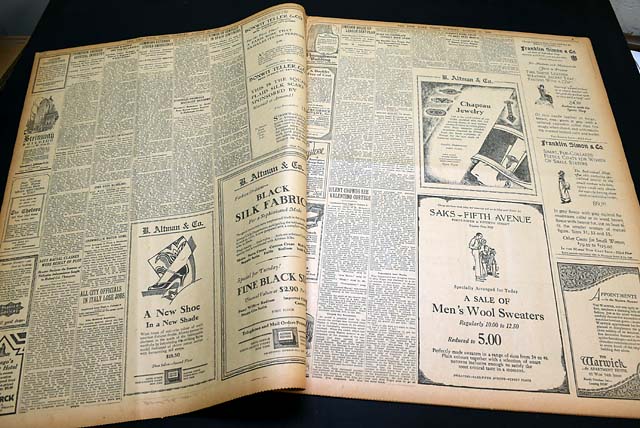
THE NEW YORK TIMES, Aug. 31, 1926
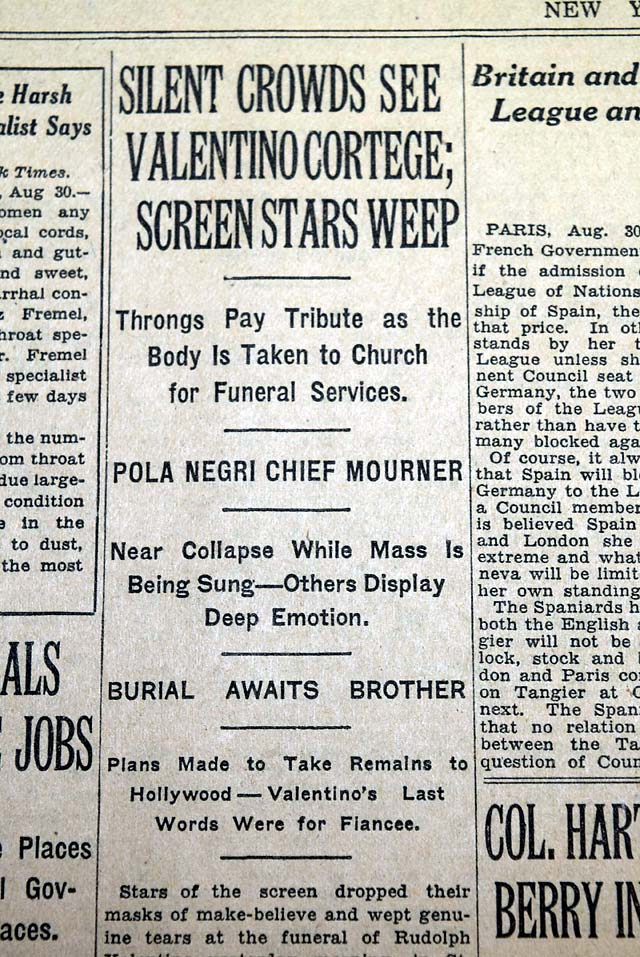
- Silent film star Rudolph Valentino
- Latin Lover - "The Sheik" funeral
- Pola Negri fainting over coffin
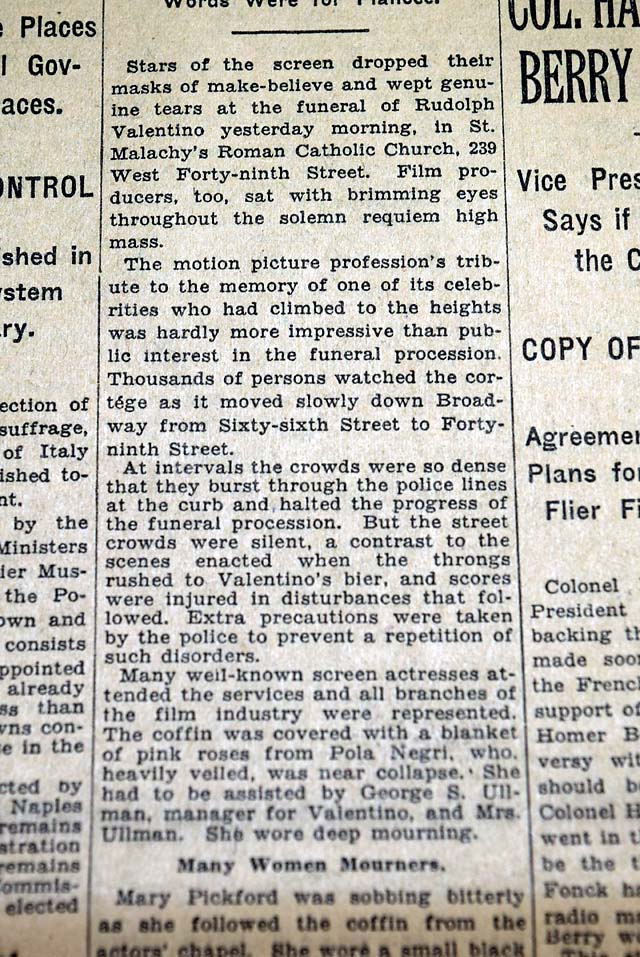
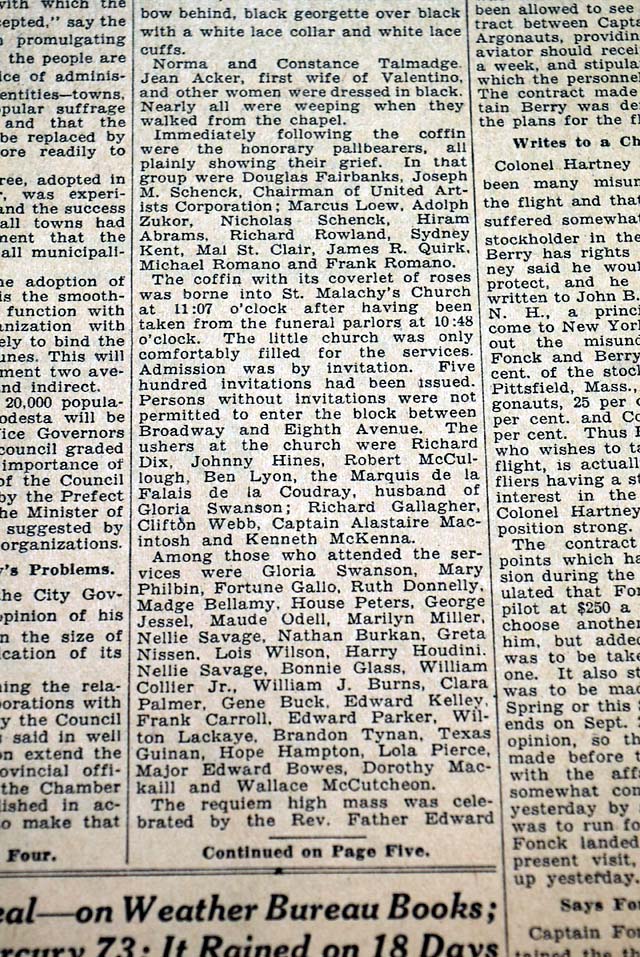
The top of the front page has a one column heading: "SILENT CROWDS SEE VALENTINO CORTEGE; SCREEN STARS WEEP" with subheads that include: "Pola Negri Chief Mourner" and more (see images)
Complete with all 40 pages, light toning at the margins, irregular along the spine, generally in good condition.
Background: The death and August 30, 1926, funeral of silent film icon Rudolph Valentino marked a watershed moment in American pop culture, signaling the birth of modern celebrity worship and the media's ability to turn real-world tragedy into a highly choreographed Hollywood spectacle. The event transformed public grief into unprecedented mass hysteria, drawing an estimated 100,000 distraught fans who rioted in the streets of New York, smashed windows, and clashed with mounted police just to catch a glimpse of the cortege or the open casket. This chaotic scene was further amplified by pure Hollywood showmanship, exemplified by studio-hired actors posing as Italian Fascist guards and actress Pola Negri’s deeply theatrical, headline-grabbing displays of grief—which included fainting over the coffin and commissioning a massive floral arrangement spelling out her own name. Historically, this event was significant because it proved that the boundary between private tragedy and public entertainment had permanently dissolved; Valentino's funeral established a new template for the cult of personality, demonstrating for the first time how the machinery of stardom, studio publicity, and fan obsession could collectively elevate a movie star from a mere entertainer into a near-mythological figure.
Other issues you may like
§ related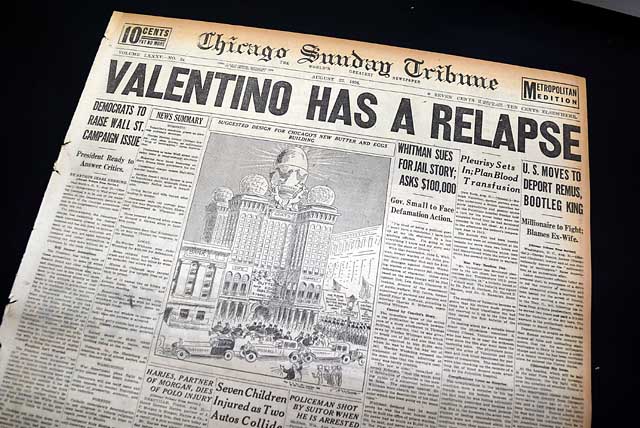
CHICAGO SUNDAY TRIBUNE (1st section only), Aug. 22, 1926
- Silent film star Rudolph Valentino
- Latin Lover - "The Sheik" actor
- He would die the very next day
The
...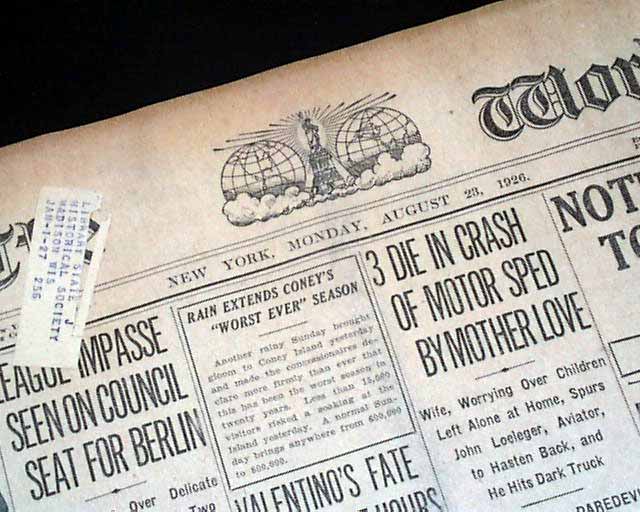
THE WORLD, New York City, August 23, 1926
- Famous movie actor death close
- Rudolph Valentino
This 30 page newspaper has a one column headline on the front page
...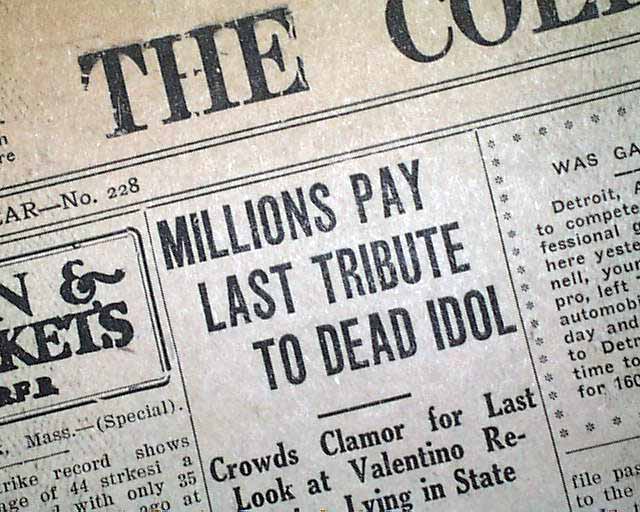
THE COLDWATER DAILY REPORTER, Michigan, August 24, 1926
- Famous movie actor death
- Rudolph Valentino
This 6 page newspaper has one column headlines on the
...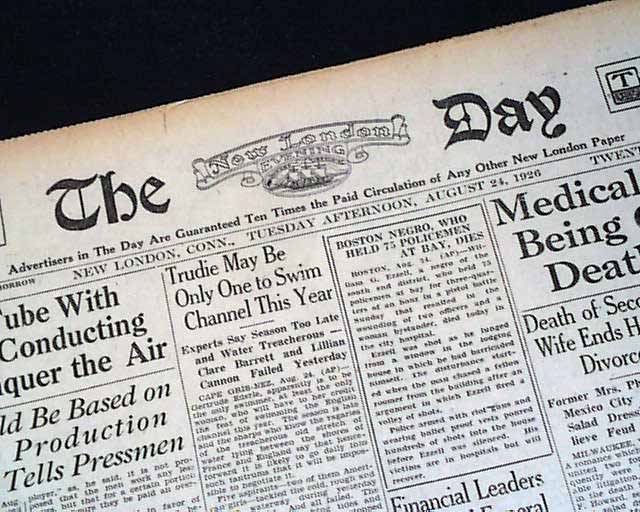
THE DAY, New London, Connecticut, August 24, 1926
- Famous movie actor death
- Rudolph Valentino
This 20 page newspaper has a one column headline on the front
...