Post atomic bombings of Japan regulations ?
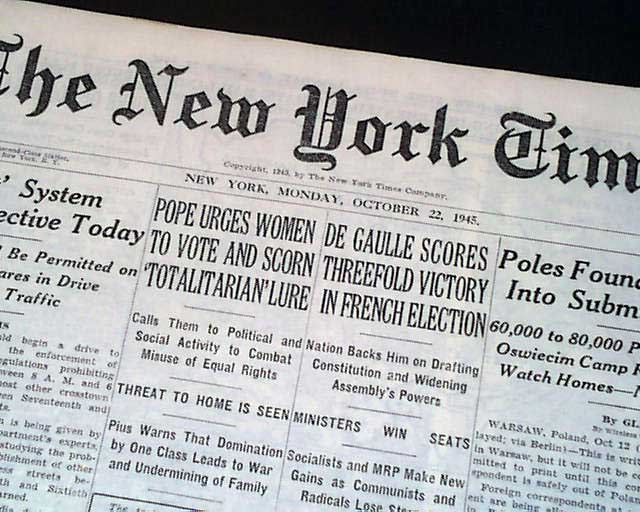
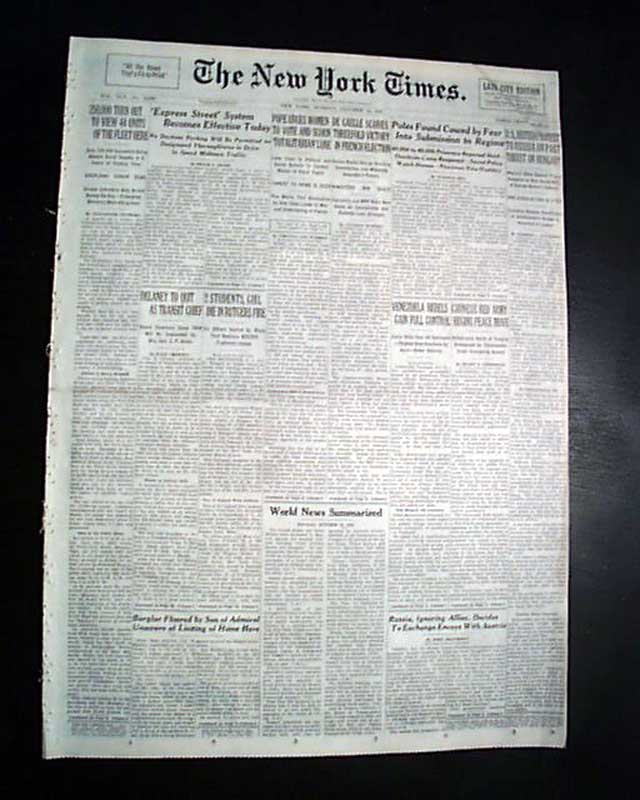
THE NEW YORK TIMES, Oct. 22, 1945
- Atomic Bombs - bombing - weapons
- Post Hiroshima and Nagasaki, Japan
- Manhattan Project scientists warning
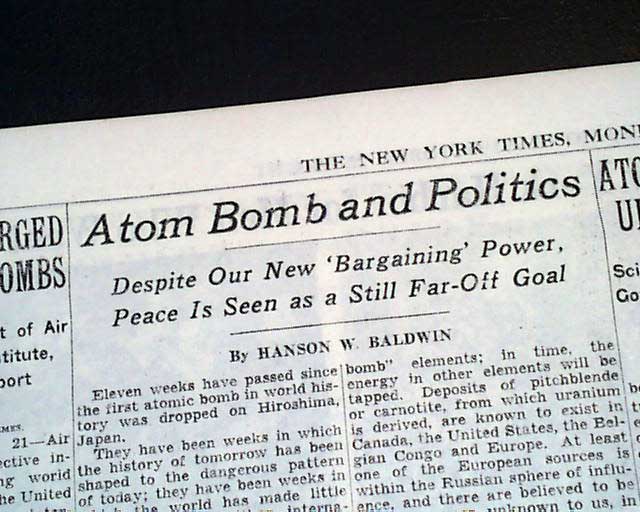
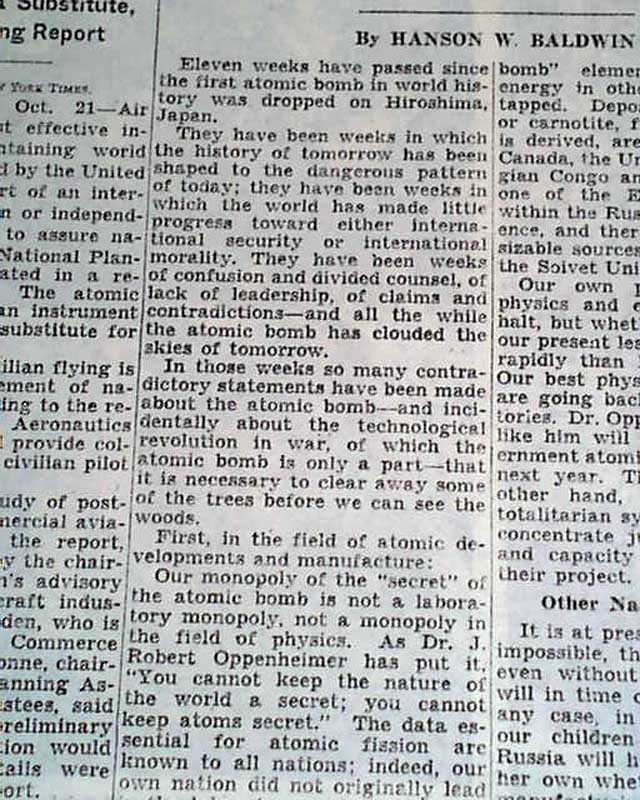
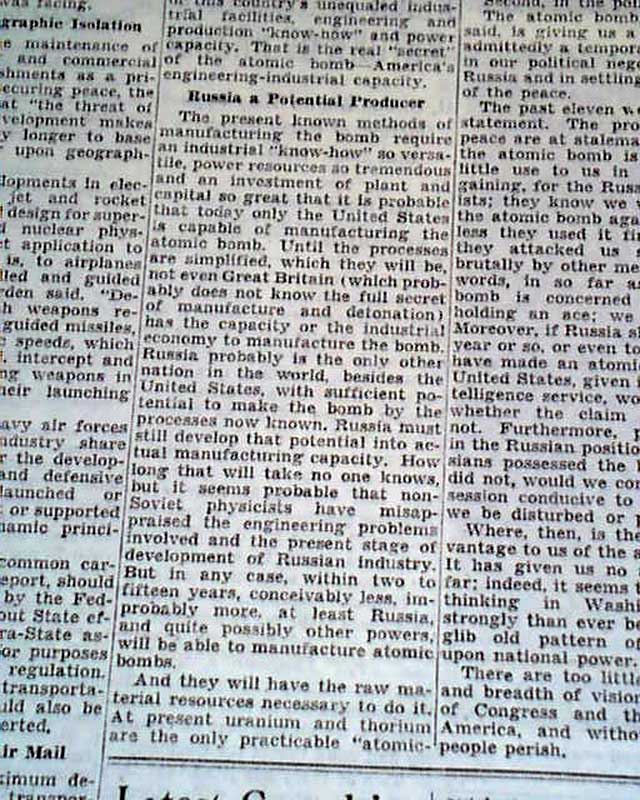
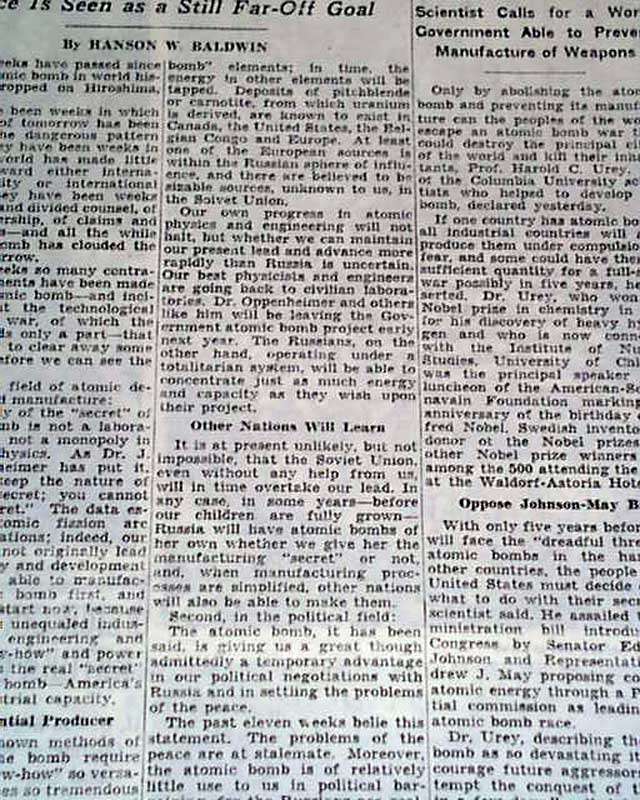
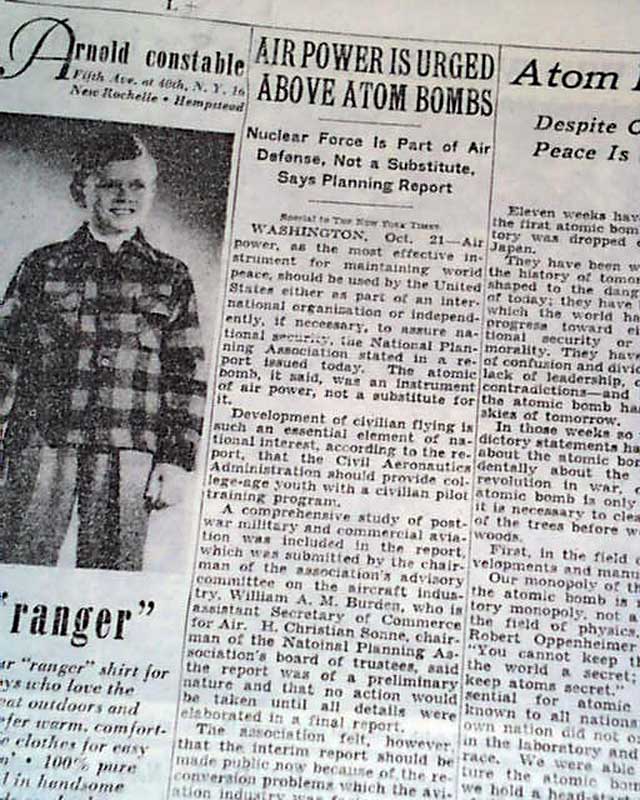
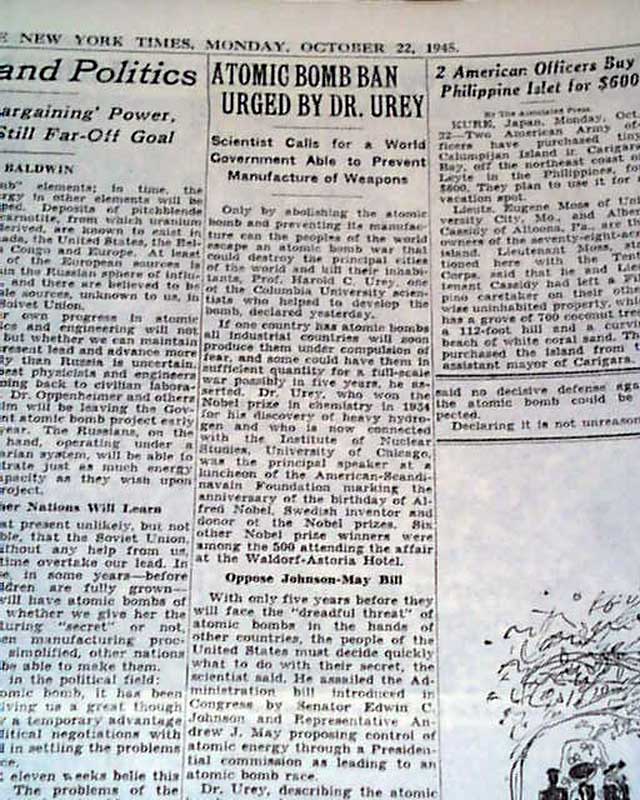
Page 4 has three articles re. the future of atomic weapons with headings: "AIR POWER IS URGED ABOVE ATOM BOMBS" "Atom Bomb and Politics" "ATOMIC BOMB BAN URGED BY DR. UREY" with subheads. (see images)
Complete with all 30 pages, rag edition in very nice condition.
Background: On October 21, 1945, a critical turning point in the dawn of the nuclear age occurred as Manhattan Project scientists openly revolted against the military-backed May-Johnson Bill, an effort that ultimately reshaped the future of nuclear governance. Just over two months after the atomic bombings of Hiroshima and Nagasaki, organizations like the newly formed Association of Los Alamos Scientists (ALAS) aggressively lobbied Congress around this date to block legislation that would have kept all atomic research under strict military secrecy and control. Operating during the final days of J. Robert Oppenheimer's leadership at Los Alamos, these scientists argued that permanent military oversight would paralyze scientific progress, prevent international cooperation, and inevitably trigger a catastrophic arms race with the Soviet Union. The historical significance of this political pushback cannot be overstated: by successfully stalling the bill, the scientists shattered the military’s monopoly on nuclear energy and paved the way for the McMahon Act of 1946, which established the civilian-led Atomic Energy Commission (AEC) and ensured that peacetime atomic research, medicine, and energy would remain under democratic, civilian control rather than permanent martial law.
Other issues you may like
§ related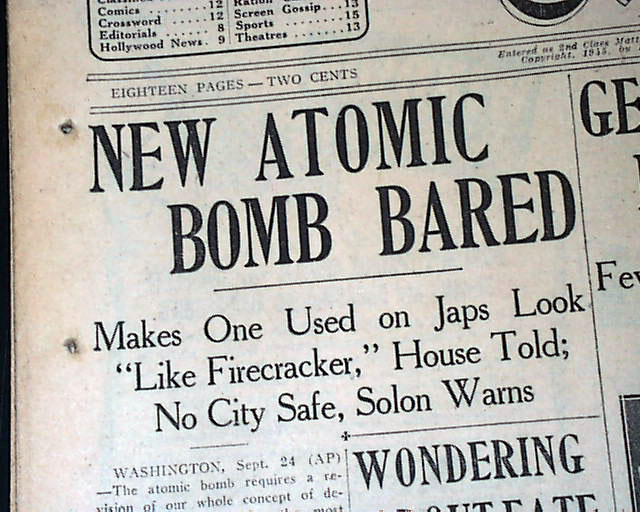
THE BOSTON POST, Sept. 25, 1945
- New super atomic bomb developed
- Post Hiroshima & Nagasaki bombings
- Leslie C. Arends' warning announcement
The top of the front
...
THE NEW YORK TIMES, Aug. 16, 1945
- Manhattan Project is first made public
- Henry DeWolf Smyth report is released
- re. Atomic bombings of Hiroshima & Nagasaki
- J.
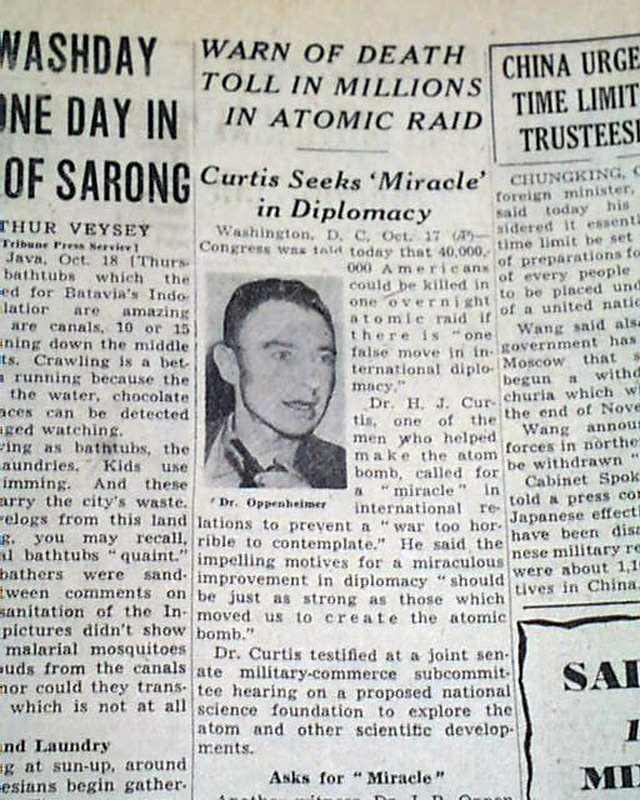
CHICAGO DAILY TRIBUNE, Oct. 18, 1945
- Physicist J. Robert Oppenheimer WARNING
- Los Alamos National Laboratory Director
The top of page 2 has one column
...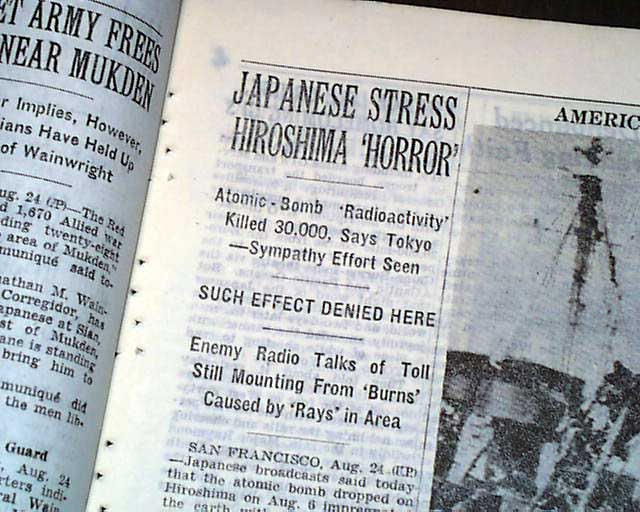
THE NEW YORK TIMES, Aug. 25, 1945
- Hiroshima & Nagasaki atomic bombings
- Japan reveals the horrors of the historic event
The top of page 3 has a one column
...