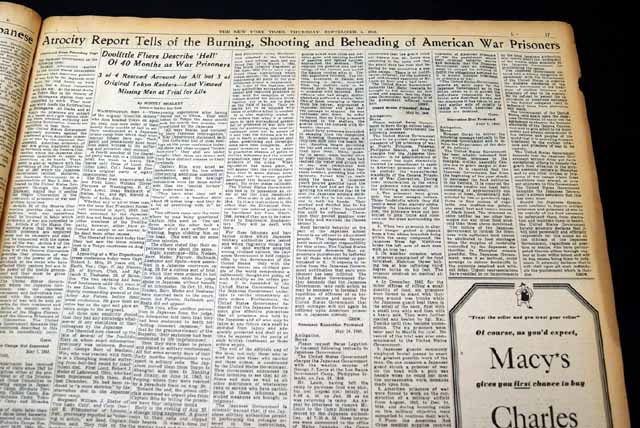
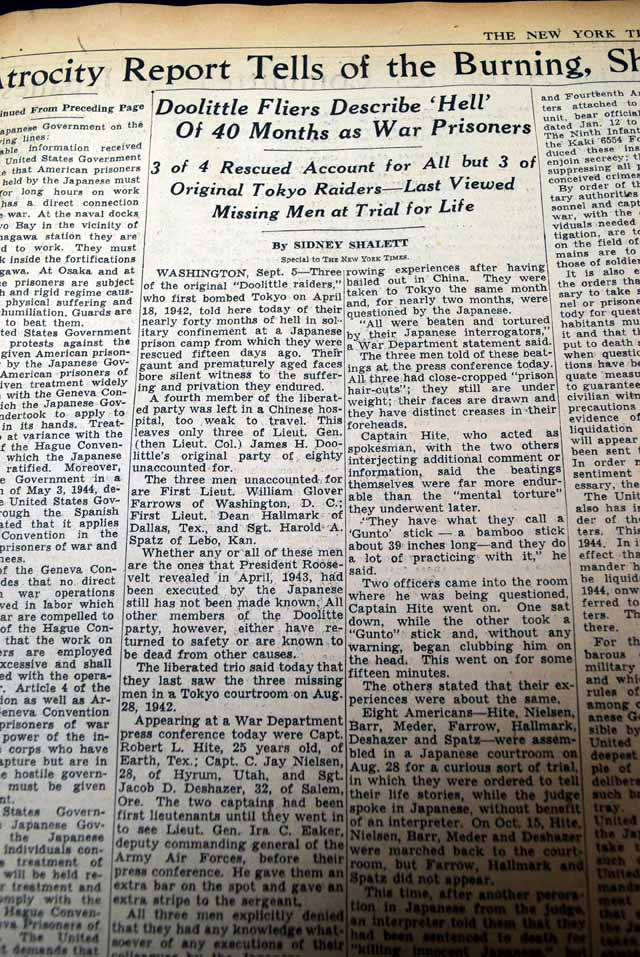
Japanese atrocities told... Palawan Massacre...
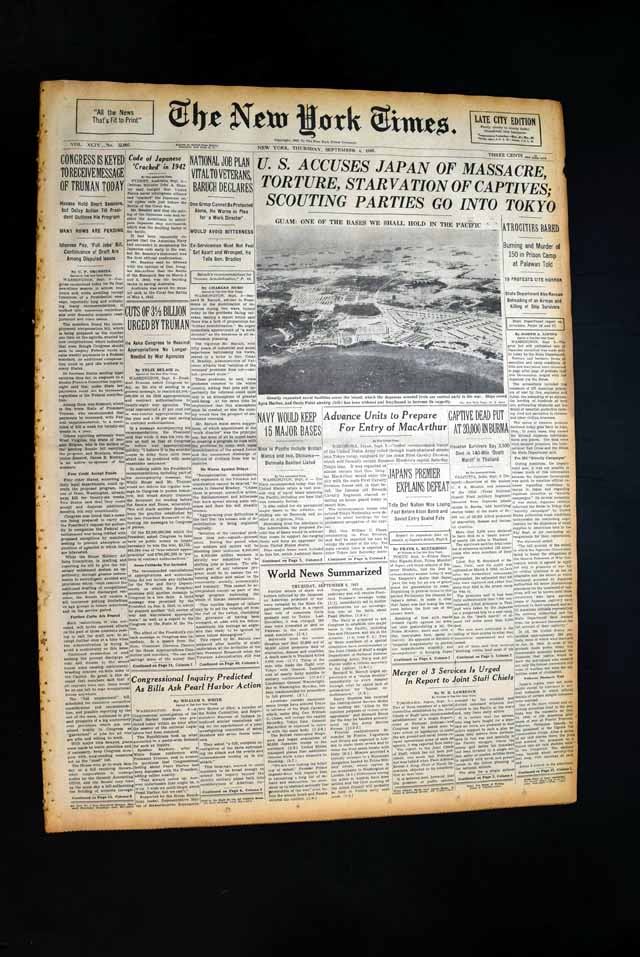
THE NEW YORK TIMES, September 6, 1945
- Japanese atrocities described
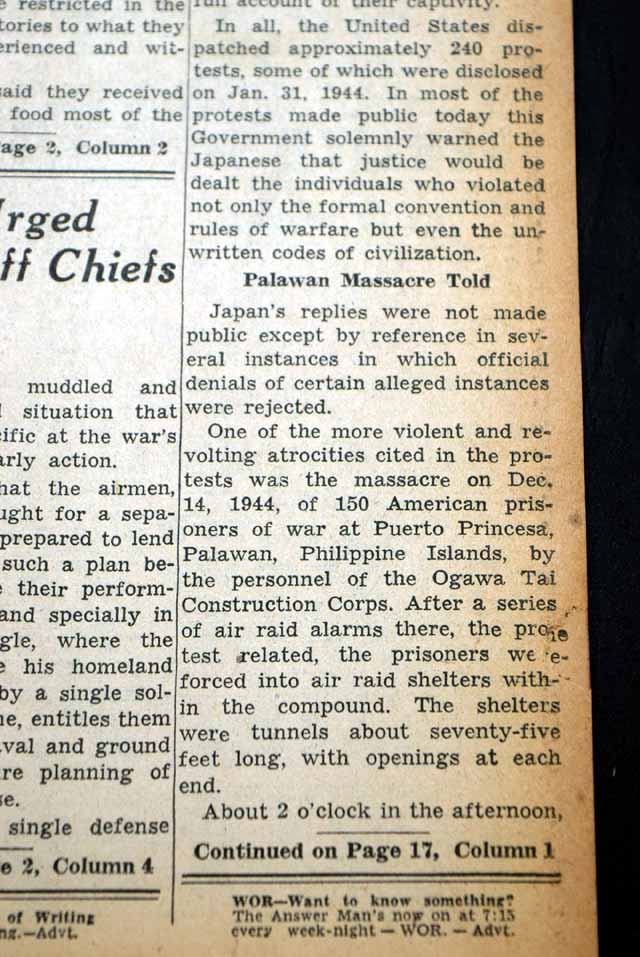
- Palawan Massacre - Philippines
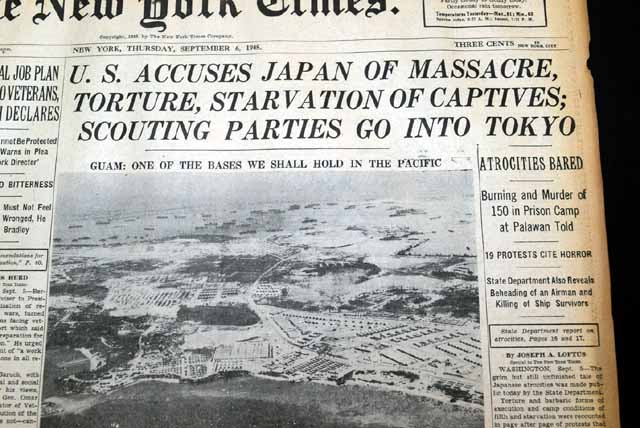
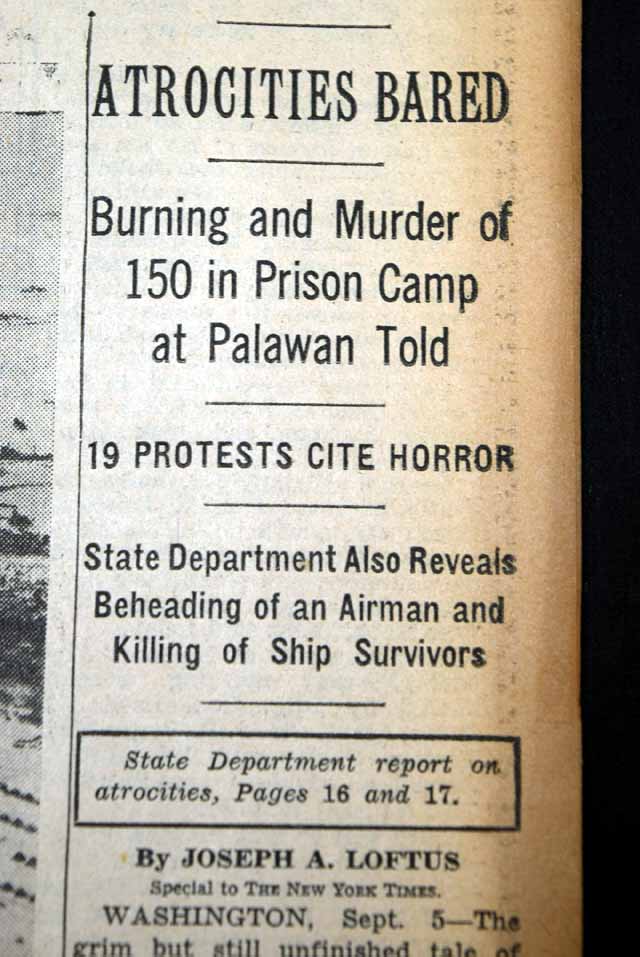
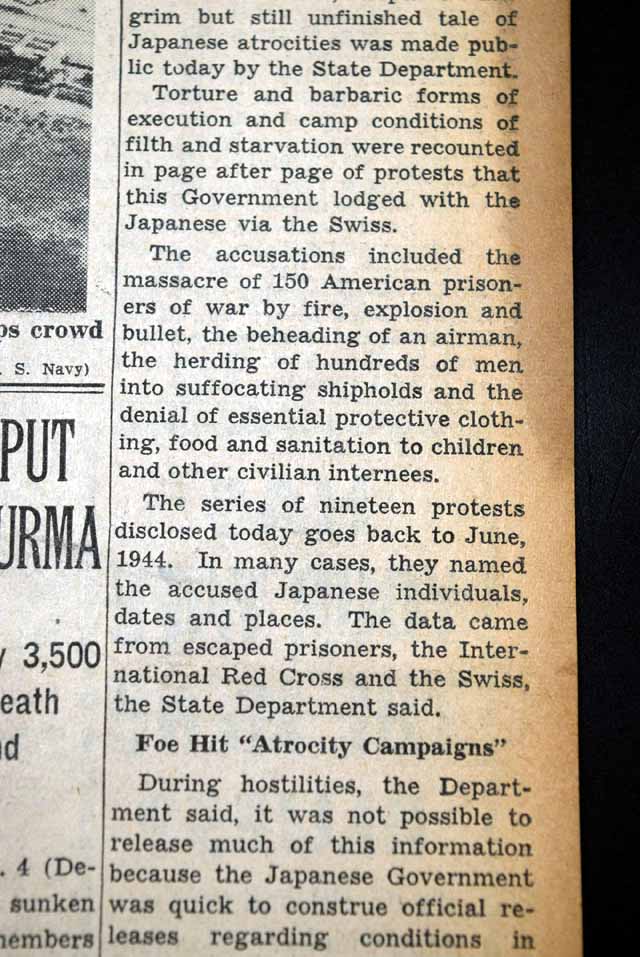
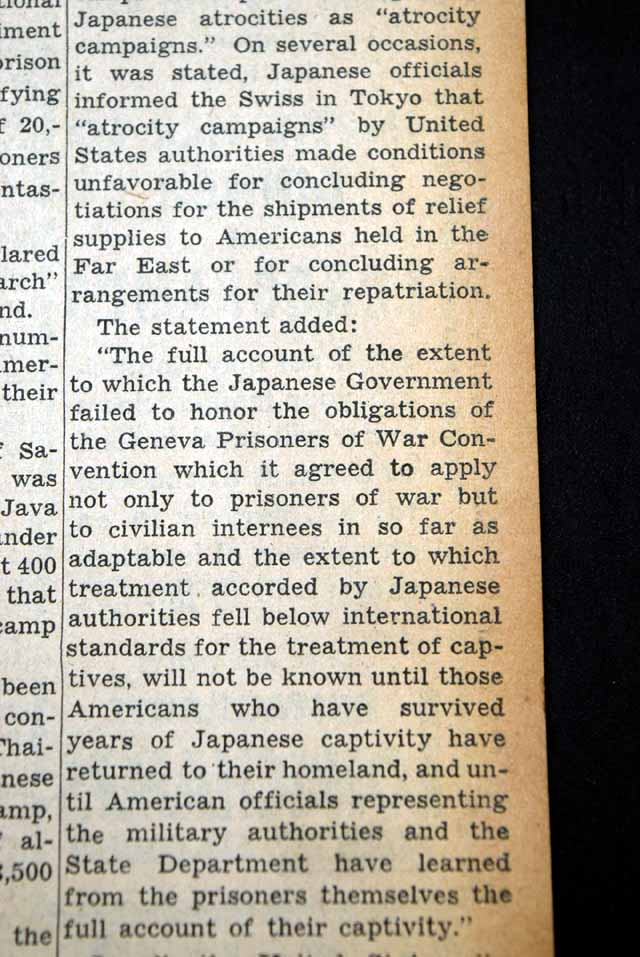
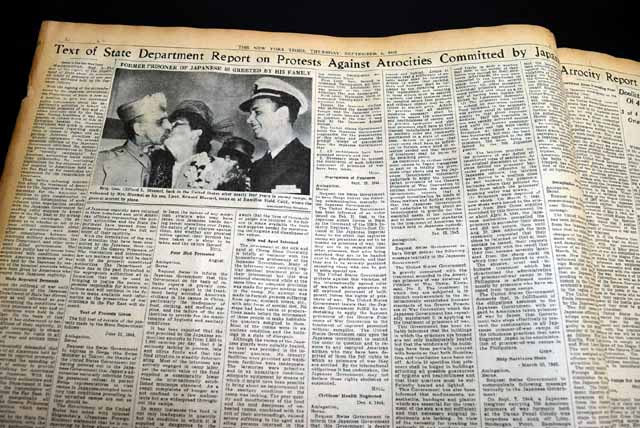
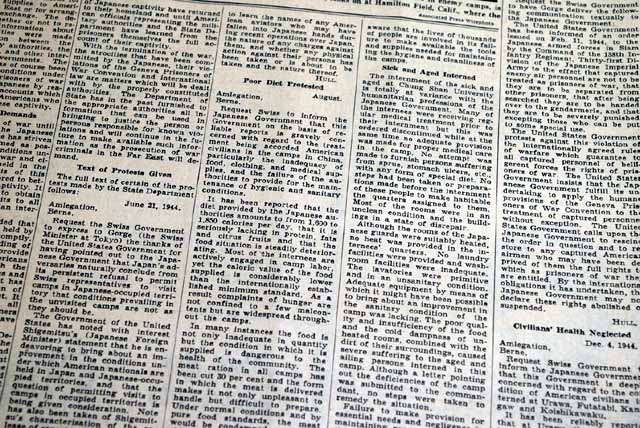
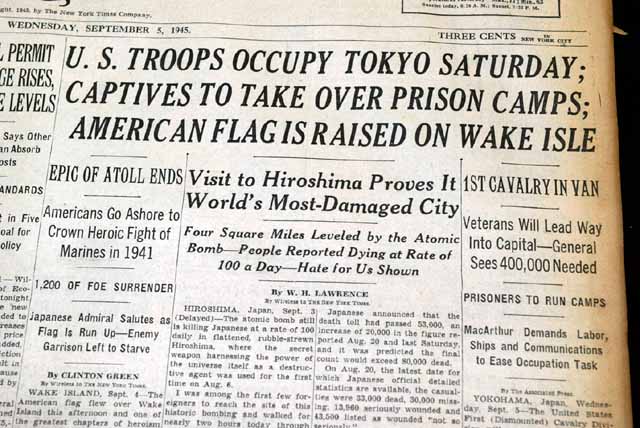
The top of the front page has a five column headline: "U. S. ACCUSES JAPAN OF MASSACRE, TORTURE, STARVATION OF CAPTIVES" with subheads that include: "Burning and Murder of 150 in Prison Camp at Palawan Told. (see) Lengthy reporting continues on pages 2 & 3.
Complete with all 40 pages, light toning and a little wear along the margins, generally nice.
Background: The global publication of Imperial Japanese war crimes around September 5, 1945—unveiled immediately following Japan's formal surrender and the lifting of wartime censorship—shattered the initial euphoria of peace by exposing the harrowing scale of human suffering inflicted across the Pacific, most brutally exemplified by the Palawan Massacre of December 14, 1944. At the Palawan camp, Japanese forces executed a barbaric, top-secret "Kill-All Order" by trapping roughly 150 American prisoners of war inside underground air raid shelters, dousing them in aviation fuel, and setting them ablaze. The profound historical significance of publishing these atrocities lies in how they fundamentally altered Allied military strategy and reshaped the landscape of global justice. The terrifying accounts brought back by the 11 miraculous survivors of Palawan had previously galvanized General Douglas MacArthur to launch high-stakes, behind-enemy-lines commando rescue raids at camps like Cabanatuan, Santo Tomas, and Los Baños, successfully saving thousands of other Allied captives before the Japanese military could enact the same genocidal orders elsewhere. Furthermore, the widespread media broadcasting of these horrors in late 1945 fueled intense public demand for accountability, directly driving the formation of the International Military Tribunal for the Far East (the Tokyo War Crimes Trials) and permanently shifting international military law to establish modern legal precedents for prosecuting crimes against humanity and protecting prisoner-of-war rights.
Other issues you may like
§ related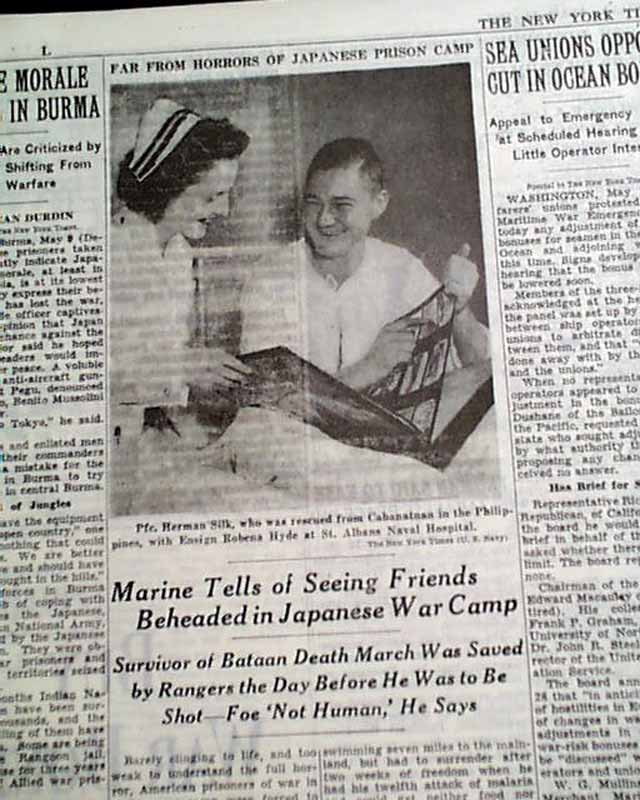
THE NEW YORK TIMES, May 13, 1945
- Japanese brutality - horrors
- Post Bataan Death March
- Raid at Cabanatuan prison camp
Page 4 has a two column heading: "Marine
...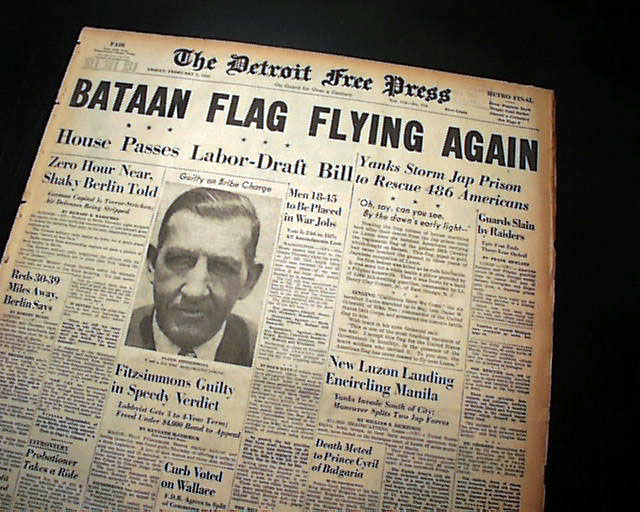
THE DETROIT FREE PRESS, February 2, 1945
- Japanese brutality - horrors
- Post Bataan Death March
- Raid at Cabanatuan prison camp
- Allied prisoners rescued
The front
...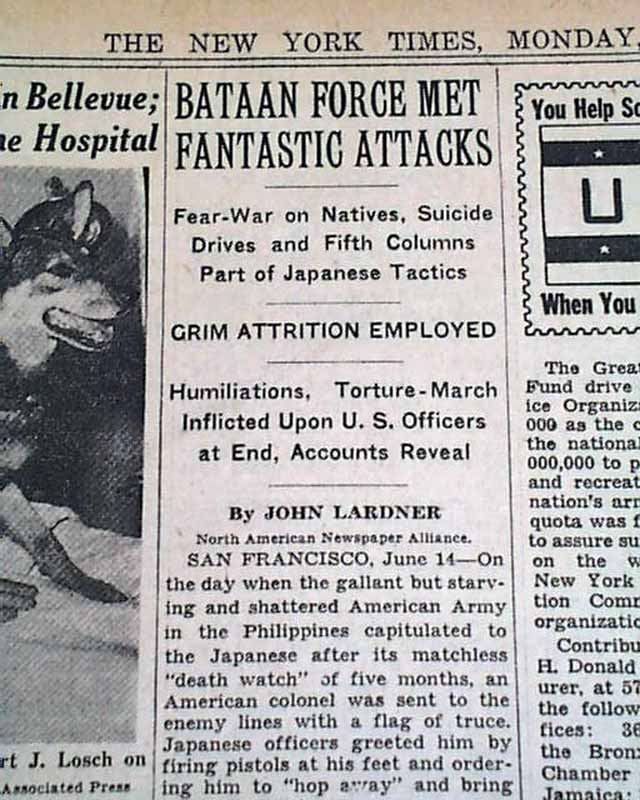
THE NEW YORK TIMES, June 15, 1942
- Post Battle of Bataan & death march
- Major General Edward P. King
- Allies surrender to Japanese
- Philippines Campaign eyewitness
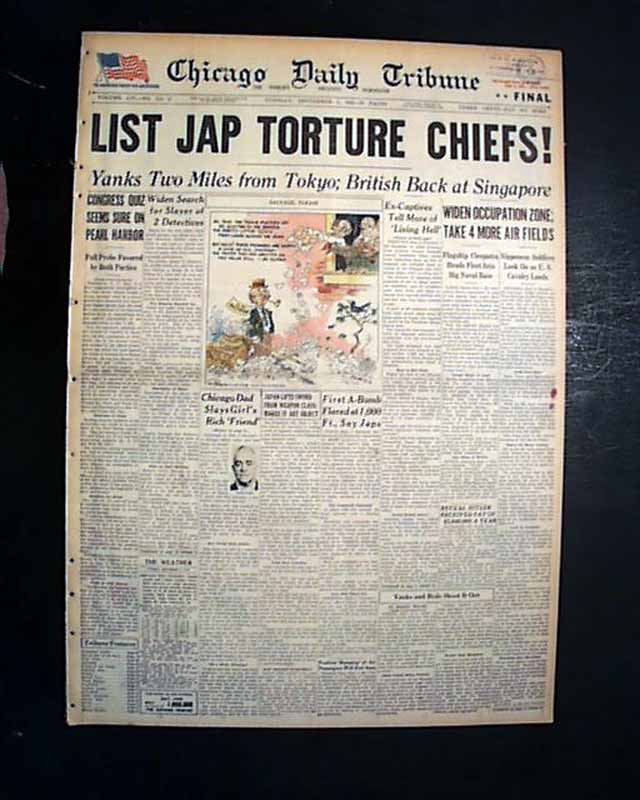
CHICAGO DAILY TRIBUNE, September 4, 1945
- Japanese atrocities described
- American soldiers tortured
The front page has a nice banner headline: "LIST JAP
...