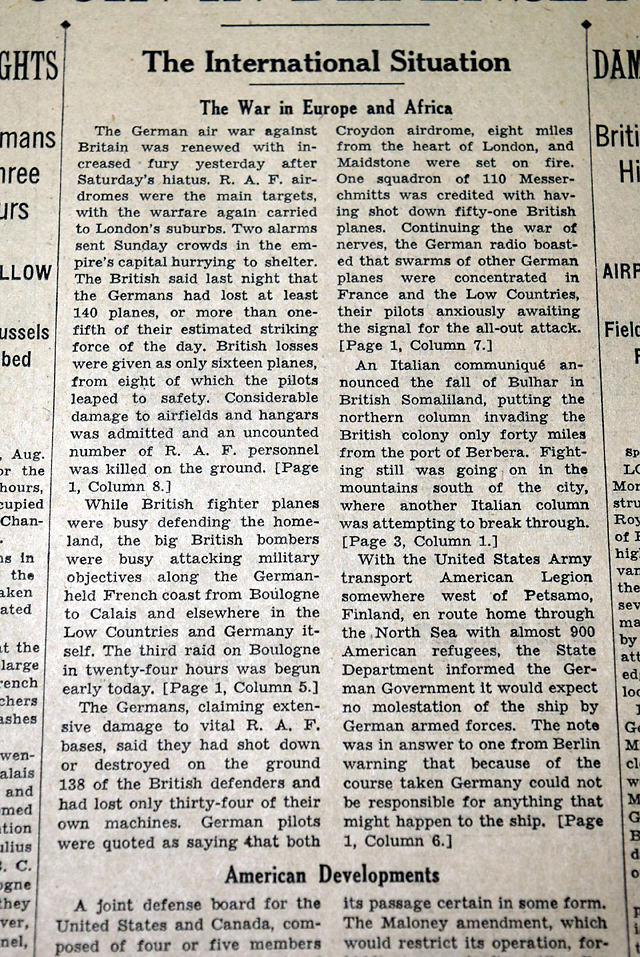
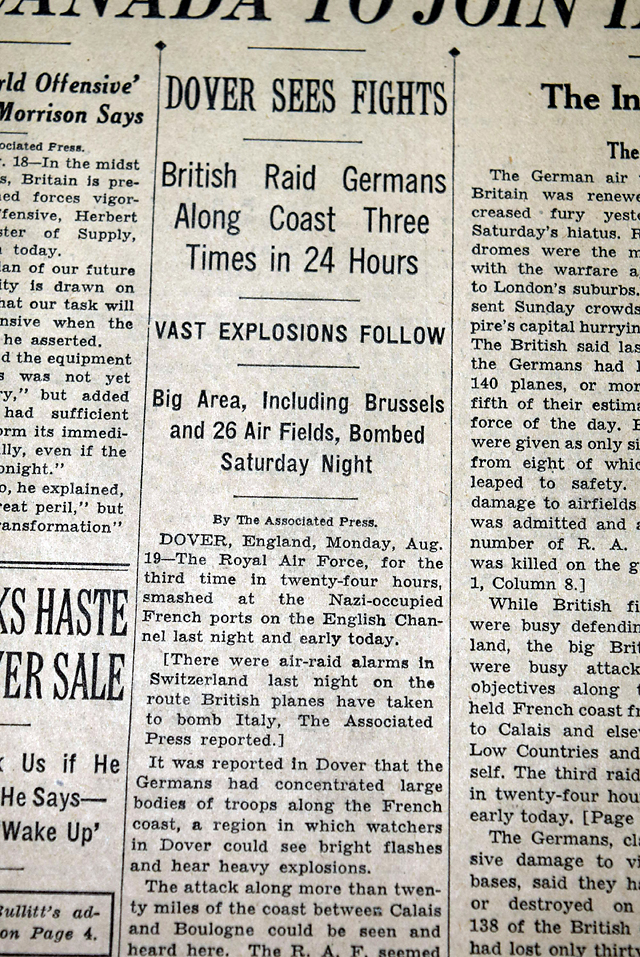
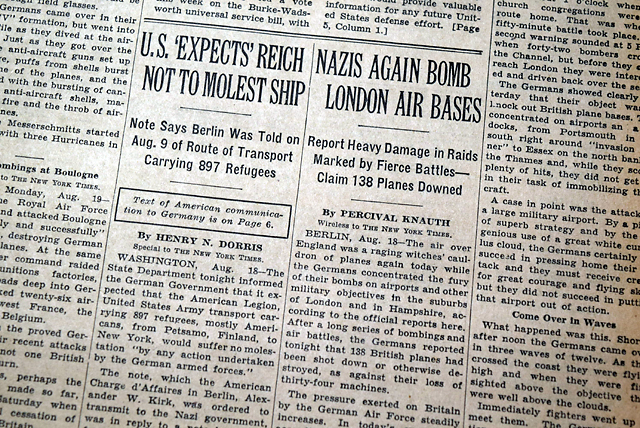
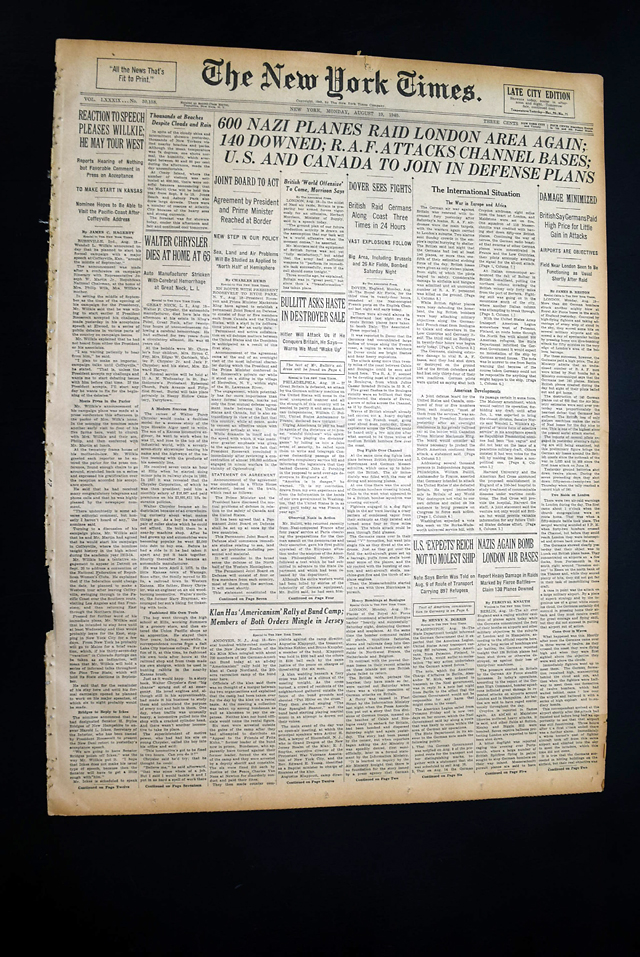
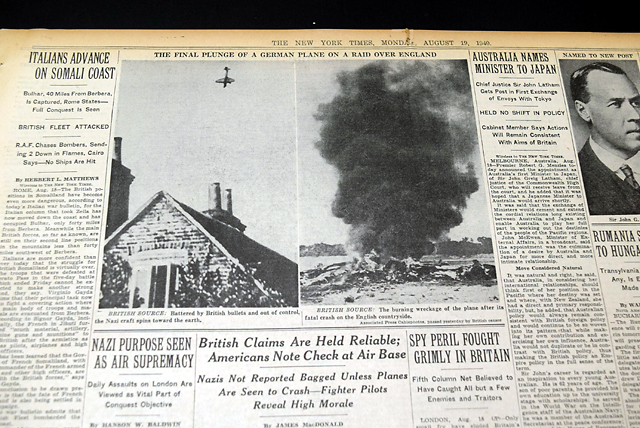
The Hardest Day... 1940 Battle of Britian...
Item # 727304
·
THE NEW YORK TIMES, Aug. 19, 1940
* The Hardest Day - Battle of Britain
* German Luftwaffe vs. British Royal Air Force
* World War II - WWII
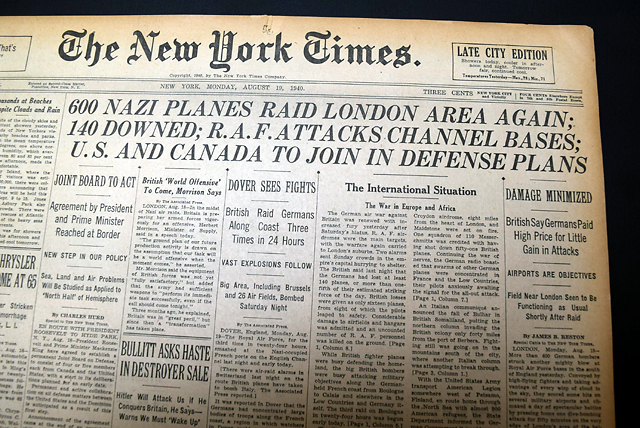
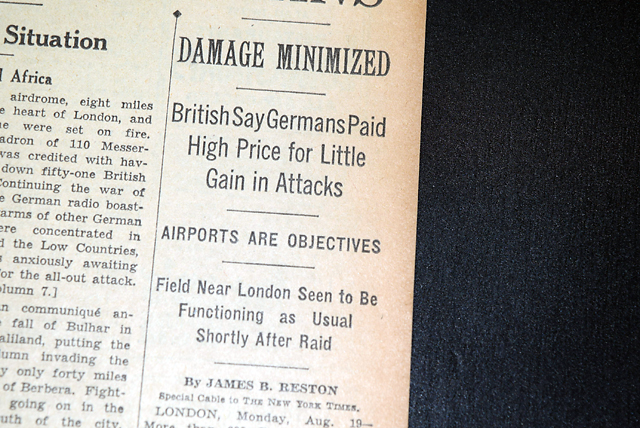
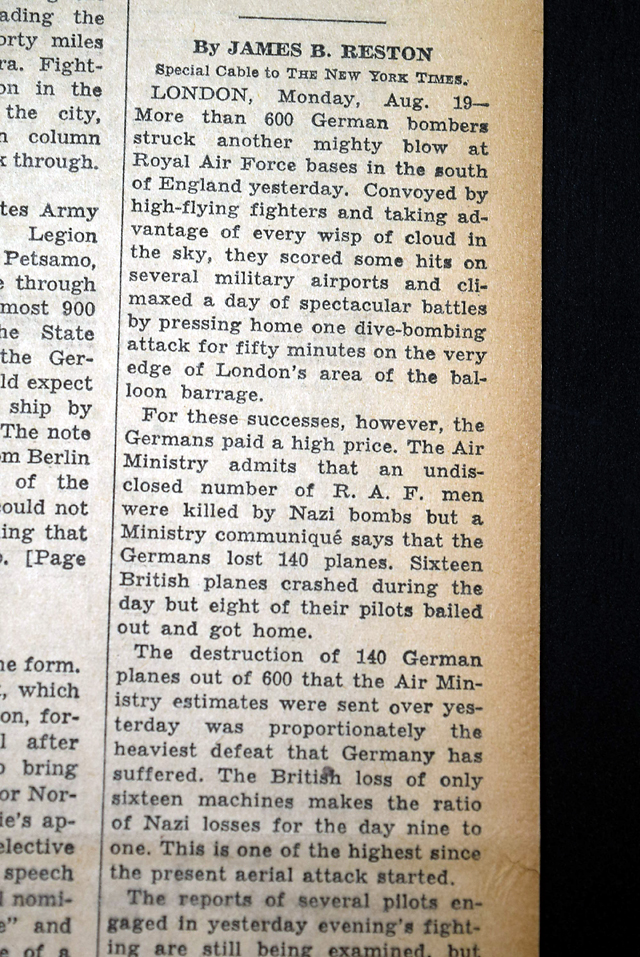
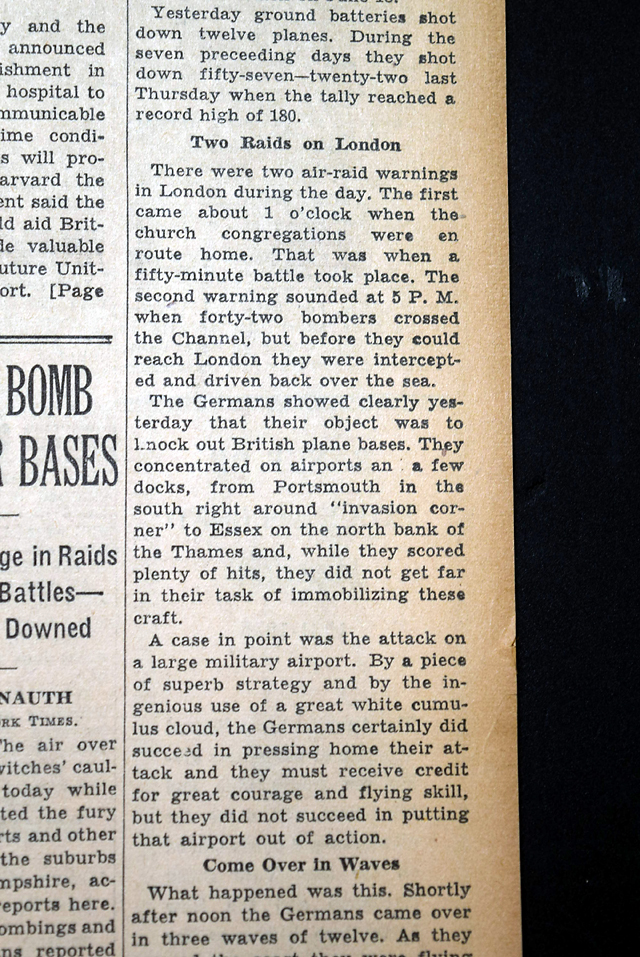
The top of the front page has a six column headline: "600 NAZI PLANES RAID LONDON AREA AGAIN; 140 DOWNED, R.A.F. ATTACKS CHANNEL BASES" with subheads. (see) Always nice to have notable events in history reported in this World famous publication.
Complete with all 32 pages, light toning and a little wear at the margins, small piece torn away along the spine, generally nice.
Background: This historic August 19, 1940 edition of The New York Times serves as a monumental artifact of World War II, capturing the immediate, raw aftermath of "The Hardest Day"—the climactic, costliest 24-hour aerial battle of the Battle of Britain that ultimately forced the German Luftwaffe to abandon its strategy of daylight bombing runs. The dramatic six-column front-page headline showcases the high-stakes information vacuum of early wartime reporting, displaying heavily inflated aircraft casualty counts that emphasize the intense psychological warfare and propaganda of the era. Preserving a complete, 32-page survival of this specific daily edition is exceptionally rare; while microfilm copies exist, physical newsprint from this period is highly susceptible to decay, and most copies were discarded or recycled during WWII-era paper drives. As a result, this intact publication stands as a rare, tangible time capsule that juxtaposes the existential dread of a European continent under siege against the mundane, peacetime consumerism of a still-neutral United States.
* The Hardest Day - Battle of Britain
* German Luftwaffe vs. British Royal Air Force
* World War II - WWII
The top of the front page has a six column headline: "600 NAZI PLANES RAID LONDON AREA AGAIN; 140 DOWNED, R.A.F. ATTACKS CHANNEL BASES" with subheads. (see) Always nice to have notable events in history reported in this World famous publication.
Complete with all 32 pages, light toning and a little wear at the margins, small piece torn away along the spine, generally nice.
Background: This historic August 19, 1940 edition of The New York Times serves as a monumental artifact of World War II, capturing the immediate, raw aftermath of "The Hardest Day"—the climactic, costliest 24-hour aerial battle of the Battle of Britain that ultimately forced the German Luftwaffe to abandon its strategy of daylight bombing runs. The dramatic six-column front-page headline showcases the high-stakes information vacuum of early wartime reporting, displaying heavily inflated aircraft casualty counts that emphasize the intense psychological warfare and propaganda of the era. Preserving a complete, 32-page survival of this specific daily edition is exceptionally rare; while microfilm copies exist, physical newsprint from this period is highly susceptible to decay, and most copies were discarded or recycled during WWII-era paper drives. As a result, this intact publication stands as a rare, tangible time capsule that juxtaposes the existential dread of a European continent under siege against the mundane, peacetime consumerism of a still-neutral United States.
Category: The 20th Century
Price
$48
100% Authentic: Original printing, never a reproduction.
Other issues you may like
§ related
The Hardest Day... 1940 Battle of Britian...
CHICAGO DAILY TRIBUNE, Aug. 17, 1940
* The Hardest Day - Battle of Britain
* German Luftwaffe vs. British Royal Air Force
* World War II - WWII
The...
* The Hardest Day - Battle of Britain
* German Luftwaffe vs. British Royal Air Force
* World War II - WWII
The...
Aug 1940
$48
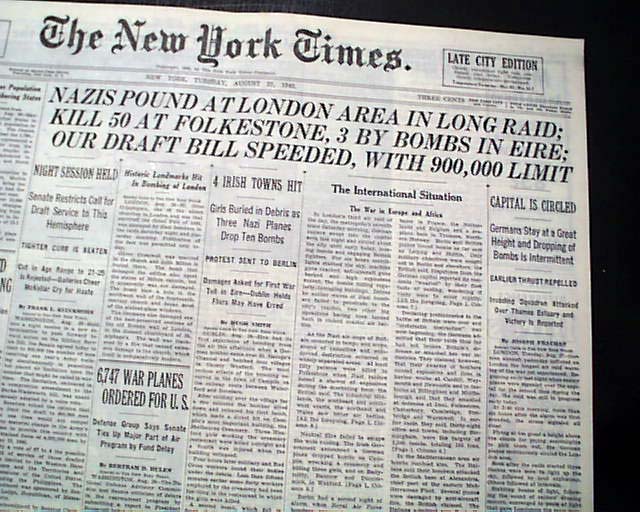
1940 Battle of Britain... London bombings...
THE NEW YORK TIMES, August 27, 1940
* Battle of Britain
* London, England bombings
* World War II - WWII
The the top of the front page has a six...
* Battle of Britain
* London, England bombings
* World War II - WWII
The the top of the front page has a six...
Aug 1940
$40
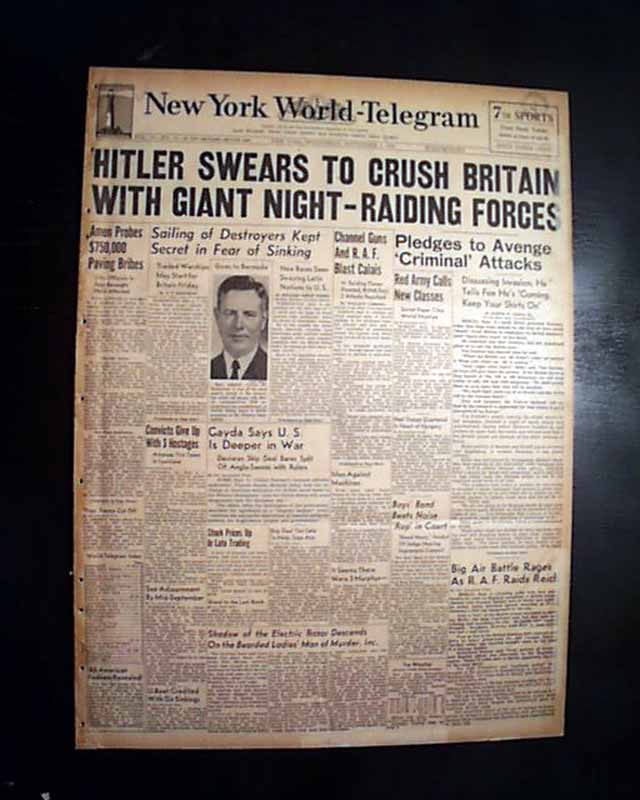
1940 Battle of Britain... London bombings...
THE NEW YORK TIMES, August 27, 1940
* Battle of Britain
* London, England bombings
* World War II - WWII
The the top of the front page has a nice...
* Battle of Britain
* London, England bombings
* World War II - WWII
The the top of the front page has a nice...
Aug 1940
$48
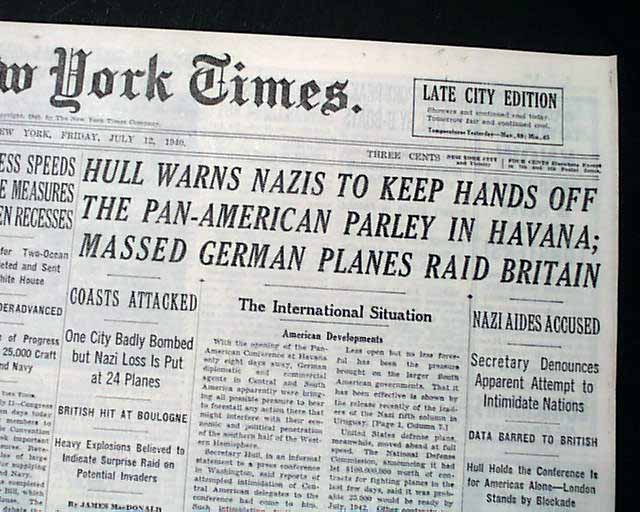
1940 Battle of Britain begins...
THE NEW YORK TIMES, New York, NY, July 12, 1940
* Battle of Britain begins
* World War II original
* Nazis bomb London and more
This 34 page...
* Battle of Britain begins
* World War II original
* Nazis bomb London and more
This 34 page...
Jul 1940
$42