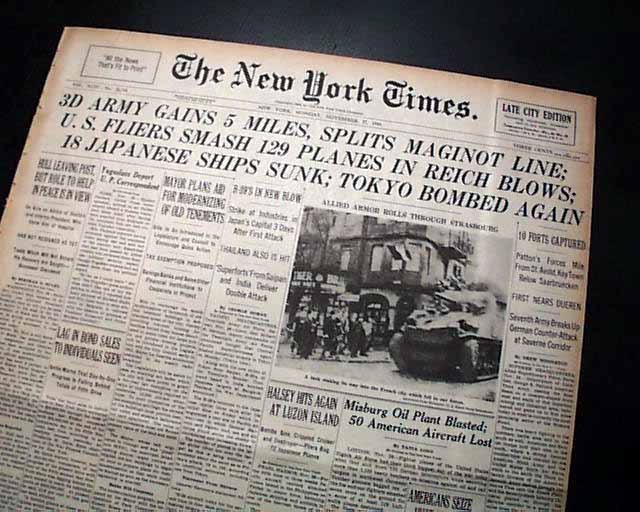
Battle of the Bulge prelude... George S. Patton...
THE NEW YORK TIMES, Nov. 27, 1944
- Third United States Army
- General George S. Patton
- World War II - WWII
- Battle of the Bulge prelude
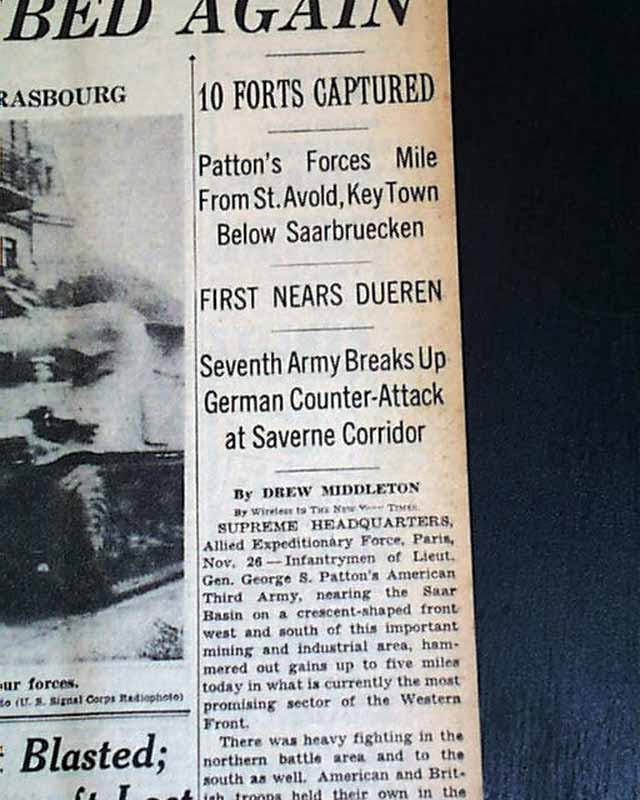
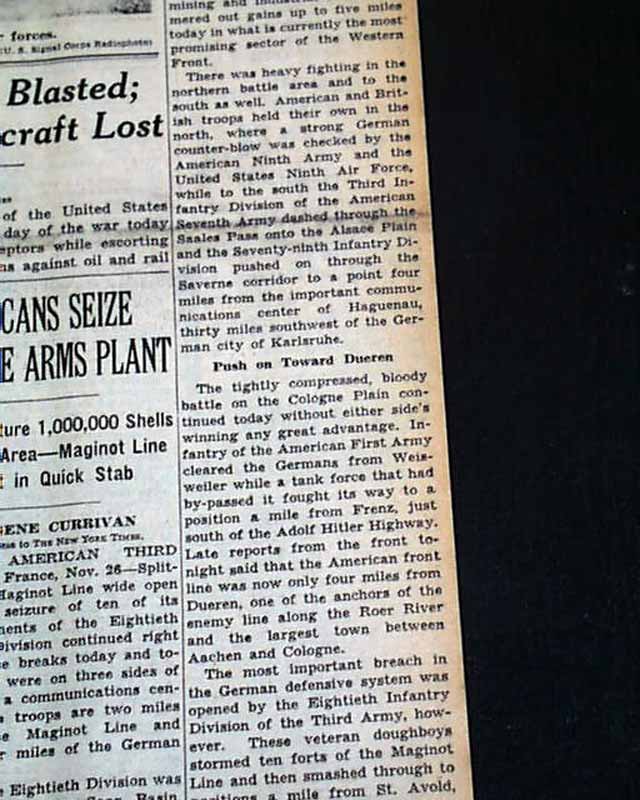
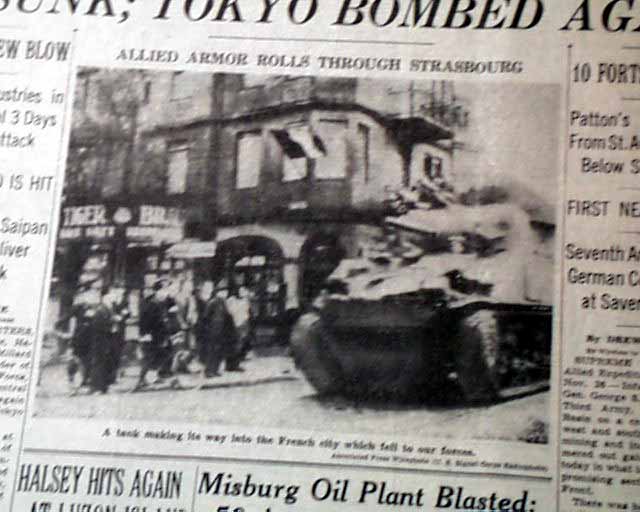
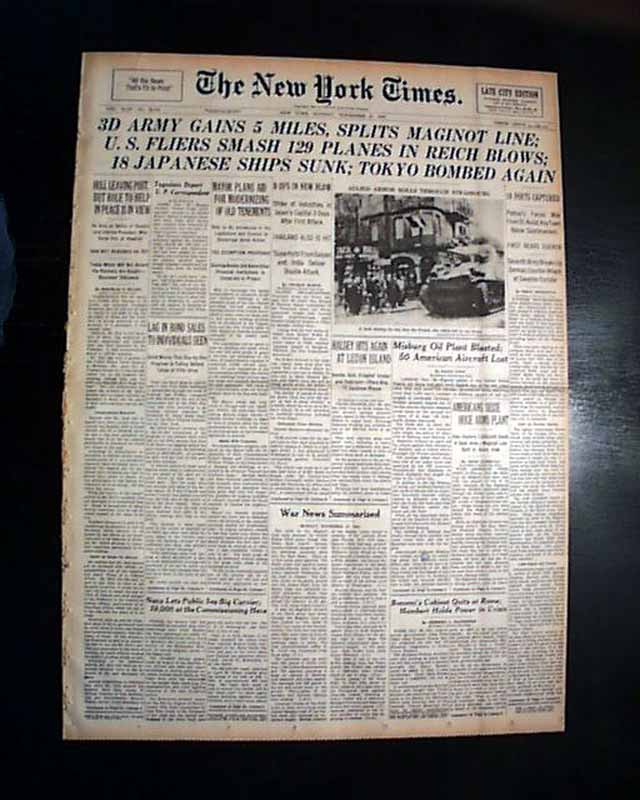
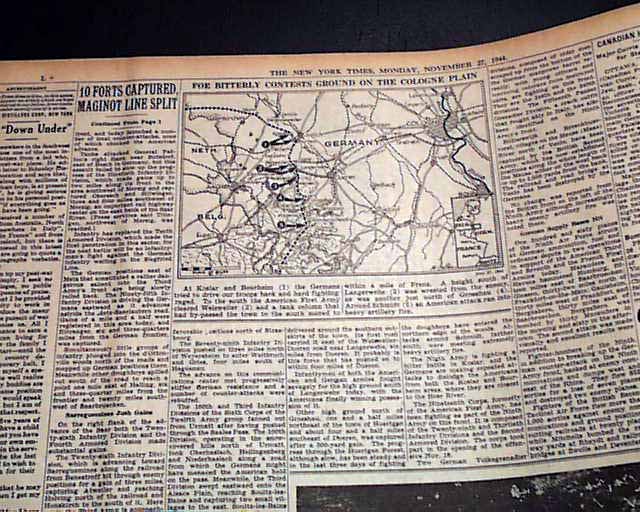
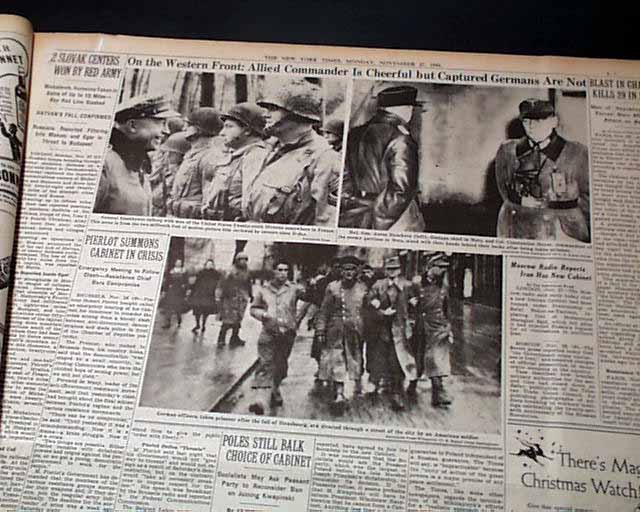
The front page has a banner headline: "3D ARMY GAINS 5 MILES, SPLITS MAGINOT LINE" with subheads that include: "Patton's Forces Mile From St. Avold, Key Town Below Saarbruecken" and more. (see) Much more on other World war II events of the day.
Complete with all 34 pages, light toning at the margins, nice condition.
Background: On November 26, 1944, a pivotal and prophetic prelude to the Battle of the Bulge quietly unfolded within Lieutenant General George S. Patton’s U.S. Third Army during the final, muddy days of the Lorraine Campaign. While the Third Army’s front-line divisions were deeply committed to an exhausting, rain-soaked offensive to breach the Saar River and crack the German border defenses, Patton’s brilliant intelligence chief, Colonel Oscar Koch, was tracking a deeply unsettling anomaly. In highly classified intelligence summaries produced around this exact date, Koch analyzed real-time combat data and noticed that the German Army was deliberately holding back its heavy armor and vanishing from the Third Army's immediate front—a discovery that led Koch to officially warn Patton of a massive, secret enemy concentration gathering directly to their north in the Ardennes. The extreme significance of this November 26 window lies in how this intelligence "trap" was set: Hitler used the brutal fighting along Patton's line to fix Allied attention southward, yet the fluid operational readiness Patton maintained during this intense push ultimately backfired on the Germans. Just three weeks later, when the surprise Ardennes offensive finally struck, this exact state of high alert allowed the Third Army to seamlessly execute its legendary, near-impossible 90-degree wheel north to save the besieged 101st Airborne Division at Bastogne.
Other issues you may like
§ related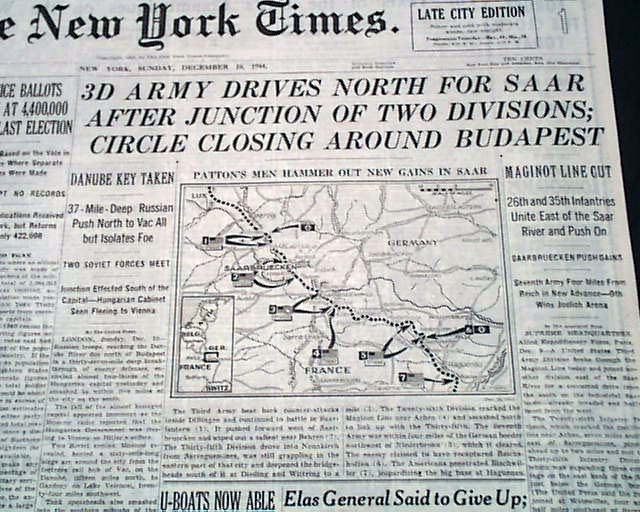
THE NEW YORK TIMES, December 10, 1944
- General George S. Patton
- World War II - WWII
- Battle of the Bulge prelude
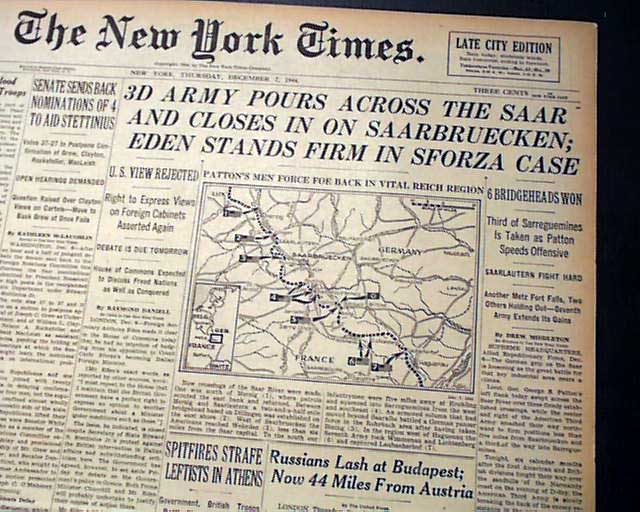
The top of the front page has a five column
...
THE NEW YORK TIMES, December 7, 1944
- General George S. Patton
- World War II - WWII
- Battle of the Bulge prelude
The top of the front page has a five column
...
CHICAGO DAILY TRIBUNE, December 2, 1944
- General George S. Patton
- World War II - WWII
- Battle of the Bulge prelude
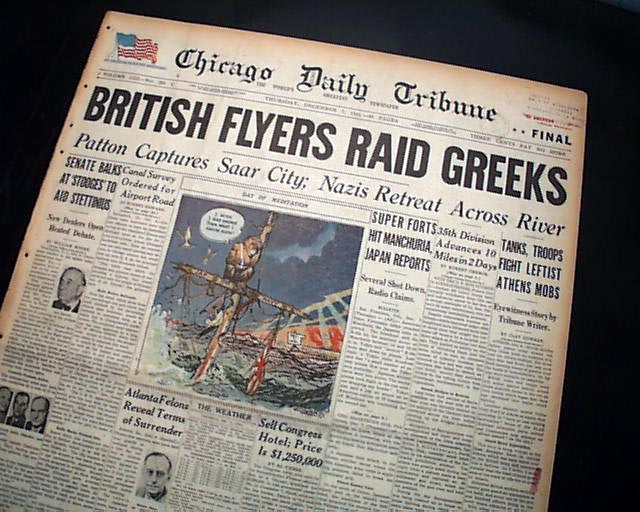
The front page has a banner heading: "Patton
...
THE NEW YORK TIMES, December 13, 1944
- General Alexander Patch
- Gen. George S. Patton photo
- World War II - WWII
- Battle of the Bulge prelude
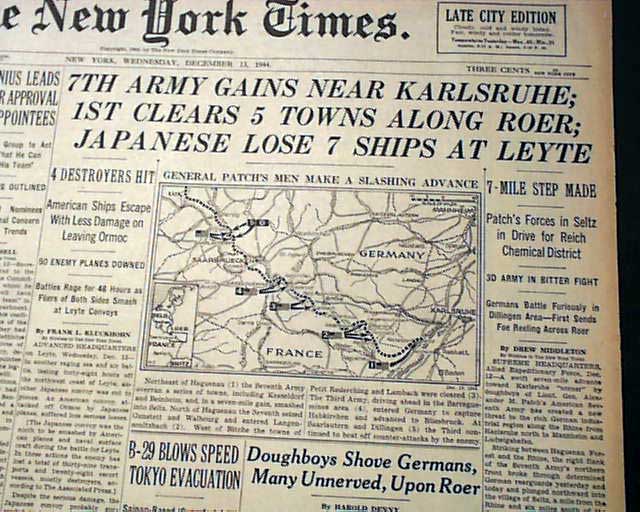
The top of the front
...