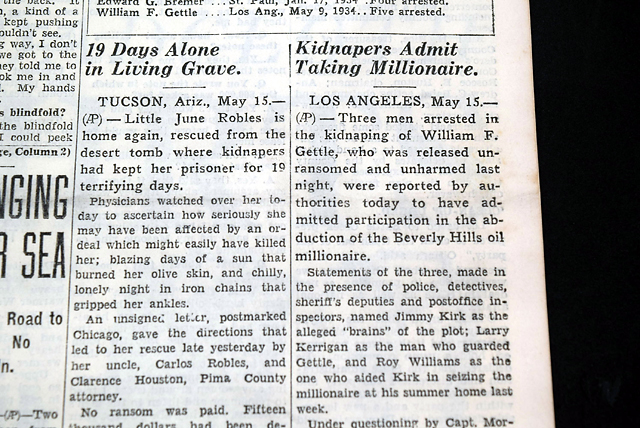
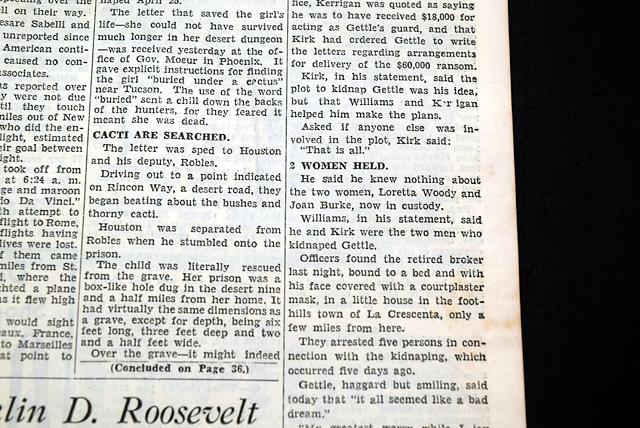
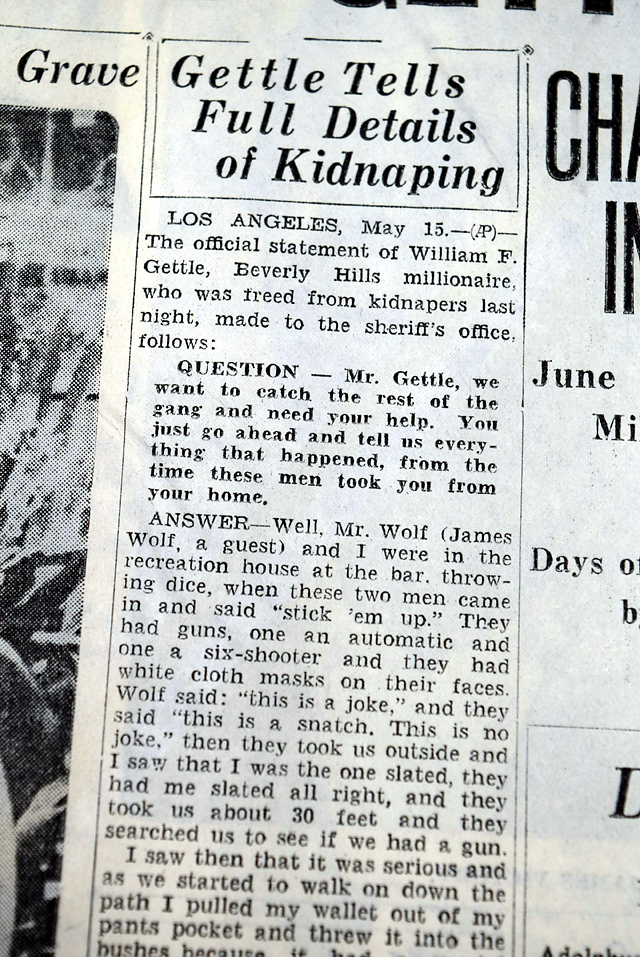
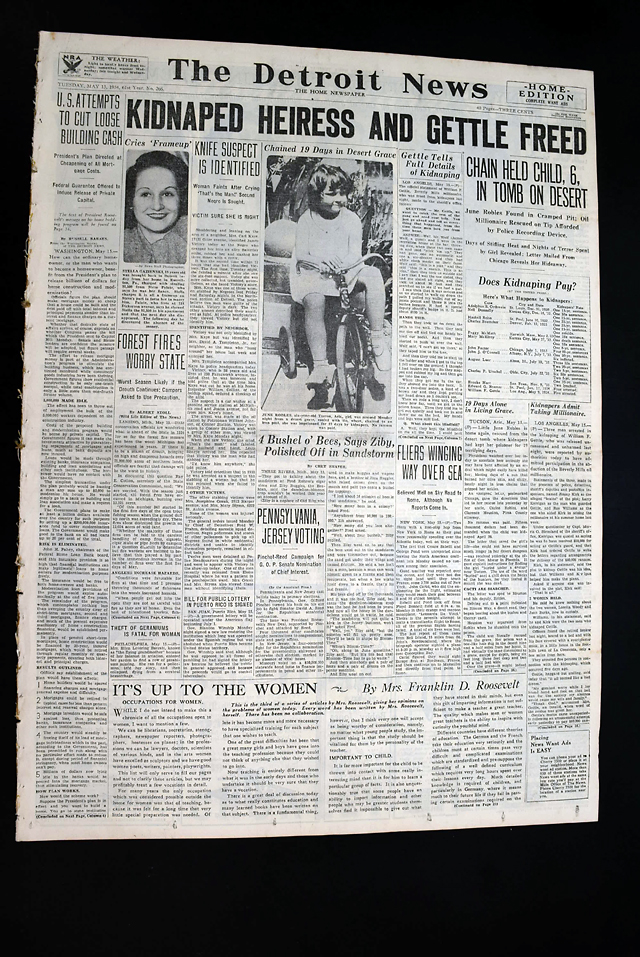
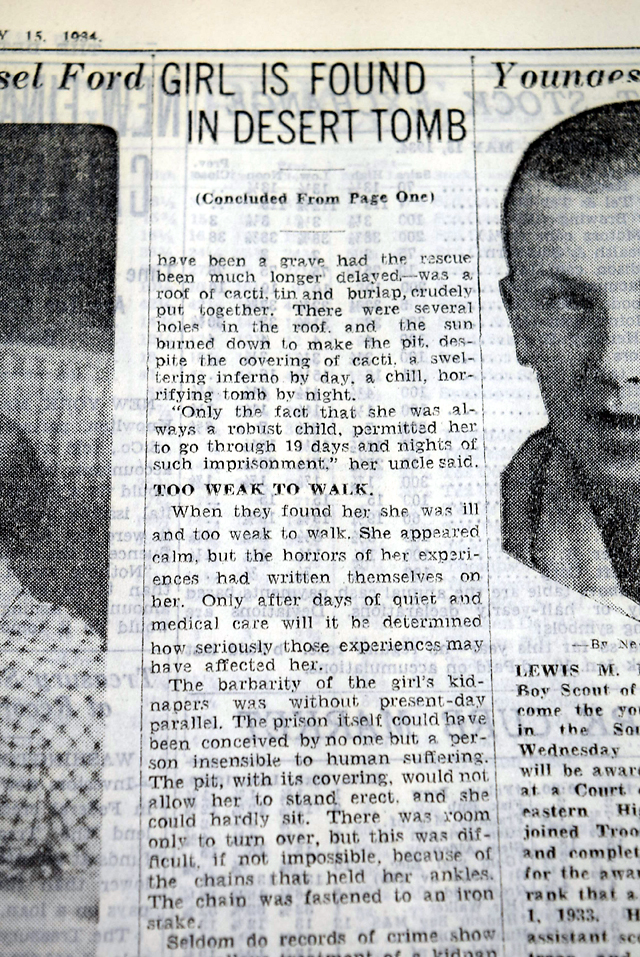
June Robles found... desert cage...
THE DETROIT NEWS, May 15, 1934
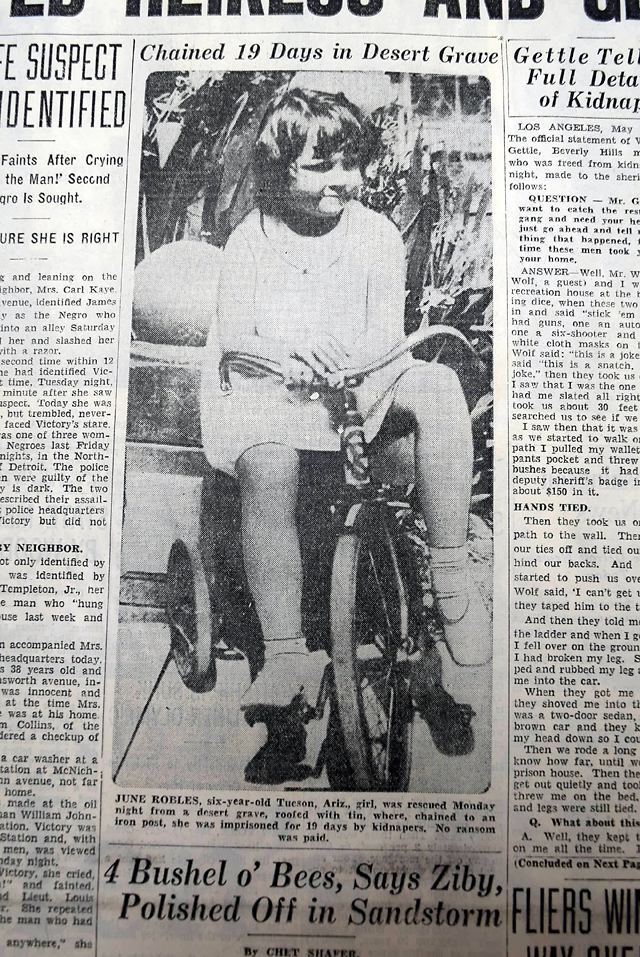
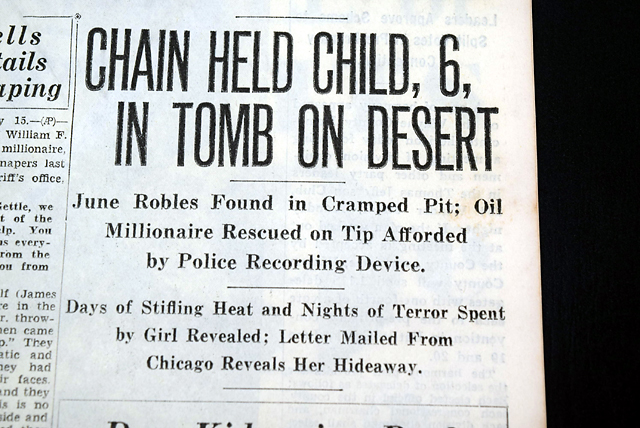
- 6 year old June Robles found alive
- Desert cage box - Tucson, Arizona
- William Gettle kidnapping case
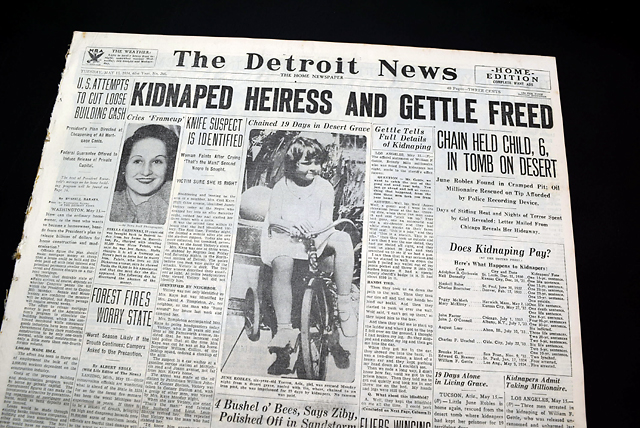
The top of the front page has a seven column headline: "KIDNAPED HEIRESS AND GETTLE FREED" with subheads and photo. (see images)
Complete with all 40 pages, rag edition in very nice condition.
Background: This rare, 40-page rag edition of The Detroit News from May 15, 1934, stands as a pristine, museum-quality artifact of Depression-era true crime, capturing the explosive national relief of two major kidnapping resolutions hitting the press simultaneously. Printed on high-quality, 100% cotton rag paper rather than standard high-acid wood pulp, this specific publication has escaped the yellowing and brittle decay that destroyed most newspapers from this period, preserving its dramatic, seven-column banner headline "KIDNAPED HEIRESS AND GETTLE FREED" in remarkable condition. The issue carries profound historical significance because it marks the miraculous climax of two cases that gripped a nation already traumatized by the Lindbergh kidnapping: the rescue of wealthy Los Angeles oilman William F. Gettle following a swift police raid, and the astonishing survival of six-year-old June Robles, who was found alive after being buried for 19 days in a sweltering, crude iron-and-wood "desert cage box" outside Tucson, Arizona. By uniting a rare, archival-grade physical medium with the peak moment of a national kidnapping obsession, this complete issue serves as a striking window into 1930s media sensation, forensic history, and American cultural anxiety.
Other issues you may like
§ related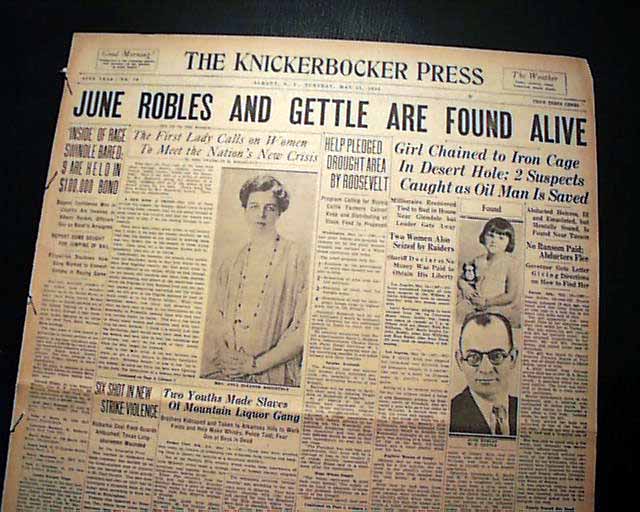
THE KNICKERBOCKER PRESS, Albany, New York, May 15, 1934
- June Robles found alive
- Desert cage box - Tucson, Arizona
- William Gettle
The front page has a banner
...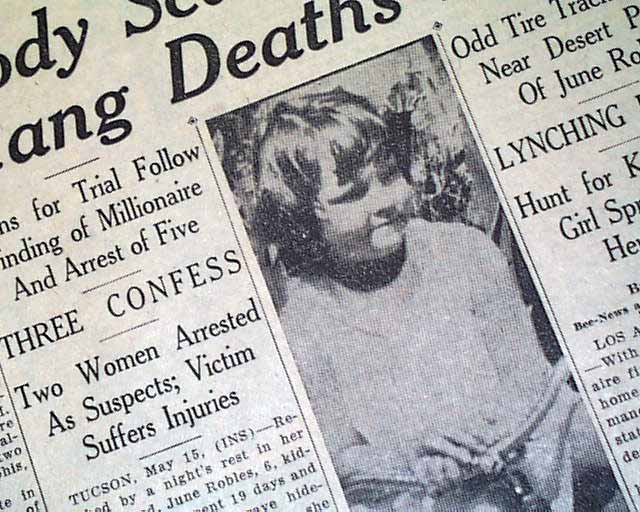
THE OMAHA BEE-NEWS, Nebraska, May 15, 1934
- June Robles found alive
- Desert cage box - Tucson, Arizona
This 22 page newspaper has a seven column headline on
...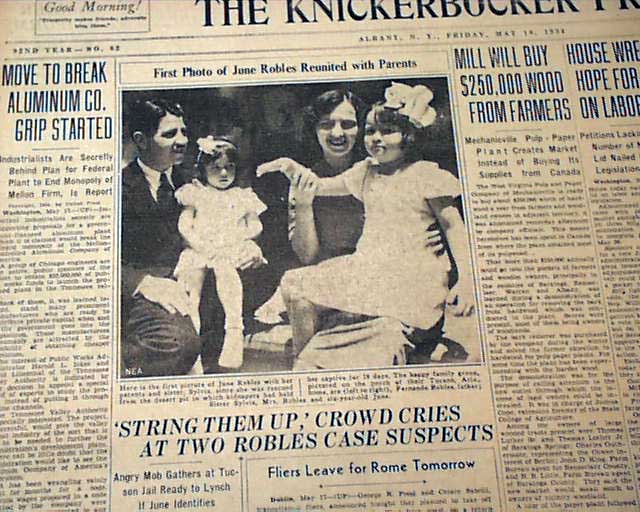
THE KNICKERBOCKER PRESS, Albany, New York, May 18, 1934
- June Robles found alive
- Desert cage box - Tucson, Arizona
- William Gettle
The top of the front page has
...
THE DETROIT NEWS, September 29, 1953
- Bobby Greenlease kidnapping (1st report)
- Carl Austin Hall
- Bonnie Emily Brown Heady
Near the bottom of the front page is a
...