Civil Rights... Freedom Riders...
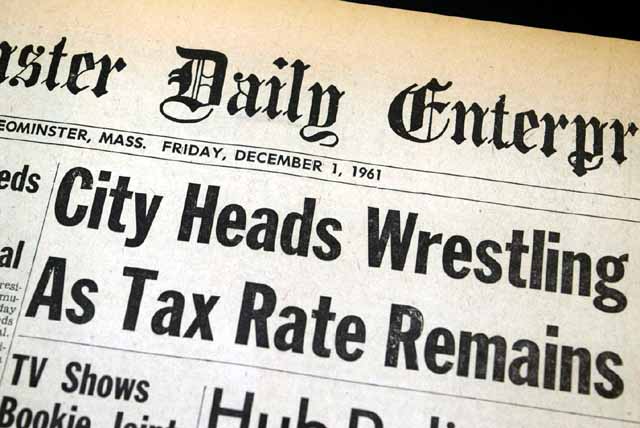
LEOMINSTER DAILY ENTERPRISE, Mass. Dec. 1, 1961
- "Freedom Riders" arrive in McComb
- American Civil Rights movement
- White racist mob violent attacks
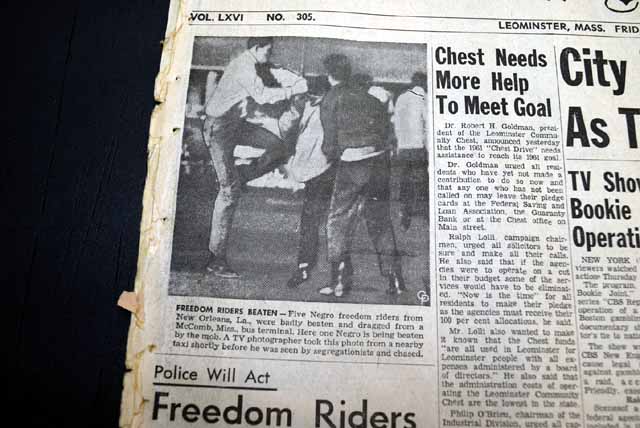
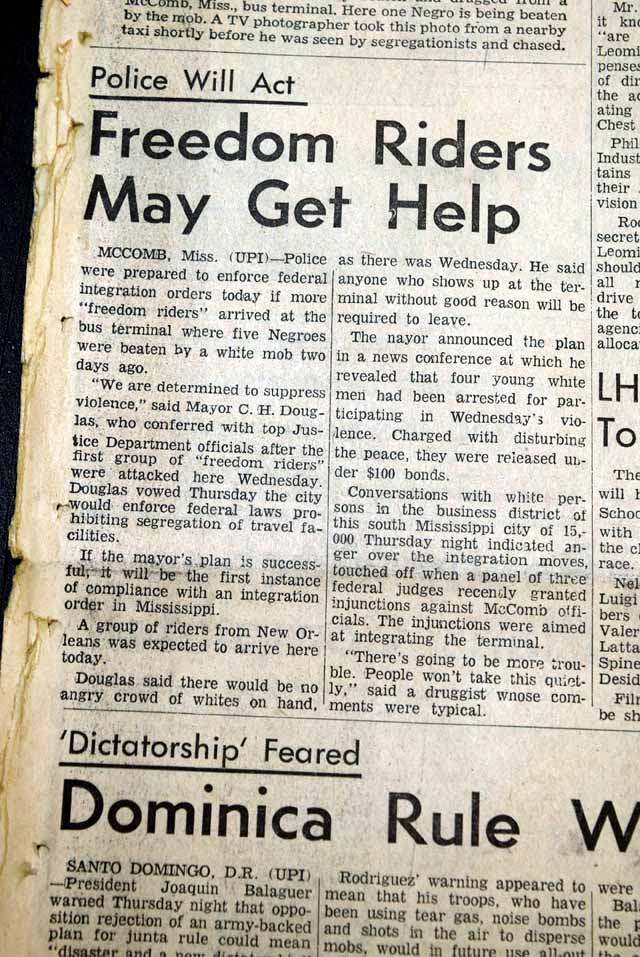
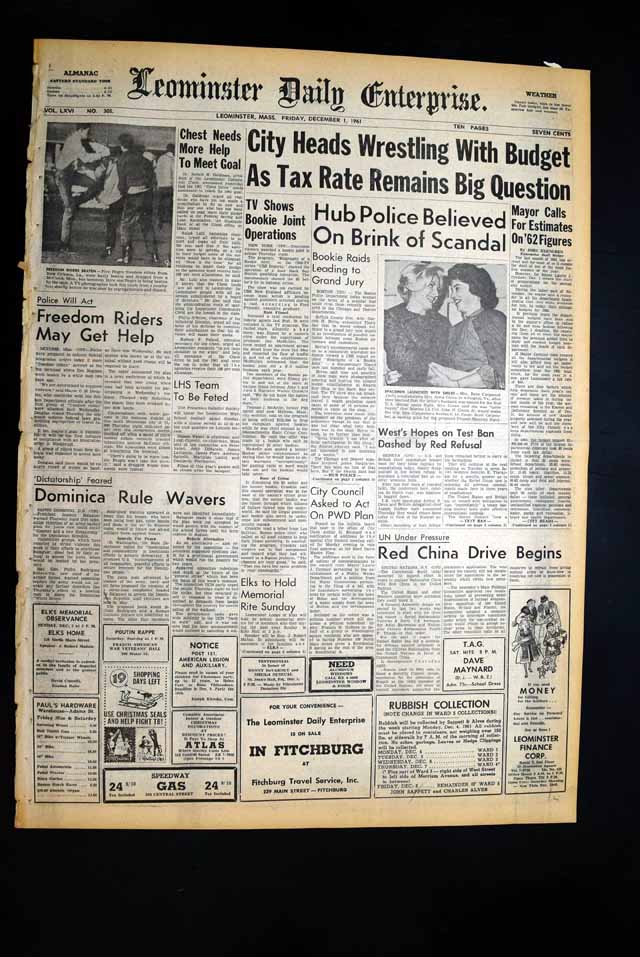
The front page has a two column heading: "Freedom Riders May Get Help" with a related photo showing the violence against the Freedom Riders. (see images)
Complete with 10 pages, light toning at the margins, a little spine wear, generally good.
Background: The Freedom Rides that culminated in McComb, Mississippi, on December 1, 1961, represented a critical, high-stakes proving ground for the American Civil Rights Movement, marking one of the earliest frontline tests of the Interstate Commerce Commission's (ICC) federal mandate banning terminal segregation. While the foundational, nationally recognized Freedom Rides began earlier in May 1961, this late-autumn mobilization—spearheaded by local activists alongside the Student Nonviolent Coordinating Committee (SNCC) and the Congress of Racial Equality (CORE)—deliberately targeted McComb to challenge the state's blatant defiance of federal law. Upon arriving at the Greyhound terminal, riders like Jean Catherine Thompson were met with brutal violence from an unrestrained white mob, resulting in severe beatings of activists and journalists alike while local law enforcement passively stood by before ultimately arresting the victims for "breaching the peace." The historical significance of this event lies in its exposure of the federal government's enforcement failure; it proved that paper victories in Washington meant little without federal intervention on the ground, thereby radicalizing local youth and solidifying McComb as a crucible of grassroots resistance. Furthermore, accounts and archival publications detailing the precise logistics of the December 1st ride remain exceptionally rare in broader civil rights literature, often overshadowed by the larger May rides or integrated into broader anthologies of Mississippi's voter registration violence, making primary documentation of this specific date a highly prized asset for historians analyzing the micro-dynamics of Southern resistance.
Other issues you may like
§ related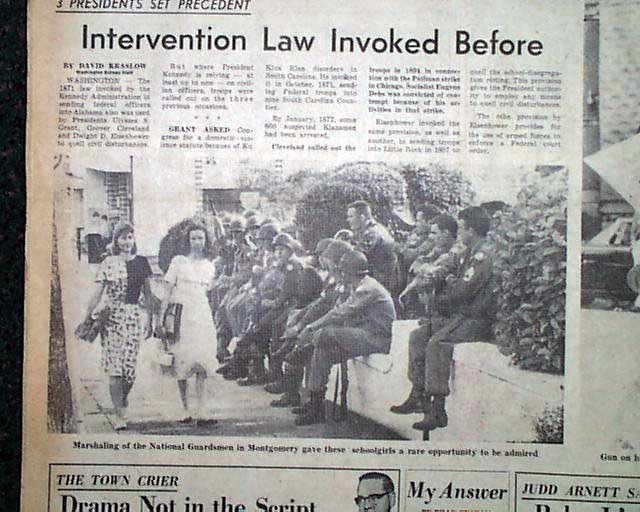
THE FREE PRESS, Michigan, May 23, 1961
- Freedom Riders
- Civil rights activists
- Montgomery, Alabama
The front page has a two-column, 3-line heading: "What It's
...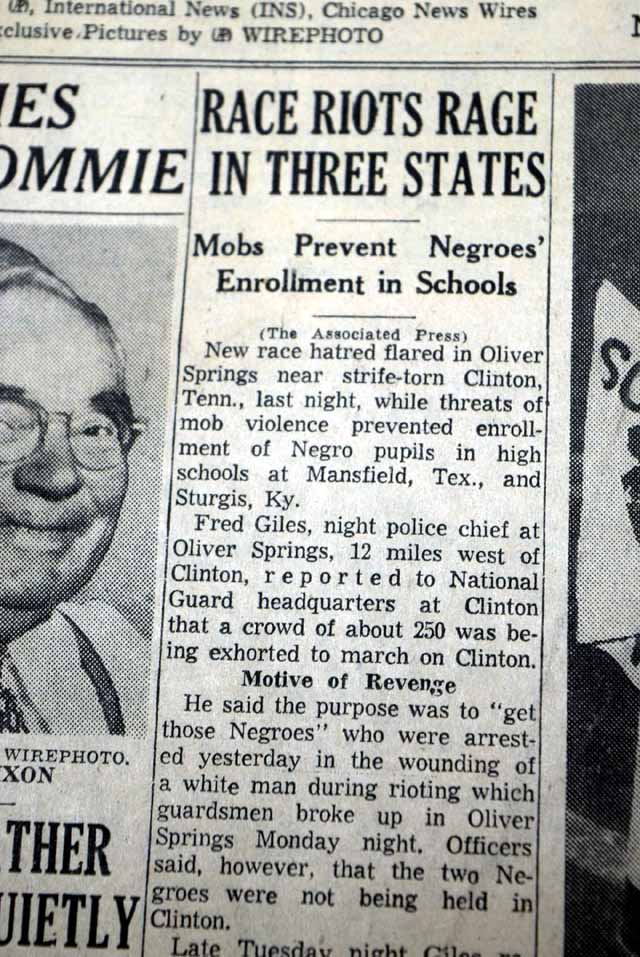
THE TIMES-PICAYUNE, New Orleans, Sept. 5, 1956
- Oliver Springs and Clinton, Tennessee
- Mansfield, Texas school integration crisis
- American Civil Rights Movement

LEOMINSTER DAILY ENTERPRISE, Mass. March 8, 1960
- Civil Rights activism - protests
- Southern segregation crisis
- Lunch counter sit-ins and arrests
The front page
...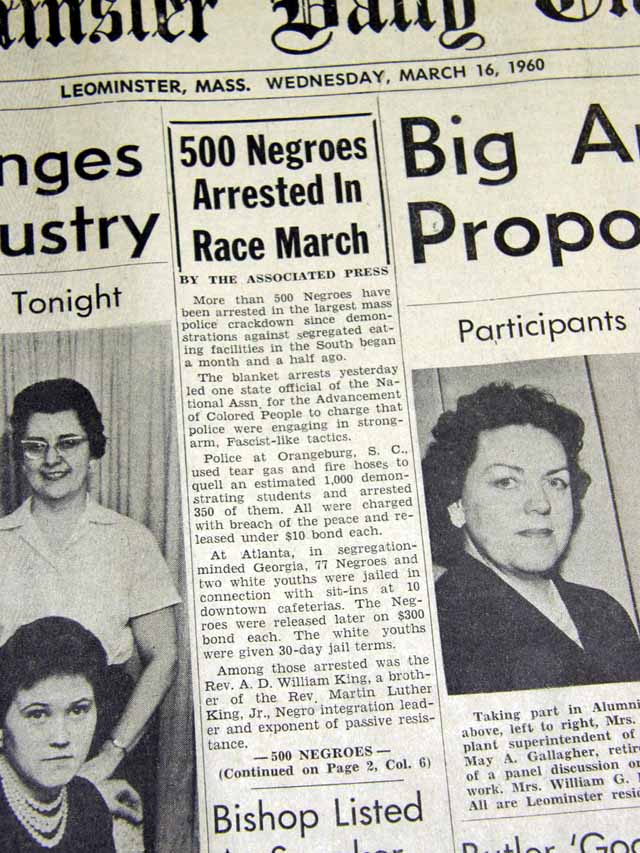
LEOMINSTER DAILY ENTERPRISE, Mass. March 16, 1960
- Civil Rights activism - protests
- Southern segregation marches
- Lunch counter sit-ins and more
- Negroes arrested