1946 Detroit-Windsor tornado disaster...
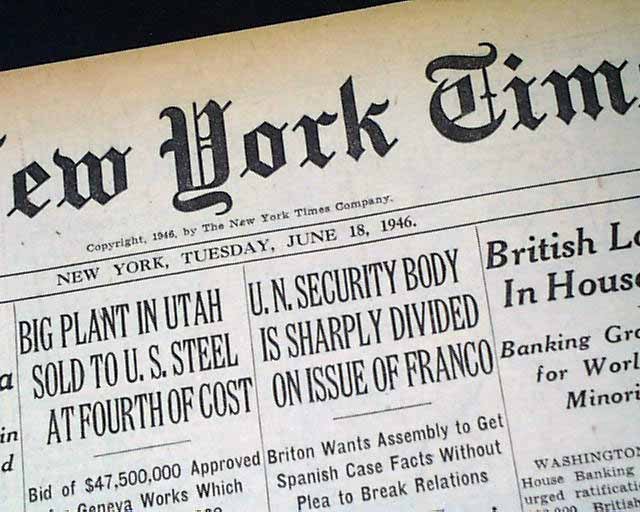
THE NEW YORK TIMES, June 18, 1946
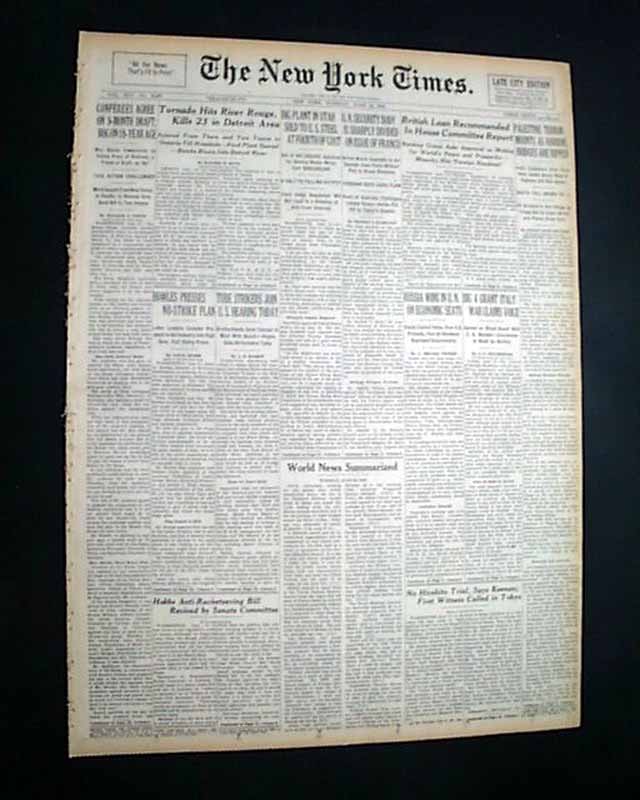
- Detroit River-Windsor F4 tornado disaster
- River Rouge, Michigan to Ontario, Canada
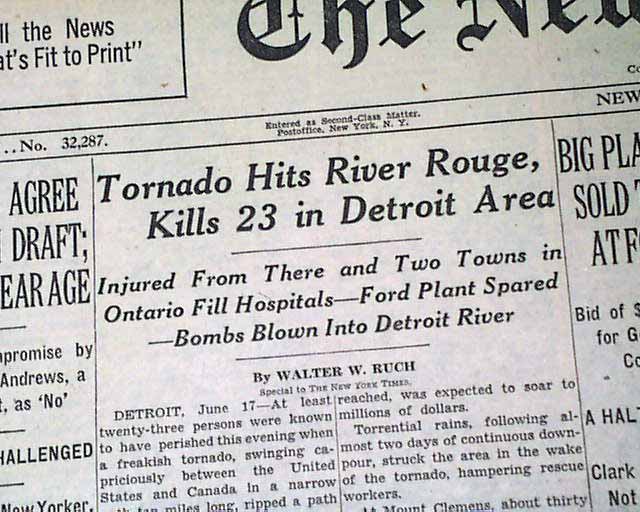
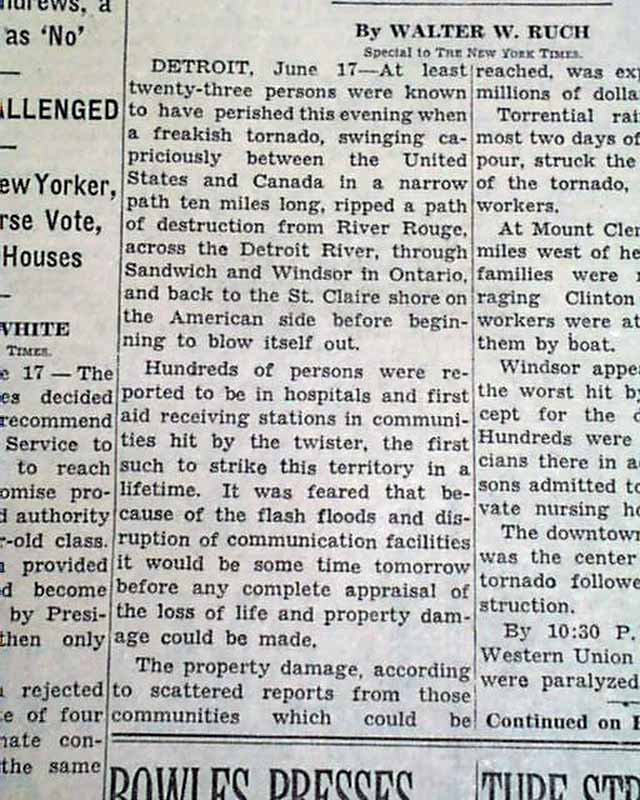
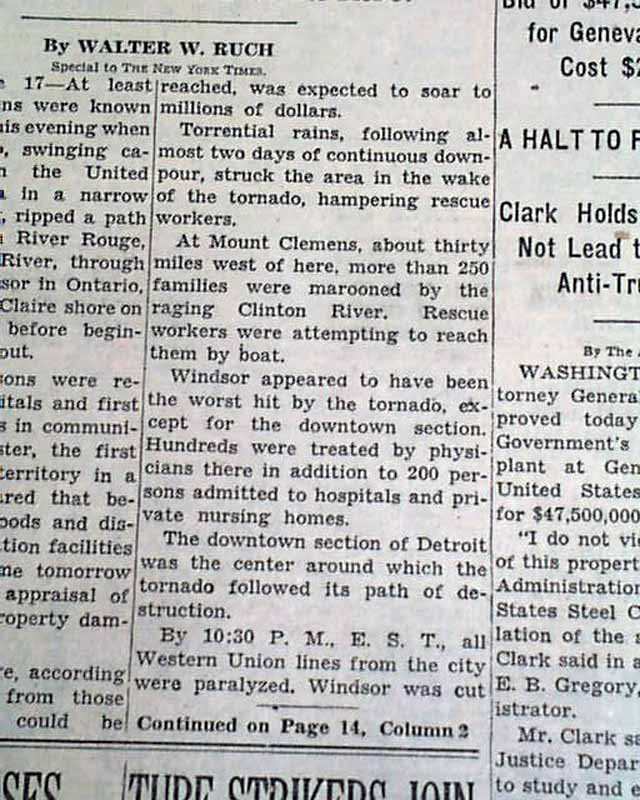
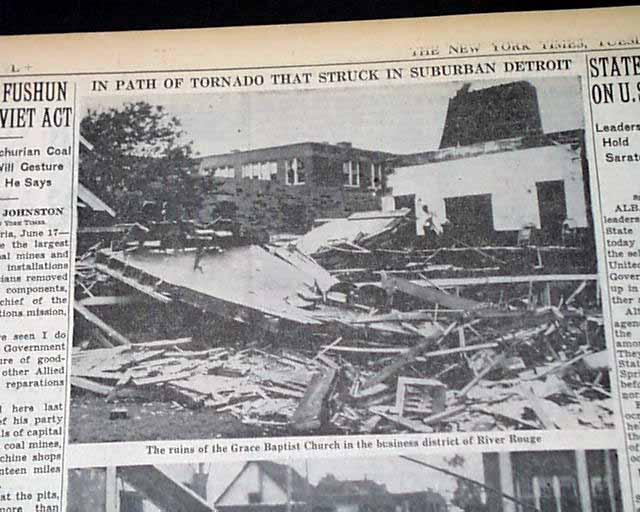
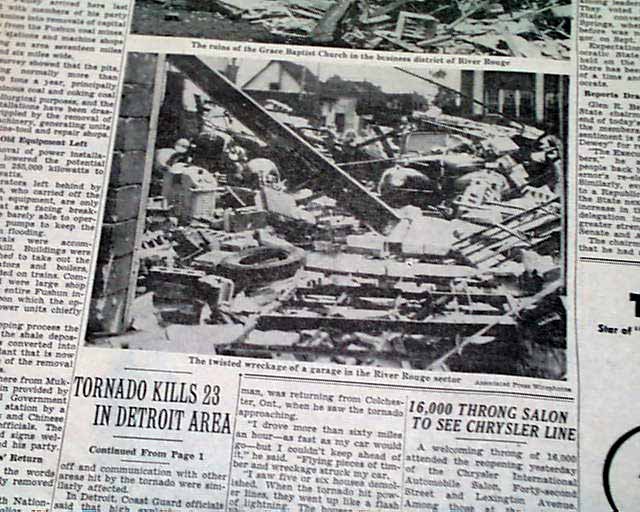
The top of the front page has a two column heading: "Tornado Hits River Rouge, Kills 23 in Detroit Area" with subhead. (see images) Coverage continues inside with 2 related photos.
Complete with 46 pages, light toning at the margins, nice condition.
Background: The historical significance of the 1946 Detroit–Windsor tornado lies primarily in its status as a catastrophic transboundary disaster that exposed the deadly limitations of mid-20th-century severe weather tracking and international communication. Striking at a time before modern radar networks and unified warning systems existed, the tornado blindsided communities on both sides of the border, ultimately becoming the third-deadliest tornado in Canadian history with 17 fatalities in Ontario. Because the storm originated as a disruptive but non-fatal event in River Rouge, Michigan, before intensifying into a violent F4 monster upon crossing the Detroit River into Windsor, it served as a stark, real-world case study for meteorologists in both nations. The tragedy underscored the reality that severe weather recognizes no geopolitical borders, acting as a critical catalyst for the United States and Canada to eventually improve bilateral data-sharing, advance radar technologies, and coordinate synchronized emergency broadcast systems to ensure that an international border would never again act as a barrier to life-saving weather warnings.
Other issues you may like
§ related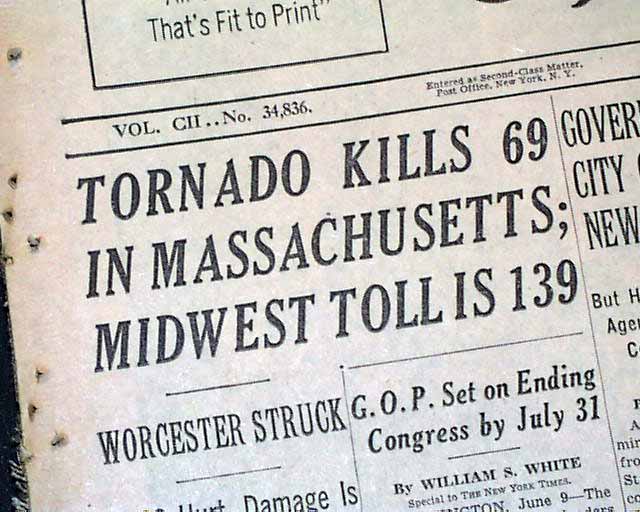
THE NEW YORK TIMES, New York, NY, June 10, 1953
- Worcester, Massachusetts tornado disaster (1st report)
This 60 page newspaper has a two column headline on
...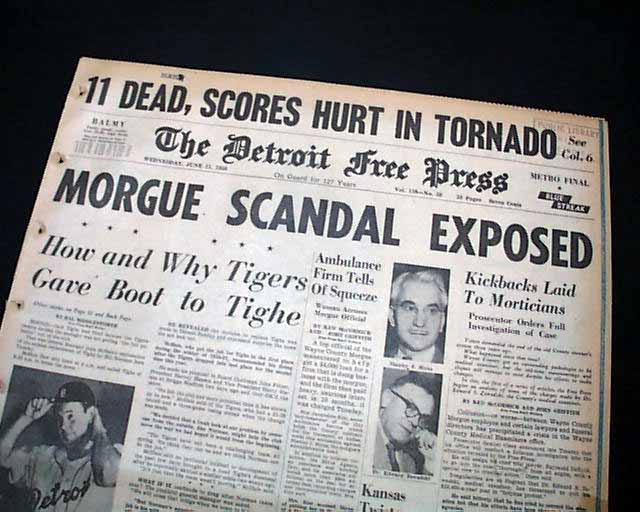
THE DETROIT FREE PRESS, June 11, 1958
- El Dorado, Butler County, Kansas
- F4 "Wrong Way" tornado storm disaster
The top of the front page has a banner headline:
...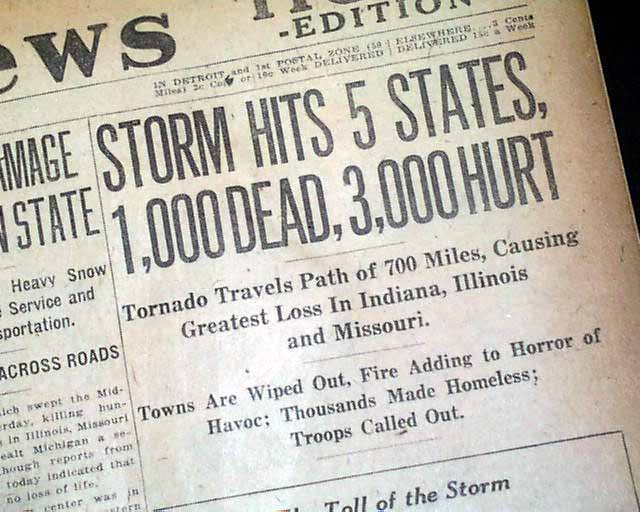
THE DETROIT NEWS, Michigan, March 19, 1925
- The Great Tri-State Tornado disaster...
This 42 page newspaper has two column headlines on the front page that
...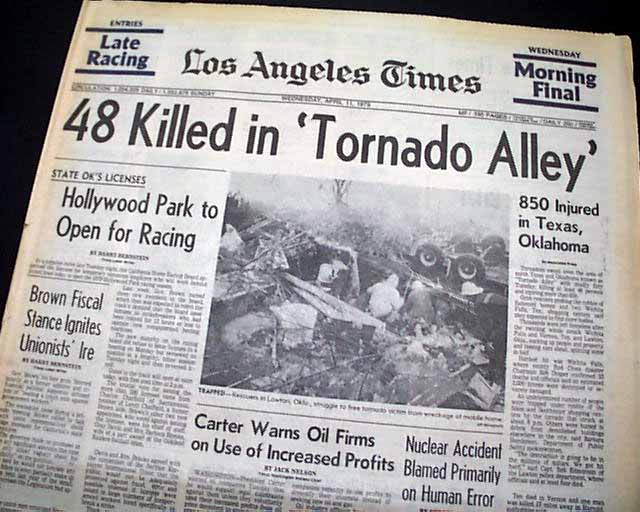
LOS ANGELES TIMES, April 11, 1979
- Wichita Falls, Texas F4 tornado
- Red River Valley tornado outbreak
- "Terrible Tuesday" disaster
The front page has a banner
...