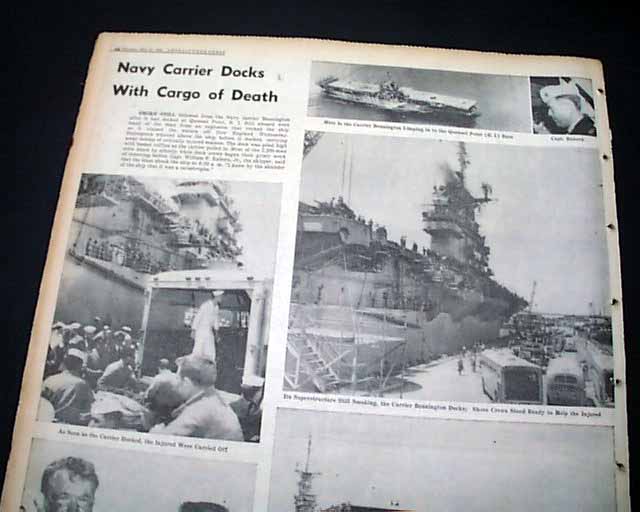
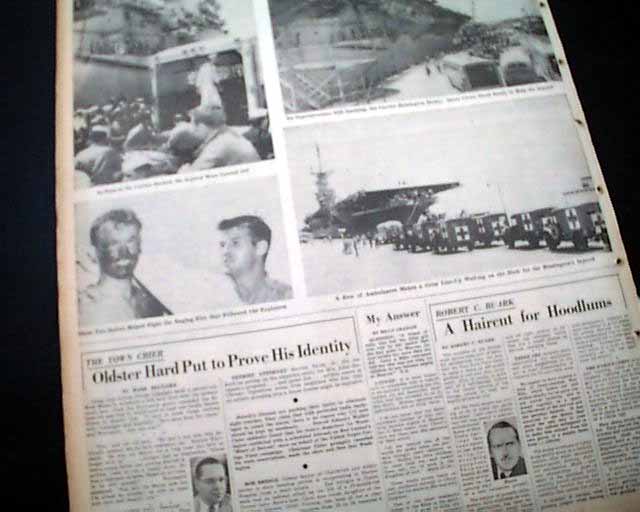
1954 USS Bennington explosion disaster...
Item # 726979
·
THE DETROIT FREE PRESS, May 27, 1954
* USS Bennington aircraft carrier explosion disaster
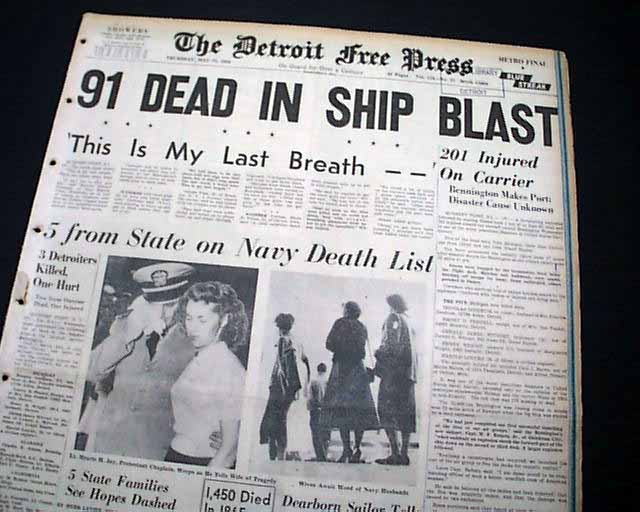
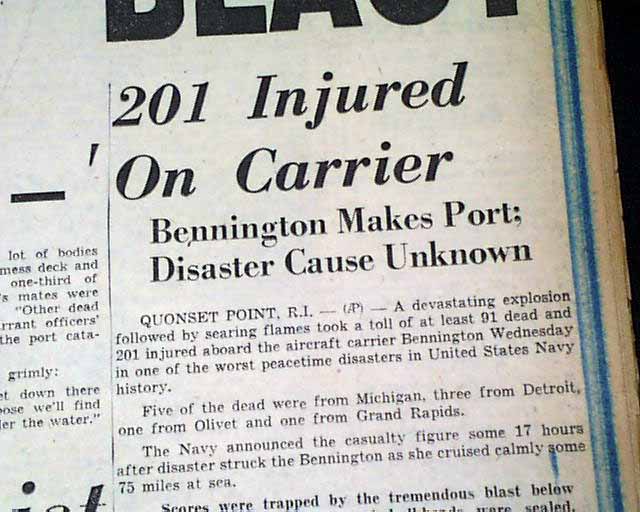
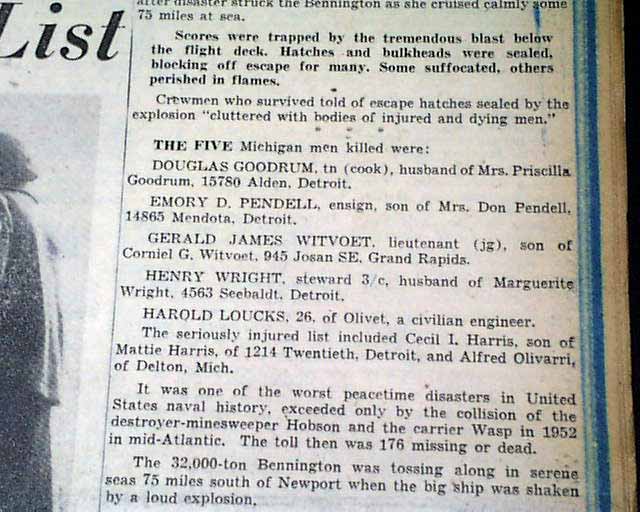
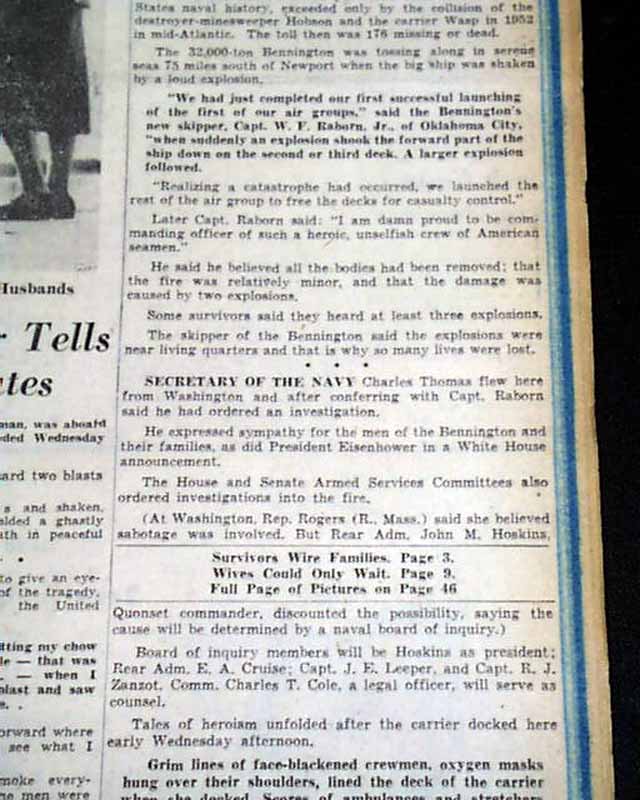
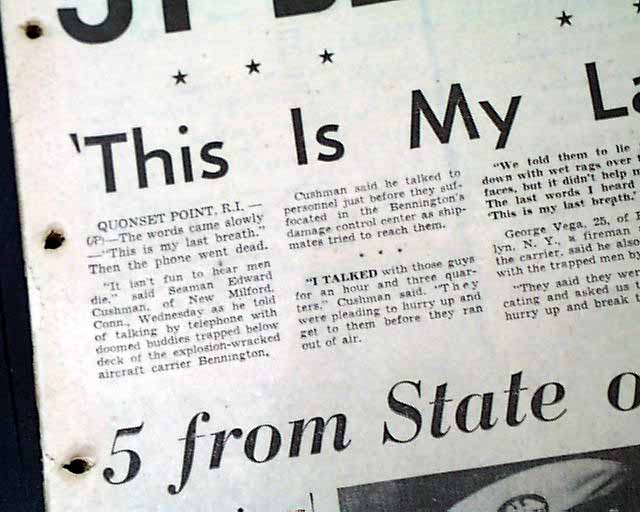
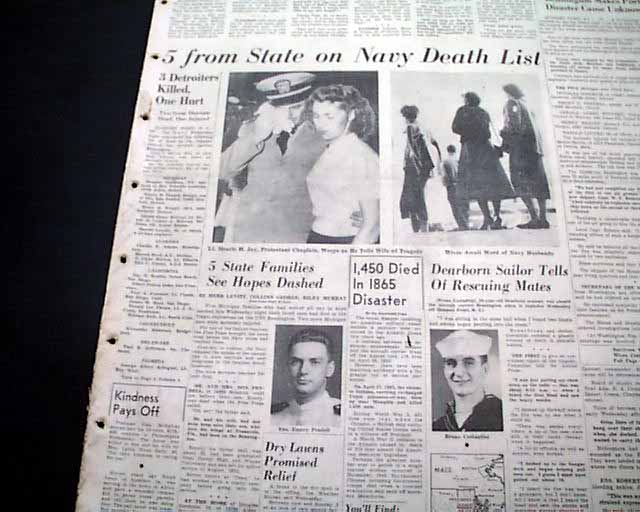
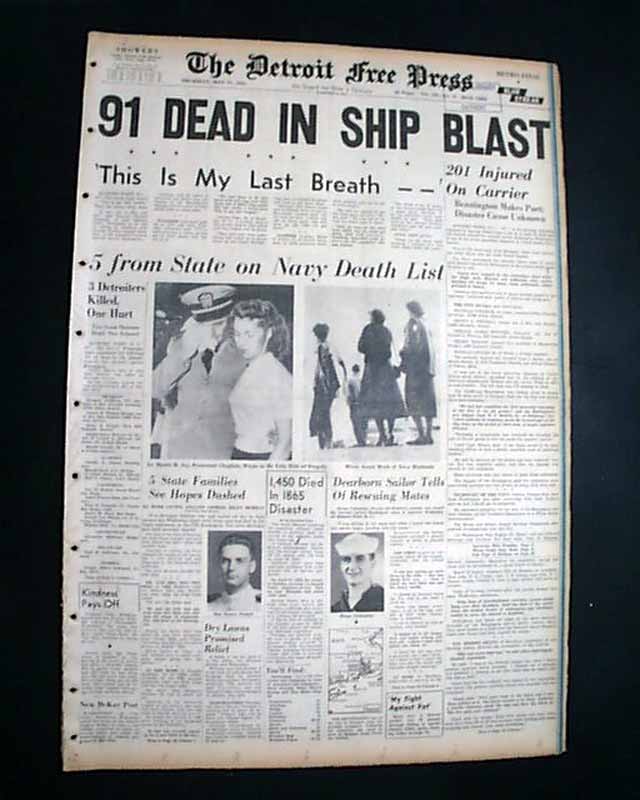
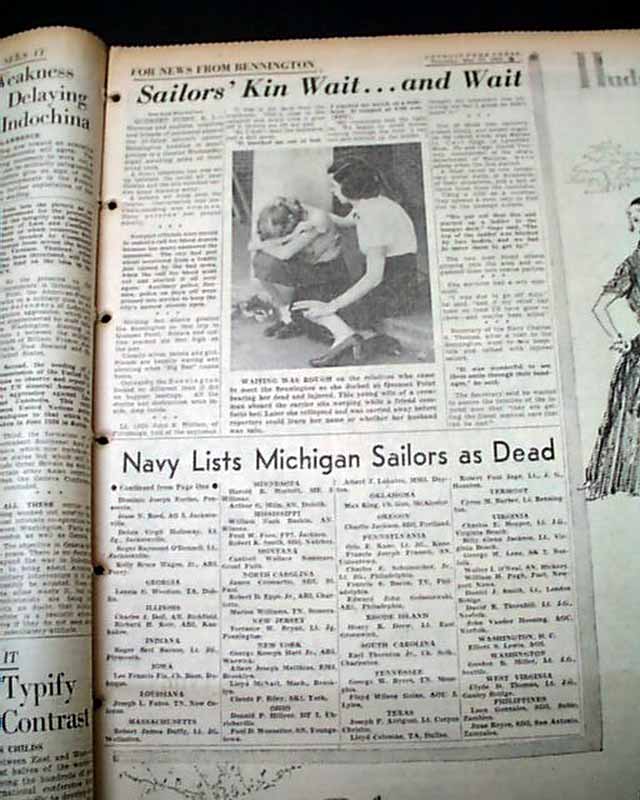
The front page has a banner headline: "91 DEAD IN SHIP BLAST" with subheads and a few related photos. (see images) More inside and on the back page.
Complete with all 46 pages, small library stamp just above the headline, small binding holes along the spine, generally nice.
Background: The 1954 USS Bennington (CVA-20) explosion stands as one of the most devastating peacetime disasters in United States Naval history, serving as the critical catalyst that fundamentally revolutionized aircraft carrier safety and technology. On May 26, 1954, while conducting routine aircraft launches off the coast of Rhode Island, a catastrophic failure occurred when highly pressurized hydraulic fluid leaked from the port catapult system, vaporized into an explosive mist, and ignited. The resulting 6:11 AM blast and subsequent secondary explosions ripped through the forward section of the ship, instantly wiping out the primary Damage Control Unit, shattering living quarters, and igniting a raging four-hour fire. Despite heroic crew efforts that saved the ship and allowed it to limp back to Quonset Point under its own power, the tragedy resulted in 103 fatalities and over 200 severe injuries. The historical significance of this disaster lies in its immediate, sweeping impact on naval engineering: the Naval Court of Inquiry's findings forced the U.S. Navy to completely abandon hazardous hydraulic launch systems fleet-wide, accelerating a permanent, global transition to safer steam-driven catapults and redesigned fire-suppression protocols that still protect naval aviators and crew members today.
* USS Bennington aircraft carrier explosion disaster
The front page has a banner headline: "91 DEAD IN SHIP BLAST" with subheads and a few related photos. (see images) More inside and on the back page.
Complete with all 46 pages, small library stamp just above the headline, small binding holes along the spine, generally nice.
Background: The 1954 USS Bennington (CVA-20) explosion stands as one of the most devastating peacetime disasters in United States Naval history, serving as the critical catalyst that fundamentally revolutionized aircraft carrier safety and technology. On May 26, 1954, while conducting routine aircraft launches off the coast of Rhode Island, a catastrophic failure occurred when highly pressurized hydraulic fluid leaked from the port catapult system, vaporized into an explosive mist, and ignited. The resulting 6:11 AM blast and subsequent secondary explosions ripped through the forward section of the ship, instantly wiping out the primary Damage Control Unit, shattering living quarters, and igniting a raging four-hour fire. Despite heroic crew efforts that saved the ship and allowed it to limp back to Quonset Point under its own power, the tragedy resulted in 103 fatalities and over 200 severe injuries. The historical significance of this disaster lies in its immediate, sweeping impact on naval engineering: the Naval Court of Inquiry's findings forced the U.S. Navy to completely abandon hazardous hydraulic launch systems fleet-wide, accelerating a permanent, global transition to safer steam-driven catapults and redesigned fire-suppression protocols that still protect naval aviators and crew members today.
Category: The 20th Century
Price
$67
100% Authentic: Original printing, never a reproduction.
Other issues you may like
§ related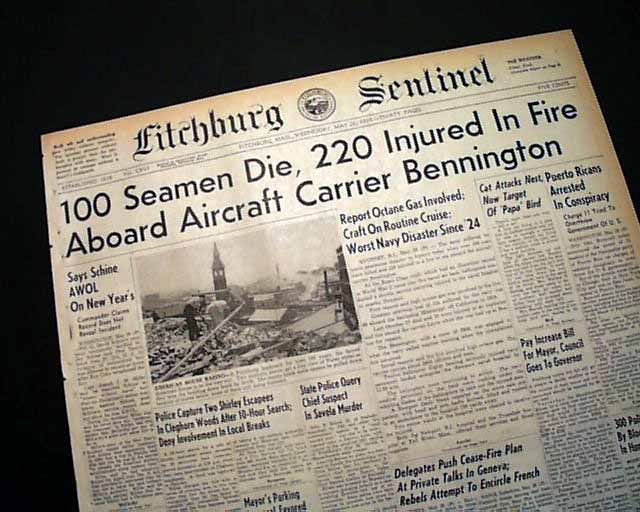
USS Bennington explosion disaster in 1954...
FITCHBURG SENTINEL, Massachusetts, May 26, 1954
* USS Bennington aircraft carrier
* Explosion disaster
This 30 page newspaper has a nice two...
* USS Bennington aircraft carrier
* Explosion disaster
This 30 page newspaper has a nice two...
May 1954
$42
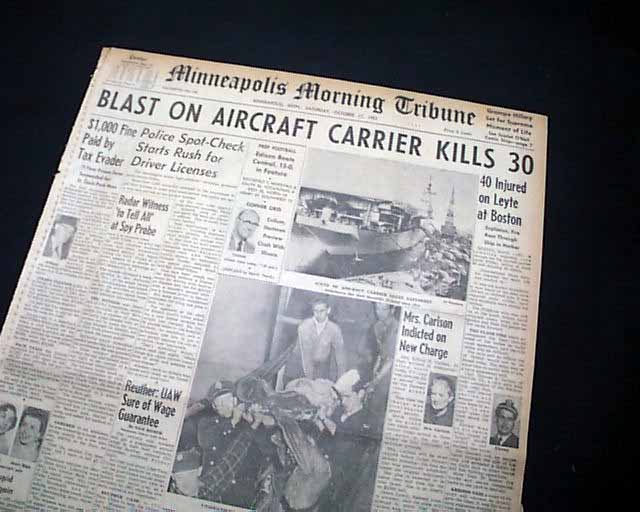
1953 USS Leyte aircraft carrier explosion.....
MINNEAPOLIS MORNING TRIBUNE, October 17, 1953
* USS Leyte explosion fire disaster
* United States Navy Aircraft Carrier
The front page has a banner...
* USS Leyte explosion fire disaster
* United States Navy Aircraft Carrier
The front page has a banner...
Oct 1953
$52
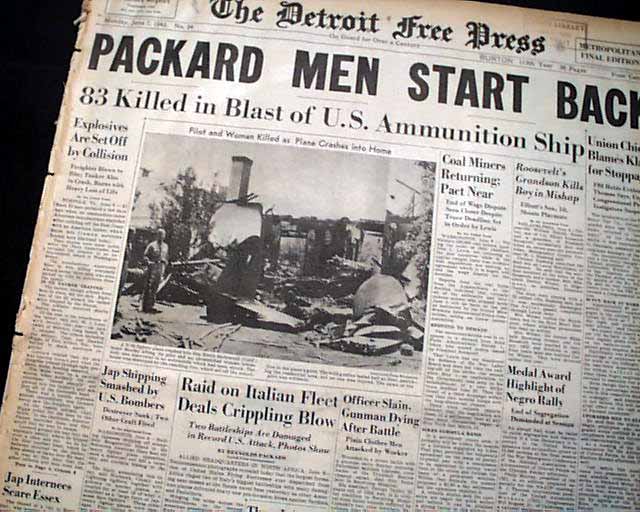
1943 ammunition ship disaster...
THE DETROIT FREE PRESS, Michigan, June 7, 1943
* Norfolk, Virginia
* World War II - WWII
This 26 page newspaper has a seven column headline on the...
* Norfolk, Virginia
* World War II - WWII
This 26 page newspaper has a seven column headline on the...
Jun 1943
$34
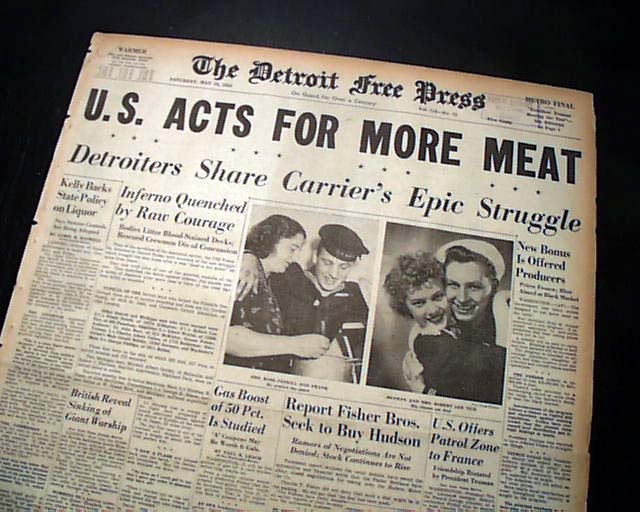
1945 USS Franklin aircraft carrier disaster...
THE DETROIT FREE PRESS. May 19, 1945
* USS Franklin (CV-13) disaster
* Japanese dive bomber attack
* United States Navy aircraft carrier
The front...
* USS Franklin (CV-13) disaster
* Japanese dive bomber attack
* United States Navy aircraft carrier
The front...
May 1945
$42