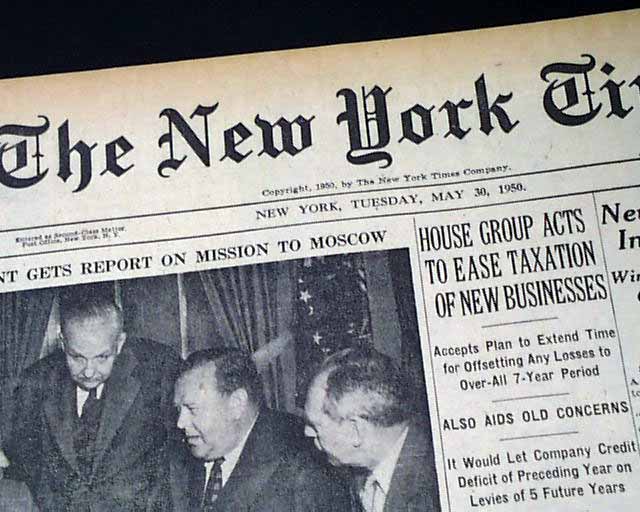
THE NEW YORK TIMES, May 30, 1950
- "Hollywood Ten" U.S. Supreme Court ruling
- Left-wing movie screenwriters and directors
- The Collapse of the First Amendment Defense
- Judicial Deference to HUAC - Legalization of the Blacklist
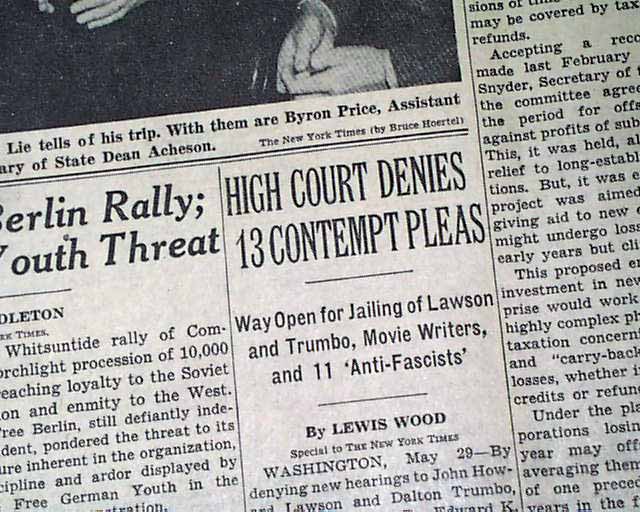
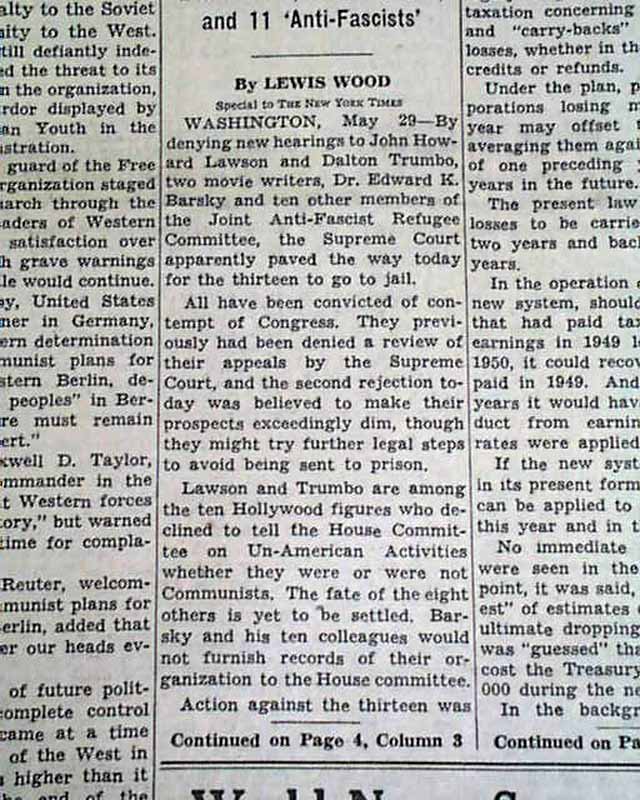
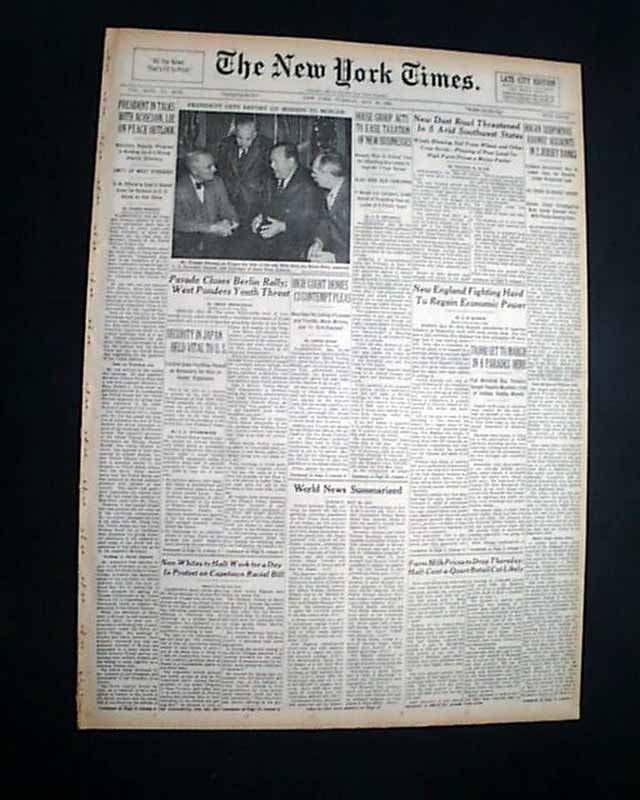
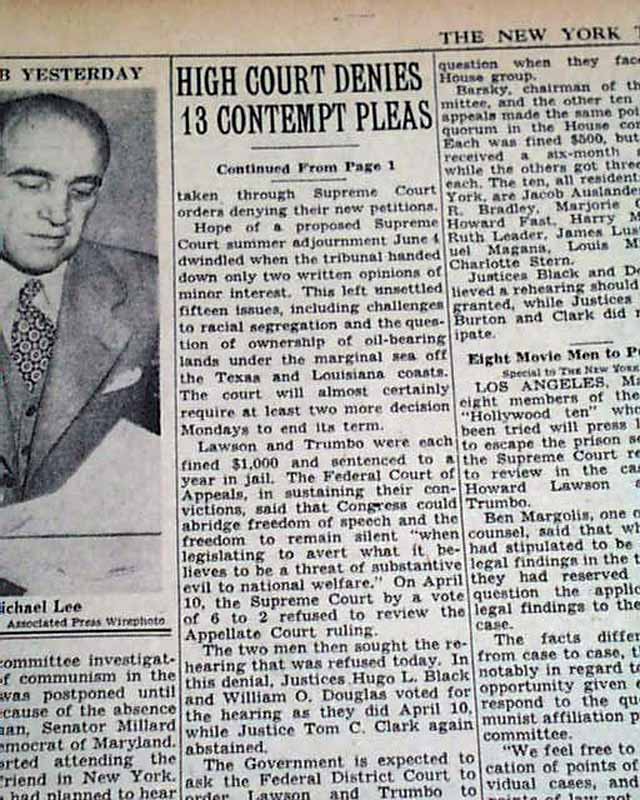
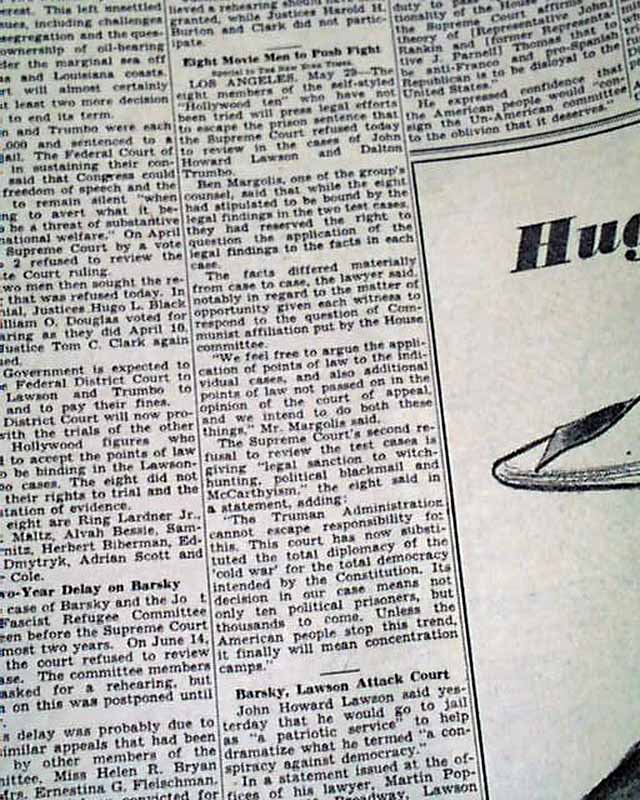
The front page has a one column heading: "HIGH COURT DENIES 13 CONTEMPT PLEAS" with subhead. (see images)
Complete with 32 pages, light toning at the margins, nice condition.
Background: The Supreme Court’s May 29, 1950, refusal to hear the appeals of the Hollywood Ten served as the definitive legal catalyst for the Great American Blacklist, effectively stripping the First Amendment of its power to protect citizens from political inquisitions. By allowing the contempt of Congress convictions of John Howard Lawson and Dalton Trumbo to stand, the judiciary signaled that it would not intervene against the House Un-American Activities Committee (HUAC), thereby emboldening the "Red Scare" tactics of the era. This decision forced a fundamental shift in legal strategy for future witnesses, who were compelled to rely on the Fifth Amendment to avoid imprisonment, a move that nonetheless carried the social stigma of implied guilt and led to the professional ruin of hundreds of artists. Historically, this event represents a period of judicial deference to legislative overreach, creating a climate of fear that suppressed creative expression and enforced political conformity in the American film industry for over a decade.
Other issues you may like
§ related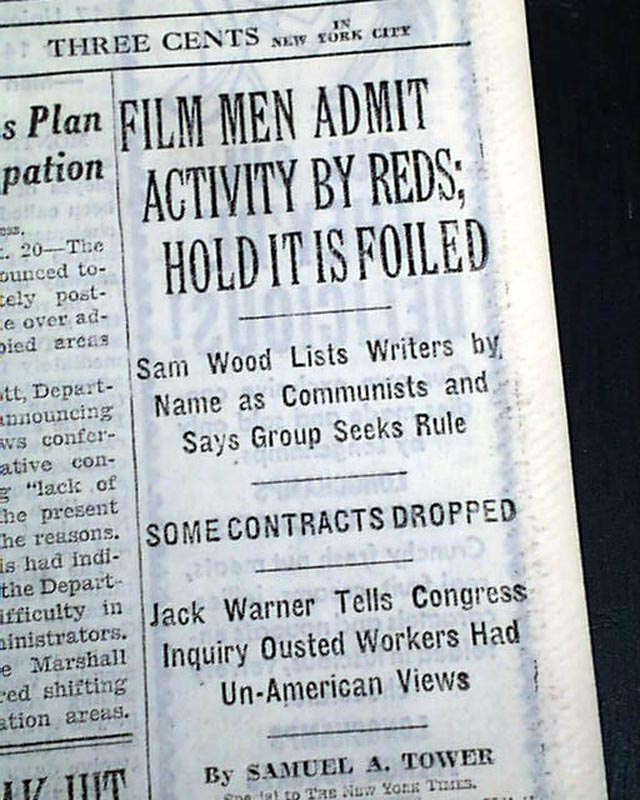
THE NEW YORK TIMES, October 23, 1947
- Hollywood under scruntiy
- Congress inquiry
- Communists - Reds scare ?
The top of the front page has a one column heading:
...
NEW YORK TIMES, Oct. 15, 1949
- Smith Act trials of Communist Party leaders
- Socialists - socialism - guilty verdict (1st report)
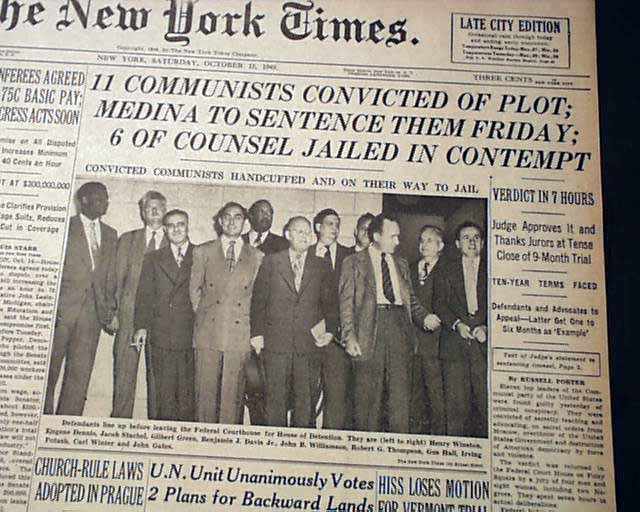
The top of the front page has
...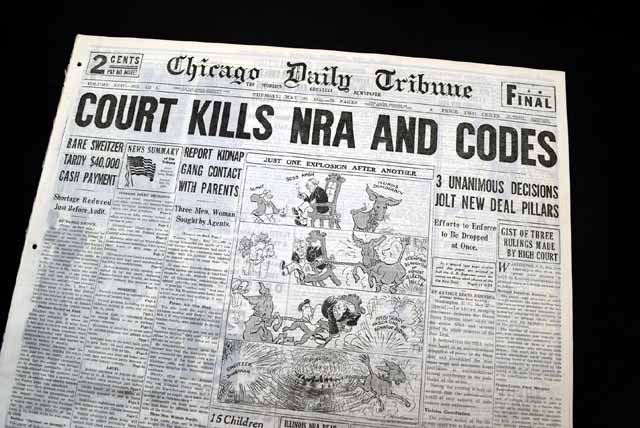
CHICAGO DAILY TRIBUNE, May 28, 1935
- Schechter Poultry Corp. v. United States
- re. Franklin D. Roosevelt's New Deal
- Supreme Court decision (1st report)
Front
...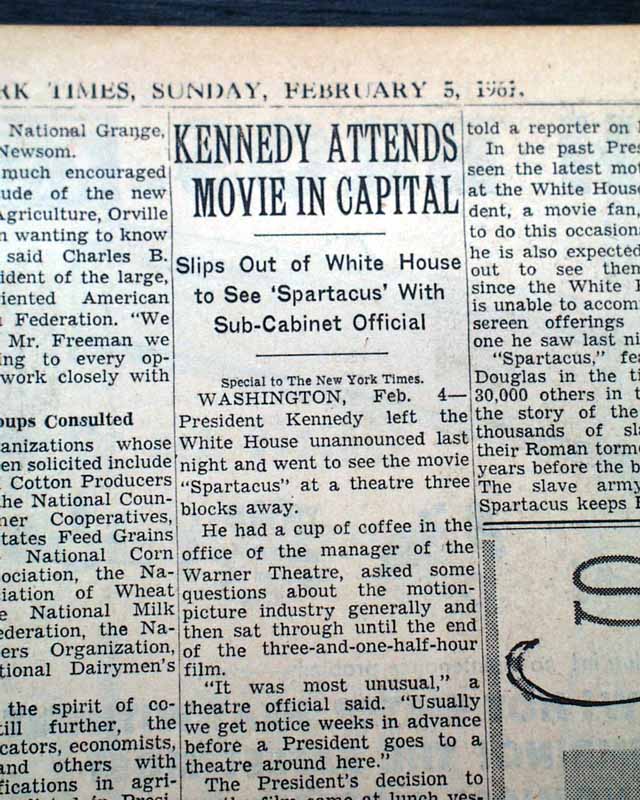
THE NEW YORK TIMES, Feb. 5, 1961 Page 39 has an "under-the-radar" report telling of JFK's attendance of the movie "Spartacus" at a local Washington, D.C.
...