
Life of planet Mars ?...
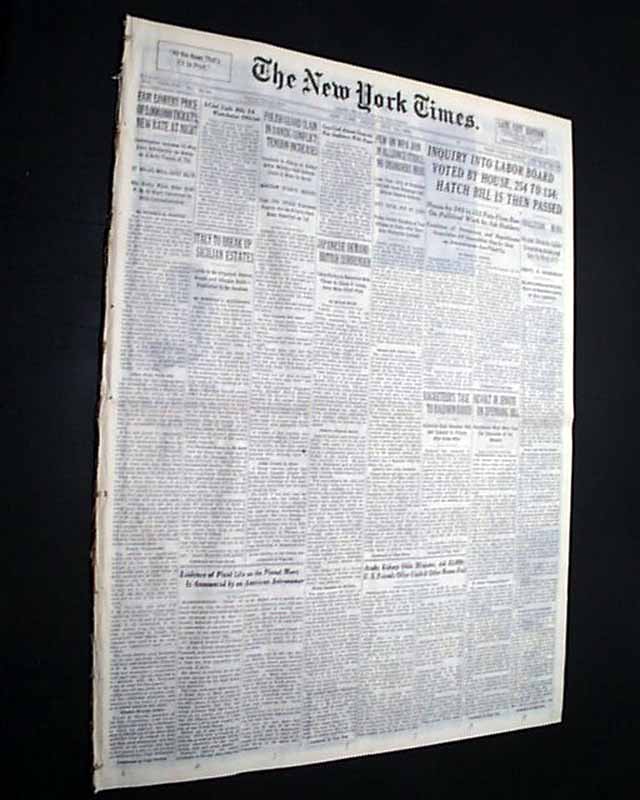
THE NEW YORK TIMES, July 21, 1939
- Plant life on planet MARS ?
- The Slipher expedition
- Pre-Space Age Paradigm
- Scientific Misinterpretation
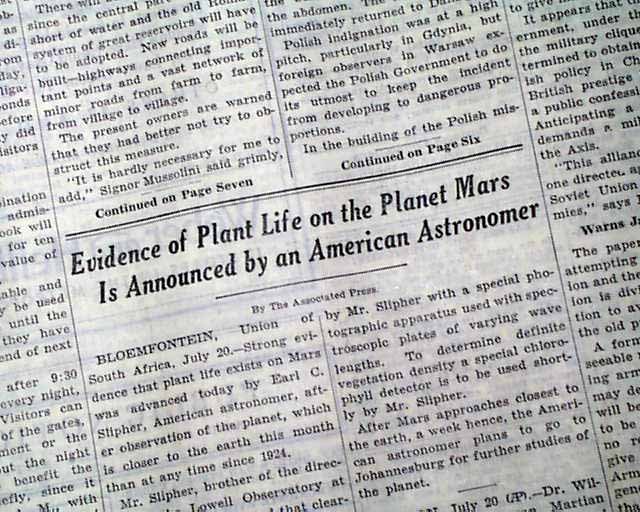
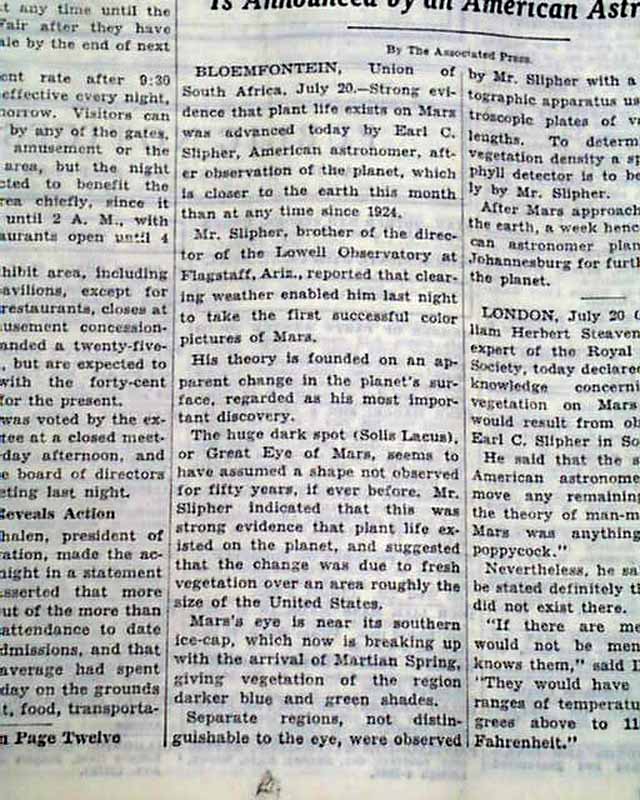
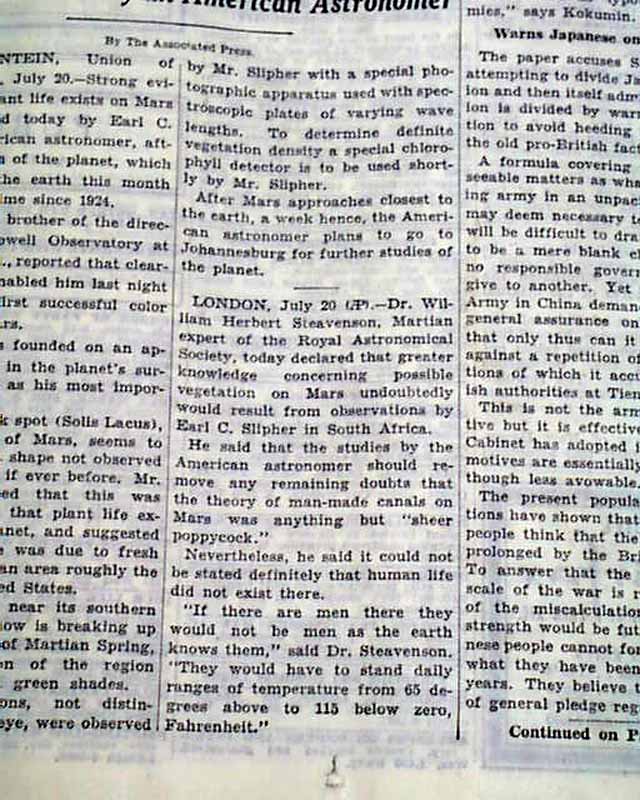
Near the bottom of the page is a two column heading: "Evidence of Plant Life on the Planet Mars Is Announced by an American Astronomer" (see images)
Complete with 36 pages, rag edition in very nice condition.
Background: The July 20, 1939, observations from the Lamont-Hussey Observatory in Bloemfontein, South Africa, represent a pivotal "high-water mark" in the history of observational astronomy, marking the final major era before space probes shifted our understanding of the Red Planet. Led by Earl C. Slipher during a rare favorable opposition where Mars was only 36 million miles from Earth, the expedition utilized the southern hemisphere's superior atmospheric clarity to produce over 8,000 photographs, which included the most detailed color images of the Martian surface to date. The event's historical significance lies in the global sensation it triggered; the observed seasonal darkening of the Martian "maria" was widely reported by the press and many scientists as definitive proof of primitive vegetation responding to melting polar caps. This announcement fueled the prevailing "Canal Theory" and late-Victorian ideas of a living Mars, cementing the planet in the public imagination as a biological world. However, these findings ultimately served as a historical "false dawn," as later missions like Mariner 4 in 1965 revealed the dark patches were not blooming lichens but basaltic rock and shifting dust, making the 1939 South African expedition a fascinating study in how scientific interpretation is often shaped by the limits of contemporary technology and the deep-seated human desire to find life among the stars.
Other issues you may like
§ related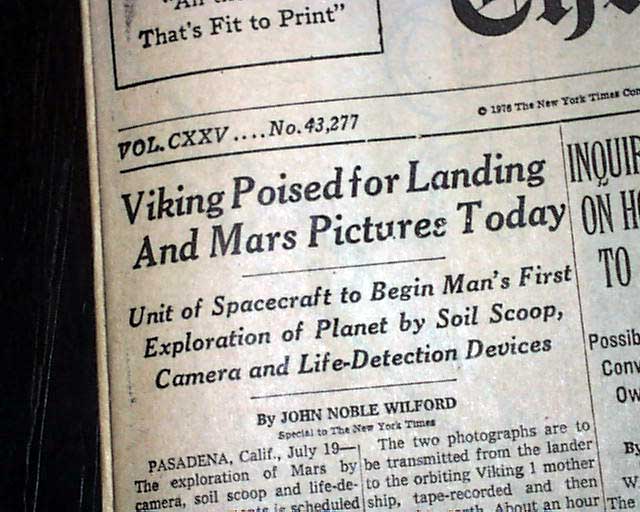
THE NEW YORK TIMES, July 20, 1976
- Viking 1 landing on Mars - Nasa (day of)
- 1st spacecraft to land on the planet
The top of the front page has a two column
...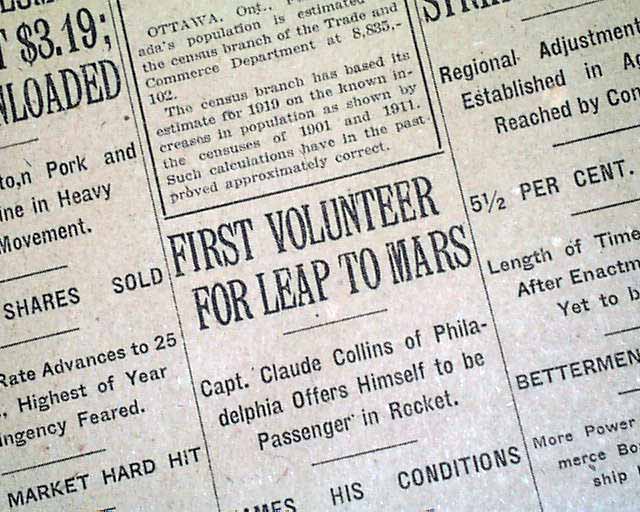
THE NEW YORK TIMES, February 5, 1920
- Professor Robert Goddard - Early rocket experiments
- Flight to Mars?
The front page has a very bizarre report concerning
...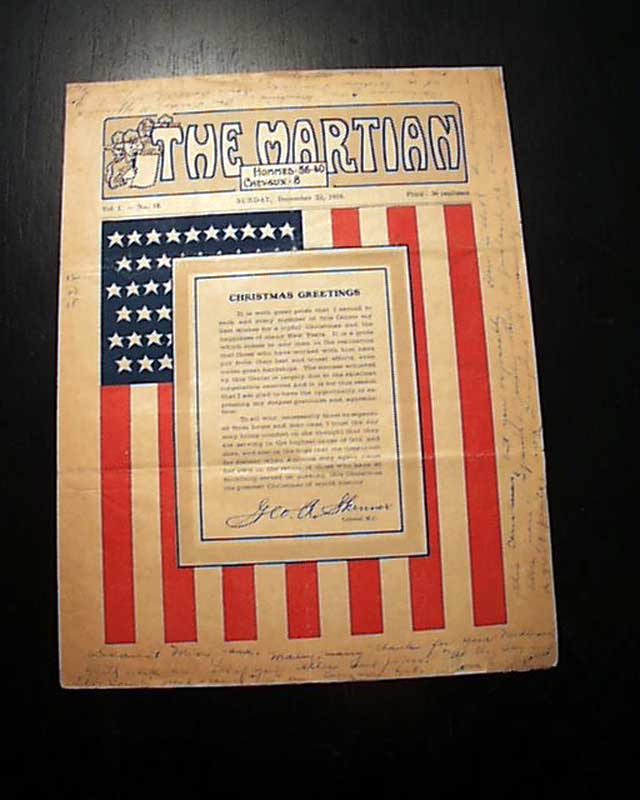
THE MARTIAN, France, Dec. 22, 1918 This is a little 8 page newspaper "Published by Organizations at Hospital Center, A.P.O. No. 780 American Expeditionary
...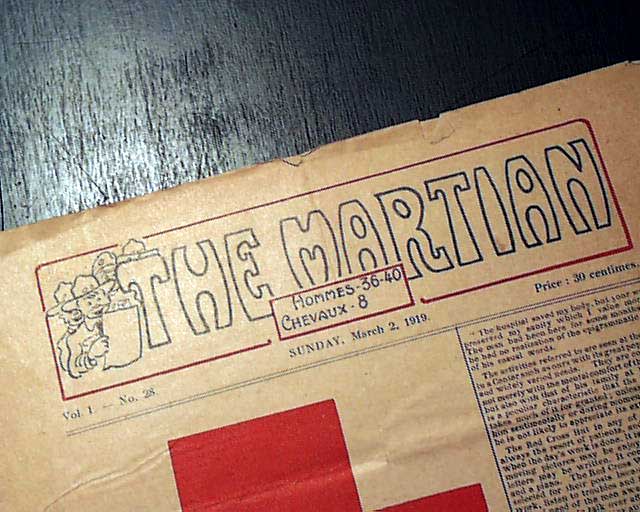
THE MARTIAN, France, March 2, 1919
- Rare U.S. military camp publication
- World War I - WWI - American Red Cross
This is a little 6 page, tri-fold newspaper
...