1926 push to end prohibition...
CHICAGO DAILY TRIBUNE, April 7, 1926
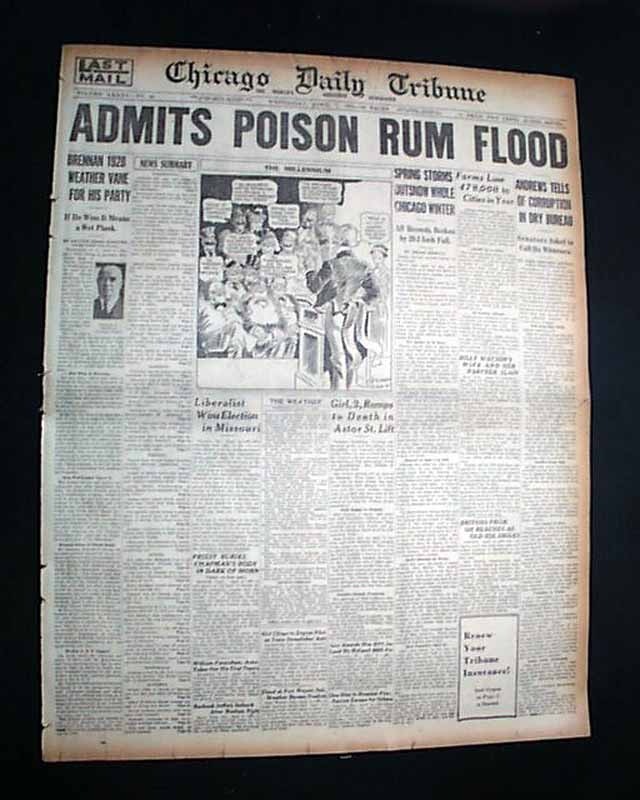
- During United States Prohibition
- The "Chemist's War" inquiry
- U.S. government deliberate poisoning
- Alcohol to deter illegal drinking
- U.S. Senate Judiciary Committee
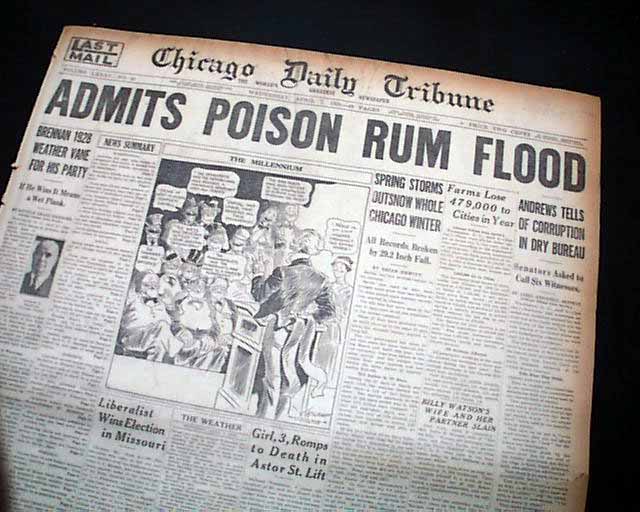
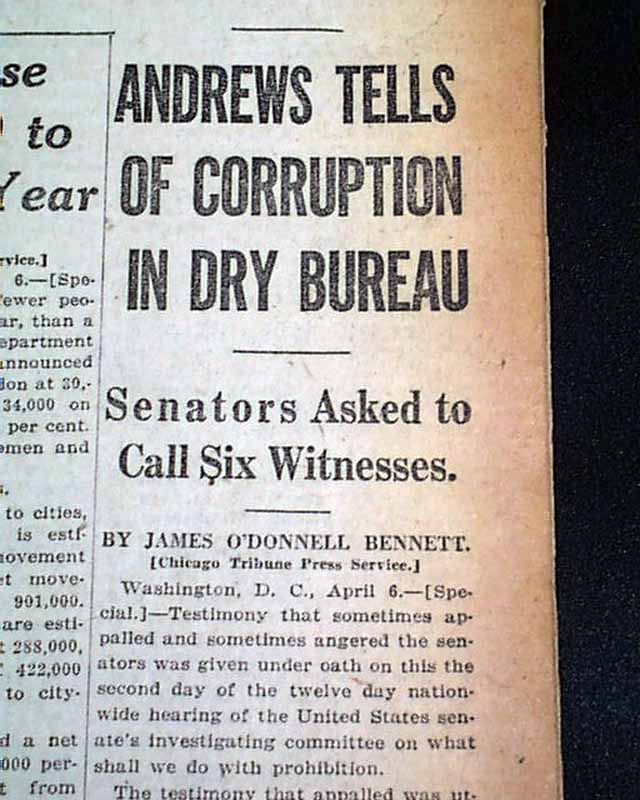
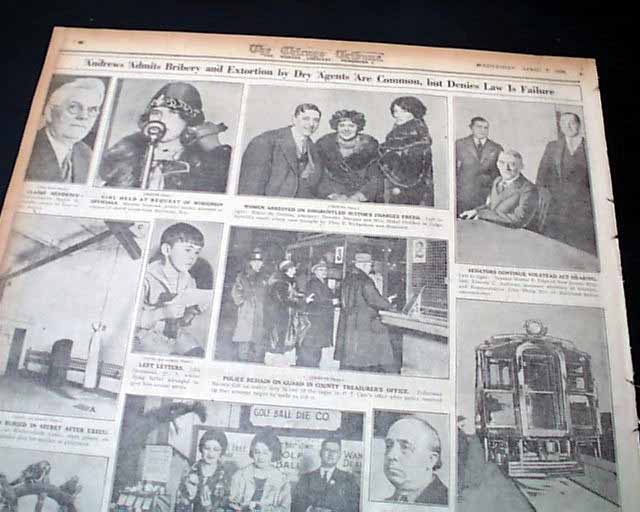
The front page has a nice banner headline: "ADMITS POISON RUM FLOOD" with subheads. (see images) A few related photos are on the back page. Nice for display for any tavern or home bar.
When it comes to gangsters, organized crime, and the nefarious activities born out of the Prohibition and Great Depression eras, no city is more in the forefront of our minds than Chicago - and what better newspaper can be found than the Chicago Tribune, self-proclaimed to be "The World's Greatest Newspaper" - attributed in part to its dramatic, banner headlines! Whether hanging on your wall or part of an ongoing collection, these events are sure to capture the flavor of this infamous period in American history.
Complete with 40 pages, light toning and a some wear at the margins, generally good.
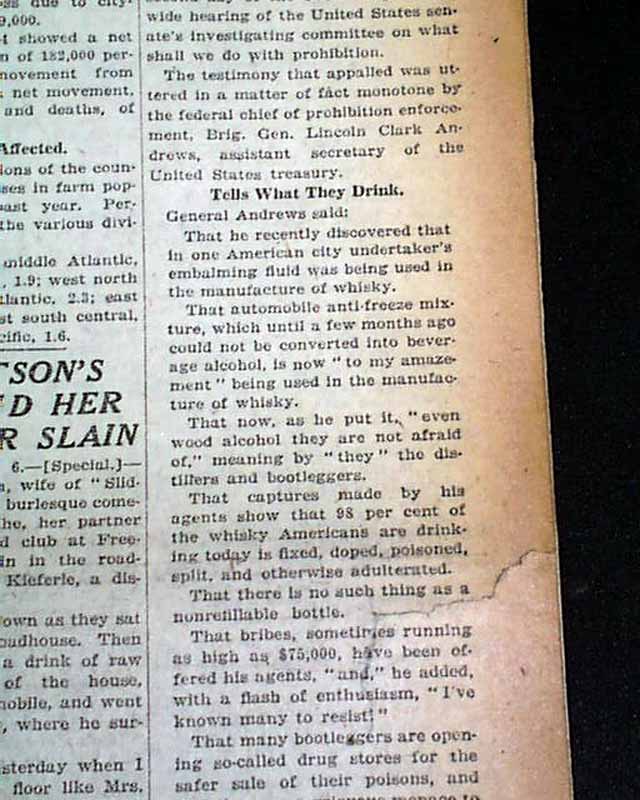
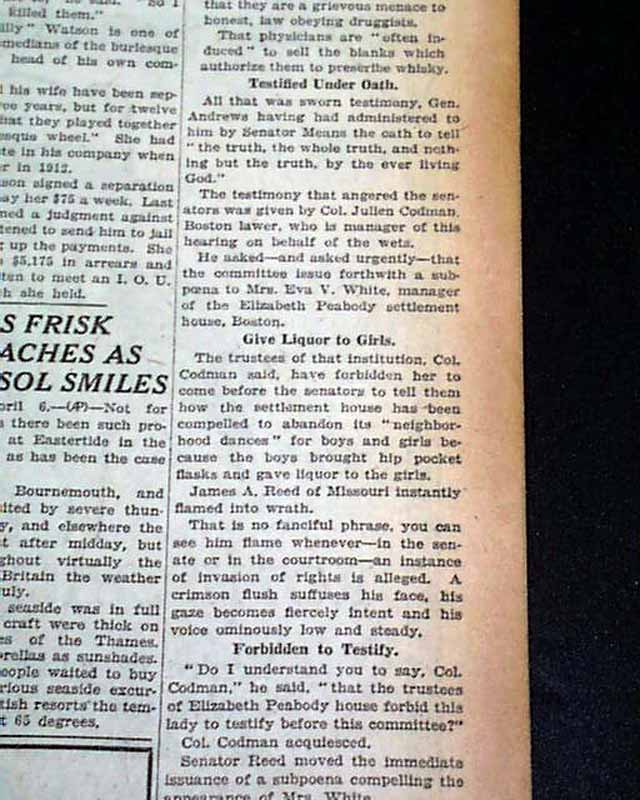
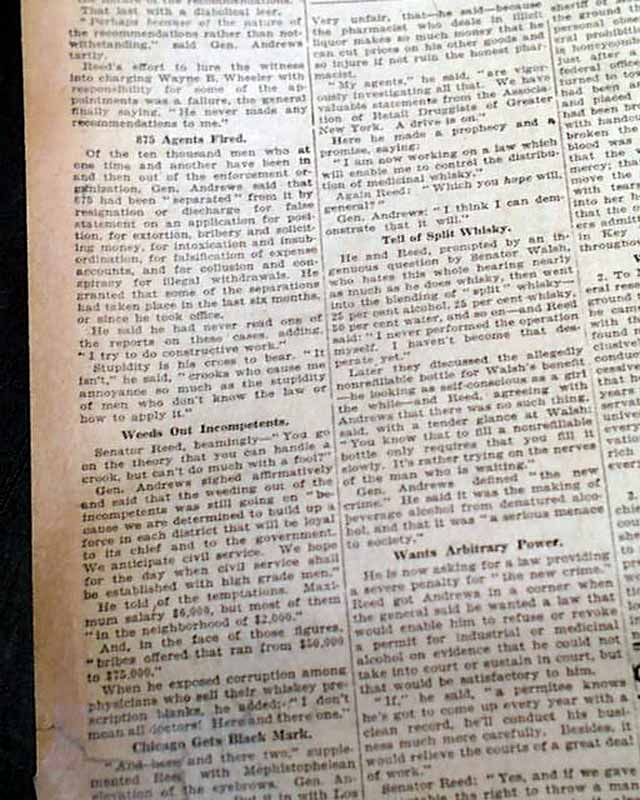
background: The Senate Judiciary Committee hearings that commenced on April 6, 1926, served as a grim indictment of the U.S. government’s "Chemist’s War," where officials like Assistant Secretary of the Treasury Lincoln C. Andrews defended the intentional poisoning of industrial alcohol as a necessary deterrent to bootlegging. Throughout the testimony, it was revealed that the Treasury Department had mandated the use of lethal denaturants—including wood alcohol (methanol), benzene, and mercury salts—to ensure that diverted spirits would be "unfit for human consumption," a policy that transformed a regulatory measure into a public health catastrophe. While Prohibitionists like Wayne Wheeler argued that the resulting deaths were the fault of the drinkers rather than the state, critics like Senator James A. Reed used the testimony to expose the moral bankruptcy of a government willing to utilize chemical warfare against its own citizens. This pivotal moment in 1926 highlighted a horrifying escalation in enforcement; rather than simply seizing illegal liquor, the government was effectively booby-trapping the nation’s alcohol supply, leading to thousands of cases of blindness, paralysis, and death that would only intensify through the remainder of the decade.
Other issues you may like
§ related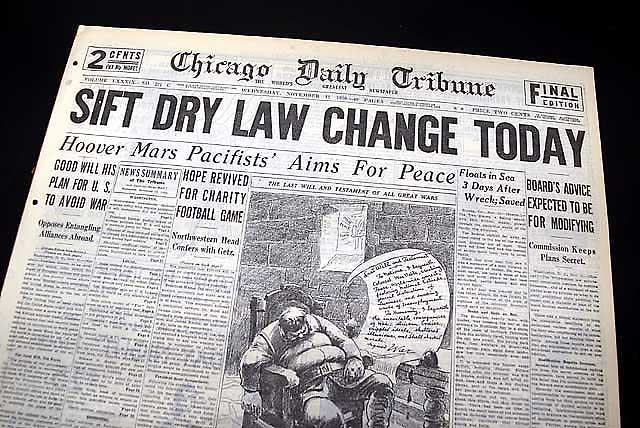
CHICAGO DAILY TRIBUNE, Nov. 12, 1930
- Prohibition is a failure ?
- re. Eighteenth Amendment
- Nice headline for display
The front page has a banner headline: "SIFT
...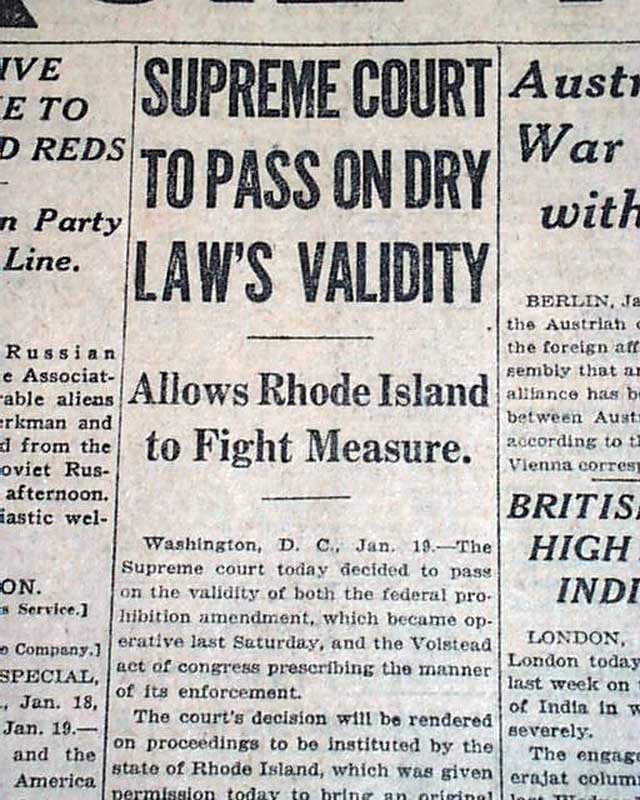
THE CHICAGO DAILY TRIBUNE, January 20, 1920.
- U.S. prohibition at the beginning
- No more beer or liquor - temperance
- From the city where crime would arise
- Prohibi
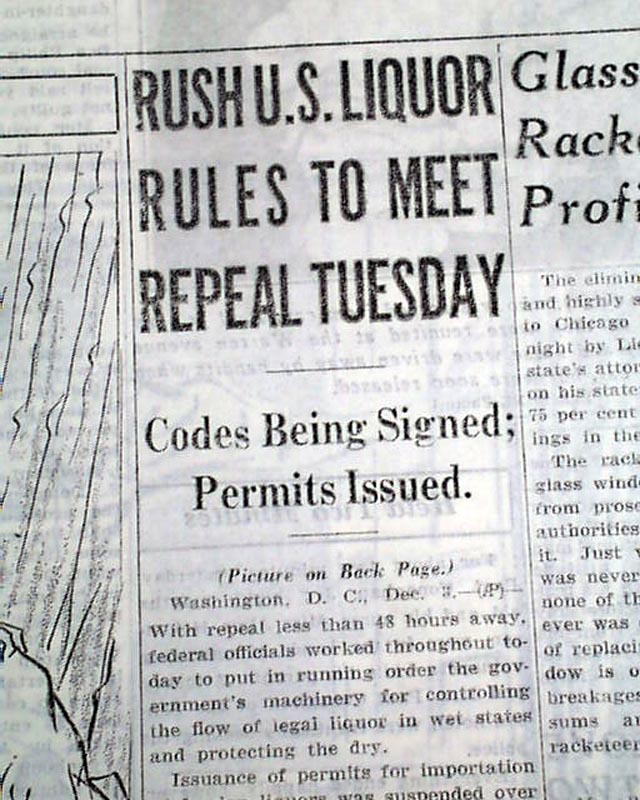
CHICAGO DAILY TRIBUNE, Dec. 4, 1933
- U.S. prohibition ending (eve)
- Liquor and beer returning
The front page has a one column heading: "RUSH U.S. LIQUOR RULES
...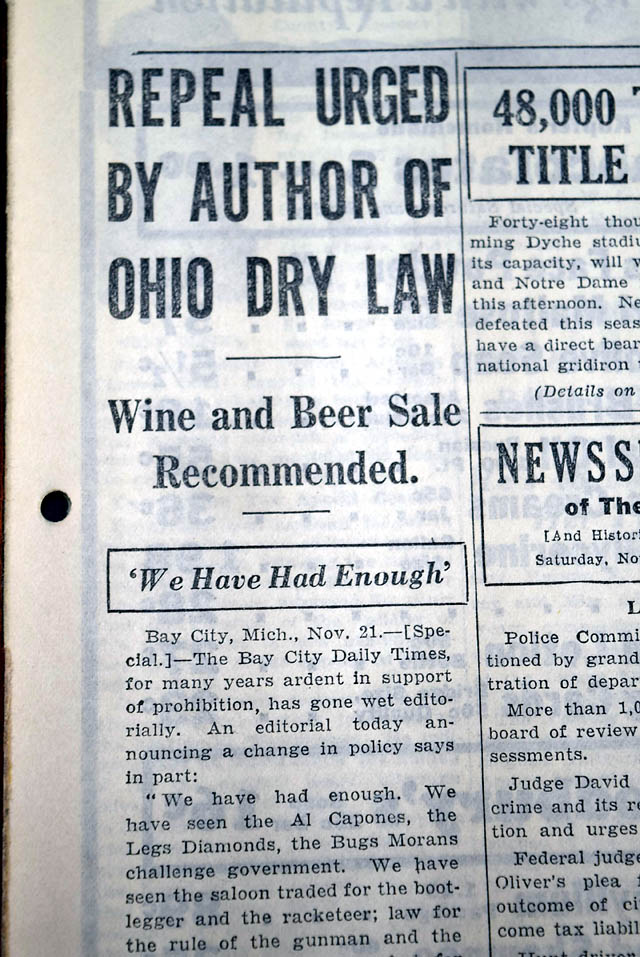
CHICAGO DAILY TRIBUNE, Nov. 22, 1930
- Anti-prohibition movement
- Wets gain majority in MI & OH
The front page has a one column heading: "REPEAL URGED BY AUTHOR
...