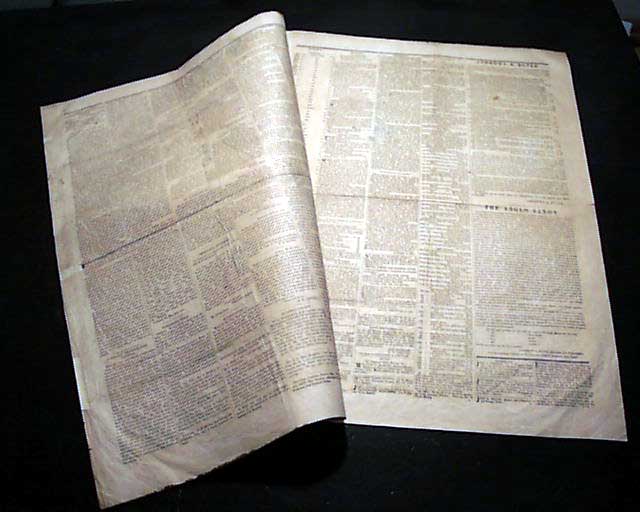
A newspaper promoting the spelling of words phonetically...
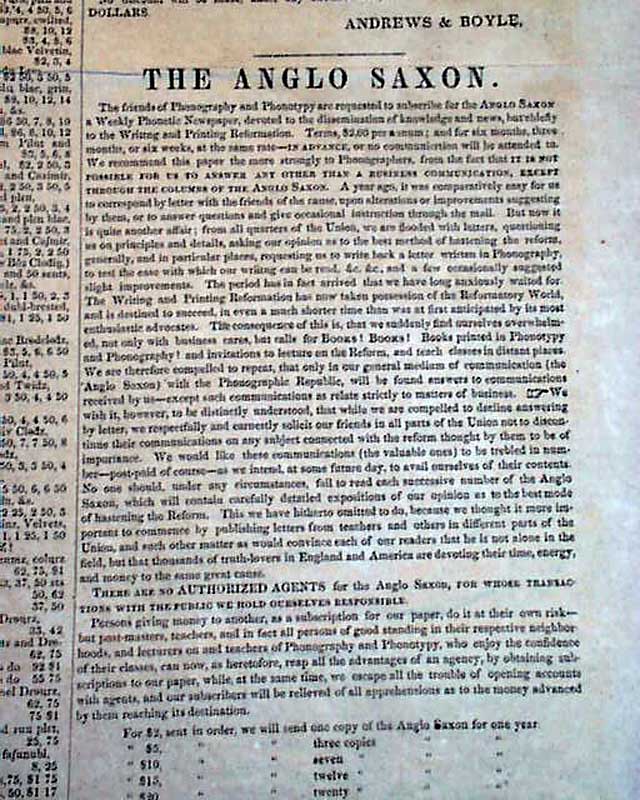
AI ANGLO SACSUN, New York, May 29, 1847
- Promoting the spelling of words phonetically
Here is one of the more fascinating newspapers that was in the private collection.
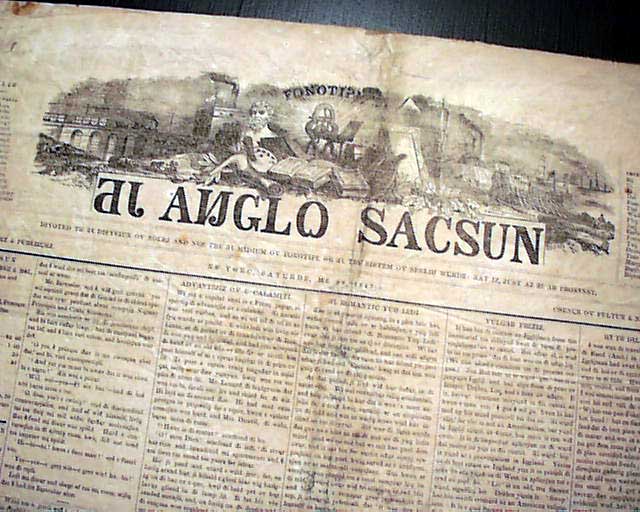
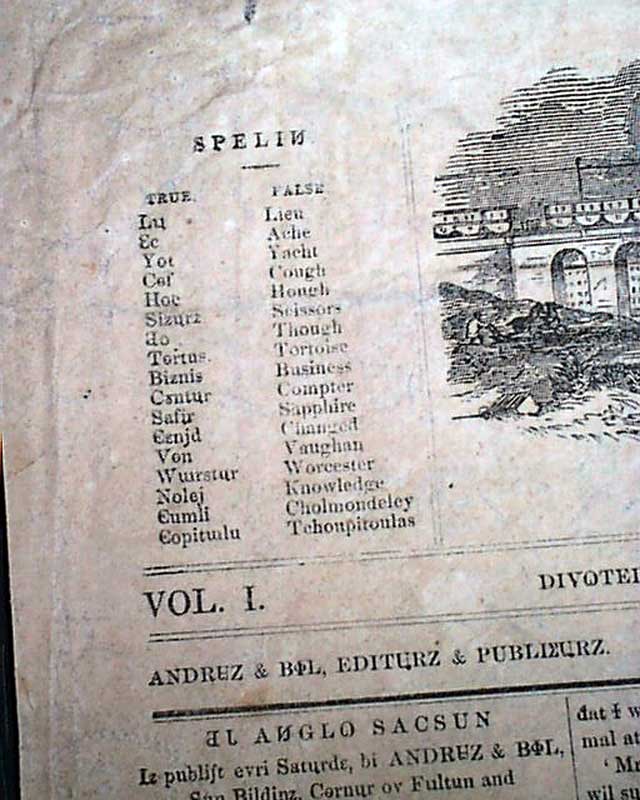
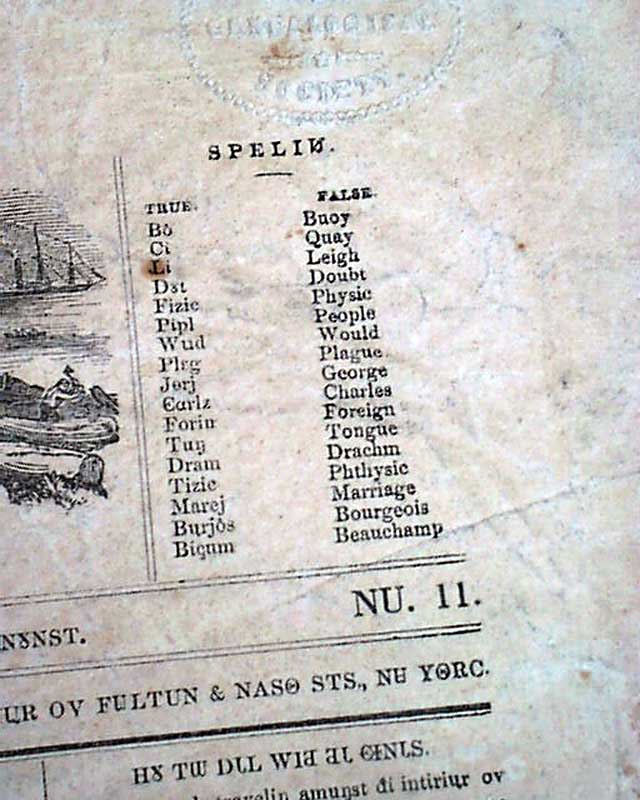
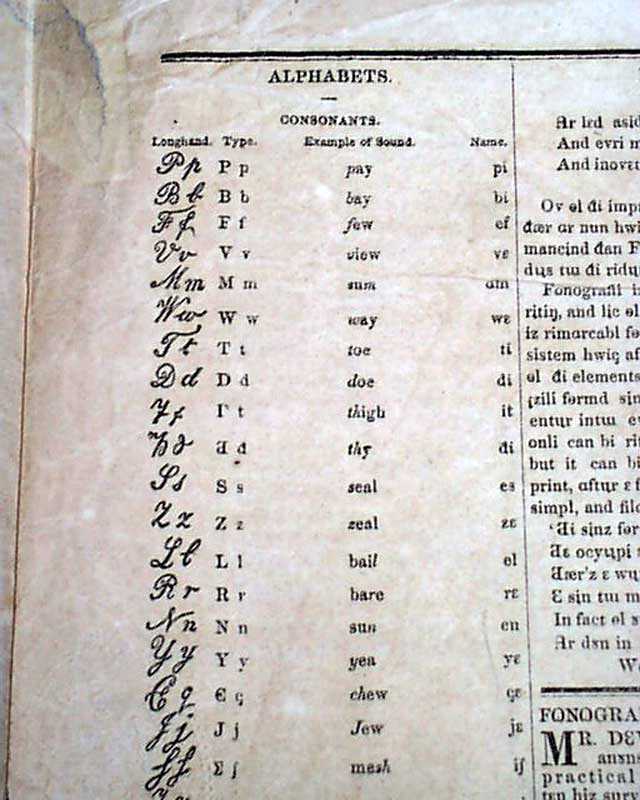
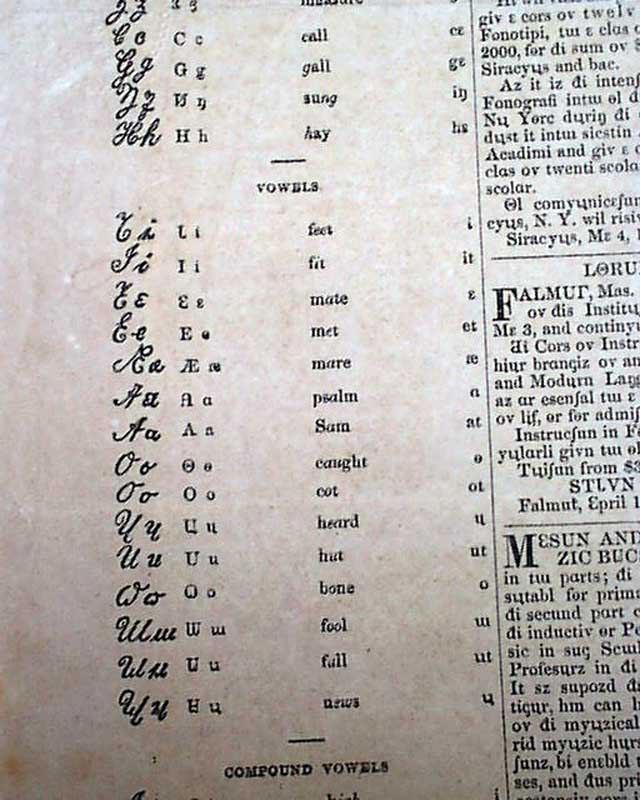
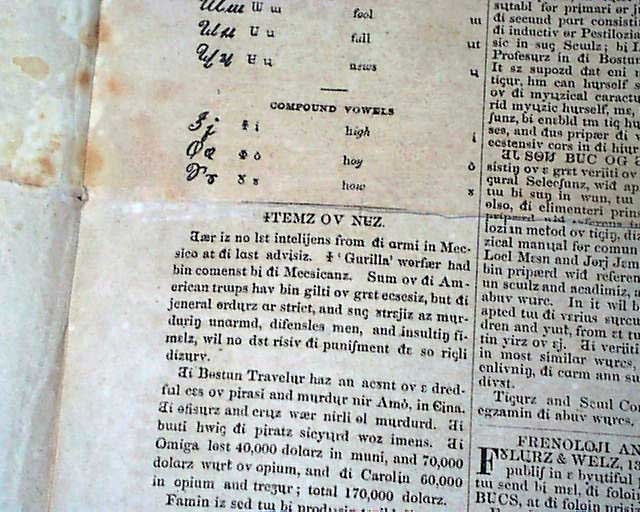
This newspaper--which is volume 1, number 11--attempted to exploit a movement to spell words phonetically, just as they sounded. So their motto in the dateline is: "Devoted Tu Ai Difyushun ov Nolej and Nuz, Tru Ai Medium of Fonotipi, or the Tru System ov Spelin Wurdz As Iz, Just Az ae are Pronnst." (difficult to translate as they use some characters not in the traditional alphabet. Their alphabet is found on page 3).
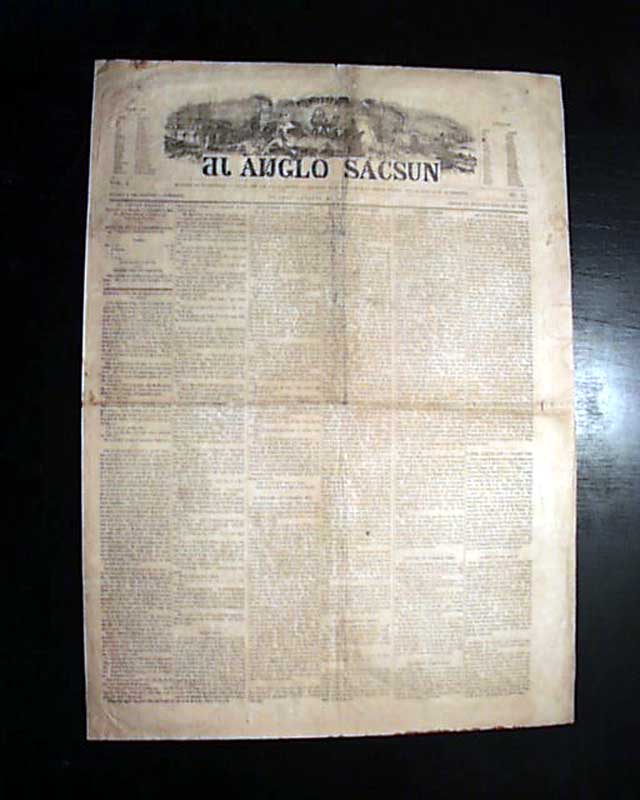
The entire issue has various articles spelled phonetically, making it difficult to read. Otherwise the layout is much like other newspapers of the era, with a very decorative masthead.
Obviously a movement which never caught on.
Four pages, folio size, never bound nor trimmed, some light dirtiness and very mild wear, generally good condition.
Background: The Anglo Sacsun newspaper represents a pivotal, albeit short-lived, chapter in 19th-century transatlantic linguistic reform, epitomizing the idealistic crusade to democratize literacy by synchronizing written text with spoken English via Isaac Pitman’s "Phonotypy" system. Published during an era of rapid American industrialization and rising immigration, this radical experiment sought to dismantle the chaotic, elitist barriers of traditional English orthography to make education accessible to the working class and non-native speakers. While the movement ultimately collapsed due to printers' resistance to custom typefaces, fierce regional dialect disputes, and the sheer illegibility of the text to traditionally literate citizens, this specific publishing artifact remains historically significant. It stands as a tangible, rare testament to the mid-19th-century utopian belief that societal progress and egalitarianism could be achieved through the total reconstruction of language, foreshadowing later, high-profile spelling reform efforts by figures like Theodore Roosevelt and Mark Twain.
Other issues you may like
§ related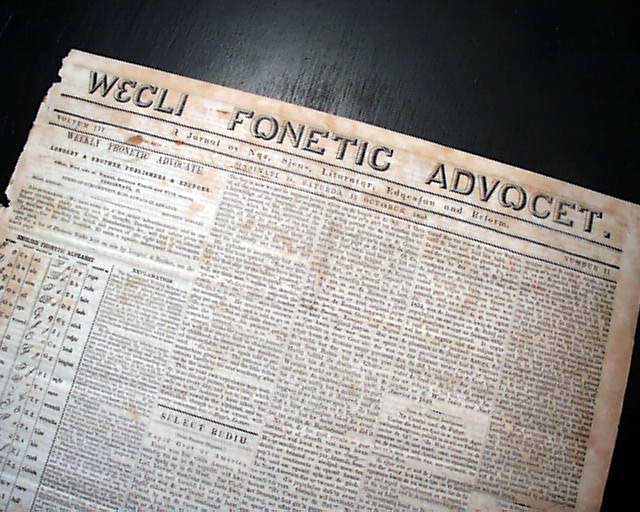
WECLI FONETIC ADVOCET, Sinsinati, O., Octobur 12, 1850
- Rare publication
[Weekly Phonetic Advocate, Cincinnati, Ohio] This is one of the more curious
...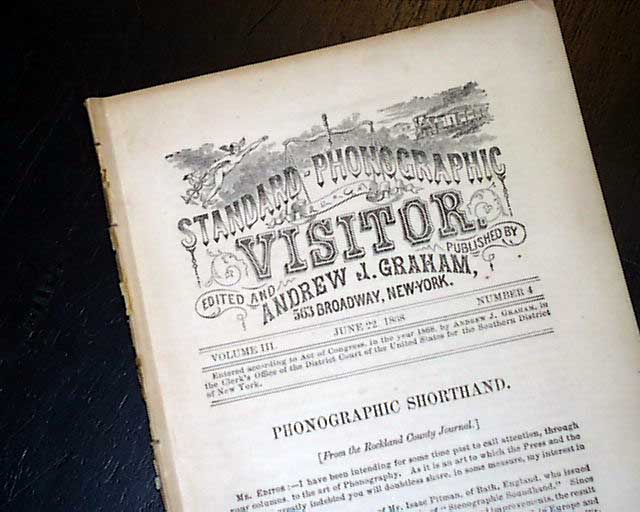
STANDARD PHONOGRAPHIC VISITOR, New York, June 22, 1868 A very curious little periodical with a very decorative masthead themed on shorthand--unusual as
...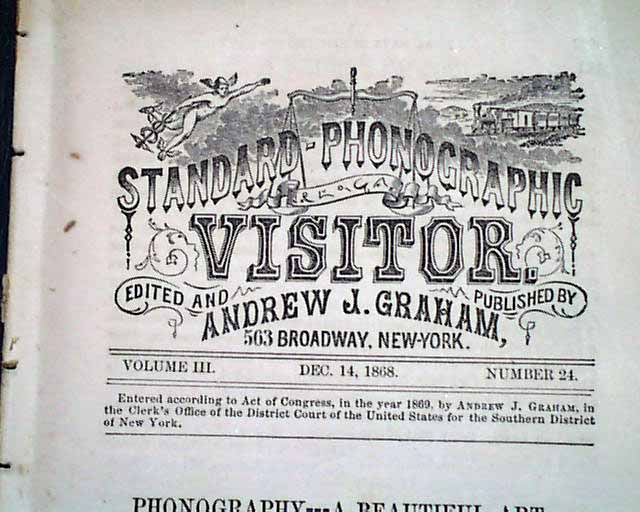
STANDARD PHONOGRAPHIC VISITOR, New York, Dec. 14, 1868 This is a very curious little periodical themed on shorthand--unusual as such. "Phonography" was
...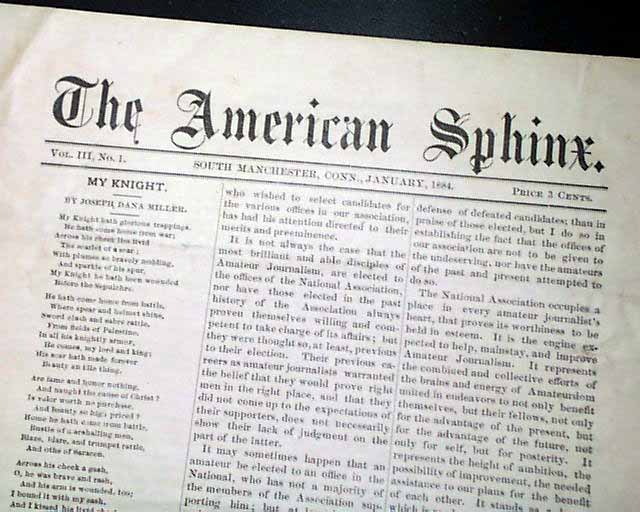
THE AMERICAN SPHINX, South Manchester, Connecticut, January, 1884
- The amateur press movement
This is an "amateur press" newspaper done by and for young
...