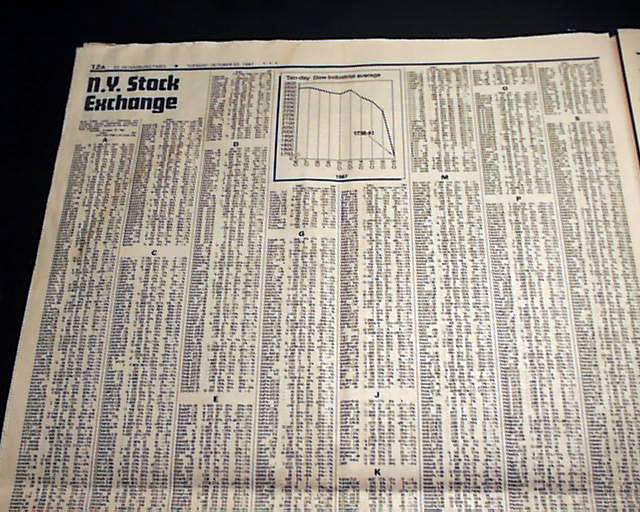
The stock market crash of 1987...
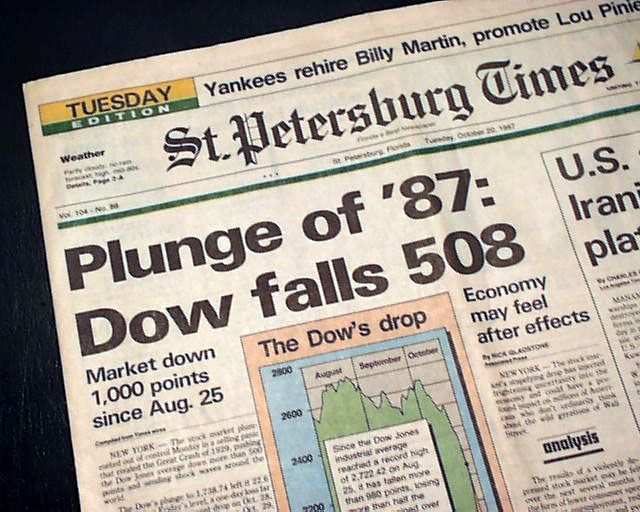
ST. PETERSBURG TIMES, Florida, Oct. 20, 1987
- Stock market crash
- Wall Street collapse
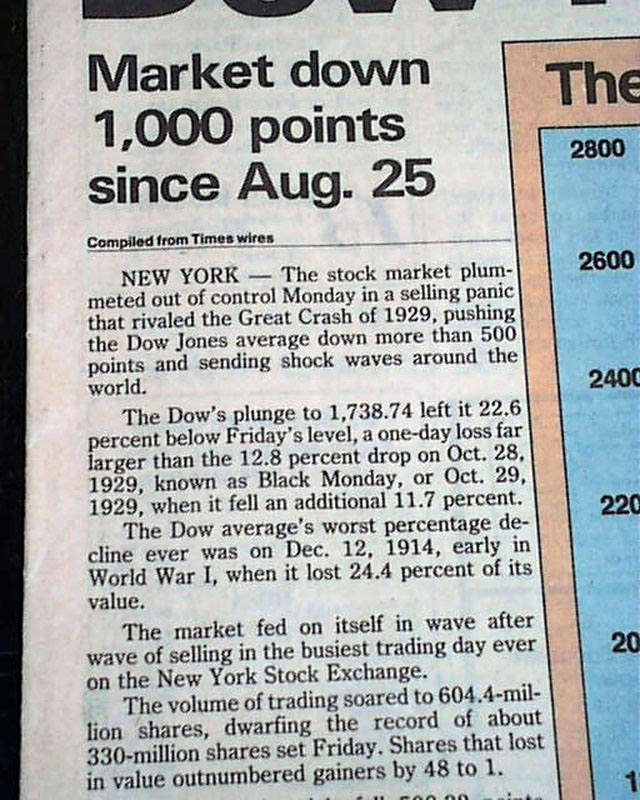
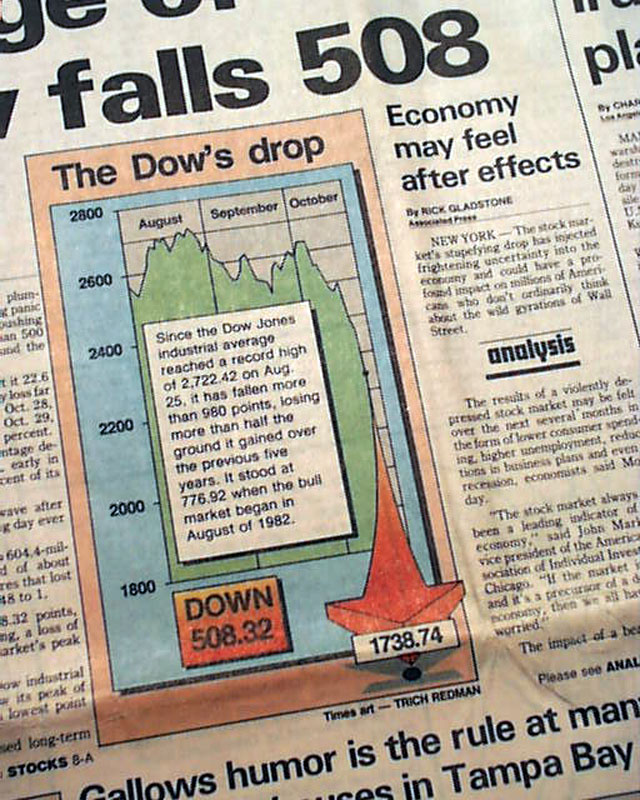
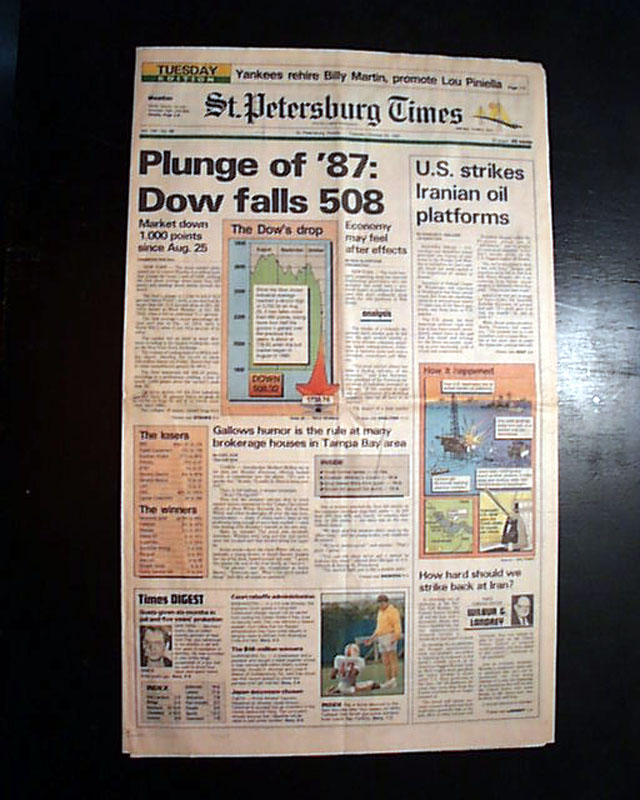
The front page reports the stock market crash of 1987 with: "Plunge of '87: Dow Falls 508" with subheads: "Market Down 1,000 points since Aug. 25" and: "Economy May feel After Effects". There is also a color graph illustrating: "The Dow's drop".
This is the complete first section with pages 1-18 (of 50). Nice condition.
Background: On October 19, 1987, known as Black Monday, global stock markets experienced an unprecedented crash, with the Dow Jones Industrial Average (DJIA) plummeting 508 points, or 22.6%, marking the largest single-day percentage drop in U.S. history. The collapse was fueled by a combination of factors, including rampant program trading, where computerized systems automatically sold stocks as prices fell, creating a feedback loop of panic selling. Stocks had also become heavily overvalued, and rising interest rates and trade deficits heightened investor anxiety. The panic quickly spread worldwide, with markets in Europe and Asia suffering sharp declines as well. Despite the dramatic losses, the U.S. economy avoided a full-blown recession, thanks in part to Federal Reserve intervention, which provided liquidity and restored some confidence. The crash profoundly influenced financial markets, leading to reforms in trading regulations, circuit breakers to halt panic selling, and a heightened awareness of systemic risk in global markets.
Other issues you may like
§ related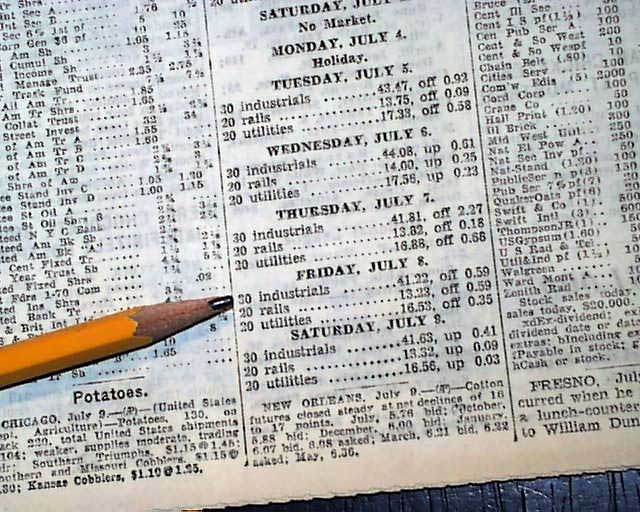
THE DETROIT NEWS, July 9, 1932
- Stock Market at lowest point during Great Depression
- Wall Street exchange bottoms out
A significant issue, as this issue has
...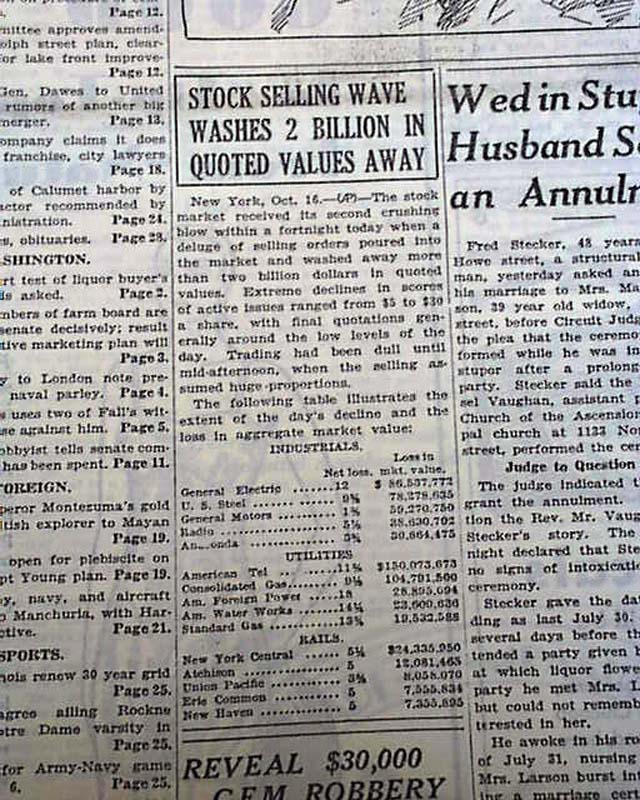
CHICAGO DAILY TRIBUNE, October 17, 1929
- Stock market crash of 1929 beginning ?
- Pre initial great collapse
The front page has a one column heading: "Stock
...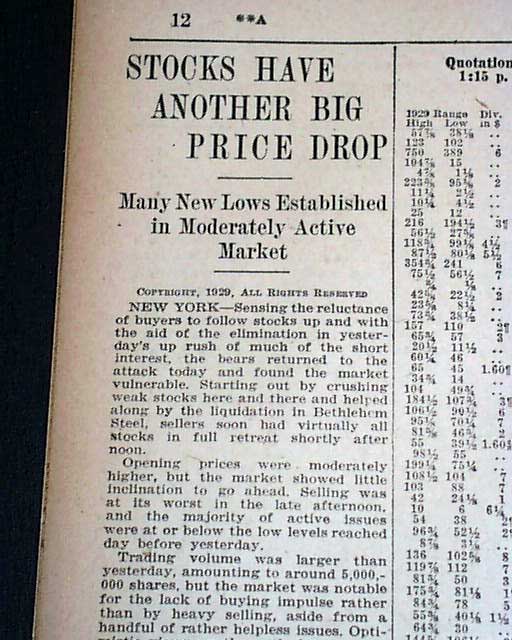
THE CHRISTIAN SCIENCE MONITOR, Boston, October 23, 1929
- Stock market crash of 1929 beginning
The stock market crash of 1929 did much to define America for
...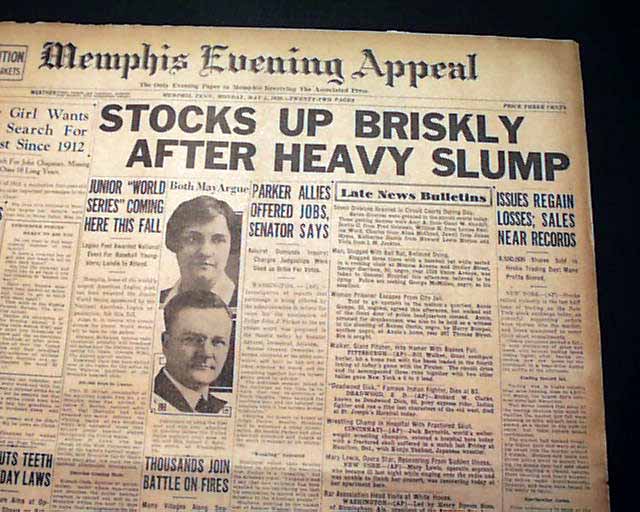
MEMPHIS EVENING APPEAL, Tennessee, May 5, 1930
- Post stock market crash of 1929... great headline for display
- Wall Stret, New York City
This 22 page newspaper
...