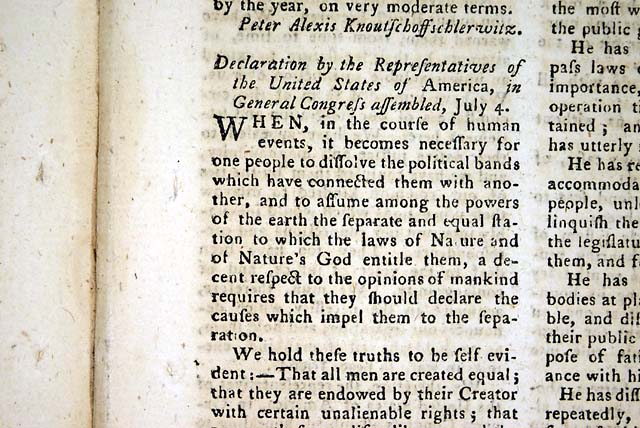
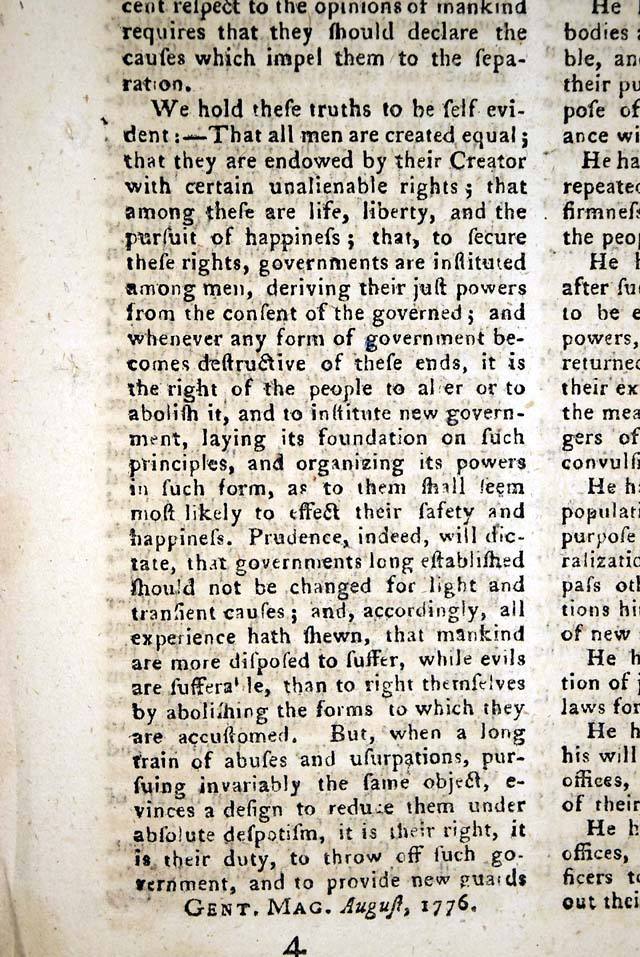
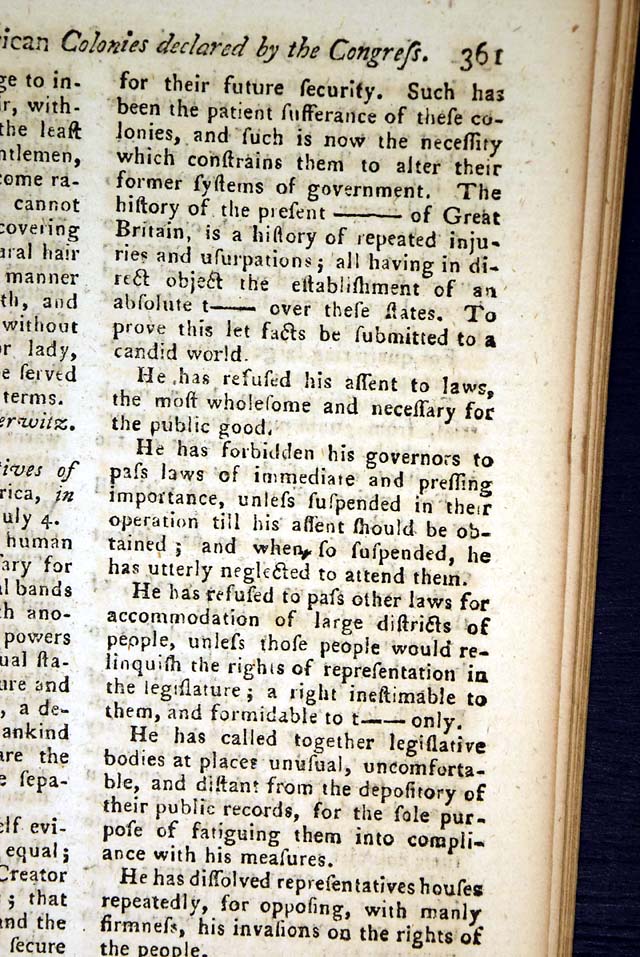
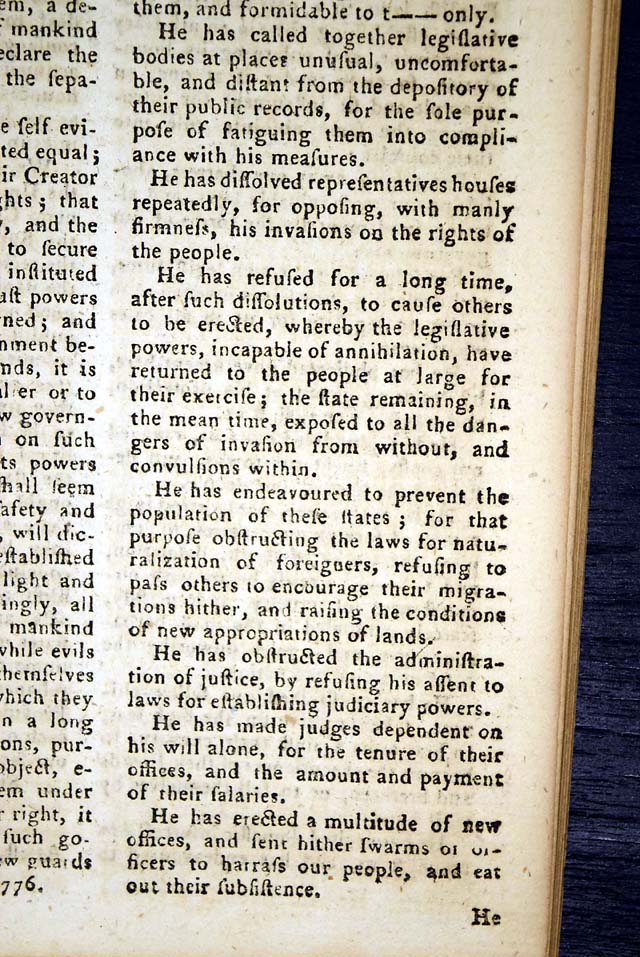
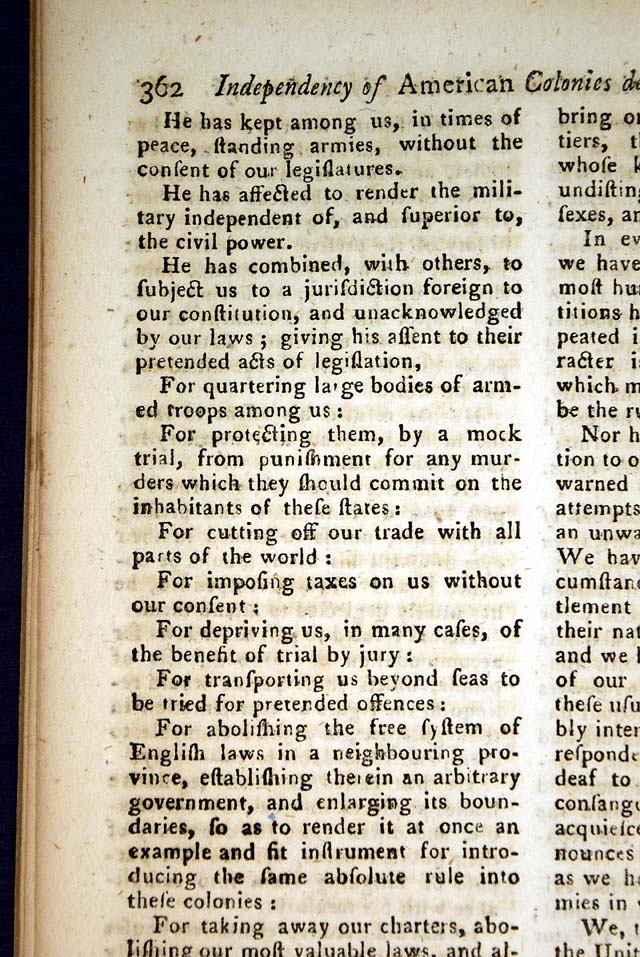
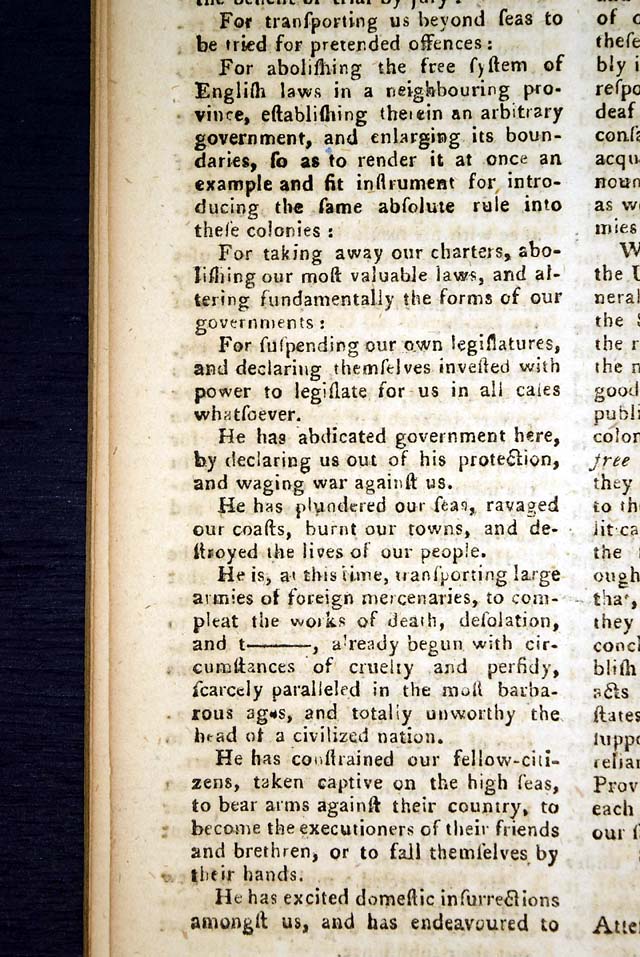
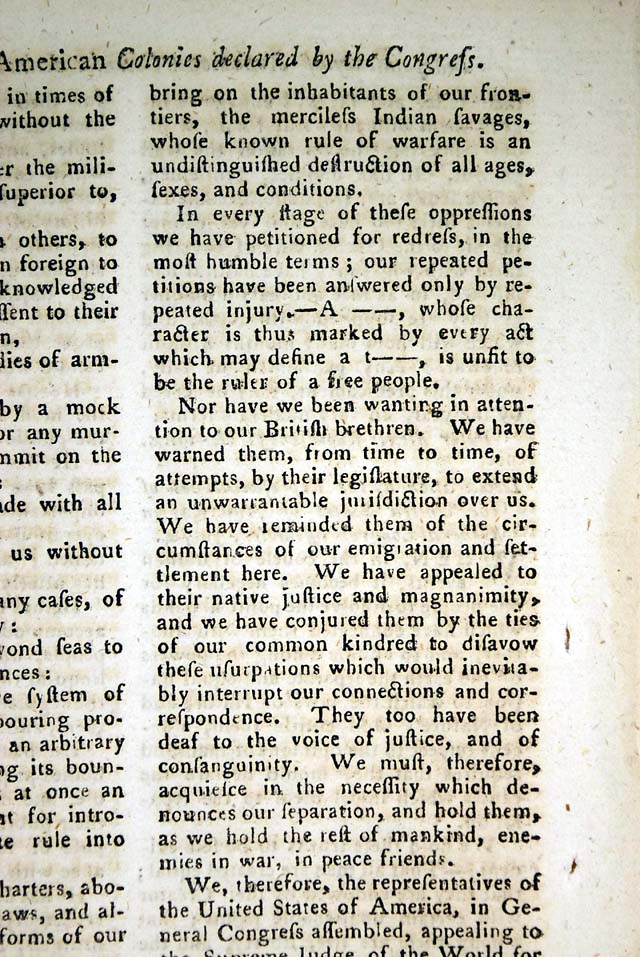
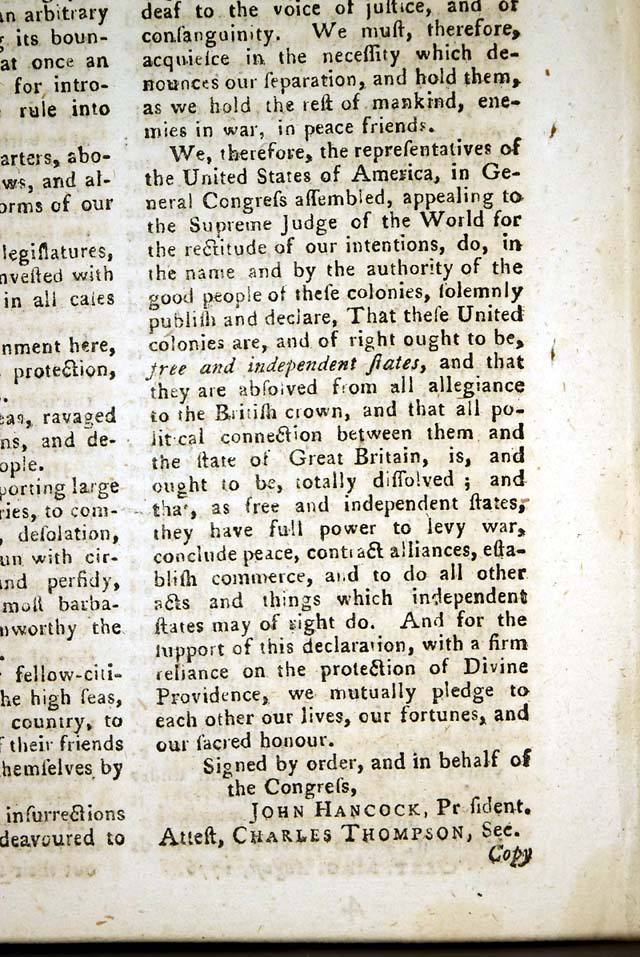
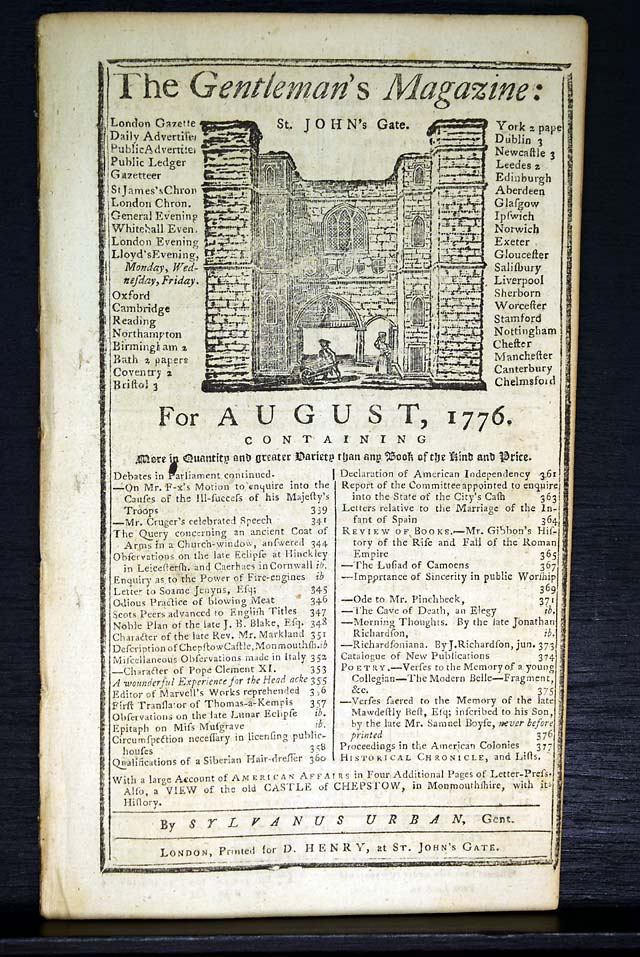
A 1776 printing of the Declaration of Independence...
THE GENTLEMAN’S MAGAZINE. London, August 1776
- Original Declaration of Independence... the complete text
- From our American Revolutionary War foe
This issue contains one of the earliest British magazine printings of the foundational American document, with the full text headed: “Declaration by the Representatives of the United States of America, in General Congress Assembled, July 4.” It begins with the immortal opening “When in the course of human events…” The document continues on the following page and is signed in type by John Hancock. The title and contents page, featuring a decorative engraving, directs readers to page 361 for the printing.
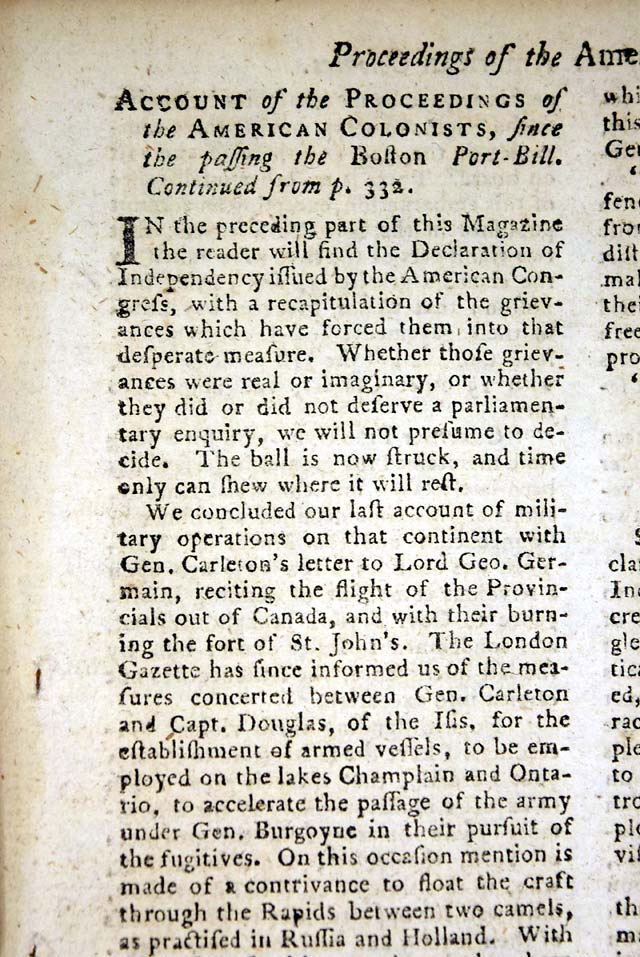
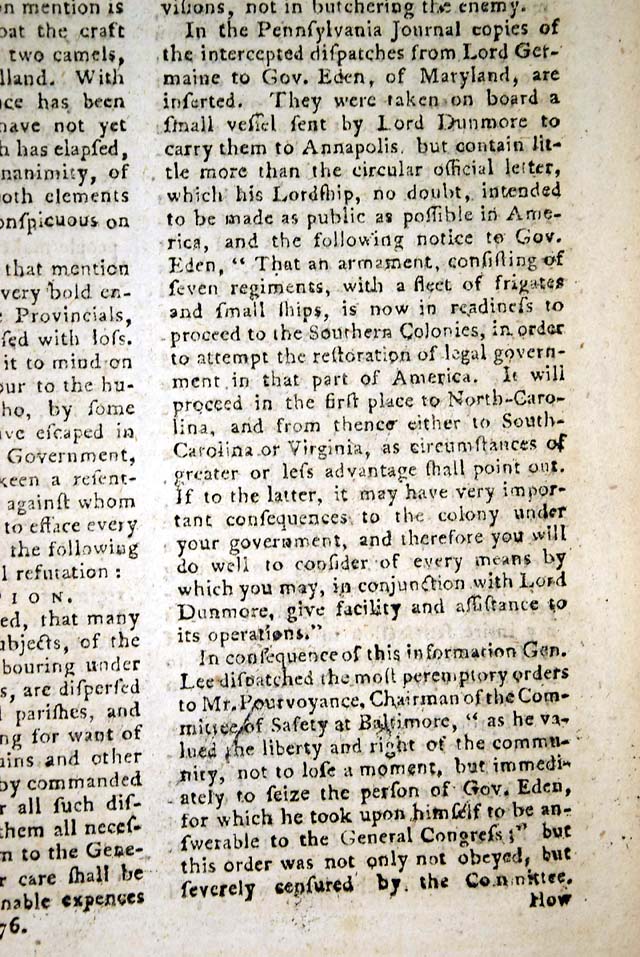
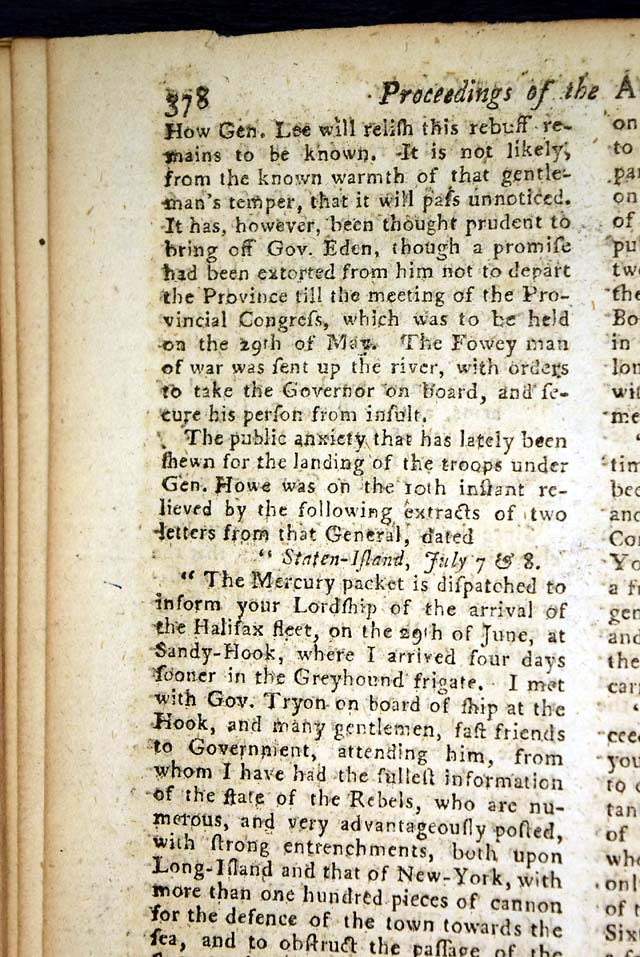
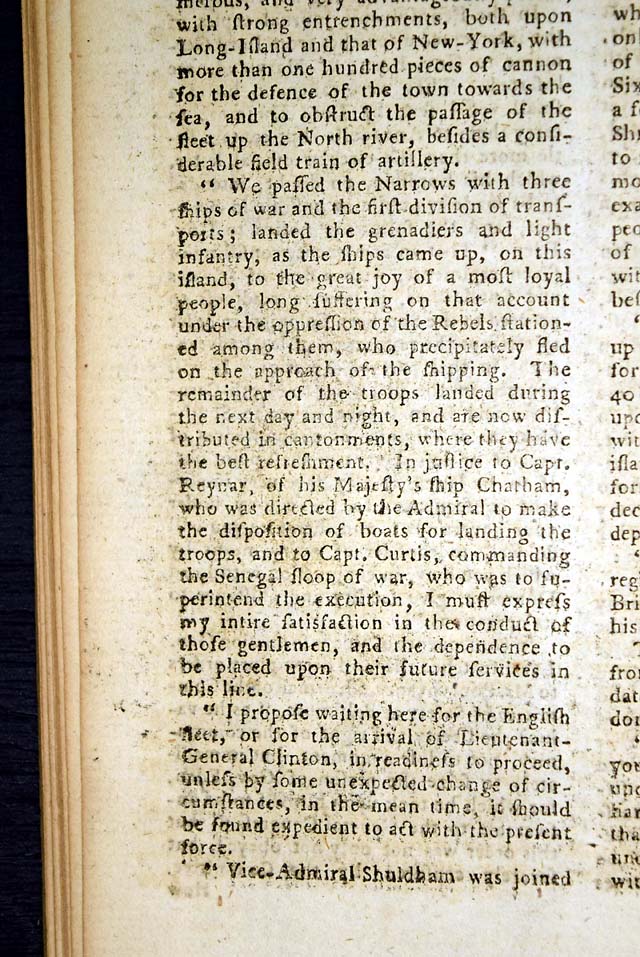
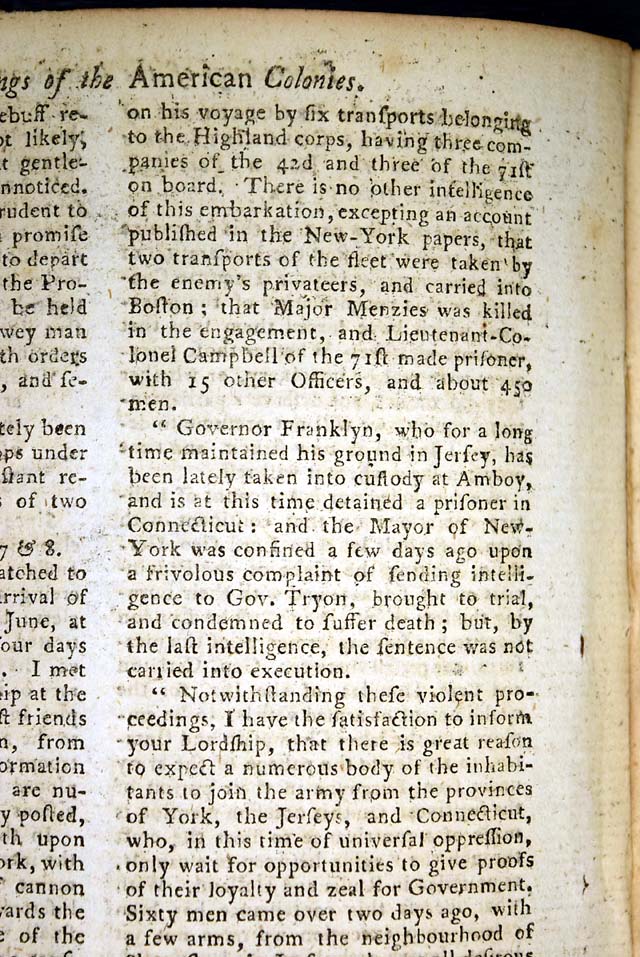
Immediately following is the magazine’s measured British commentary under “Proceedings of the American Colonies,” which recapitulates the grievances cited by Congress and offers a contemporary assessment: “Whether those grievances were real or imaginary… we will not presume to decide. The ball is now struck, and time only can shew where it will rest.”
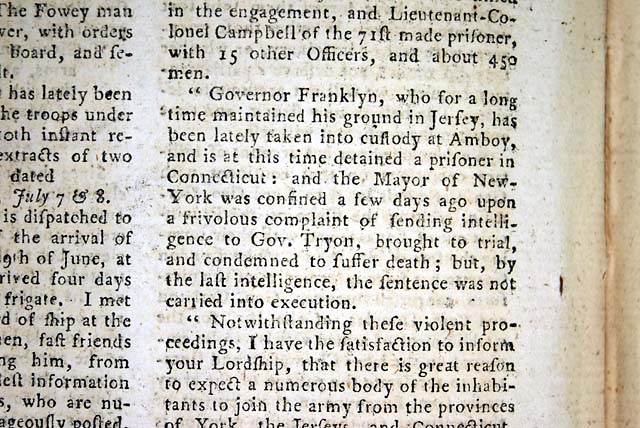
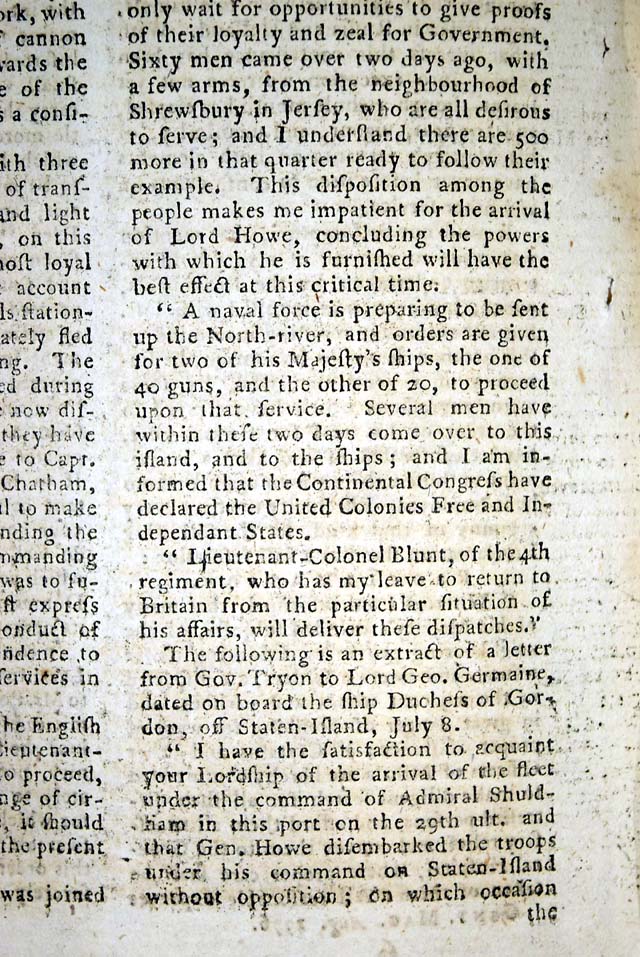
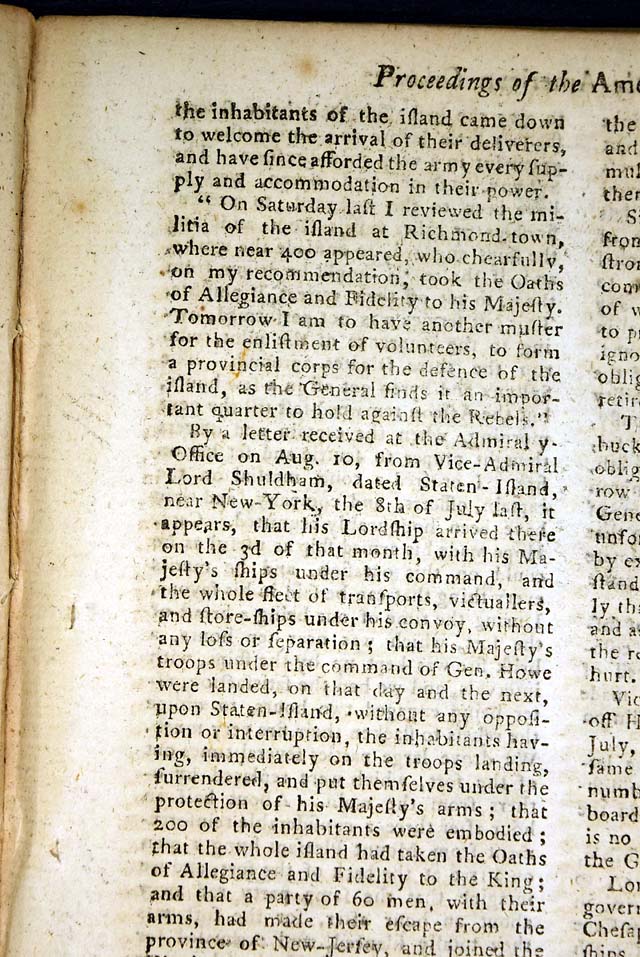
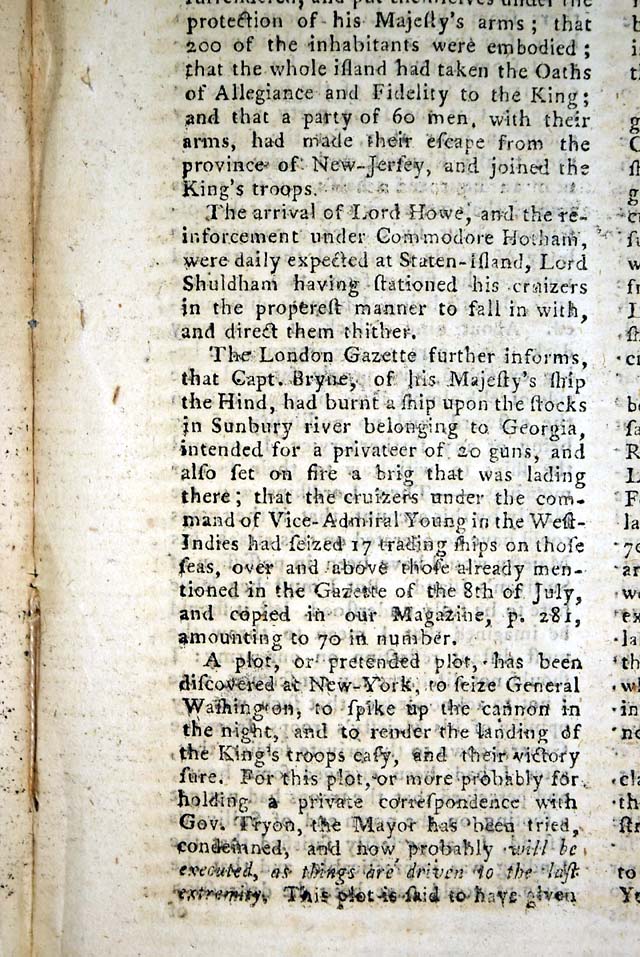
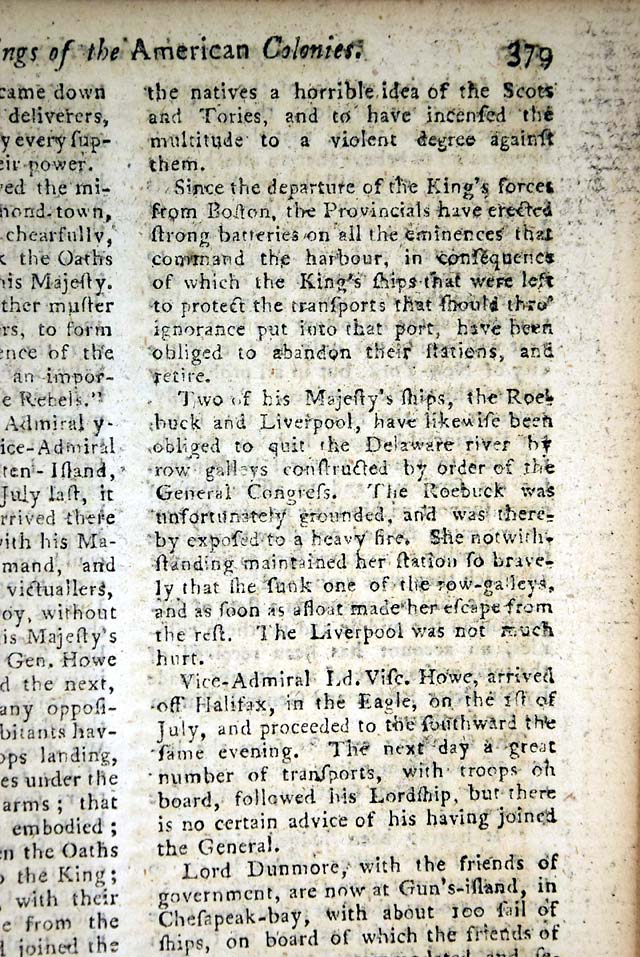
Additional reports on the Revolutionary War appear in the same section, including the mention that Williams Franklyn (the illegitimate and acknowledged son of Ben Franklin), who until recently had been the Governor of New Jersey, and David Mathews, the mayor of New York, had been arrested on the accusation of sharing critical information with the British Army. While not mentioned by name, history now connects their actions to "The Hickey Plot" which was aimed at kidnapping and/or assassinating General George Washington.
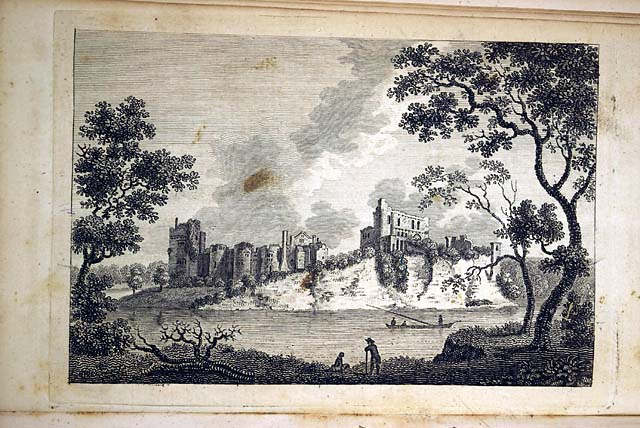
The full-page engraved plate of Chepstow Castle is present.
Complete in 52 pages with the full title/contents leaf, disbound. 5 by 8½ inches, excellent condition. A cornerstone item for any collection of American history, presenting the seminal text alongside a vivid window into its immediate reception in Britain.
Background: The August 1776 issue of The Gentleman’s Magazine holds exceptional historical significance and rarity as one of the very earliest British magazine printings of the Declaration of Independence. Directed from a decorative title and contents page to page 361, the publication presented the complete text of the document—headed "Declaration by the Representatives of the United States of America, in General Congress Assembled, July 4" and signed in type by John Hancock—to a British public previously reliant on sparse official dispatches. Notable for its subtle editorial censorship—where the typesetter obscured inflammatory references like "King" or "tyranny" with blanks and dashes—the issue is equally distinguished by the measured, remarkably pragmatic commentary that immediately follows under "Proceedings of the American Colonies". Refusing to debate whether the colonists' grievances were "real or imaginary," the magazine acutely concluded that "the ball is now struck, and time only can shew where it will rest," signaling the public realization of a full-scale imperial conflict. Because contemporary American printings of the Declaration are extraordinarily scarce and financially out of reach for most collectors, this early London printing serves as an exceptionally rare, cornerstone artifact that captures both the full foundational text and the immediate, tentative reaction of Great Britain at the dawn of the American Revolution.
Other issues you may like
§ related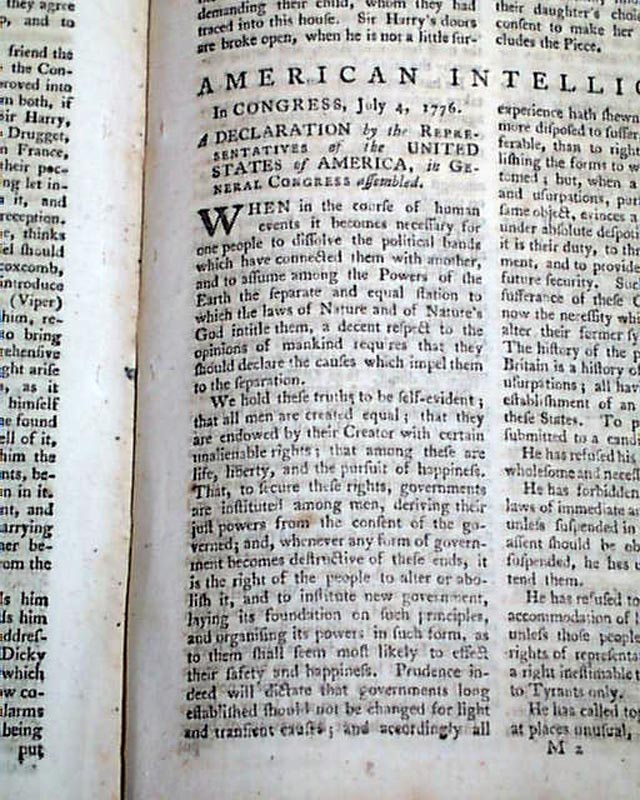
THE UNIVERSAL MAGAZINE, London, England, August, 1776
- Original Declaration of Independence... the complete text
- As reported from Great Britain
It would be
...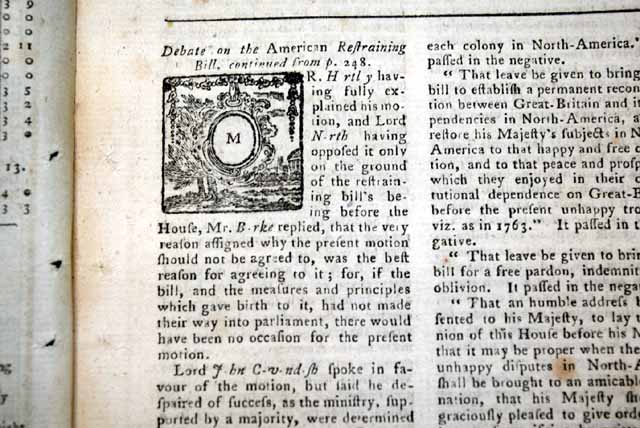
GENTLEMAN'S MAGAZINE, London, July, 1776
- American Independence
- John Hancock (July, 1776)
- Great month & Year to have
It is rare to find newspapers or magazines
...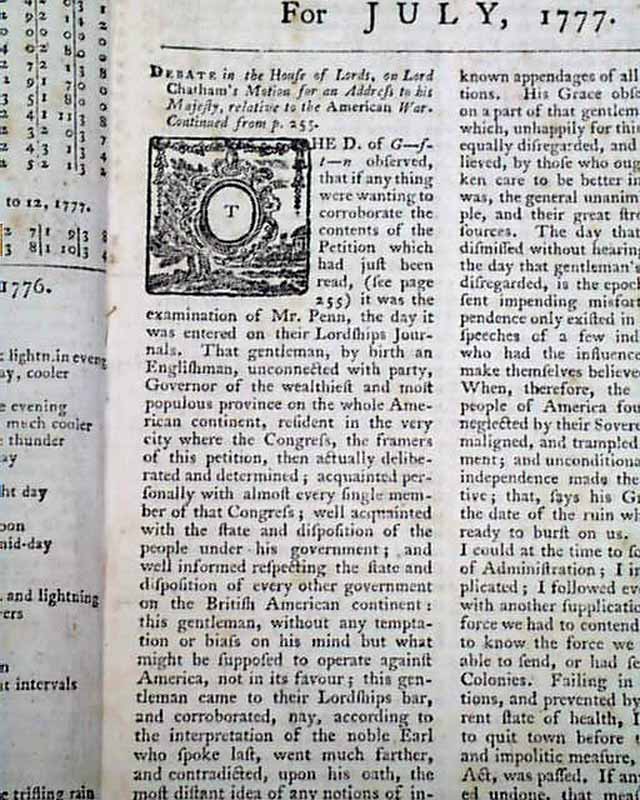
THE GENTLEMAN'S MAGAZINE, London, July, 1777
- General William Howe
- Charles Cornwallis
- American Independence ?
The issue begins with a continuation of the:
...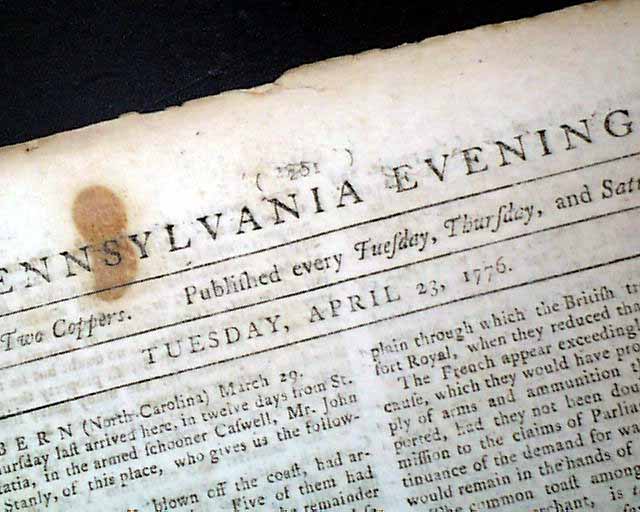
THE PENNSYLVANIA EVENING POST, Philadelphia, April 23, 1776
- Pre Declaration of Independence signing
- American Revolutionary War original
- Great year to have