World's 1st nuclear device explosion announcement...
Item # 716842
·
Sorry, but this item is no longer available. Please be in touch at info@rarenewspapers.com if you would like to be placed on a want list or are interested in a potential alternate issue.
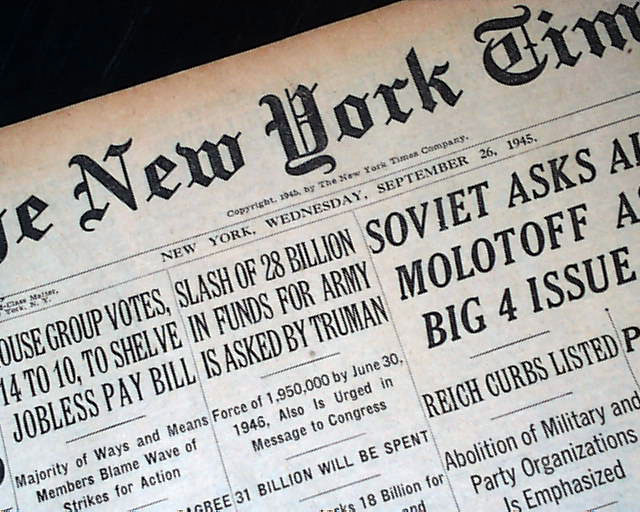
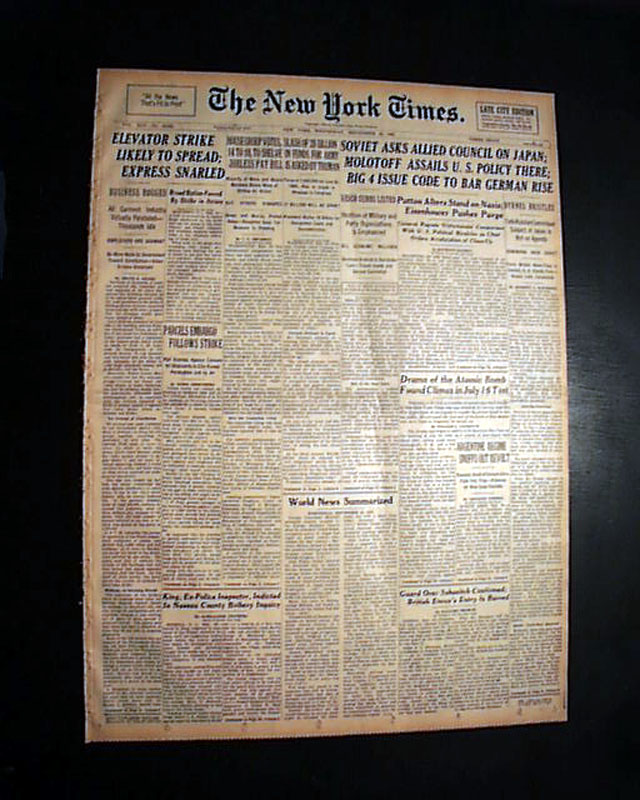
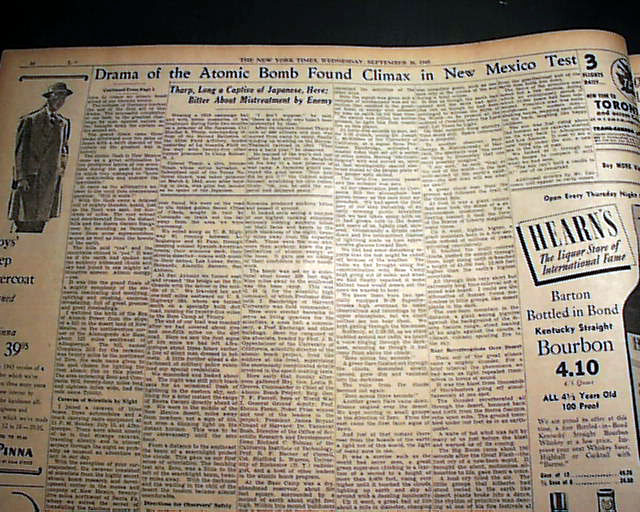
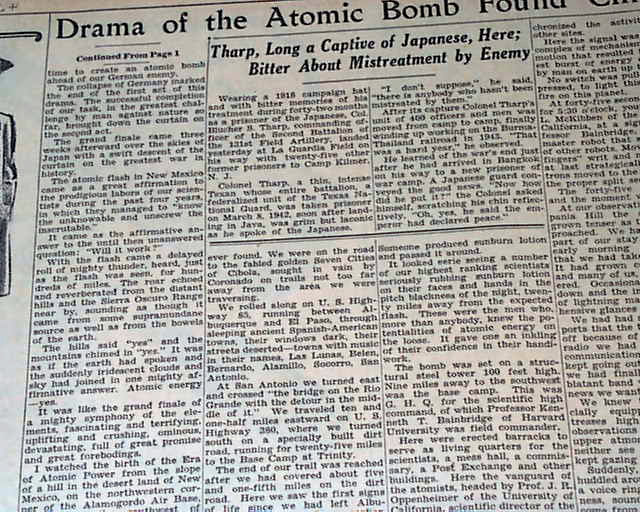
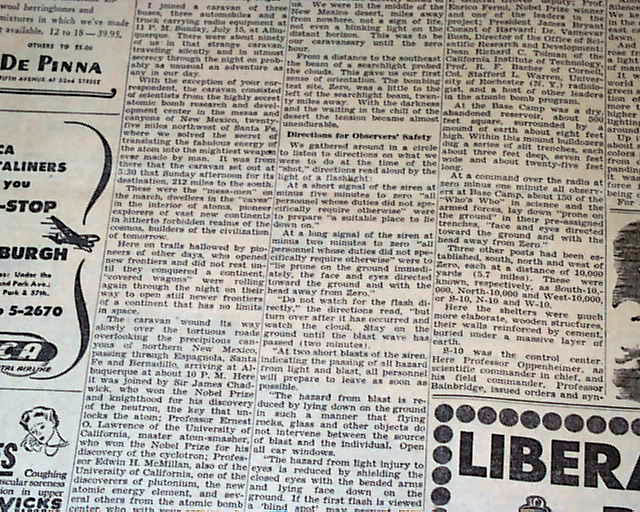
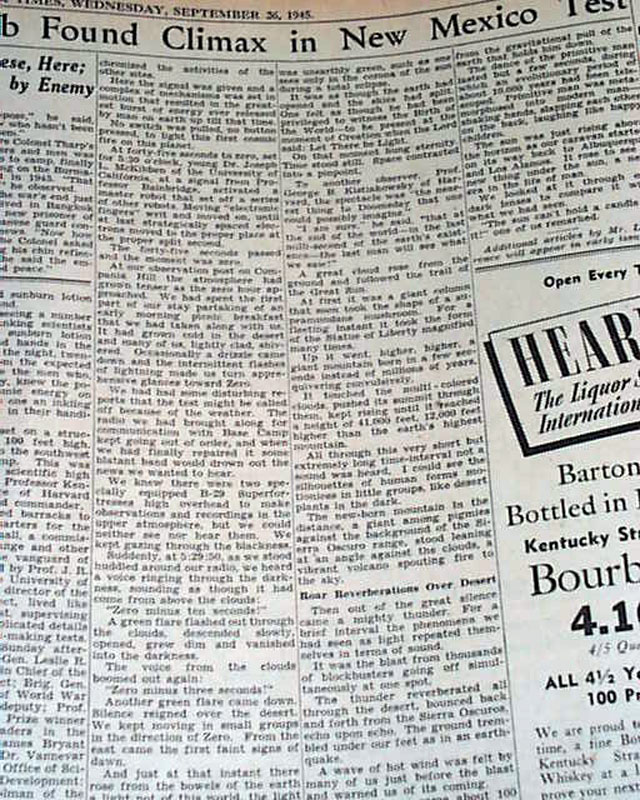
THE NEW YORK TIMES, Sept. 26, 1945
* Manhattan Project comes to a climax
* Trinity nuclear test is made public (1st time)
* Director physicist J. Robert Oppenheimer
* Post atomic bombing of Hiroshima & Nagasaki
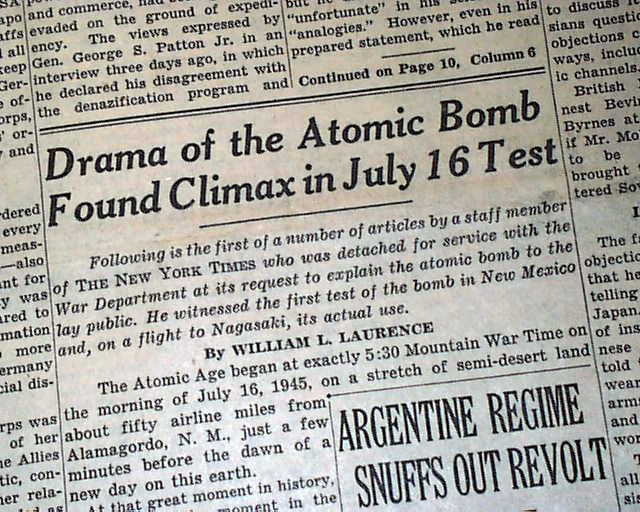
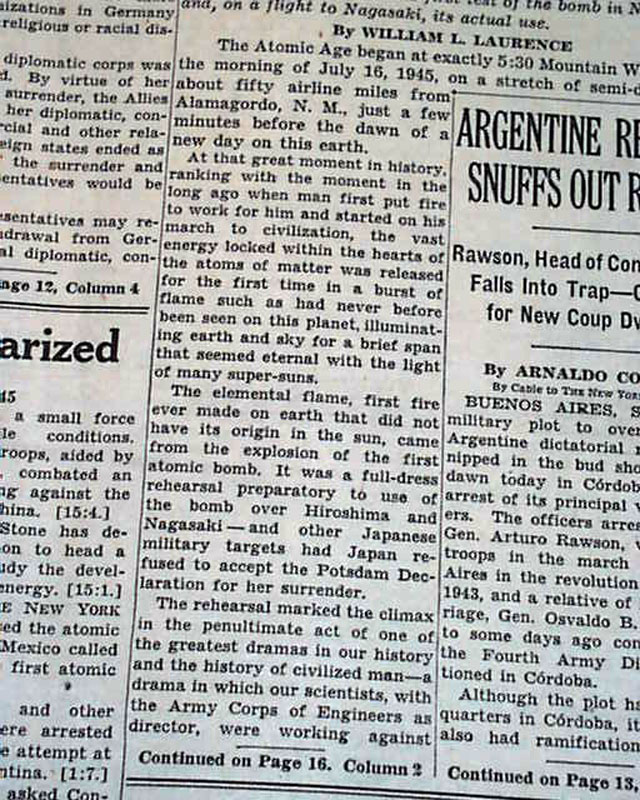
The front page has a two column heading; "Drama of the Atomic Bomb Found Climax in July 16 Test" (see images) Lengthy 1st report coverage continues on page 16.
Complete with 40 pages, light toning at the margins, nice condition.
background: In 1945, New York Times journalist William L. Laurence wrote a widely circulated editorial and series of reports on the atomic bomb, portraying it as a monumental scientific achievement and a decisive force that ended World War II. As an embedded reporter with the U.S. War Department and a witness to both the Trinity Test and the Nagasaki mission, Laurence framed the bomb as a symbol of American ingenuity and a harbinger of future peacetime benefits. His writings celebrated the weapon’s power and strategic impact, while largely omitting the human suffering it caused, a perspective later criticized for promoting government propaganda and minimizing the moral and humanitarian consequences of nuclear warfare.
* Manhattan Project comes to a climax
* Trinity nuclear test is made public (1st time)
* Director physicist J. Robert Oppenheimer
* Post atomic bombing of Hiroshima & Nagasaki
The front page has a two column heading; "Drama of the Atomic Bomb Found Climax in July 16 Test" (see images) Lengthy 1st report coverage continues on page 16.
Complete with 40 pages, light toning at the margins, nice condition.
background: In 1945, New York Times journalist William L. Laurence wrote a widely circulated editorial and series of reports on the atomic bomb, portraying it as a monumental scientific achievement and a decisive force that ended World War II. As an embedded reporter with the U.S. War Department and a witness to both the Trinity Test and the Nagasaki mission, Laurence framed the bomb as a symbol of American ingenuity and a harbinger of future peacetime benefits. His writings celebrated the weapon’s power and strategic impact, while largely omitting the human suffering it caused, a perspective later criticized for promoting government propaganda and minimizing the moral and humanitarian consequences of nuclear warfare.
Category: The 20th Century
No Longer Available
100% Authentic: Original printing, never a reproduction.
Other issues you may like
§ related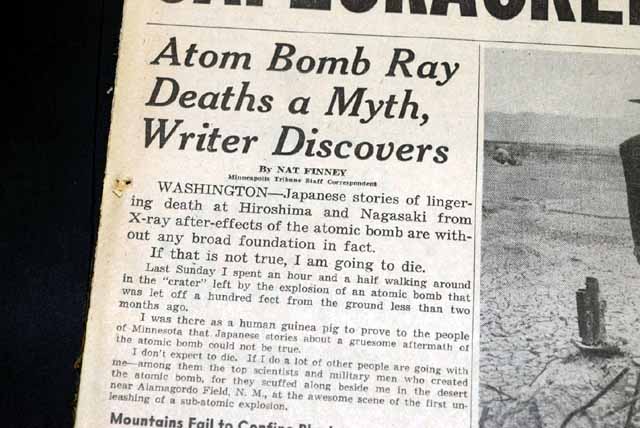
World's 1st nuclear device explosion announcement...
MINNEAPOLIS MORNING TRIBUNE, Sept. 12, 1945
* Manhattan Project comes to fruition
* Director physicist J. Robert Oppenheimer
* Post atomic bombing of Hiroshima...
* Manhattan Project comes to fruition
* Director physicist J. Robert Oppenheimer
* Post atomic bombing of Hiroshima...
Sep 1945
$48

Manhattan Project goes public for the first time....
THE NEW YORK TIMES, Aug. 16, 1945
* Manhattan Project is first made public
* Henry DeWolf Smyth report is released
* re. Atomic bombings of Hiroshima &...
* Manhattan Project is first made public
* Henry DeWolf Smyth report is released
* re. Atomic bombings of Hiroshima &...
Aug 1945
$98
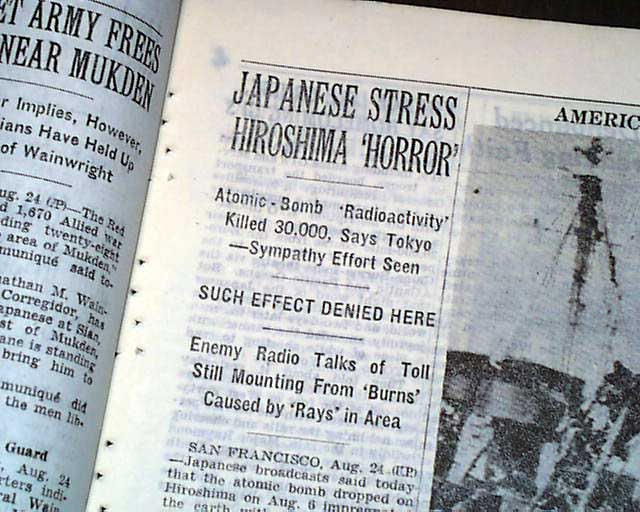
re. 1945 Atomic bombing of Hiroshima & Nagasaki...
THE NEW YORK TIMES, Aug. 25, 1945
* Hiroshima & Nagasaki atomic bombings
* Japan reveals the horrors of the historic event
The top of page 3 has a...
* Hiroshima & Nagasaki atomic bombings
* Japan reveals the horrors of the historic event
The top of page 3 has a...
Aug 1945
$48
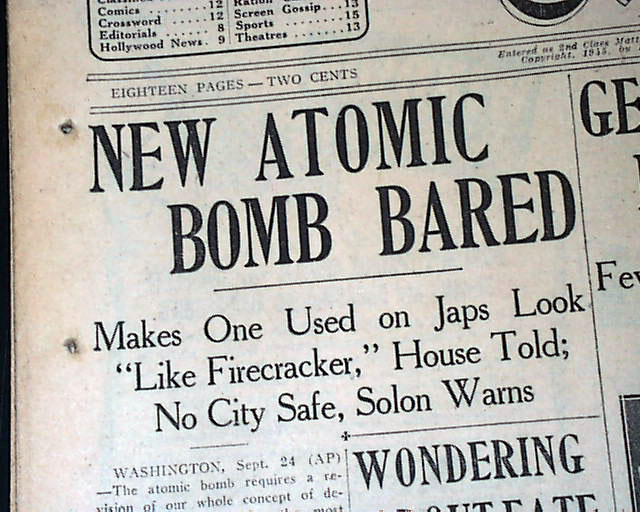
1945 super atomic bomb development announcement...
THE BOSTON POST, Sept. 25, 1945
* New super atomic bomb developed
* Post Hiroshima & Nagasaki bombings
* Leslie C. Arends' warning announcement
The...
* New super atomic bomb developed
* Post Hiroshima & Nagasaki bombings
* Leslie C. Arends' warning announcement
The...
Sep 1945
$48