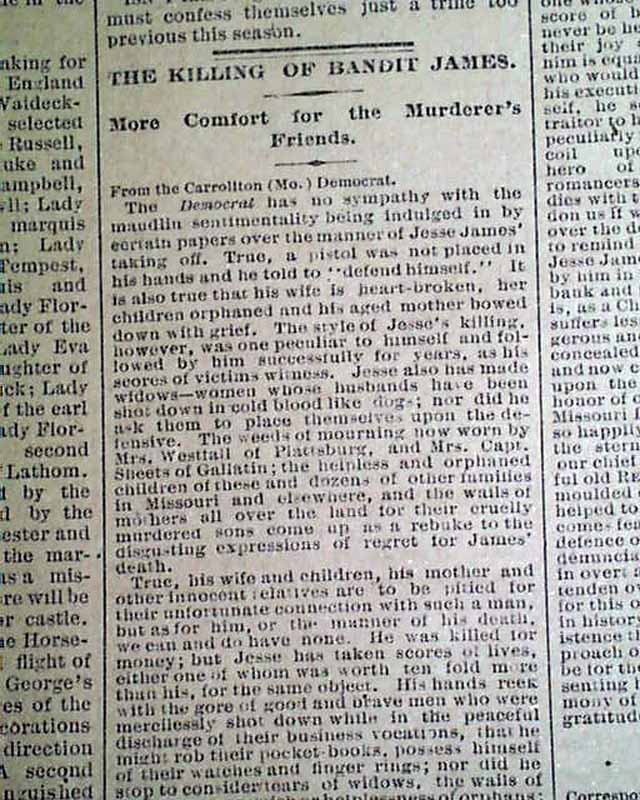


Reacting to the romanticizing of the killing of Jesse James in a same-state newspaper...
THE REPUBLICAN, St. Louis, Missouri, April 13, 1882
- Outlaw Jesse James assassination
- Anti-Bob Ford Brothers narrative
Page 4 has an article with column heads: "The Killing Of Bandit James" "More Comfort for the Murderer's Friends".
This is an interesting editorial groaning about the those who mourn about how he was killed, and including: "...True, a pistol was not placed in his hands and he told to 'defend himself'..." and: "...Missourians who think more of Missouri and its prosperity than they do of outlaws, thieves, murderers, need not be disturbed by the silly twaddle of certain sentimental fools in other states over the killing of Jesse James..." with more.
Another article on page 4 also: "Jesse James, the Banks and the Newspapers." has a similar theme, including: "...The bank official of Missouri, who have been the favored prey of the dead bandit for 15 years and whose cashiers have been gagged & shot down like dogs, will not easily forget that portion of our state press which has been so ready to throw a glamour of heroism over a murderous & thieving outlaw and so quick to censure our executive for the means used in his extermination...".
Two great articles counteracting those who would romanticize the career of Jesse James.
Complete in ten pages, evenly toned, minor chipping at the margins and some margin tears, somewhat fragile & should be handled with care.
Background: Published just ten days after Jesse James was assassinated by Bob Ford on April 3, 1882, these Missouri Republican editorials provide a fierce, real-time primary counter-narrative against the immediate romanticization of America's most notorious outlaw. Unapologetically defending Governor Thomas T. Crittenden’s controversial secret bounty, the newspaper roundly dismissed complaints from "sentimental fools in other states" who lamented that James was shot in the back without a chance to defend himself, asserting that a ruthless murderer and bank robber responsible for fifteen years of terror, gagged cashiers, and cold-blooded killings deserved no chivalrous duel. By directly condemning Eastern media and sympathizers for casting a "glamour of heroism" over a criminal enterprise, the publication sought to safeguard Missouri’s economic prosperity, restore law and order, and reshape public memory before the Robin Hood myth of Jesse James could permanently take root.
Other issues you may like
§ related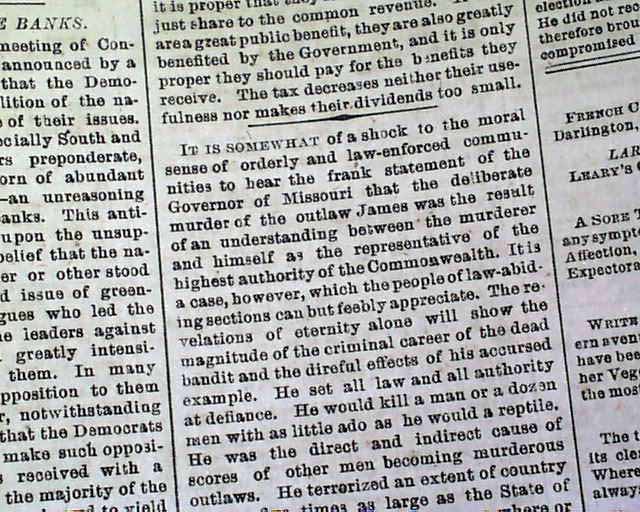
THE EVENING TELEGRAPH, Philadelphia, April 5, 1882
- Outlaw Jesse James assassination
Page 4 has a great editorial concerning the recent (killed 2 days prior)
...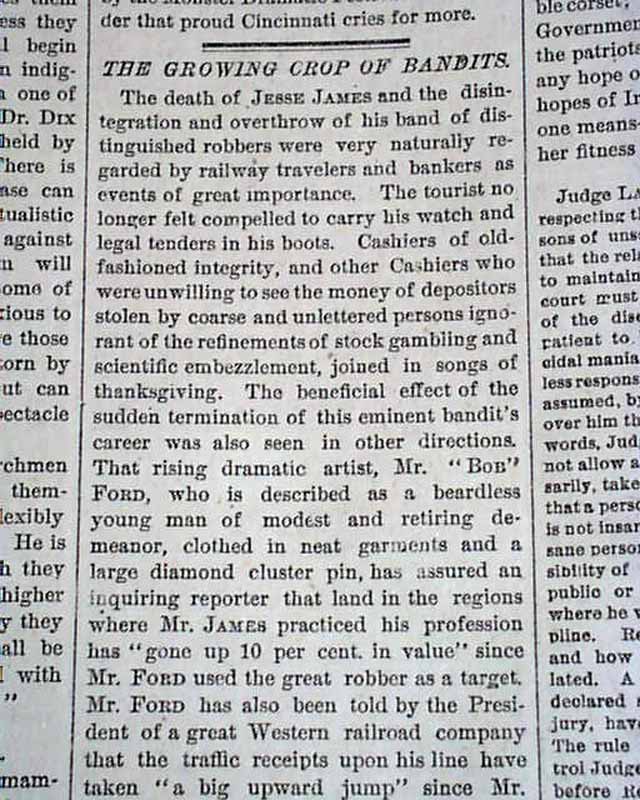
NEW YORK TIMES, May 7, 1883 Page 4 has a lengthy & interesting editorial headed: "The Growing Crop of Bandits" which begins: "The death of Jesse James and
...
BOSTON EVENING TRANSCRIPT, April 5, 1882
- Outlaw Jesse James assassination
Page 2 has a brief & quite inconspicuous report reading: "Great satisfaction is
...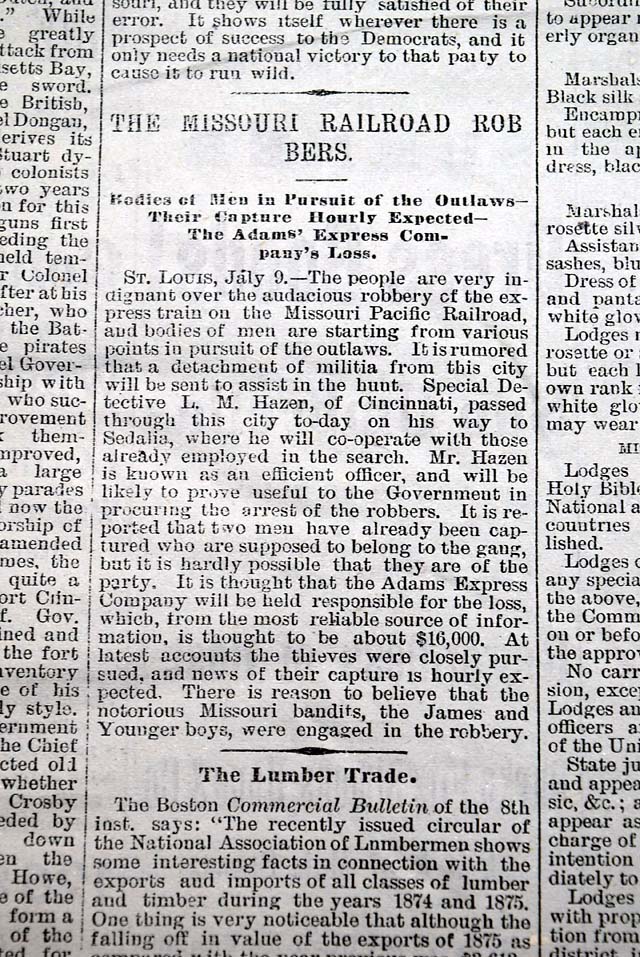
THE ROCHESTER EVENING EXPRESS, New York, July 11 1876
- Outlaws - Jesse James gang
- Bandits Younger Brothers
- Otterville, Missouri train robbery
The front page
...