A 1708 Daniel DeFoe periodical...
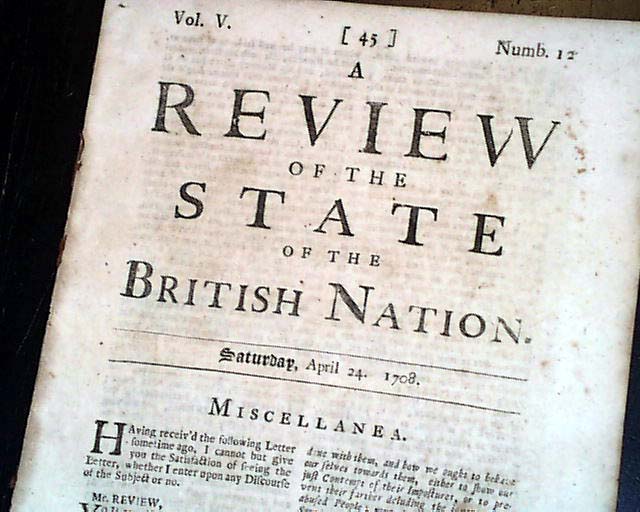
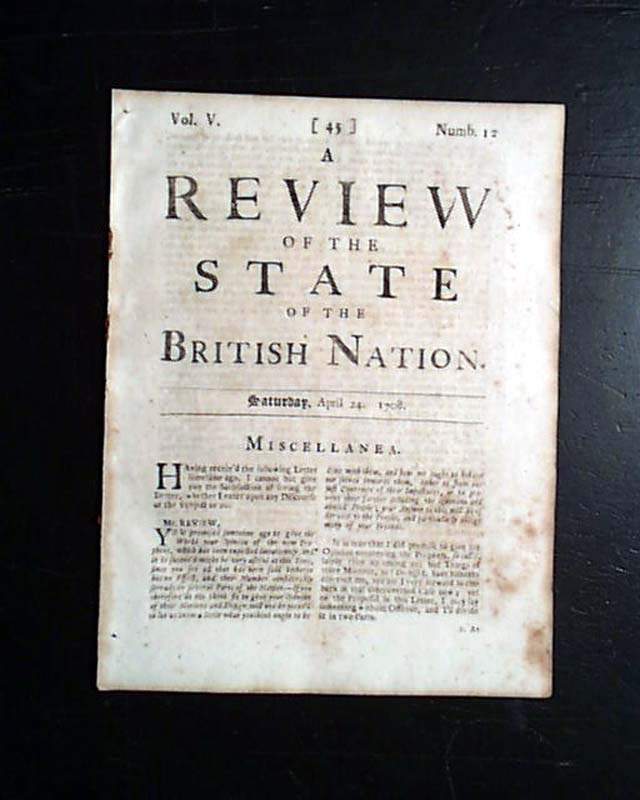
A REVIEW OF THE STATE OF THE BRITISH NATION, London, April 24, 1708
- Rare Daniel Defoe periodical
- Early 18th century original
From research done by the prestigious London rare book firm of Pickering & Chatto, this is: "...one of Daniel Defoe's greatest, but least known, works. The Review covered his many interests, both literary and historical. It had a tiny original print run of just 400, making this a very rare title.
Defoe's "Review" played a significant role in the birth of the modern press. It was not so much a newspaper dealing in facts but a journal of opinion and discussion. But in some ways it was itself the most interesting example as it was the first of a new genre: the eighteenth-century periodical essay. It was ultimately the government's imposition of a stamp duty, not a decline in quality, that brought the Review to a close in 1713." (courtesy Pickering & Chatto)
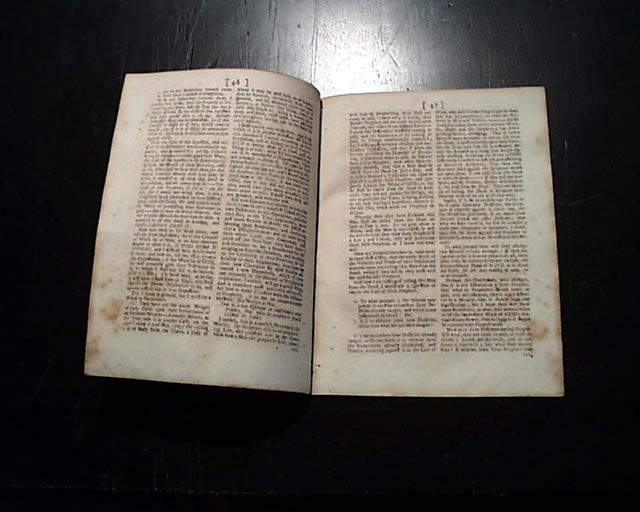
Four pages, 6 1/2 by 8 1/2 inches, very nice condition. A rare opportunity for a rare publication.
Background: A Review of the State of the British Nation (specifically the issue from April 24, 1708) represents a landmark artifact in the evolution of print media, serving as the direct precursor to the 18th-century periodical essay format later popularized by The Tatler and The Spectator. Written almost entirely by Daniel Defoe, this publication shifted away from simple factual reporting toward sophisticated political opinion, economic commentary, and social discourse, published during the tumultuous aftermath of the 1707 Acts of Union—a period when Defoe was actively working as a government agent to promote British political integration. Original individual issues are exceptionally rare today due to a minuscule original print run of approximately 400 copies, as well as the fact that most surviving examples were bound into multi-year volumes rather than preserved as single leaves. Its eventual end in 1713 was driven not by a decline in readership or literary quality, but by the crippling financial burden of the government’s 1712 Stamp Duty, making surviving standalone four-page issues from its peak production years highly coveted by antiquarian collectors and literary historians alike.
Item from last month's catalog - #369 - released for August, 2026
Other issues you may like
§ related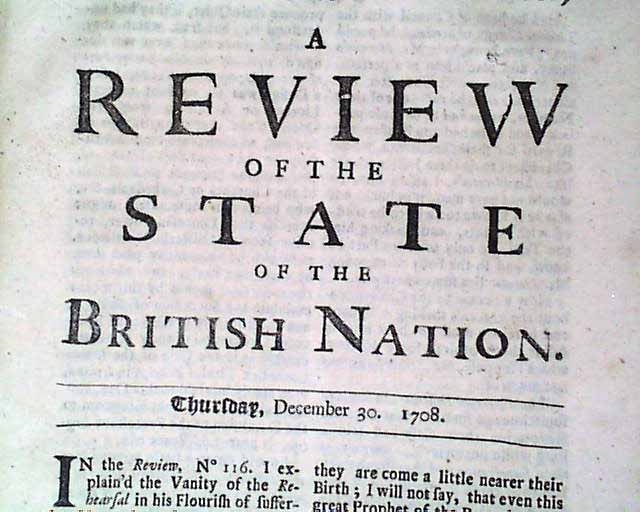
A REVIEW OF THE STATE OF THE BRITISH NATION, London, 1708-09 From research done by the prestigious London rare book firm of Pickering & Chatto, this is one
...
THE LITERARY MAGAZINE & BRITISH REVIEW, London, August, 1789 One of the less common titles of the 18th century, this magazine is mostly taken up with--as
...
THE UNIVERSAL SPECTATOR & WEEKLY JOURNAL, London, March 16, 1734
- Rare 18th century publication
An uncommon title that existed from 1728 thru 1746. This is
...
THE LITERARY MAGAZINE & BRITISH REVIEW, London, September, 1789 One of the less common titles of the 18th century, this magazine is mostly taken up
...