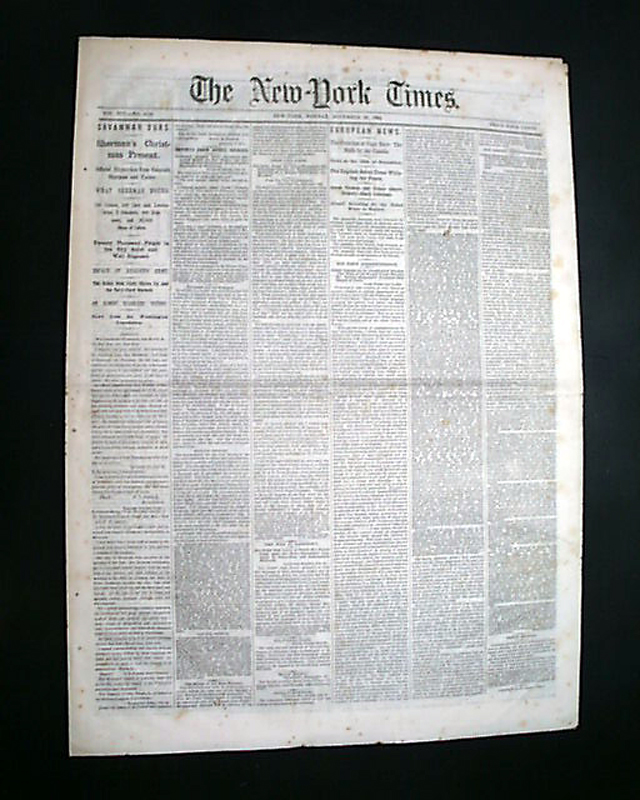
Sherman's "Christmas Present" to Abraham Lincoln...
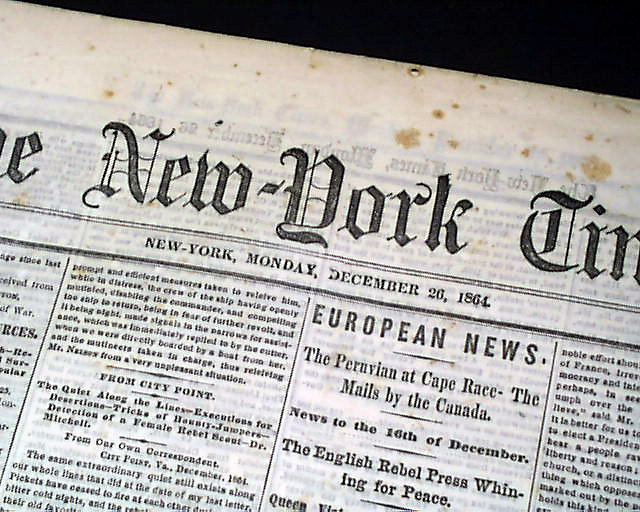
NEW YORK TIMES, Dec. 26, 1864
- Christmas present to Abraham Lincoln
- General William T. Sherman
- March to the sea completed
- Savannah GA Georgia captured
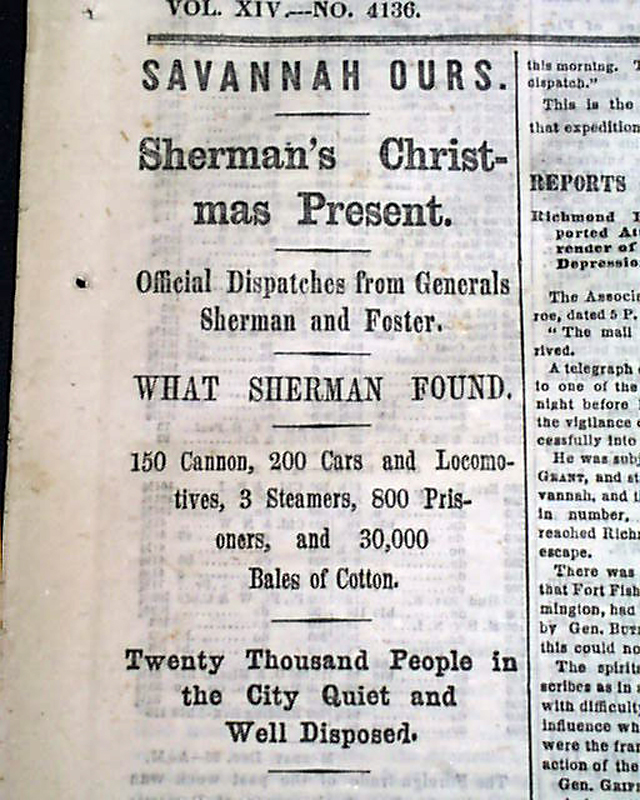
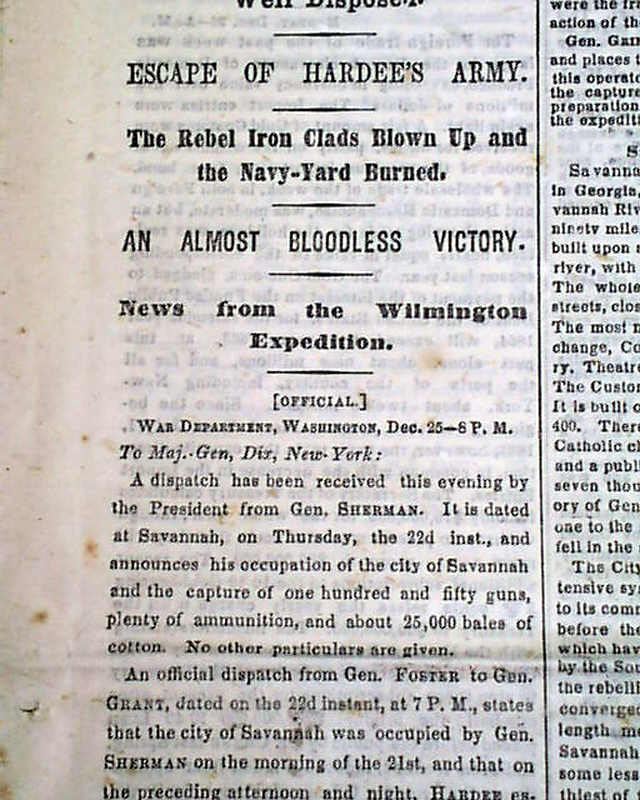
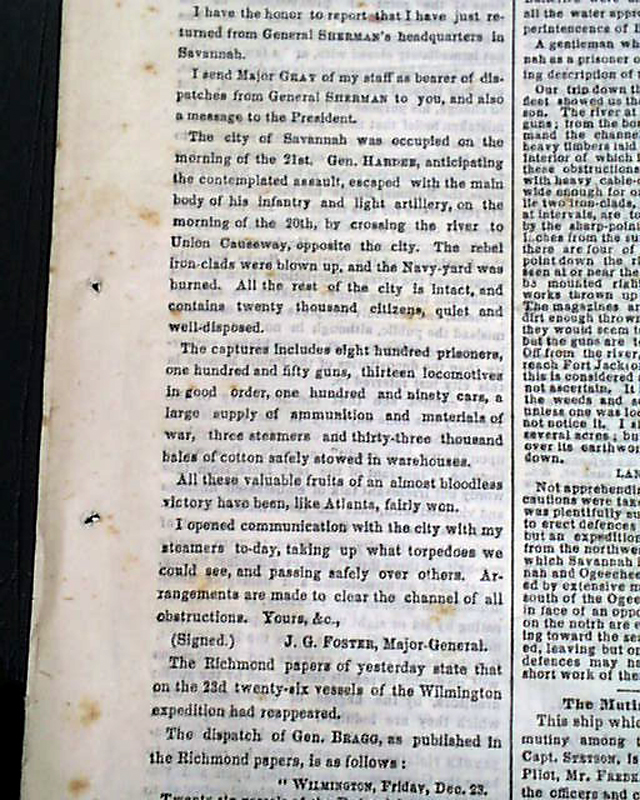
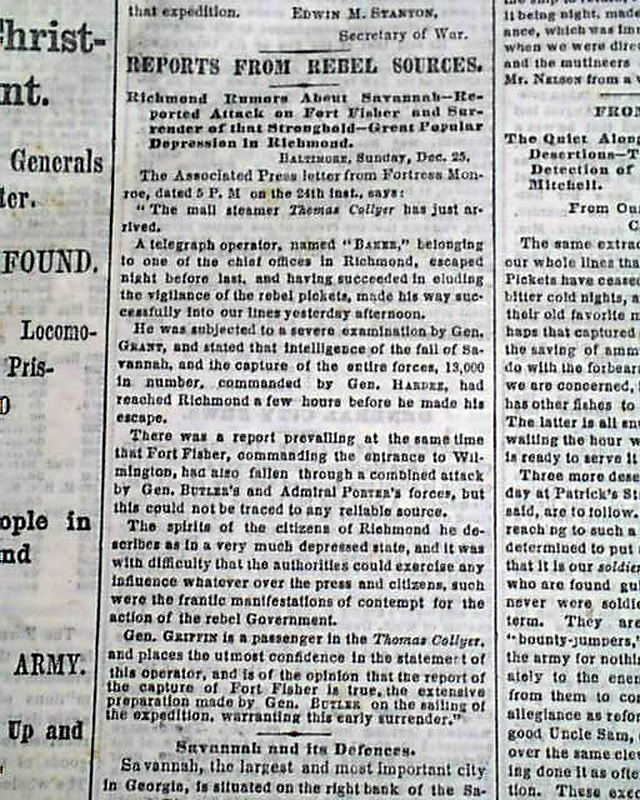
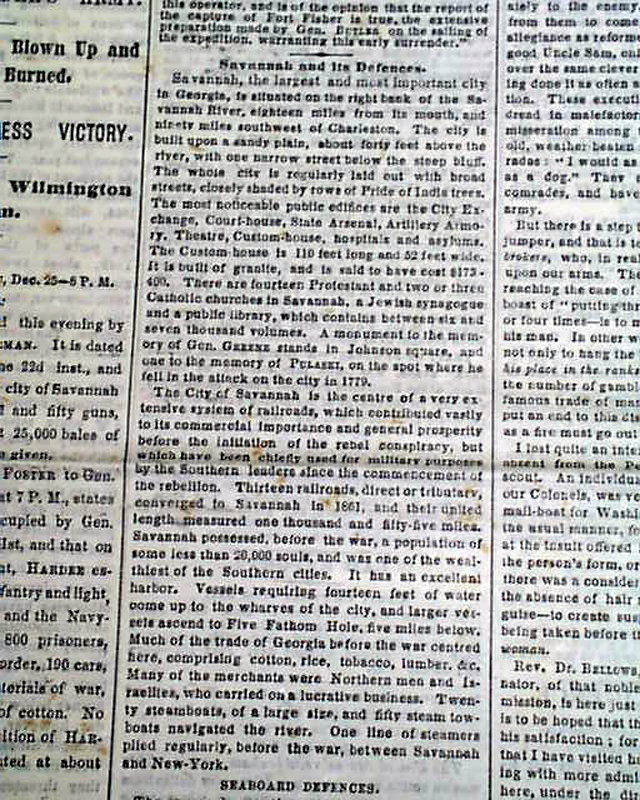
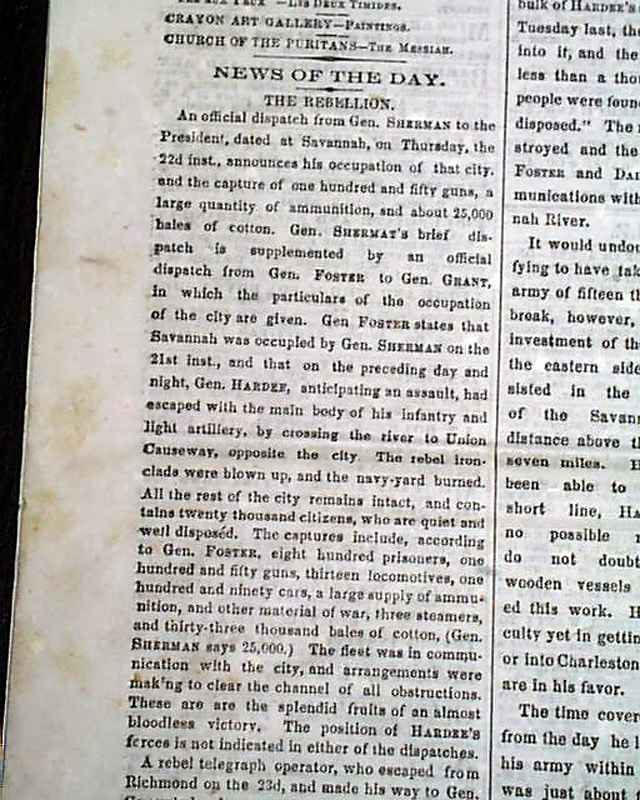
One of the more desired Times issues from the latter part of the Civil War, as the various first column headlines announce Sherman's capture of Savannah, heads including: "SAVANNAH OURS" "Sherman's Christmas Present" "Official Dispatches from Generals Sherman and Foster" "What Sherman Found" "20,000 People in the City Quiet & Well Disposed" "Escape of Hardee's Army" "An Almost Bloodless Victory" and more.
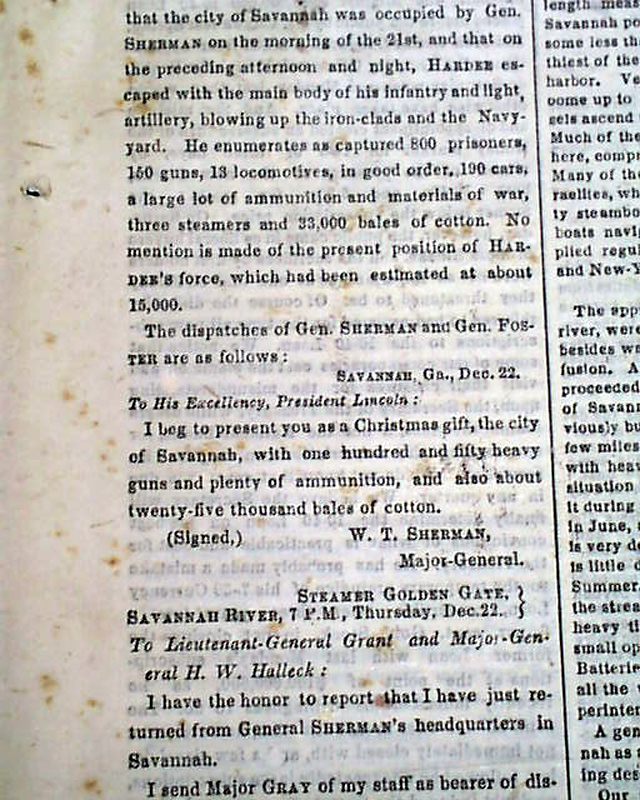
Included within the detailed reports is the famous message: "To His Excellency, President Lincoln: I beg to present you as a Christmas gift, the city of Savannah, with 150 heavy guns and plenty of ammunition, and almost about 25,000 bales of cotton." signed in type: W. T. Sherman, Major-General".
Complete in eight pages, never bound nor trimmed so it folds out to a single sheet, very nice condition.
Background: Major General William Tecumseh Sherman’s famous December 22, 1864, dispatch—offering President Abraham Lincoln the city of Savannah alongside 150 heavy artillery guns, abundant ammunition, and approximately 25,000 bales of captured cotton—stands as one of the most celebrated and culturally resonant communications in American military history. Sent via Fort Monroe to reach Washington by Christmas Day, the brief message delivered monumental strategic and political impact: it provided dramatic public proof of the success of Sherman’s high-stakes "March to the Sea," relieved weeks of deep national anxiety caused by his army’s total blacking out of communications, and inflicted a severe economic blow on the Confederacy through the seizure of cotton worth tens of millions of dollars at the time. From an archival perspective, while printed contemporary broadsides, wartime telegraph transcriptions, and period newspaper accounts occasionally appear in high-end historical auctions, original primary manuscript copies—such as the official received military telegraph logs preserved in Record Group 107 at the U.S. National Archives and Lincoln's executive papers at the Library of Congress—are extraordinarily rare institutional treasures that almost never enter the private market.
Other issues you may like
§ related
NEW YORK HERALD, Dec. 26, 1864
- Christmas present to Abraham Lincoln
- General William T. Sherman
- March to the sea completed
- Savannah GA Georgia captured
An
...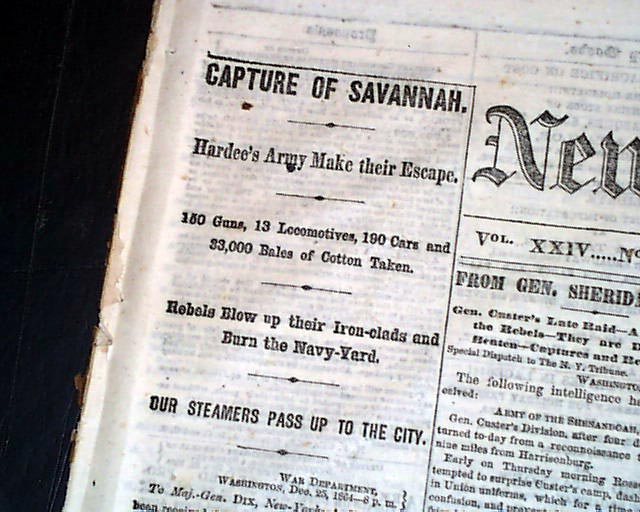
NEW YORK TRIBUNE, Dec. 26, 1864 An historic issue reporting the fall of Savannah to the Union forces, with one of the more notable quotes part of the
...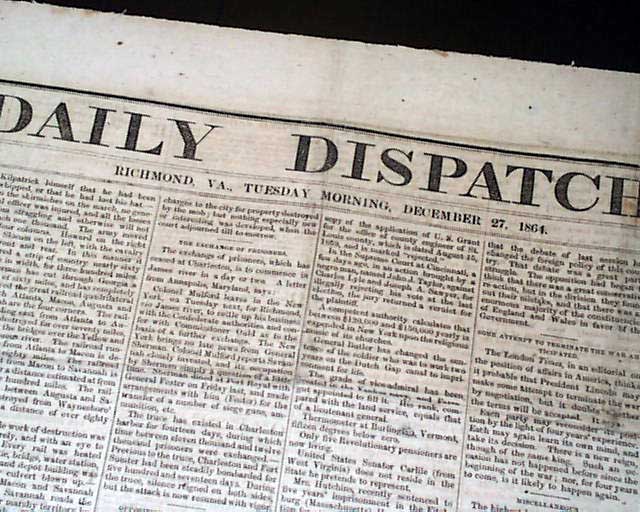
DAILY DISPATCH, Richmond, Virginia, Dec. 27, 1864
- From the capital of the Confederacy
- William T. Sherman's march to the sea ends
- Surrender of Savannah,
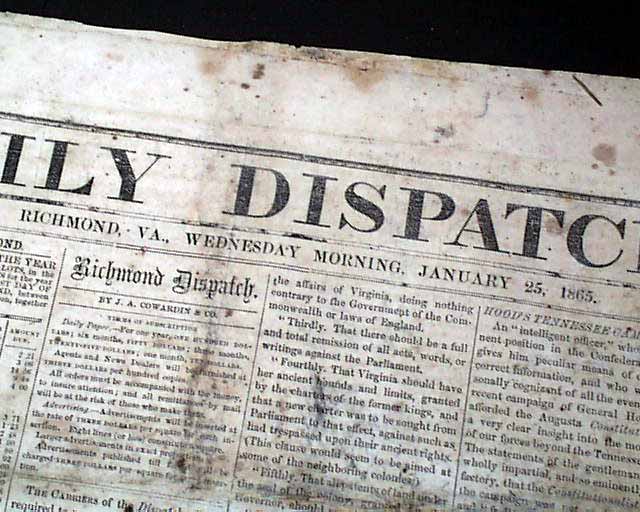
DAILY DISPATCH, Richmond, Virginia, Jan. 25, 1865
- From the Capital of the Confederacy
- Capture of Savannah, Georgia by W.T. Sherman
The front page has a
...