A rare & decorative campaign newspaper supporting Harrison...
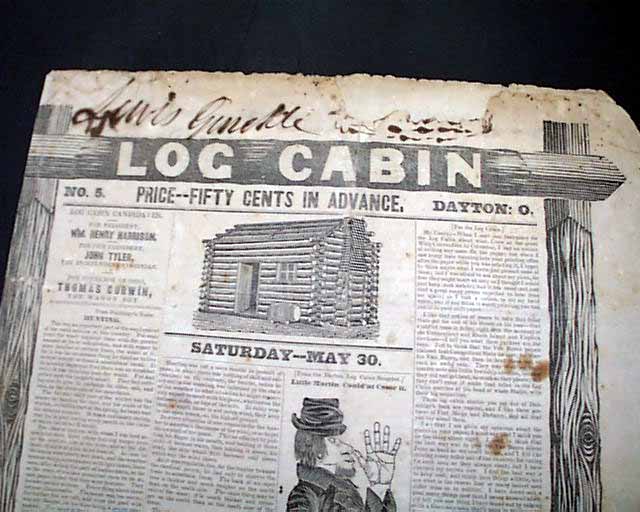
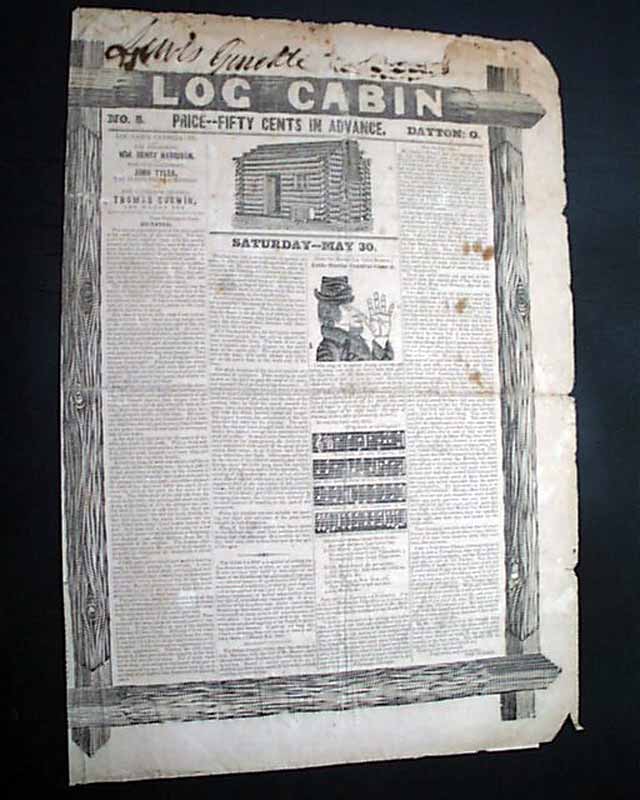
LOG CABIN, Dayton, Ohio, May 30, 1840
- President William Henry Harrison
- Very rare campaign publication
A very obscure campaign newspaper in support of William H. Harrison for President.
Campaign newspapers were common in the 19th century with the lack of more modern communication available today. These often-inflammatory publications were published with the sole purpose of supporting a candidate and lasted only during the campaign period. They sought to rally support for their politicians of choice by emphasizing the benefits of their candidates and party platforms and attacking those of the opposition.
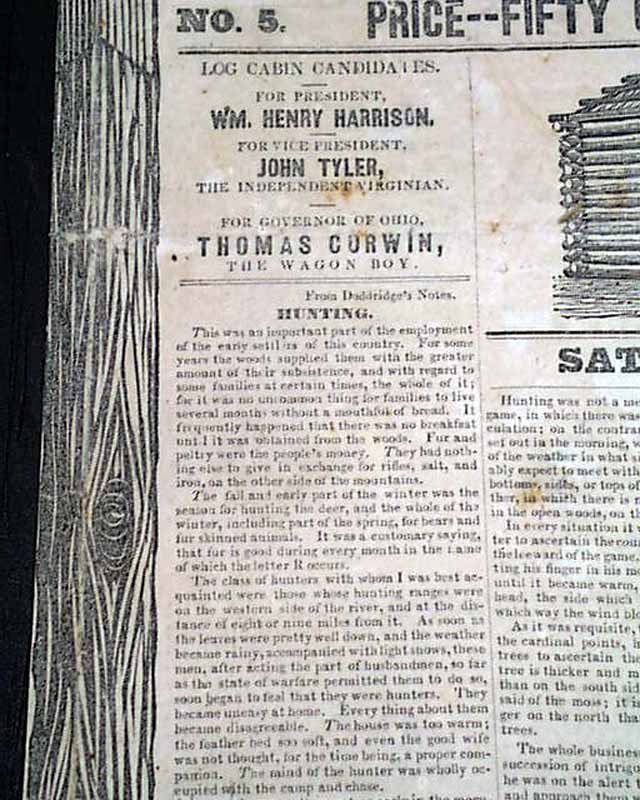
The Log Cabin, from Dayton, Ohio, was published from March to October 1840. It supported Whig candidate William Henry Harrison who defeated the Democratic incumbent, Martin Van Buren.
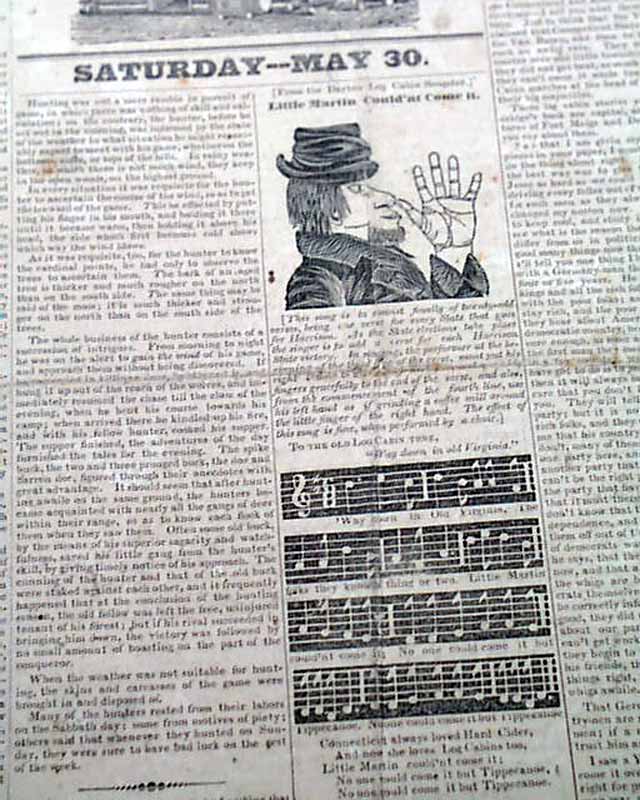
Harrison was not only the first Ohioan to serve as president of the United States, but was also the first president to actively campaign for office. Along with employing the slogan “Tippecanoe and Tyler Too,” he was called “the log cabin and hard cider candidate.” This “common man” image helped him win the election against Van Buren.
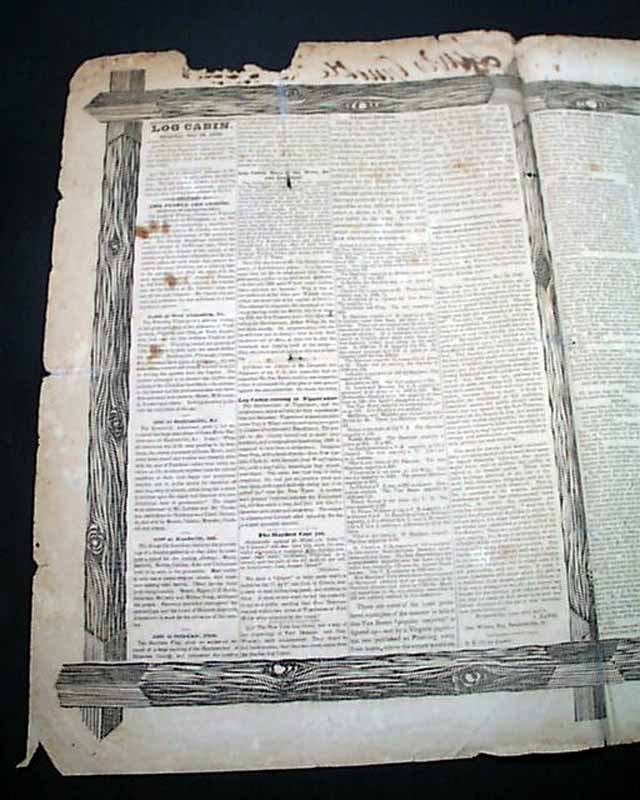
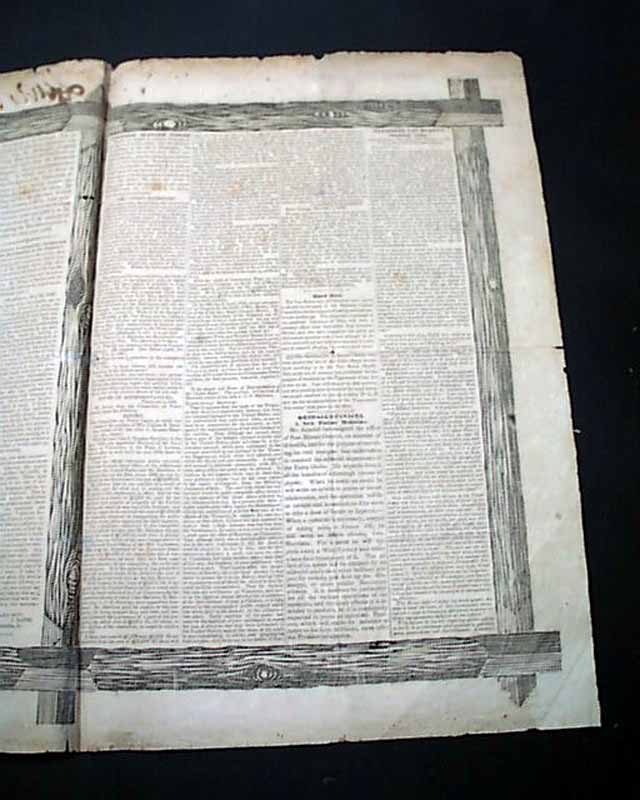
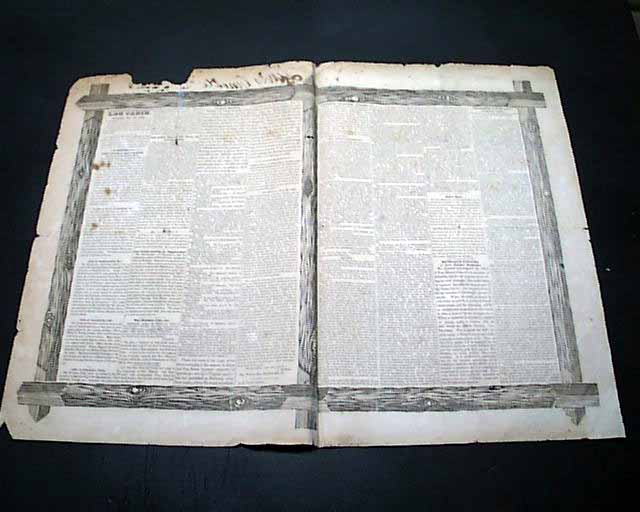
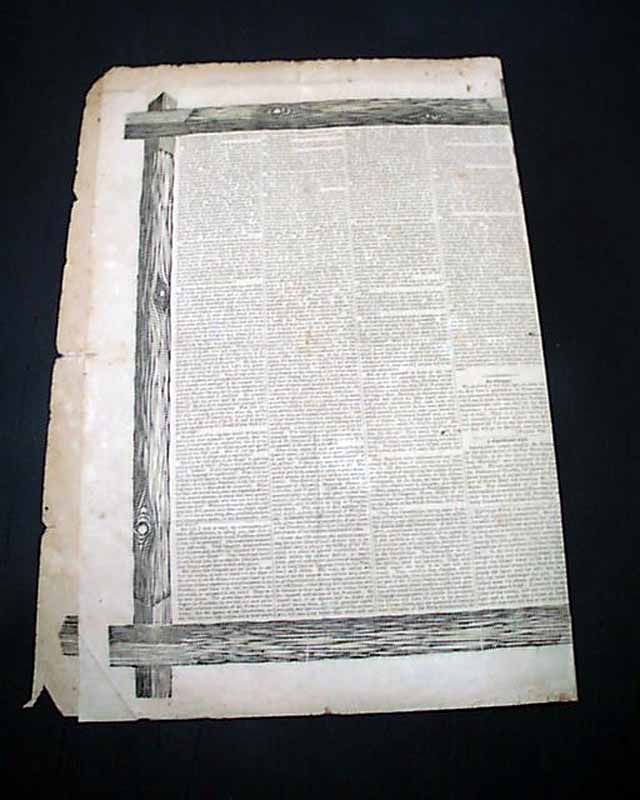
This is issue number 5 of only 13 published. All pages are bordered in logs, with an engraving of a log cabin on the front page.
Four pages, 12 by 17 1/2 inches, never bound nor trimmed, wear at the margins with period inking above the masthead, and a piece from the blank, top margin not affecting text or decorative borders.
Background: This specific issue of the Dayton Log Cabin represents a pivotal moment in American history, marking the birth of modern, image-driven political campaigning while remaining an exceptionally rare artifact of 19th-century material culture. Published during the 1840 election, it captures the Whig Party’s revolutionary shift away from substantive policy debates toward populist branding; by leaning into the "log cabin and hard cider" imagery, the Whigs successfully reframed William Henry Harrison—a wealthy, aristocratic Virginian—as a relatable "common man" to defeat the incumbent Martin Van Buren. Because campaign newspapers of this era were highly ephemeral—cheaply printed, aggressively partisan, and intended to be discarded immediately after the election—finding a complete, unbound, and untrimmed copy of this specific regional run is incredibly rare. As issue number 5 of only 13 ever printed, its distinct log-bordered pages and front-page engraving serve as a pristine, physical blueprint of the political marketing tactics that still dominate democratic elections today.
Other issues you may like
§ related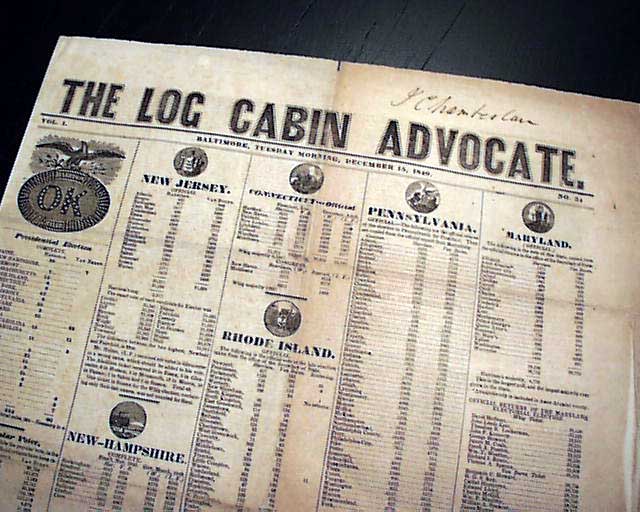
THE LOG CABIN ADVOCATE, Baltimore, Dec. 15, 1840
- William Henry Harrison
- Rare campaign publication
Not to be confused with the "Log Cabin" of New York, this
...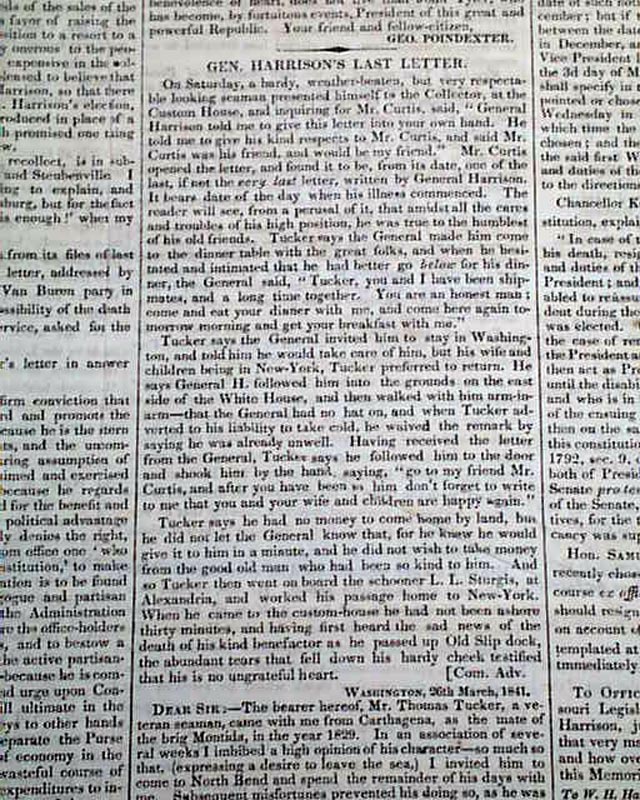
THE LOG CABIN, New York, April 17, 1841 The famous campaign newspaper published by Horace Greeley in support of William Henry Harrison in the 1840
...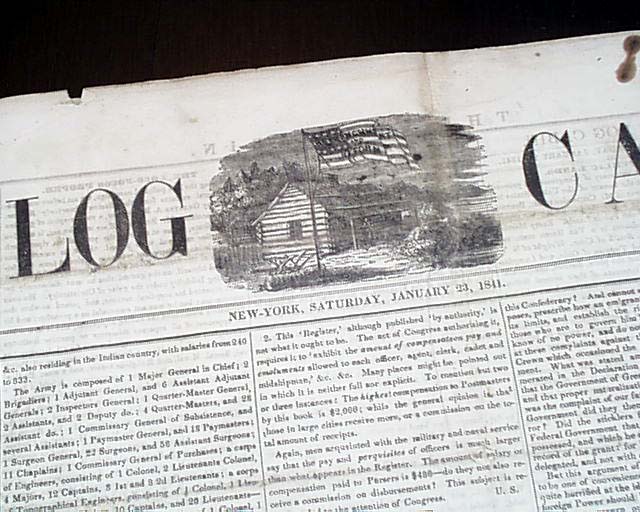
THE LOG CABIN, New York, Jan. 23, 1841
- William Henry Harrison
- Rare campaign publication
The famous campaign newspaper published by Horace Greeley in support
...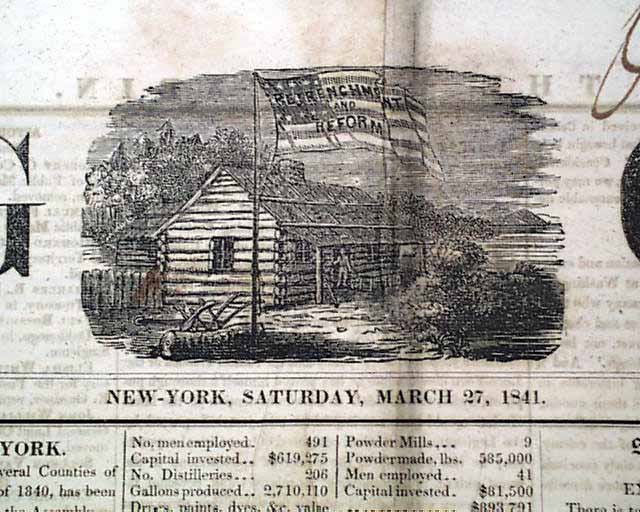
THE LOG CABIN, New York, March 27, 1841 The famous campaign newspaper published by Horace Greeley in support of William Henry Harrison in the 1840
...