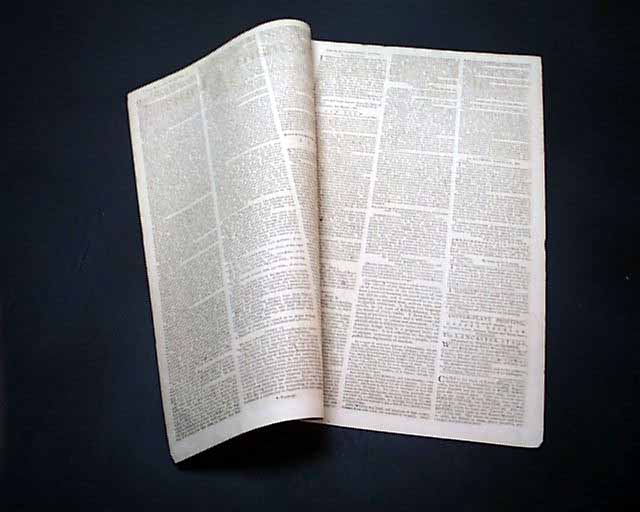
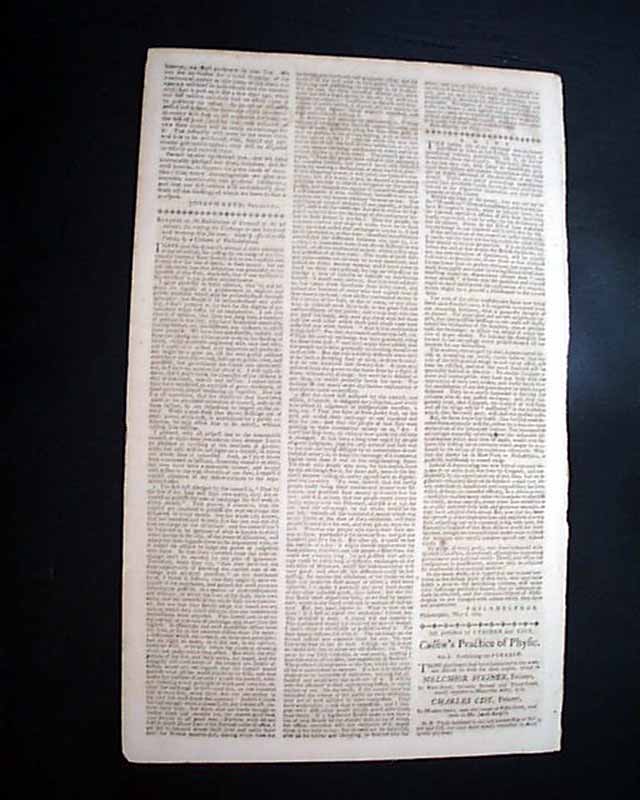
Guilford Court House celebration... more war action...
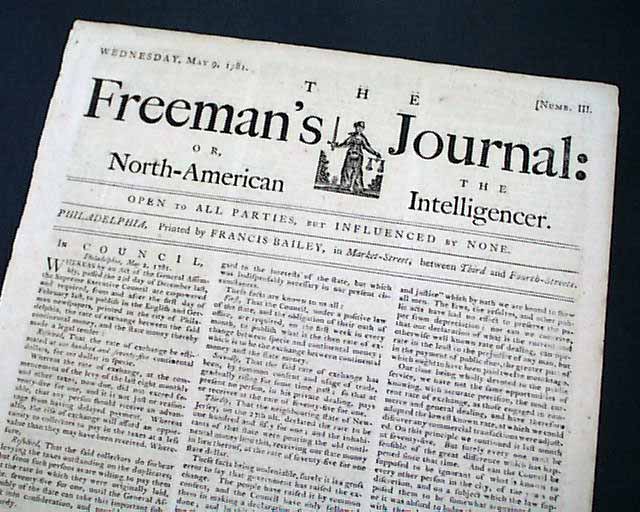
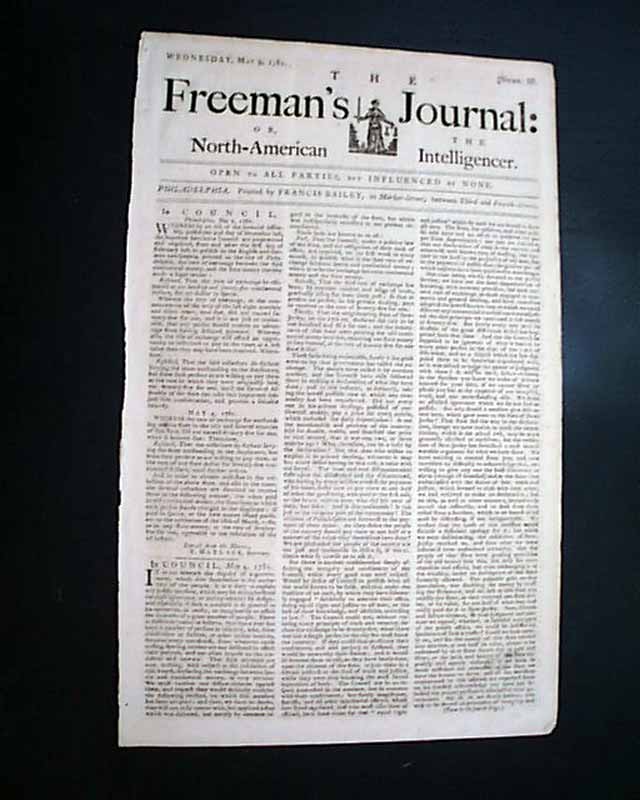
THE FREEMAN'S JOURNAL: of the NORTH AMERICAN INTELLIENCER, Philadelphia, May 9, 1781
- American Revolutionary War
- Battle of Guilford Court House
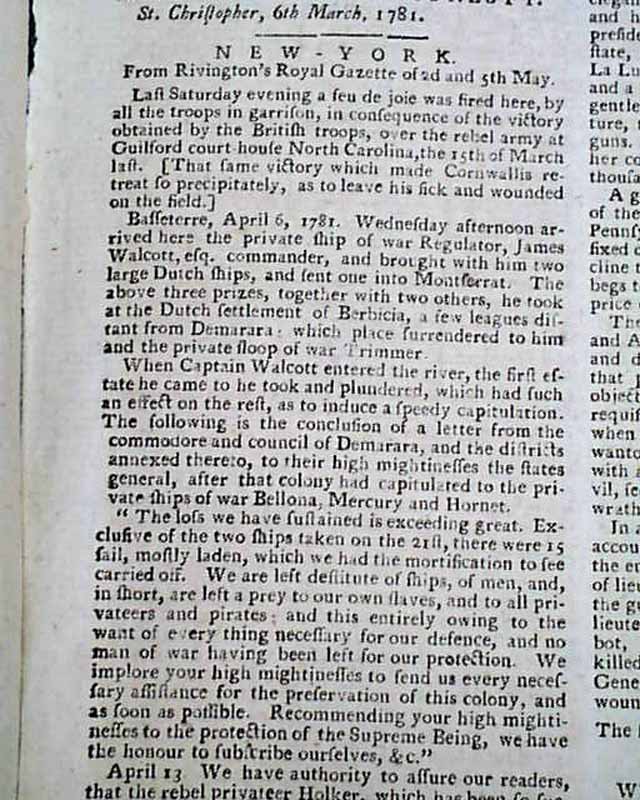
Page 3 has a report from New York on the celebration of the British victory at Guilford Court House, North Carolina: "Last Saturday...a feu de joie was fired here, by all the troops in garrison, in consequence of the victory obtained by the British troops over the rebel army at Guilford court house...the 15th of March last...".
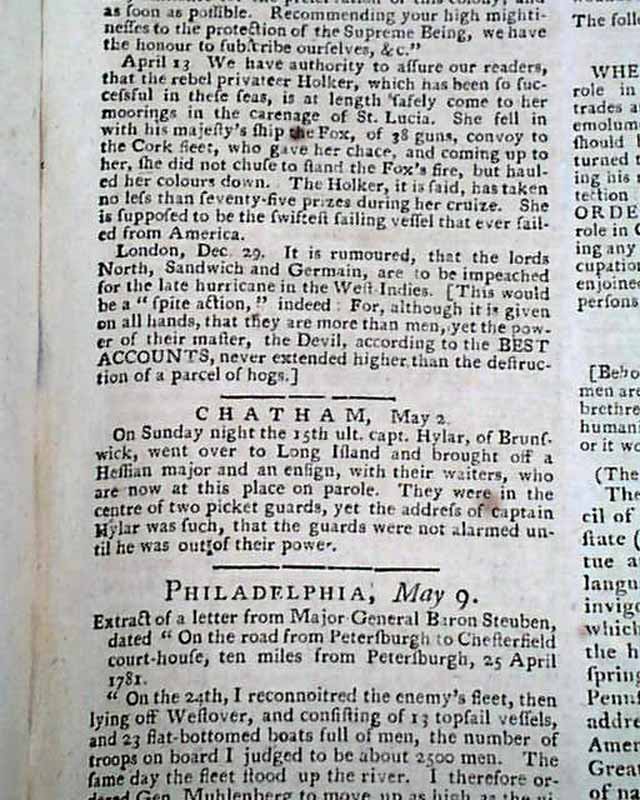
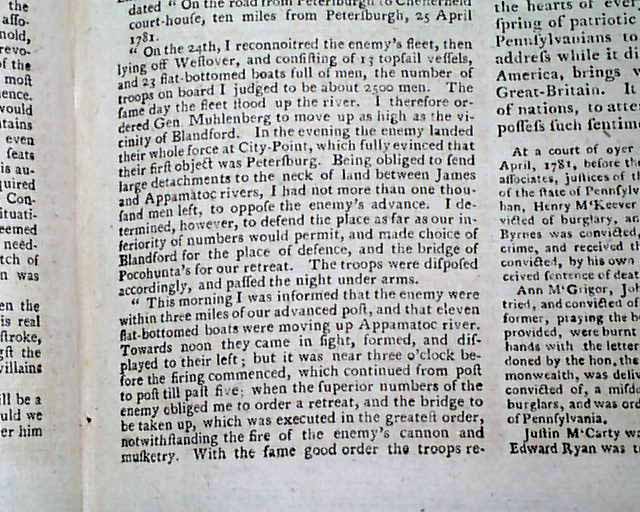
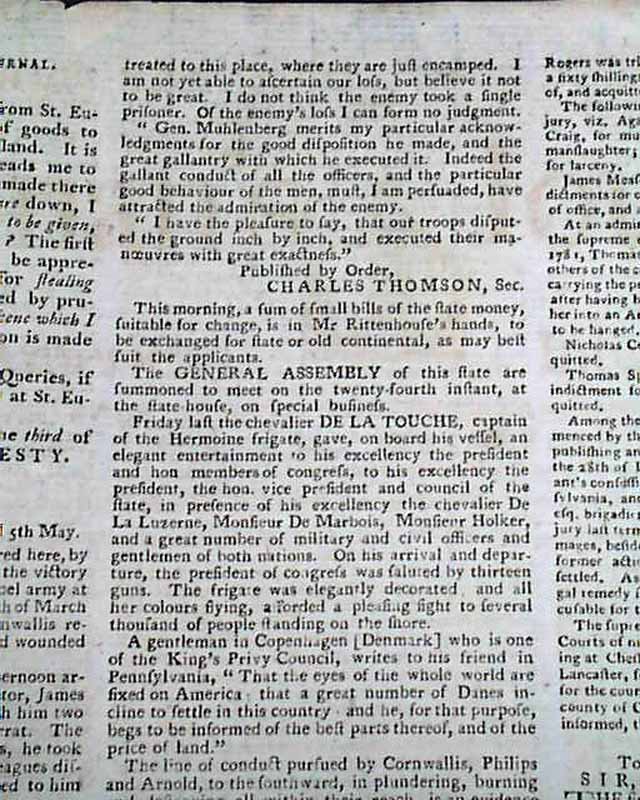
Also a letter from General Baron Steuben from Virginia noting in part: "...I reconnoitered the enemy's fleet...number of troops on board I judged to be about 2500 men...I therefore ordered Gen. Muhlenberg to move up a high as the vainly of Blandford...the enemy landed their whole force at City Point which fully evinced that their first object was Petersburg..." with more on the military action there.
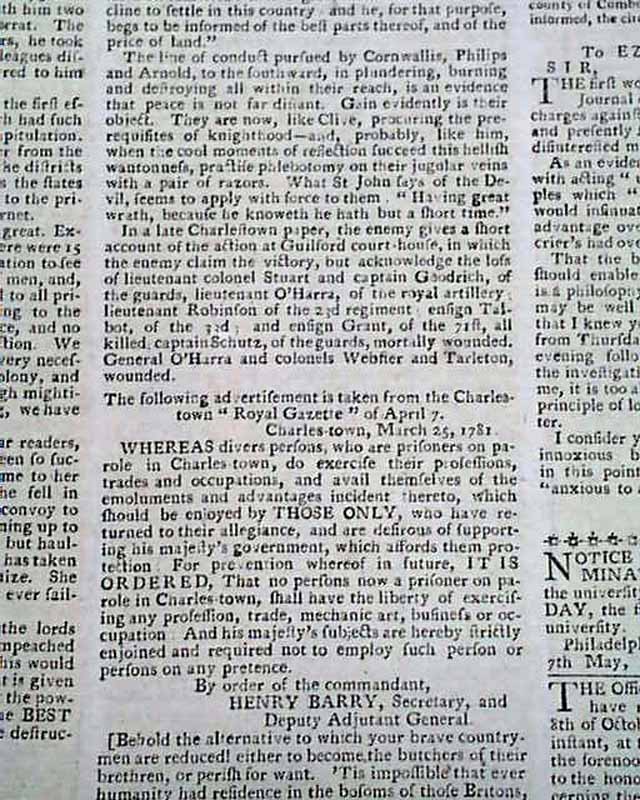
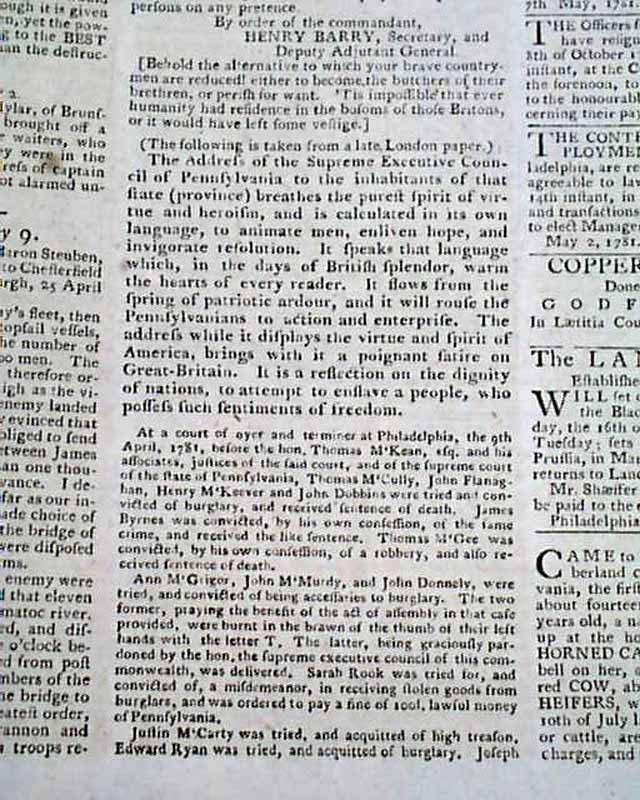
More war-related reports on page 3 as seen in the photos.
Four pages, very nice condition.
Background: Printed during a decisive turning point in the Revolutionary War, these primary accounts in The Freeman’s Journal highlight how tactical clashes in early 1781 set the stage for ultimate British defeat. In New York, the British garrison staged a triumphant feu de joie to celebrate Lord Cornwallis's tactical win over Major General Nathanael Greene at Guilford Court House on March 15; however, this "victory" cost Cornwallis a quarter of his force, crippling his North Carolina campaign and forcing a strategic retreat to the coast. Meanwhile, in Virginia, Baron von Steuben reconnoitered a fleet of 2,500 men landing at City Point, recognizing that their primary target was Petersburg. Ordering General Muhlenberg to position forces near the valley of Blandford, Steuben’s 1,000 militiamen executed a crucial, disciplined delay against British regulars on April 25. Together, these events illustrate the illusion of British tactical success versus the strategic reality on the ground: heavy casualties in the Carolinas and mounting resistance in Virginia ultimately compelled Cornwallis to merge his forces in the region, directly setting the trap for his eventual encirclement and final surrender at Yorktown later that year.
Other issues you may like
§ related
GENTLEMAN'S MAGAZINE London, May, 1781
- Battle of Guilford Courthouse
- American Revolutionary War
- Captain James Cook voyage
Content includes: "Debates in
...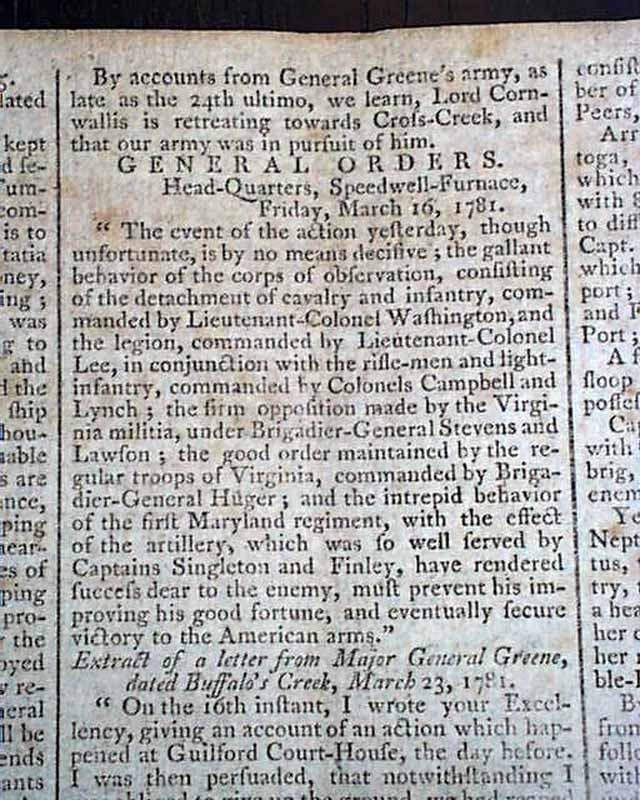
THE CONNECTICUT COURANT & WEEKLY INTELLIGENCER, Hartford, April 24, 1781
- Battle of Guilford Courthouse
- Greensboro, North Carolina
- General Charles Cornwallis
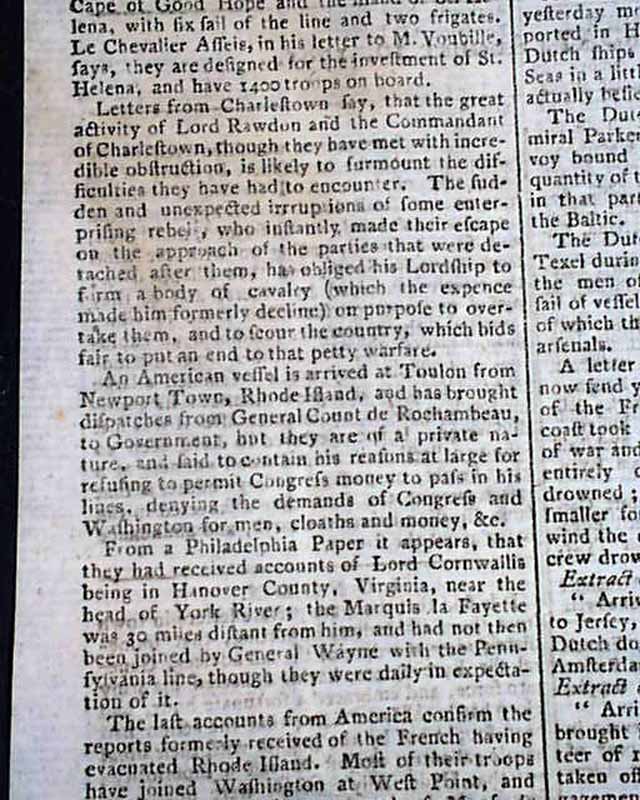
THE LONDON CHRONICLE, England, Aug. 16, 1781
- Revolutionary War events in the South
Page 2 has some reports on the Revolutionary War, bits including: Letters
...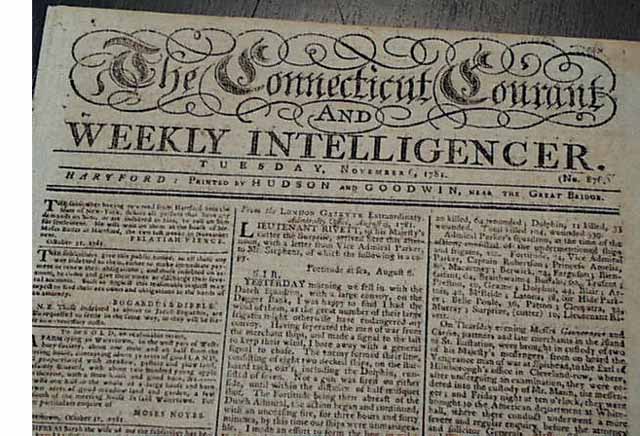
THE CONNECTICUT COURANT & WEEKLY INTELLIGENCER, Hartford, Nov. 6, 1781
- Cornwallis surrenders at Yorktown
- American Revolutionary War ending
Certainly the most
...