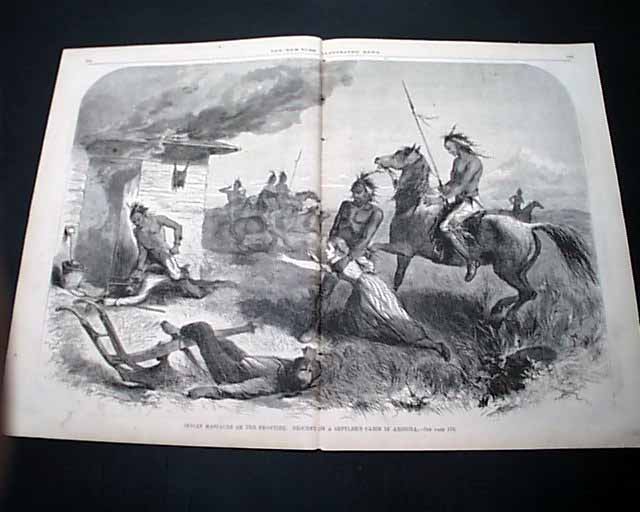
Brutal Indian attack in Arizona... Robert E. Lee... much more...
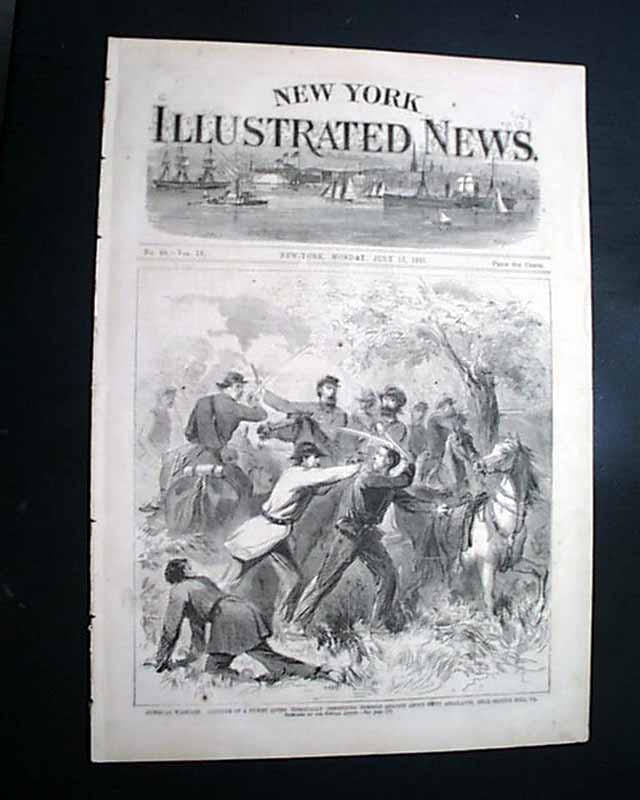
NEW YORK ILLUSTRATED NEWS, July 15, 1861 Formatted much like the popular Harper's Weekly, but a much scarcer title.
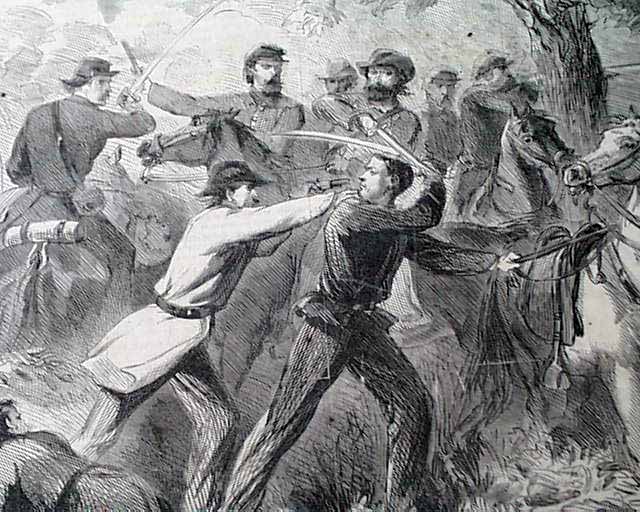
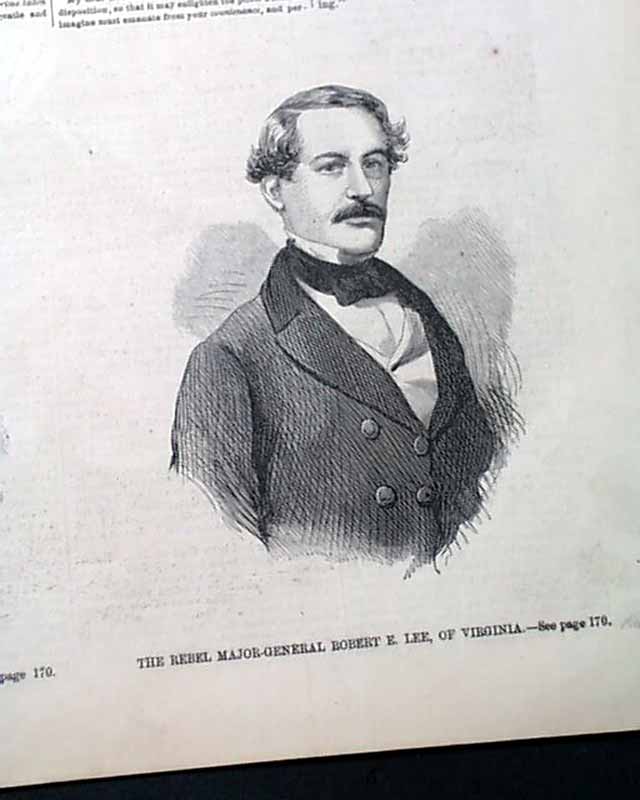
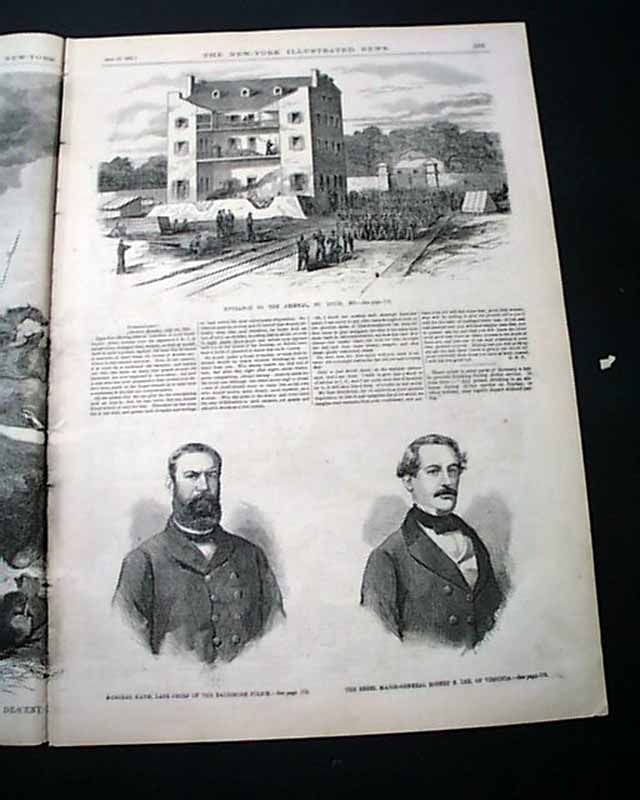
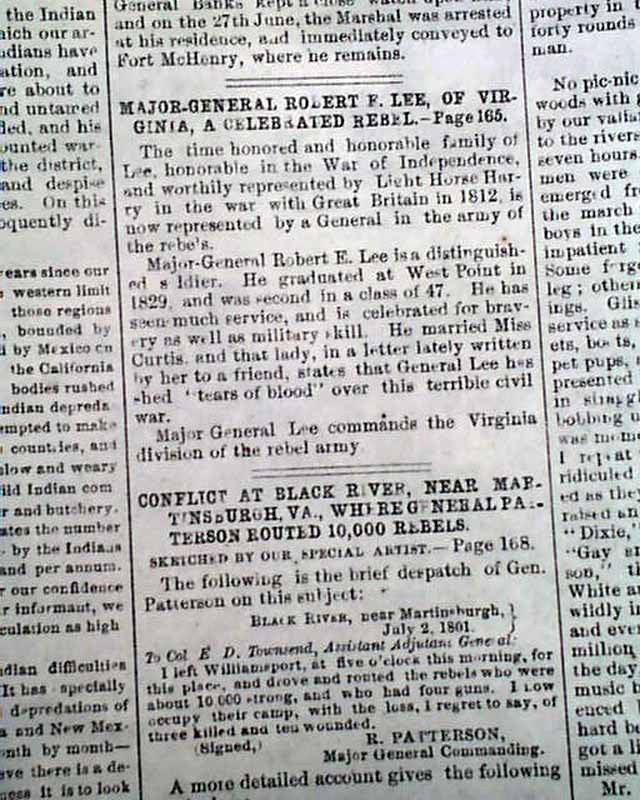
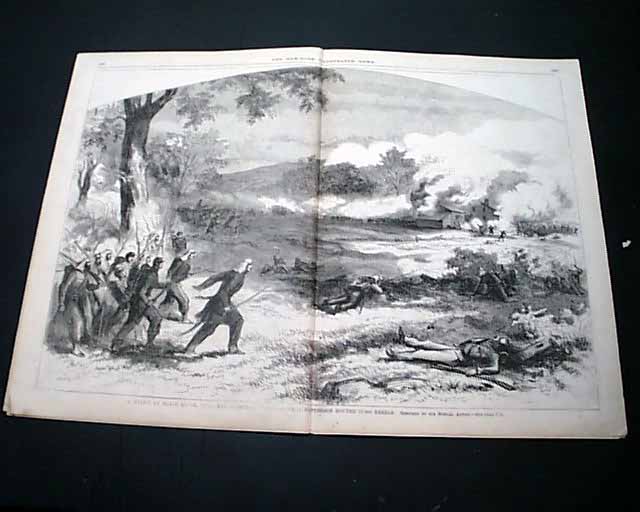
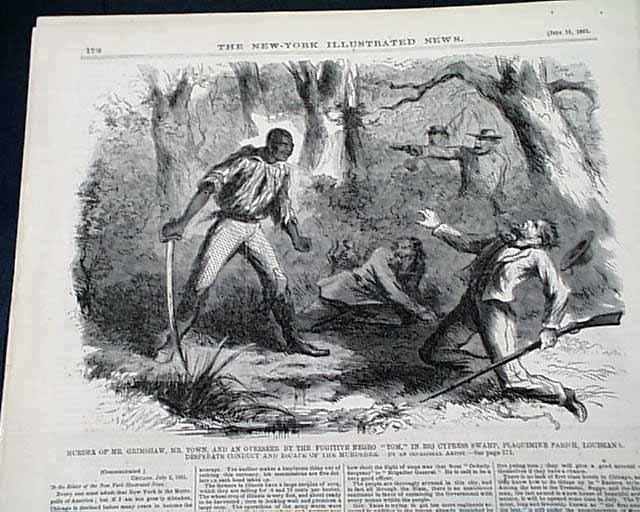
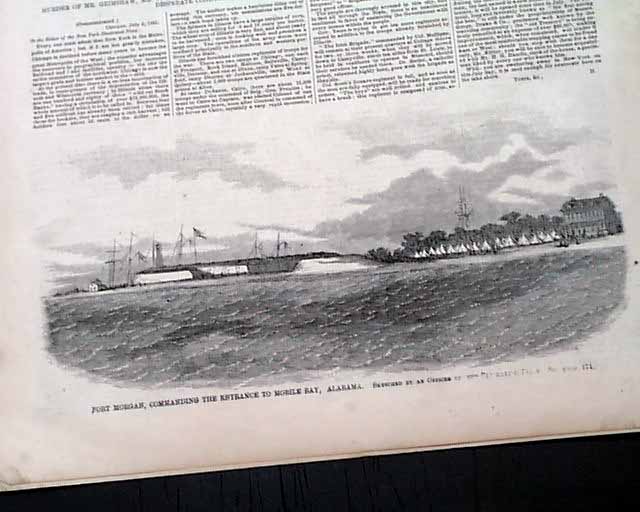
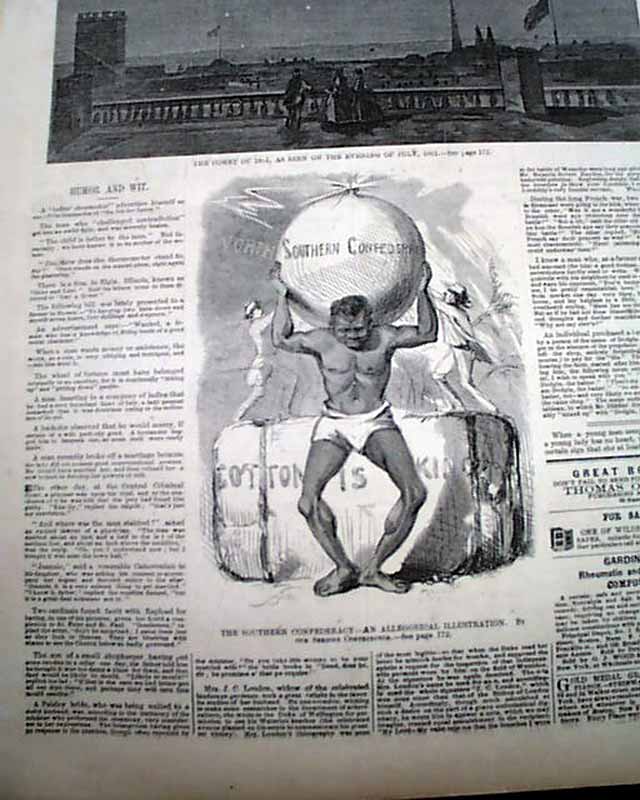
The full front page shows: "Capture of a Picket After Heroically Defending Himself Against About 50 Assailants, near Cloud's Mill, Virginia". Other prints include a dramatic double page centerfold: "Indian Massacre on the Frontier. Descent On a Settler's Cabin In Arizona" (small binding holes at the fold); "Arsenal at St. Louis" "The Rebel Major-Gen era Robert E. Lee, of Virginia" with an article on him; another double page centerfold: "Conflict at Black River, Near Martinsburg, When General Patterson Routed 10,000 Rebels" "Murder of Mr. Grimshaw...by the Fugitive Negro...In Big Cypress Swamp...Louisiana" "Fort Morgan..." and more.
Sixteen pages, nice condition.
Background: The July 15, 1861 edition of the New York Illustrated News captures a pivotal, fleeting moment in American history when the Civil War was transitioning from a localized crisis into a grueling national conflict, while simultaneously reflecting the nation's broader anxieties regarding race and westward expansion. Published just six days before the disastrous Union defeat at the First Battle of Bull Run, the issue highlights early military clashes like General Robert Patterson’s minor victory at the "Conflict at Black River" (the Battle of Hoke's Run), an event that briefly fueled a false sense of Northern optimism and highlighted the tactical movements near Martinsburg that would directly influence the upcoming major battle. Furthermore, its feature on "The Rebel Major-General Robert E. Lee" offers a rare, real-time glimpse of Lee before he achieved iconic status as the commander of the Army of Northern Virginia, at a time when Northern media was still processing the defection of top U.S. officers to the Confederacy. By juxtaposing these early Virginia campaigns with sensationalized depictions of an "Indian Massacre" in Arizona and the racially charged "Murder of Mr. Grimshaw" in Louisiana, this specific issue serves as a remarkable cultural artifact; it illustrates how the Northern public in the summer of 1861 viewed the outbreak of the rebellion not in isolation, but as part of a wider, violent fracturing of law, order, and white supremacy across the entire American landscape.
Other issues you may like
§ related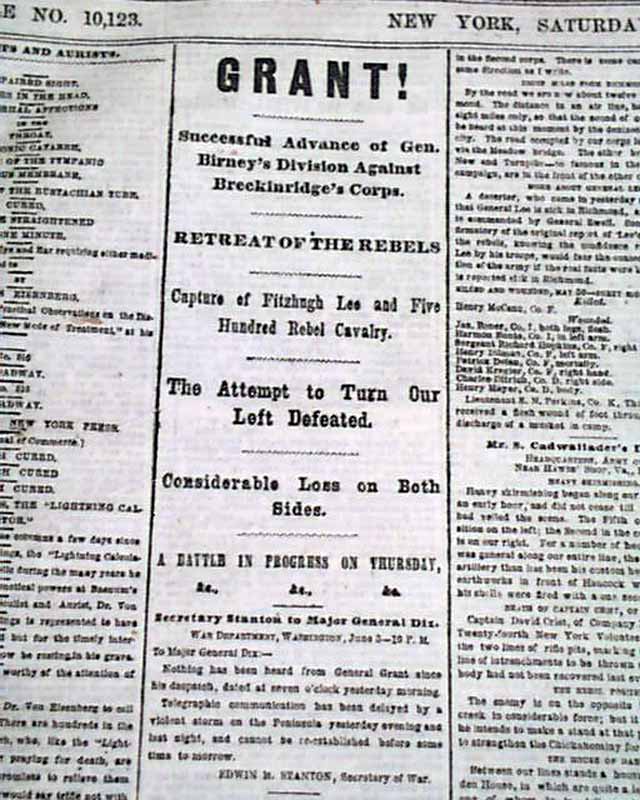
NEW YORK HERALD, June 4, 1864
- Battle of Cold Harbor
- Overland Campaign
Among the front page column Civil War heads are: "GRANT ! " "Successful Advance of Gen.
...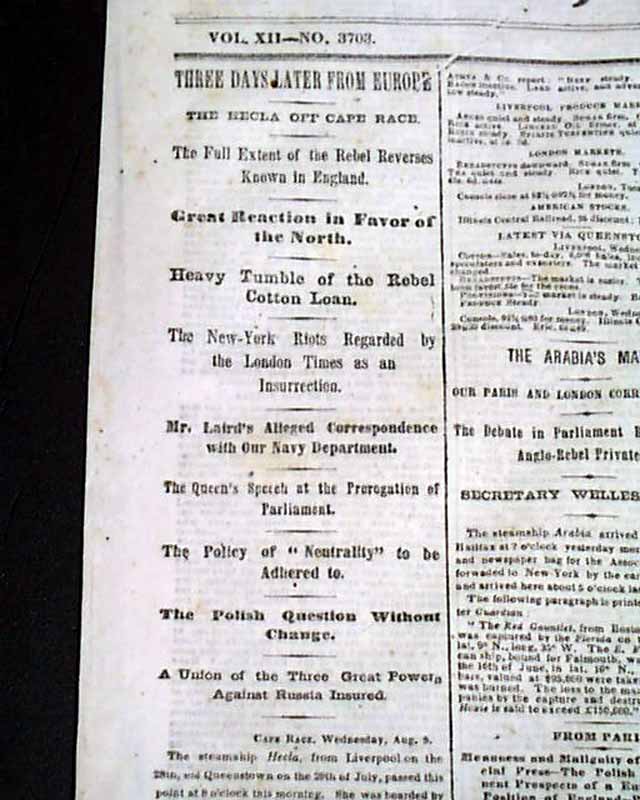
NEW YORK TIMES, Aug. 6, 1863 Among the war-related reports inside: "The Position of Lee's Army" "Affairs On the Mississippi" "Important Captures at Natchez
...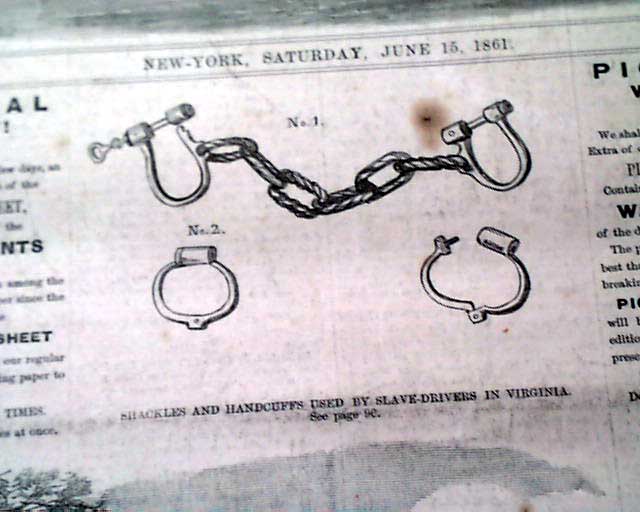
NEW YORK ILLUSTRATED NEWS, June 15, 1861 Formatted very much like the more popular 'Harper's Weekly' but considerably more uncommon.
The front page shows:
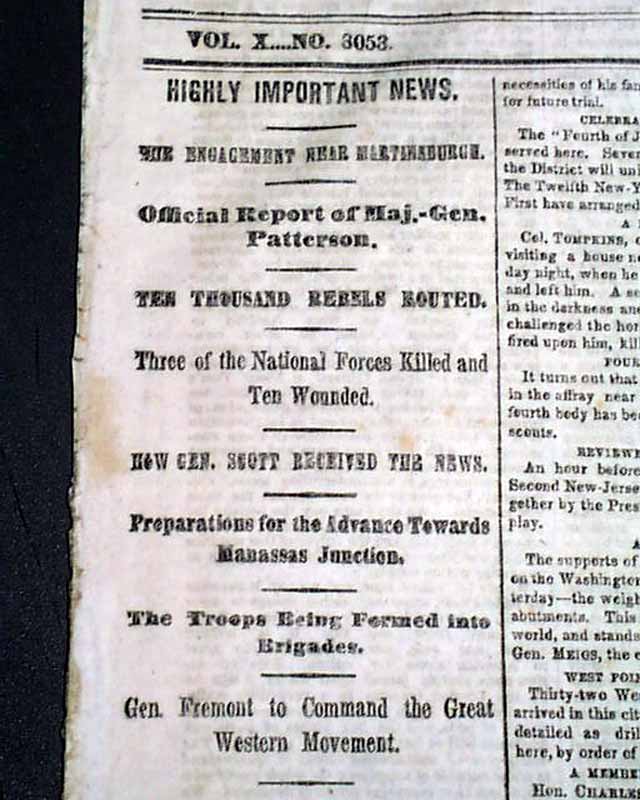
NEW YORK TIMES, July 4, 1861 Among the first column heads on the Civil War are: "The Engagement Near Martinsburgh" "Official Report of Maj.-Gen. Patterson"
...