Displayable issue on the Republican elephant...
HARPER'S WEEKLY, New York, March 8, 1884
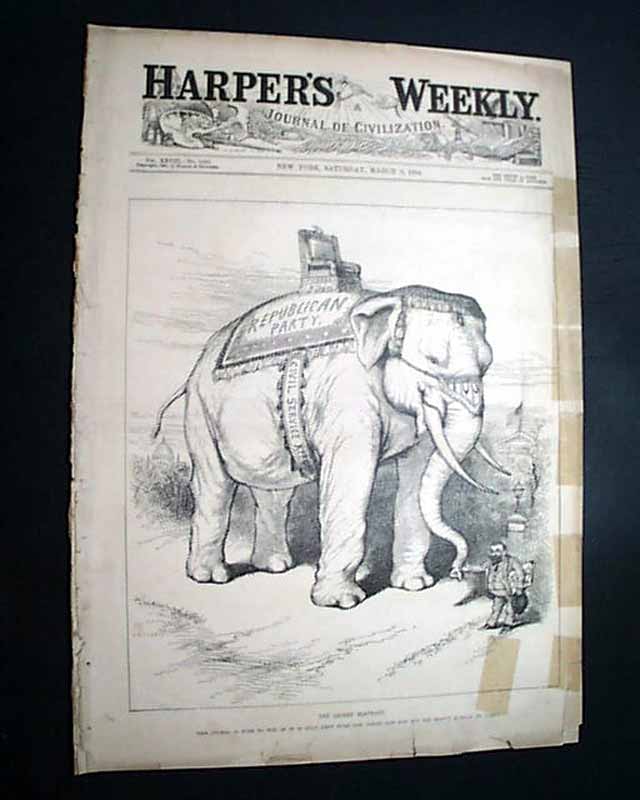
- The "Republican Elephant" is born
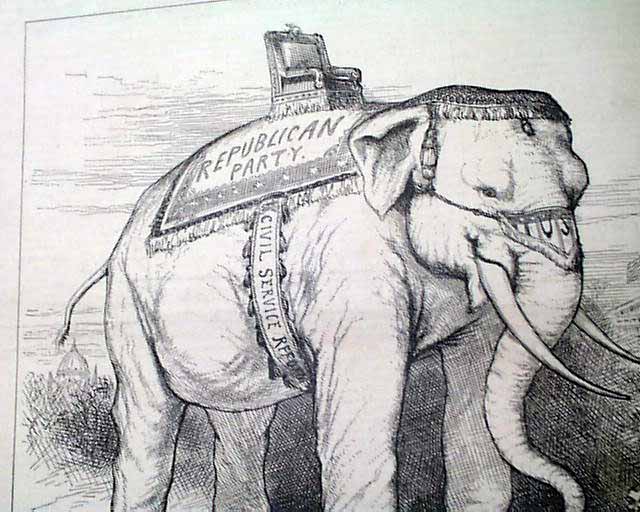
For a political junkie--and a Republican--this could be the best Harper's Weekly for display as the entire front page print is captioned: "The Sacred Elephant. This Animal Is Sure To Win, If It Is Only Kept Pure And Clean, And Has Not Too Heavy A Load To Carry."
This drawing is by Thomas Nast who created the republican elephant and the democratic donkey, as well as the modern version of Santa Claus. Included within the drawing is a small rendition of Thomas Nast himself.
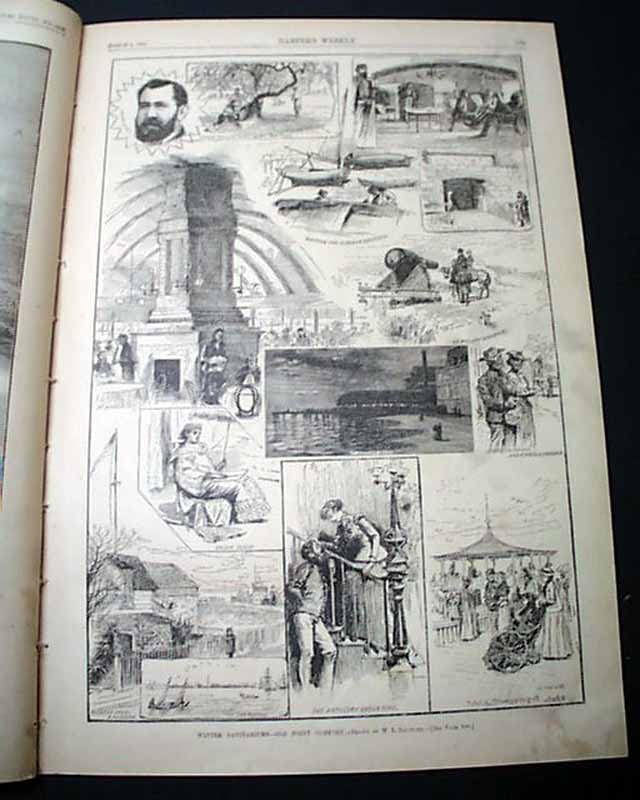
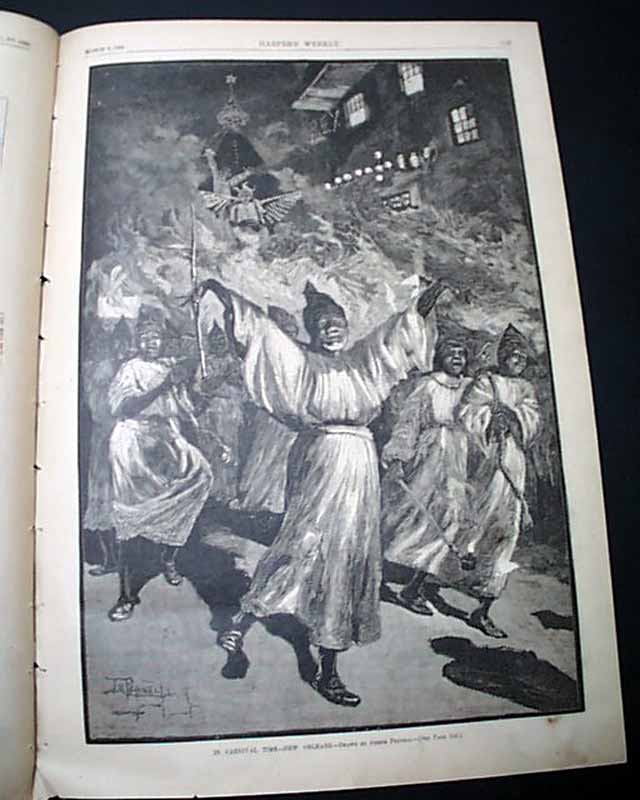
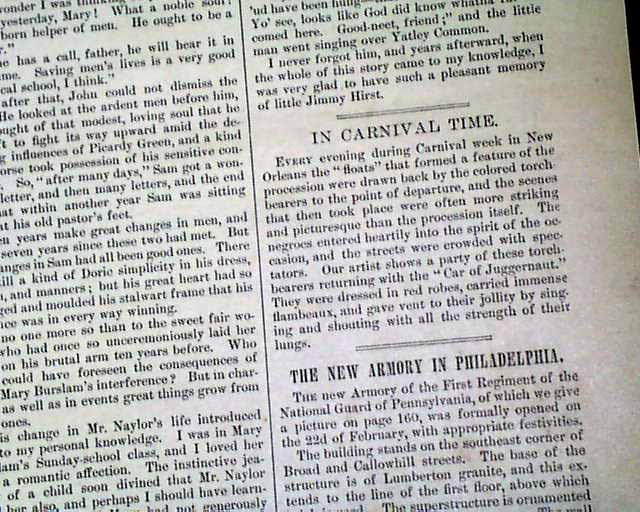
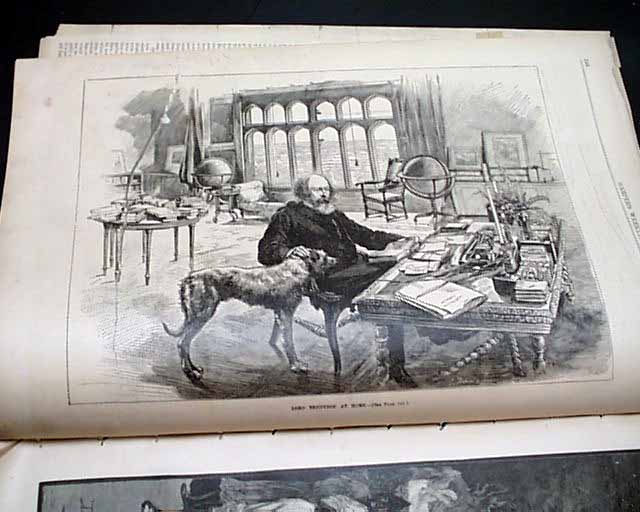
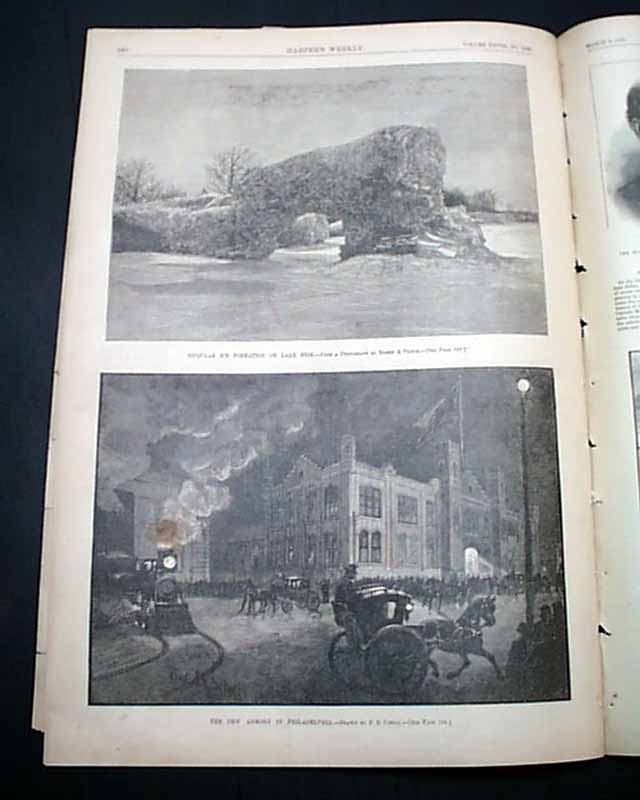
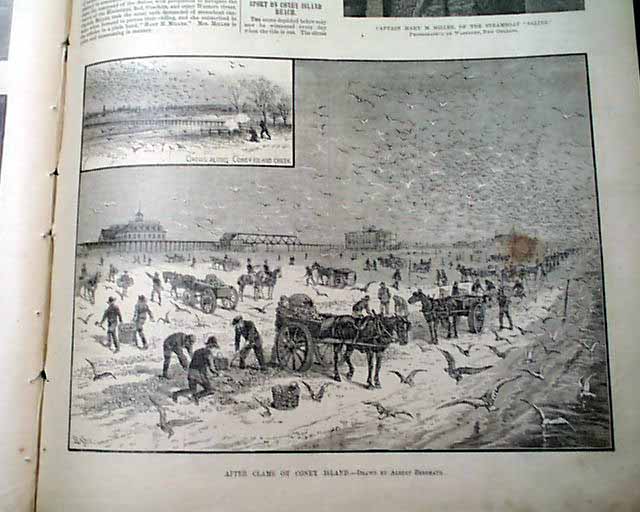
Other nice prints within include a full page of: "Bird's-Eye Map of the Seat of War in the Soudan"; a full page montage of 12 prints captioned: "Winter Sanitariums--Old Point Comfort"; a full page: "Lord Tennyson at Home" a full page: "In Carnival Time--New Orleans", "The New Armory in Philadelphia", "After Clams on Coney Island and a few other prints.
Complete in 16 pages, in somewhat "2nd rate" condition due to tape mends at two margins of the front page, none touching any of the Nast images. Some irregularity at the bottom margin of the front leaf and at the spine, and an interior print has a crude tape repair. Offered at half the regular price.
Background: The March 8, 1884 issue of Harper’s Weekly captures a pivotal geopolitical and domestic turning point, framed by Thomas Nast’s iconic cover cartoon that foreshadowed the chaotic 1884 U.S. presidential election. Nast’s warning that the "Sacred Elephant" must be "kept pure and clean" to win became a self-fulfilling prophecy later that year when the Republican Party nominated James G. Blaine; his association with political corruption triggered the "Mugwump" revolt of reform-minded Republicans, fracturing the party and handing the presidency to Democrat Grover Cleveland for the first time since the Civil War. Concurrently, the issue's focus on the "War in the Soudan" documents the escalating Mahdist War, a defining conflict of British imperial history. The featured map illustrates the British Empire’s desperate military entanglement in Sudan that culminated less than a year later in the harrowing Siege of Khartoum and the death of General Charles Gordon—a shockwave that crippled Prime Minister William Gladstone’s administration and fundamentally altered Western colonial policy in Northeast Africa.
Other issues you may like
§ related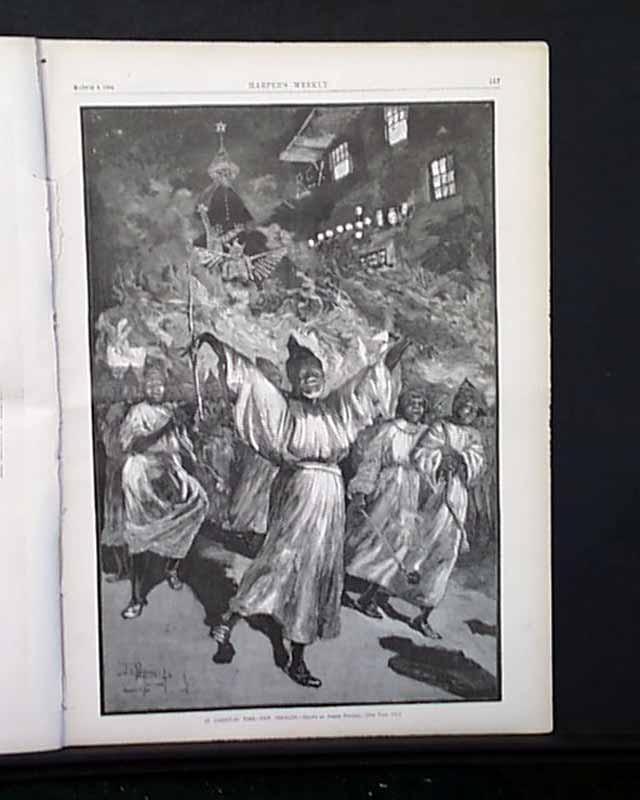
HARPER'S WEEKLY, New York, March 8, 1884 For a political junkie--and a Republican--this could be the best Harper's Weekly for display as the entire front
...
HARPER'S WEEKLY, New York, April 16, 1881
- Republican Elephant - campaign figure
- Cartoonist - caricaturist Thomas Nast
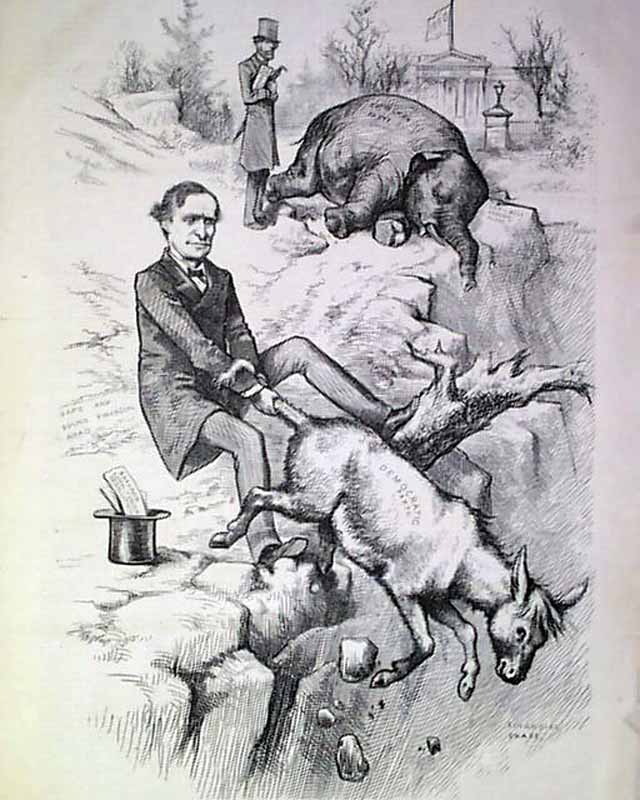
The prime print in this issue is the
...
HARPER'S WEEKLY, New York, April 16, 1881 The prime print in this issue is the full front page Thomas Nast print titled: "The Readjusting Performances".
...
HARPER'S WEEKLY, New York, December 27, 1879 An ideal issue for any political junkie as it contains the famous Thomas Nast print with the first appearance
...