Tortured by Indians...
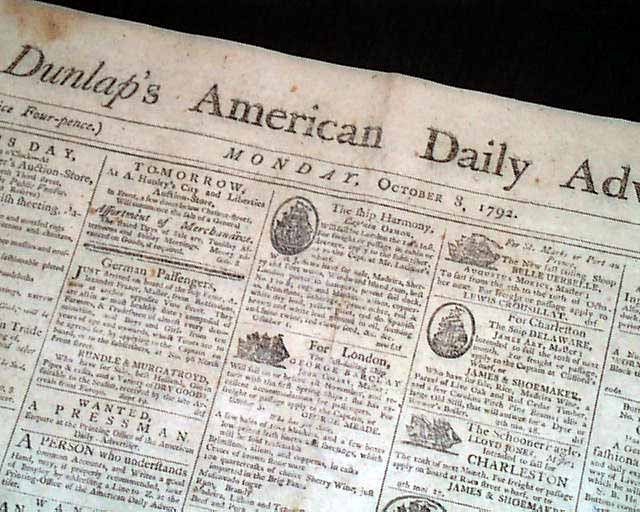
DUNLAP'S AMERICAN DAILY ADVERTISER, Philadelphia, Oct. 8, 1792
- Northwest Indian War
- Colonel John Hardin
- False report of torture
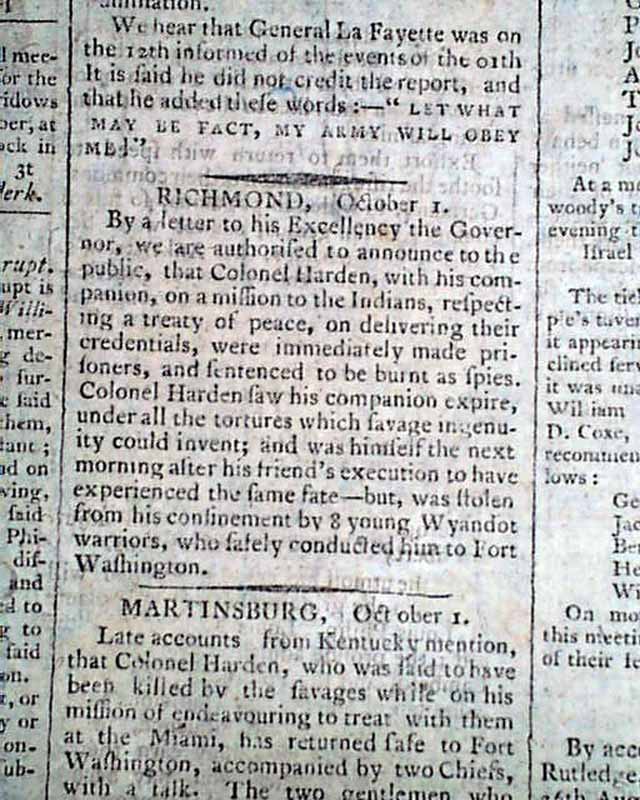
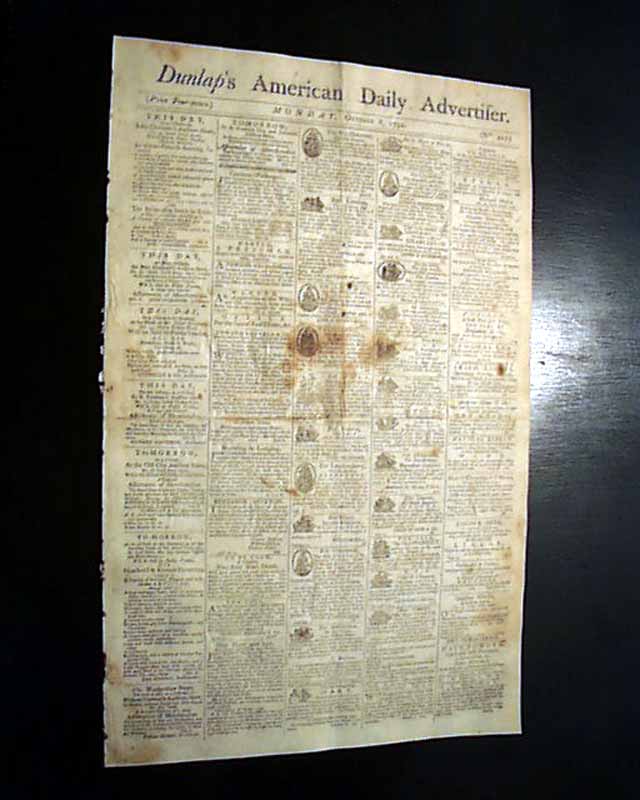
The front page features 24 illustrated ship ads. Page 2 has a report: "...that Colonel Harden...on a mission to the Indians respecting a treaty of peace...were immediately made prisoners & sentenced to be burnt as spies. Colonel Harden saw his companion expire under all the tortures which savage ingenuity could invent; and was himself the next morning after his friend's execution to have experienced the same fate--but was stolen from his confinement by 8 young Wyandot warriors who lately conducted him to Fort Washington." followed by a related account.
Four pages, some foxing near the middle, otherwise nice.
Background: The report in the October 8, 1792, edition of Dunlap’s American Daily Advertiser carries immense historical significance because it captures the chaotic, rumor-filled reality of the Northwest Indian War (1785–1795) and highlights the tragic failure of early American diplomacy on the frontier. The dramatic account of "Colonel Harden" (Colonel John Hardin) escaping execution with the help of Wyandot warriors was actually a false report; in reality, Hardin and his contemporary, Major Alexander Trueman, had been ambushed and killed months earlier in May 1792 by Native Americans while traveling under a flag of truce to negotiate a peace treaty on behalf of President George Washington and Secretary of War Henry Knox. At a time when the fledgling United States was reeling from the catastrophic defeat of St. Clair’s Army in 1791, the deaths of these peace commissioners signaled a point of no return, proving that the Western Confederacy of Native tribes was resolute in defending their lands north of the Ohio River. This specific newspaper clipping perfectly illustrates the agonizingly slow and unreliable flow of information between the Ohio frontier and the capital city of Philadelphia, where desperate public hope for a peaceful resolution repeatedly manifested as sensationalized survival myths before the grim reality of total war—which would culminate two years later at the Battle of Fallen Timbers—finally set in.
Other issues you may like
§ related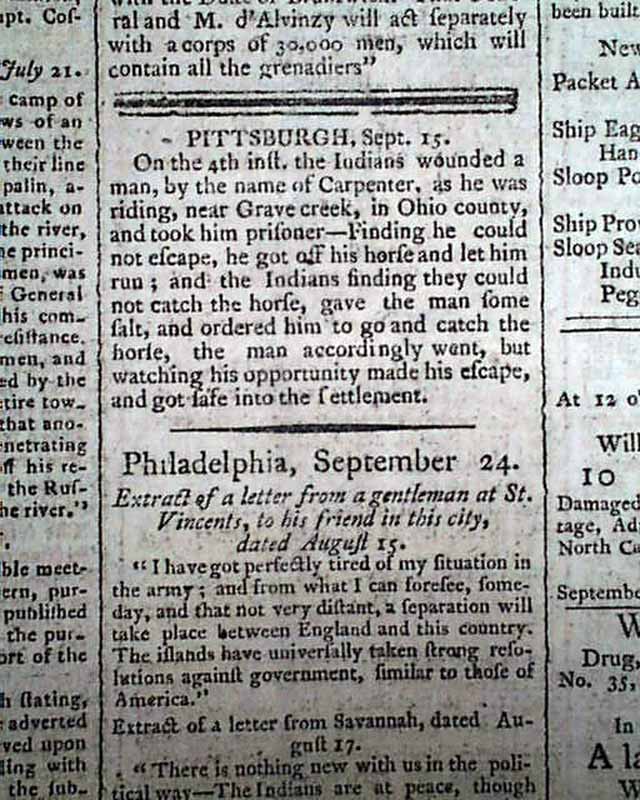
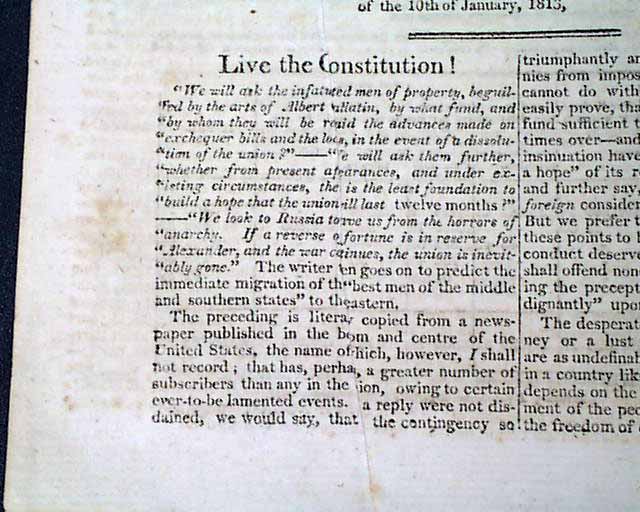
DUNLAP'S AMERICAN DAILY ADVERTISER, Philadelphia, Sept. 24, 1792 The front page features 19 illustrated ship advertisements. Page 3 has a curious article
...
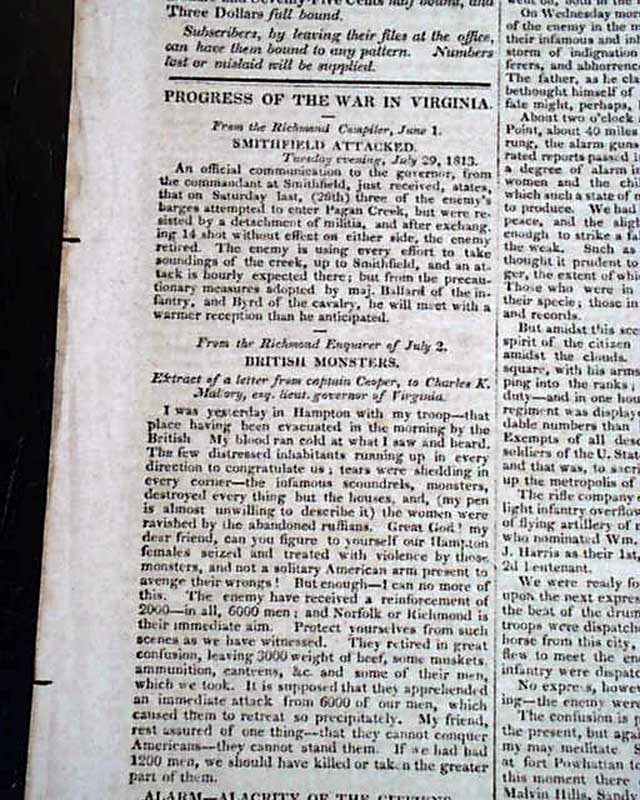
THE WEEKLY REGISTER, Baltimore, Feb. 13, 1813 Inside has; "Law of Ohio - An Act for the Encouragement of Volunteers in the North-Western Army of the United
...
THE WAR, New York, July 13, 1813
- Battle of Beaver Dams - Ontario, Canada
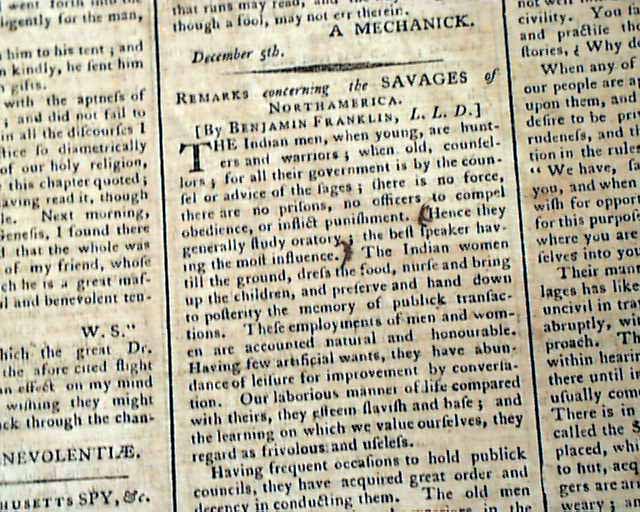
The front page has: "Progress of the War In Virginia--Smithfield Attacked--British
...
THOMAS'S MASSACHUSETTS SPY; OR THE WORCESTER GAZETTE, Boston, Dec. 22, 1791
- St. Clair's Defeat - Northwest Territory
- Battle of the Wabash River
- Native