Growth of Cooperstown...
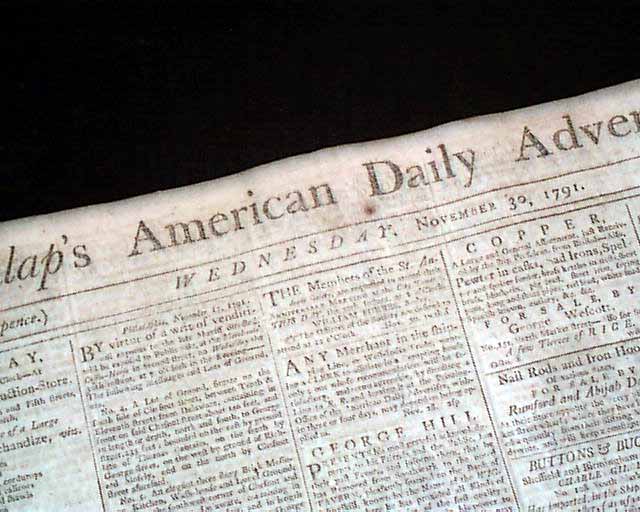
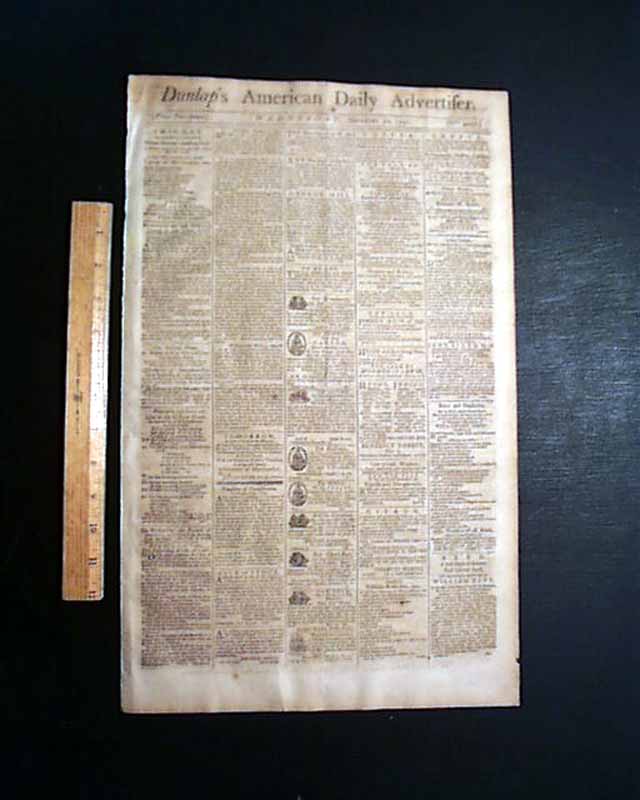
DUNLAP'S AMERICAN DAILY ADVERTISER, Philadelphia, Nov. 30, 1791
- 18th century Otsego County, New York
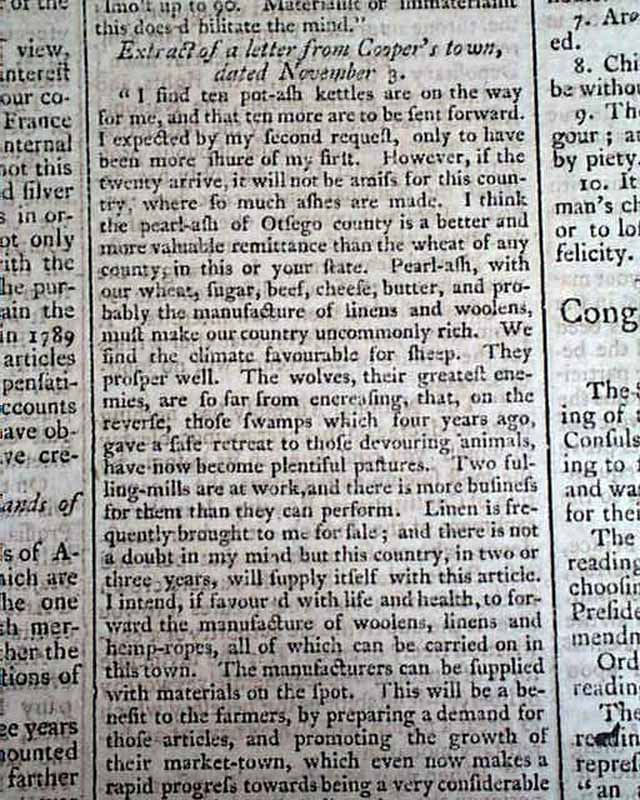
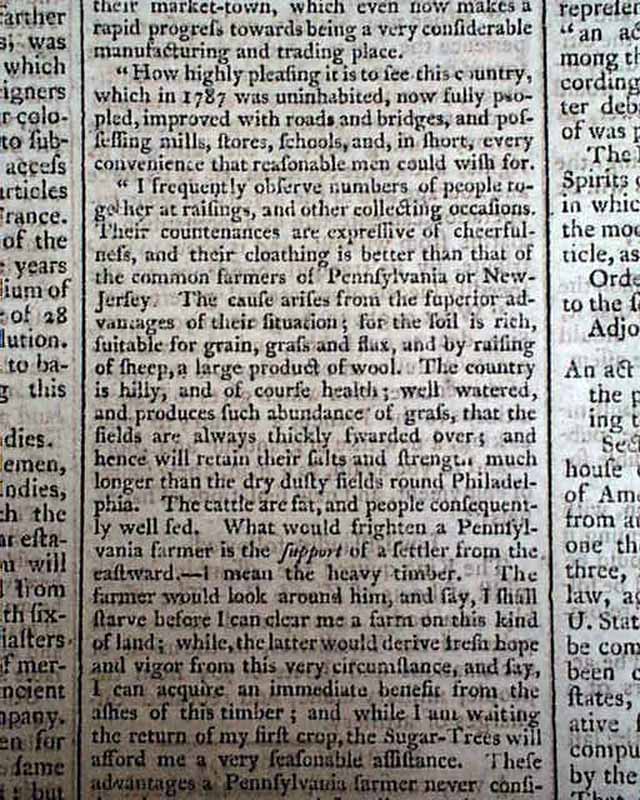
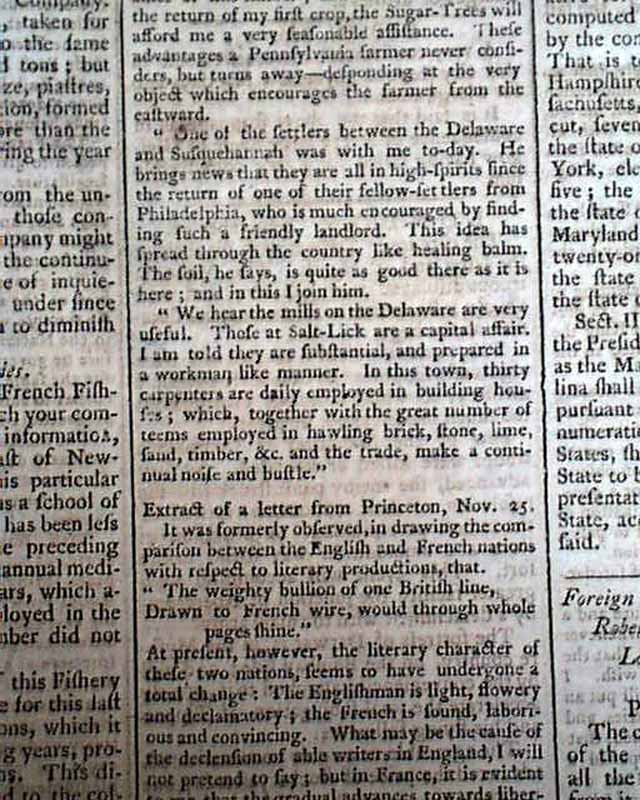
Page 2 has a lengthy extract of a letter from Cooperstown that describes the abundant natural resources in the area and the related businesses, the prosperity and more.
It includes a glowing observation: "...How highly pleasing it is to see this country, which in 1787 was uninhabited, now fully peopled, improved with roads and bridges, and possessing mills, stores, schools and, in short, every convenience that reasonable men could wish for. I frequently observe numbers of people together at raisings, and other collecting occasions..." & much more.
Four pages, nice condition.
Background: Printed by John Dunlap—the famed typographer of the official first broadsides of the Declaration of Independence—this complete four-page November 30, 1791 issue of Dunlap’s American Daily Advertiser is a rare and highly collectible artifact from the infancy of the Constitutional United States. Intact pre-1800 newspapers are exceptionally scarce, and this issue derives extraordinary historical value from its prominent Page 2 extract detailing the rapid rise of Cooperstown, New York. Founded in 1786 by William Cooper (father of novelist James Fenimore Cooper), Cooperstown’s transformation from an uninhabited wilderness in 1787 to a prosperous settlement by 1791—replete with roads, bridges, mills, stores, schools, and social labor traditions like communal barn "raisings"—serves as a compelling firsthand record of early post-Revolutionary frontier expansion. Published in the early American capital of Philadelphia, such glowing reports doubled as crucial land-speculation literature designed to lure East Coast settlers and investors westward, elevating this well-preserved newspaper into both an important primary historical document and a prized example of early American print culture.
Other issues you may like
§ related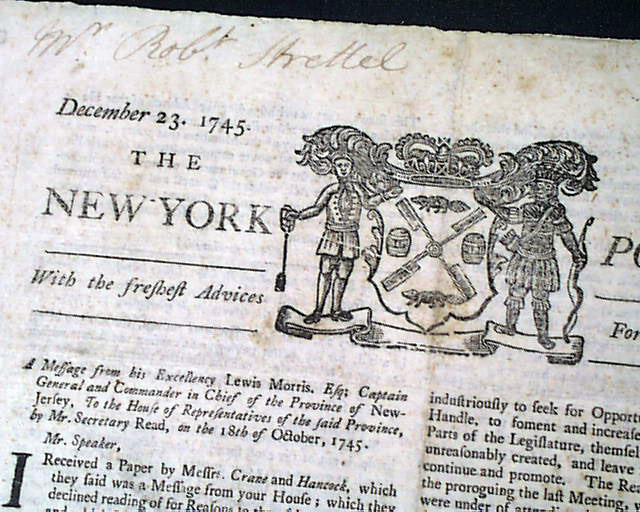
THE NEW YORK WEEKLY POST-BOY, Dec. 23, 1745
- Very rare Colonial NYC publication
- 30 years prior to the Revolutionary War
As those who follow our offerings
...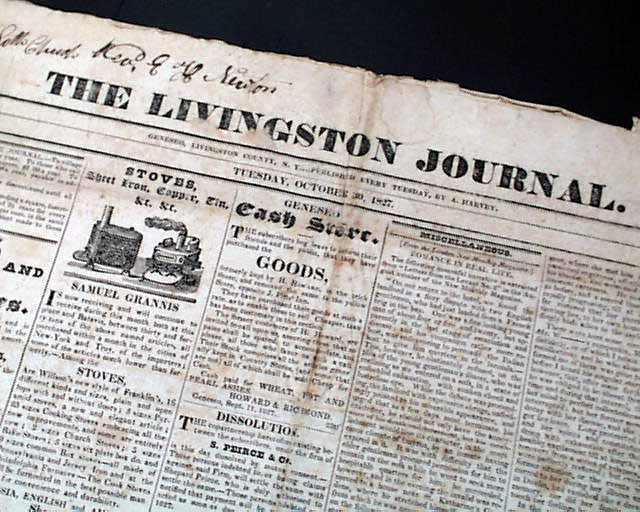
THE LIVINGSTON JOURNAL, Geneseo, New York, Oct. 30, 1827 A quite scarce newspaper as Gregory notes that only 4 institutions have any issues, 3 of which
...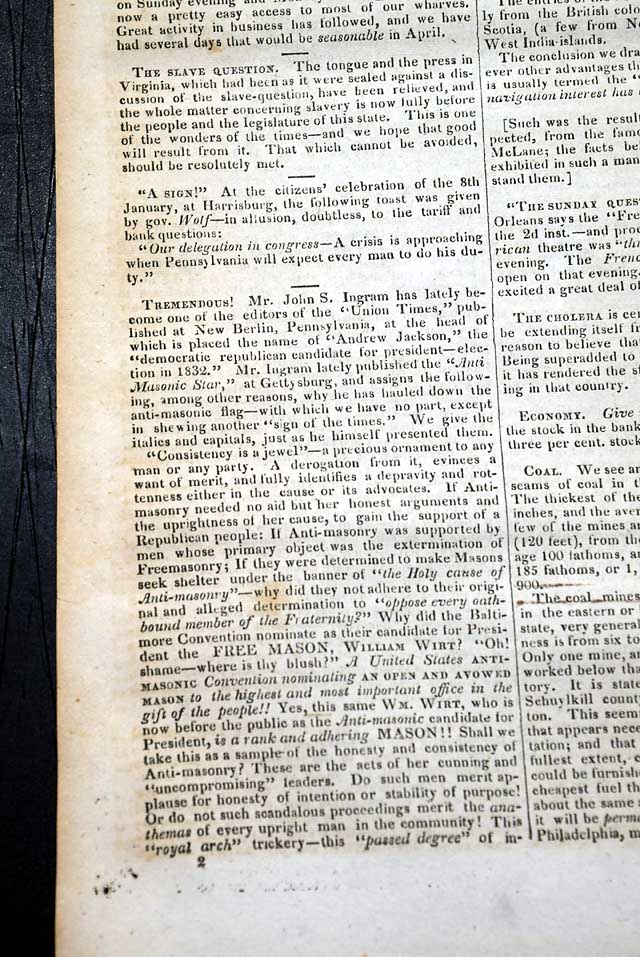
NILES' WEEKLY REGISTER, Baltimore, Jan. 21, 1832 Inside has a quite rare & obscure report concerning famed author James Fenimore Cooper.
It has a small
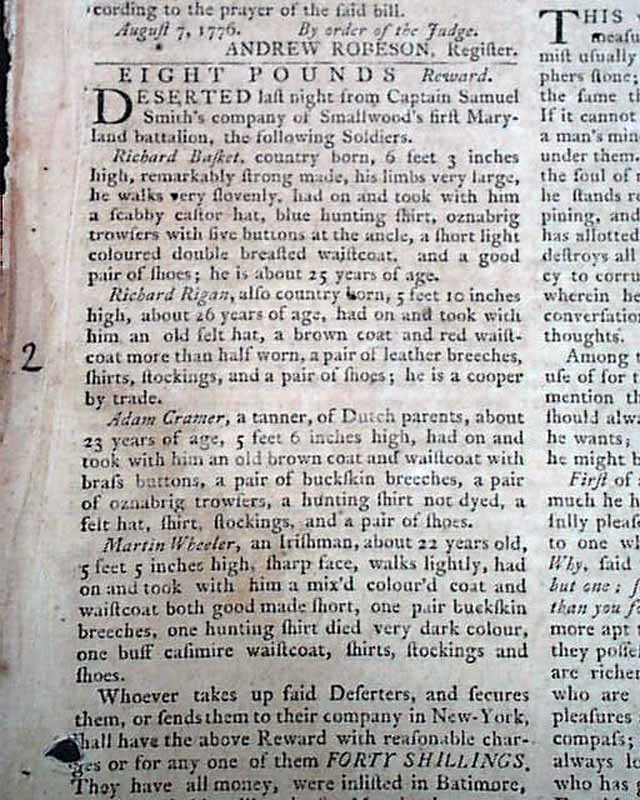
THE PENNSYLVANIA LEDGER, Philadelphia, August 17, 1776
- Post Declaration of Independence
- American Revolutionary War
This exceptional, content-rich issue was
...