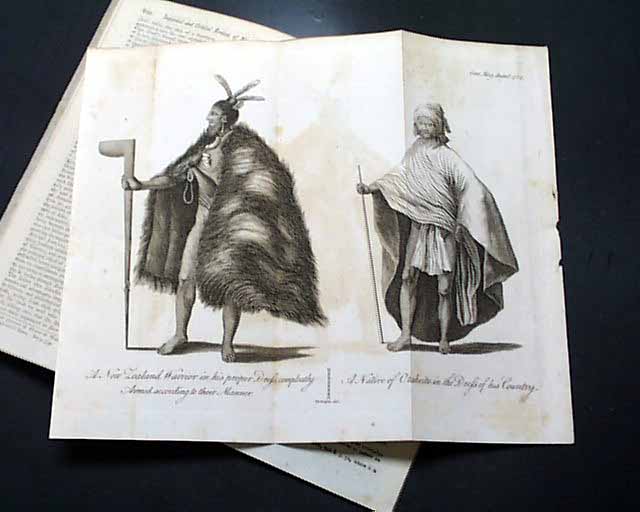
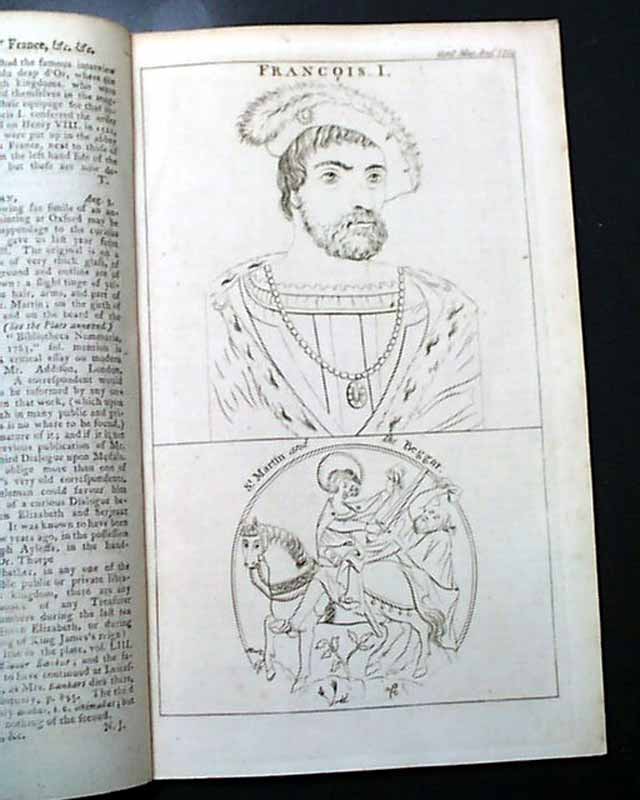
Captain James Cook's voyage... Print of New Zealand warrior...
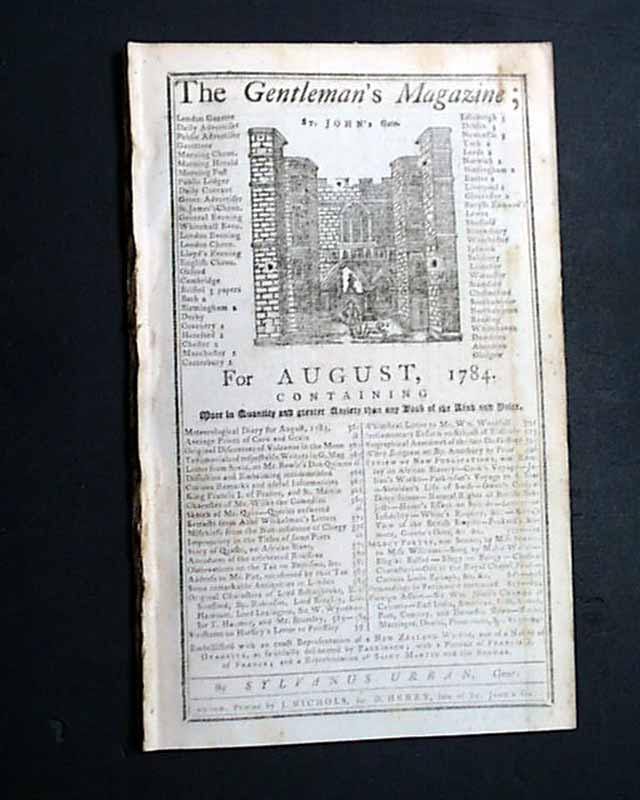
THE GENTLEMAN'S MAGAZINE, London, August, 1784
- HMS Resolution - Royal Navy
- Captain James Cook death
- Third Voyage - Hawaiian Islands
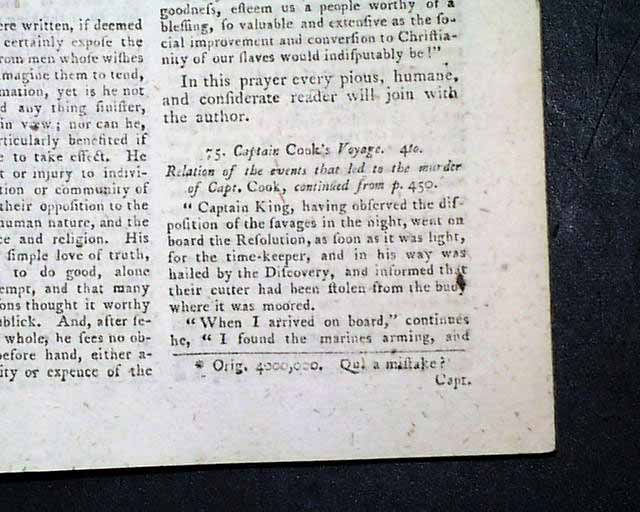
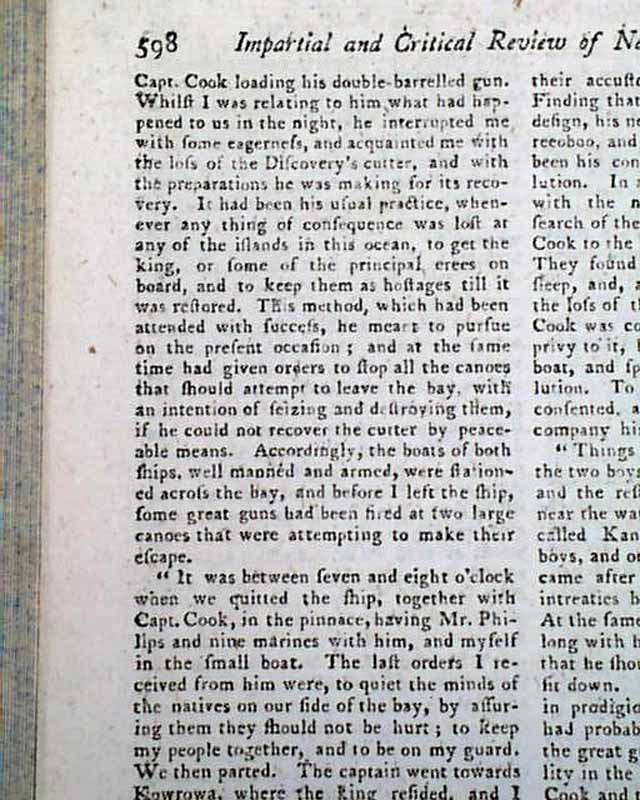
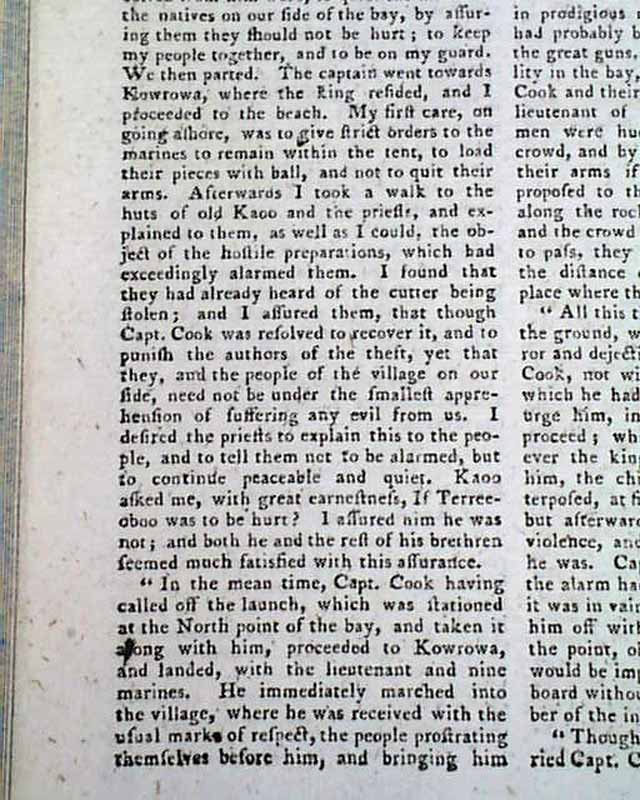
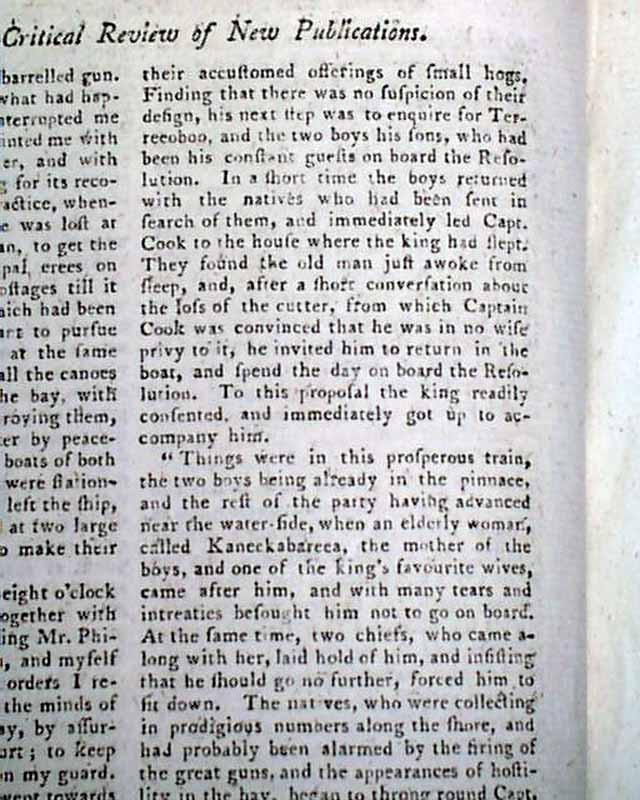
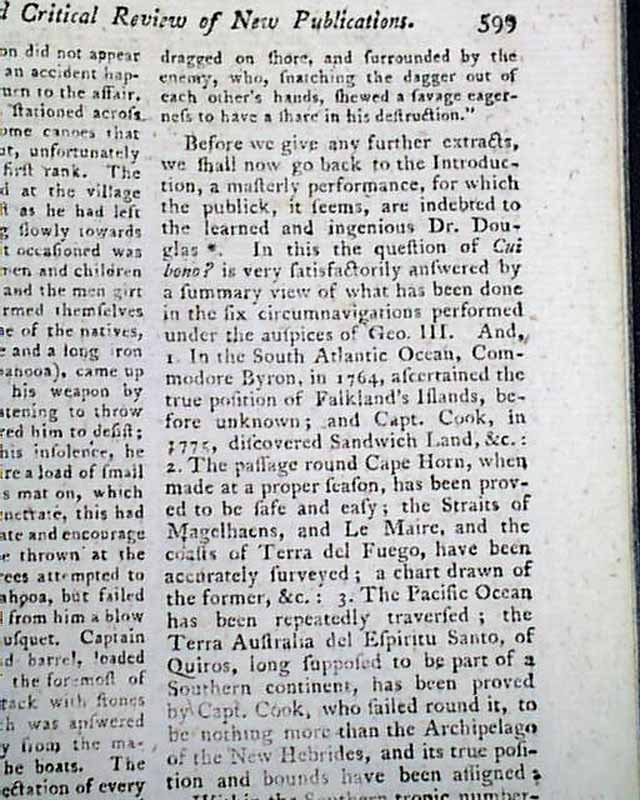
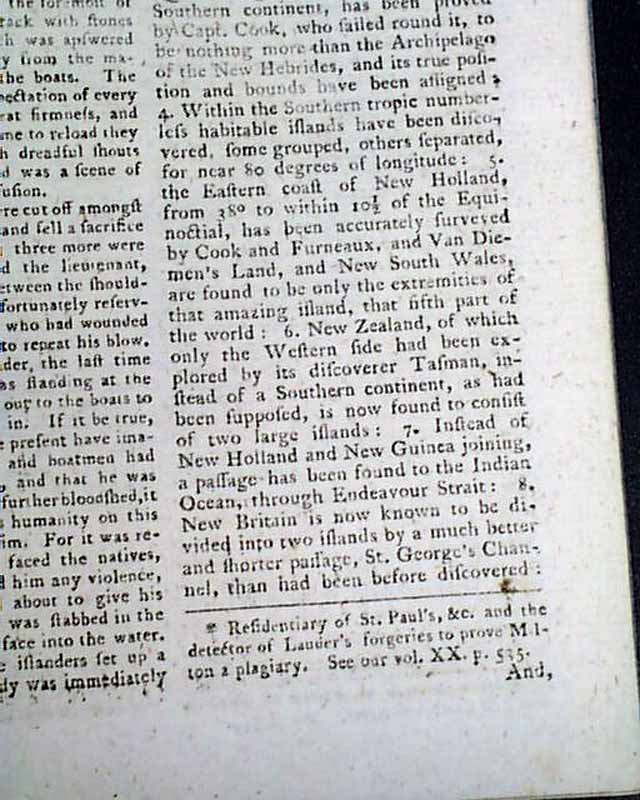
Certainly the most interesting content in this issue is the great & lengthy text (continued from the June issue) on a review of a new publication, headed: "Captain Cook's Voyage--Relation of the events that led to the murder of Capt. Cook...". This report takes nearly 3 pages, portions seen in the photos, and includes the details of the murder of Capt. Cook by the natives of Hawaii: "...What followed was a scene of the utmost horror & confusion...having turned about to give his orders to the boats, he was stabbed in the back & fell with his face into the water. On seeing him fall, the islanders set up a great shout & his body was immediately dragged on shore & surrounded by the enemy, who, snatching the dagger out of each other's hands, shewed a savage eagerness to have a share in his destruction...". At this point the article reverts to an overview of Cook's life, which is continued in the September issue.
This issue also includes the rare foldout plate showing: "A New Zealand Warrior in his proper Dress..." as well as a full-figure view of: "A Native Of Otaheite [present-day Tahiti] in the Dress of his Country". Included also is the other plate called for: "Francis I. of France".
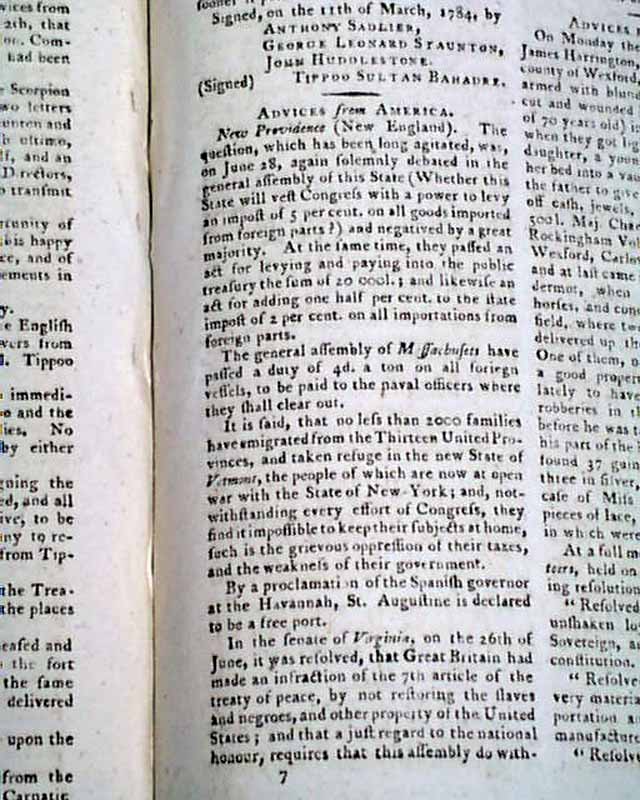
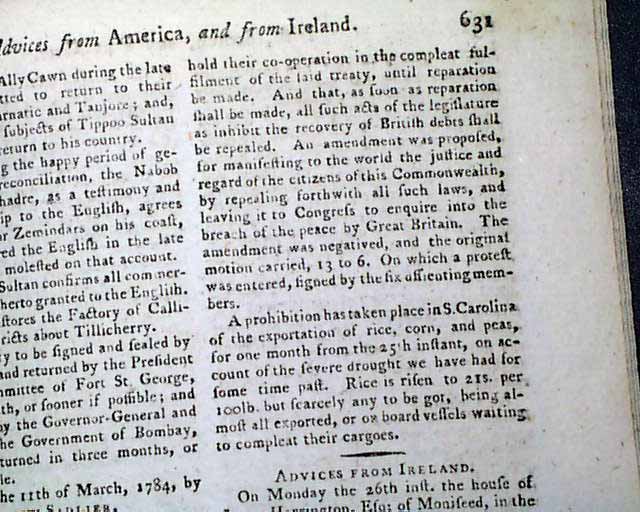
Among other articles within this issue of interest are: "Original Discoverer of Volcanoes in the Moon" "King Francis I of France" "Story of Quashi, an African Slave" "Ramsay on African Slavery", much on "Summary of Proceedings in the last Session of Parliament", and also: "Advices from America".
Complete in 80 pages, 5 1/4 by 8 1/4 inches, full title/contents page, minor foxing to the prints, otherwise in very nice condition.
Background: The publication of Captain James Cook's death in the August 1784 issue of The Gentleman's Magazine marks a pivotal moment in global history, capturing the exact vehicle through which the Western public processed the demise of its most celebrated Enlightenment explorer five years after the event. By serializing the highly anticipated official Admiralty account of the third voyage, this specific issue democratized a narrative that had previously been restricted to expensive luxury volumes, profoundly shaping the European imagination regarding the Pacific. The text itself established a powerful, enduring mythos of Cook as a tragic hero who was stabbed in the back at Kealakekua Bay precisely because he turned to order his men to cease firing—framing his restraint as his ultimate undoing. Historically, the event serves as a stark, violent flashpoint of structural and cultural misunderstanding: Cook's heavy-handed attempt to take the ruling chief Kalaniʻōpuʻu hostage to recover a stolen boat occurred during the volatile transition from the peaceful Makahiki festival to the season of the war-god Kū. By disseminating these dramatic details alongside John Webber's influential copperplate engravings of Pacific Islanders, the magazine cemented a foundational shift in British imperial policy from purely scientific exploration to aggressive colonization, forever altering the geopolitics of Oceania and establishing the definitive 18th-century template for how the West perceived indigenous cultures.
This periodical was the first ever to use the word "magazine" in its title.
Other issues you may like
§ related
THE GENTLEMAN'S MAGAZINE, London, September, 1784
- HMS Resolution - Royal Navy
- Captain James Cook
- Third Voyage - Gulf of Alaska
- Early ballooning flight -
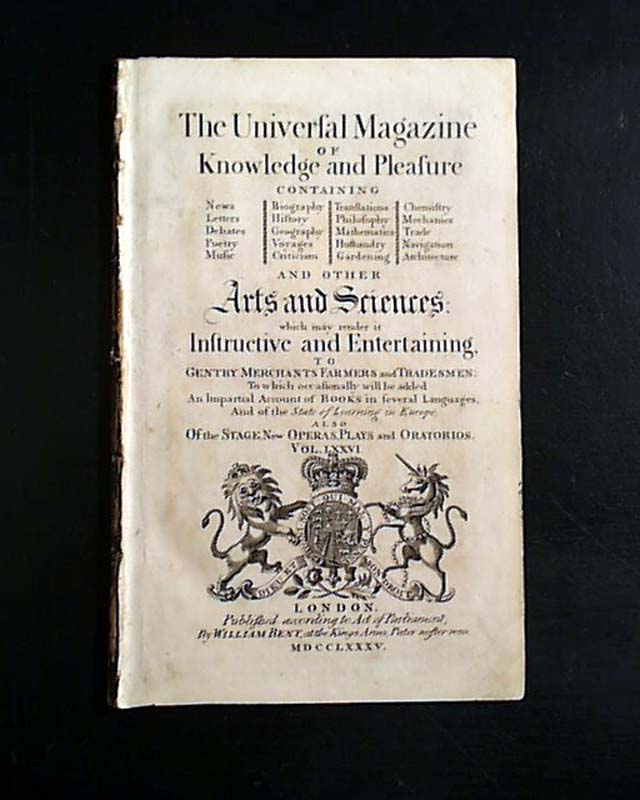
THE UNIVERSAL MAGAZINE, London, January, 1785 This magazine--much more scarce than the Gentleman's Magazine--published in serial form the account of:
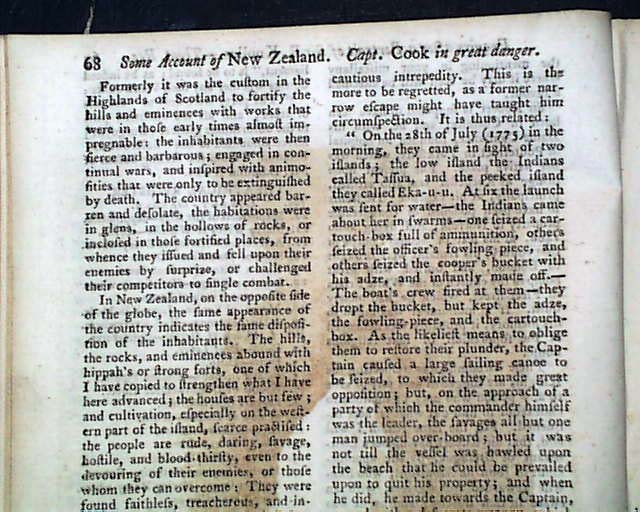
...
THE GENTLEMAN'S MAGAZINE, London, February, 1780
- Siege of Savannah - Georgia
- Benjamin Lincoln letter
- Captain James Cook - South Seas
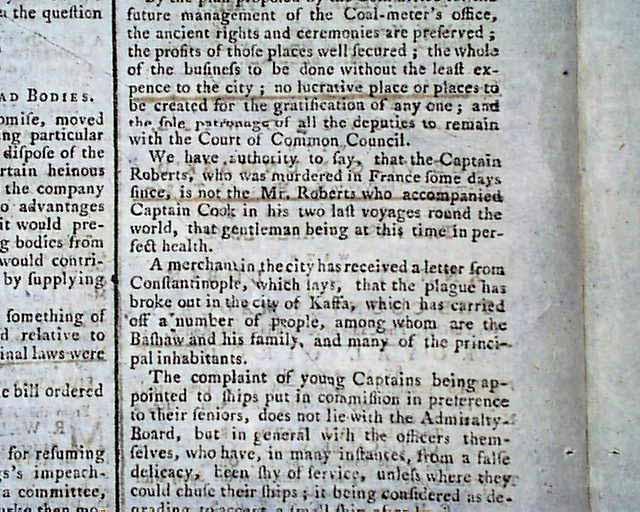
Near the back is a
...
THE MORNING POST & DAILY ADVERTISER, London, May 17, 1786
- Captain James Cook mention
Page 2 has an item noting: "We have authority to say that the Captain
...