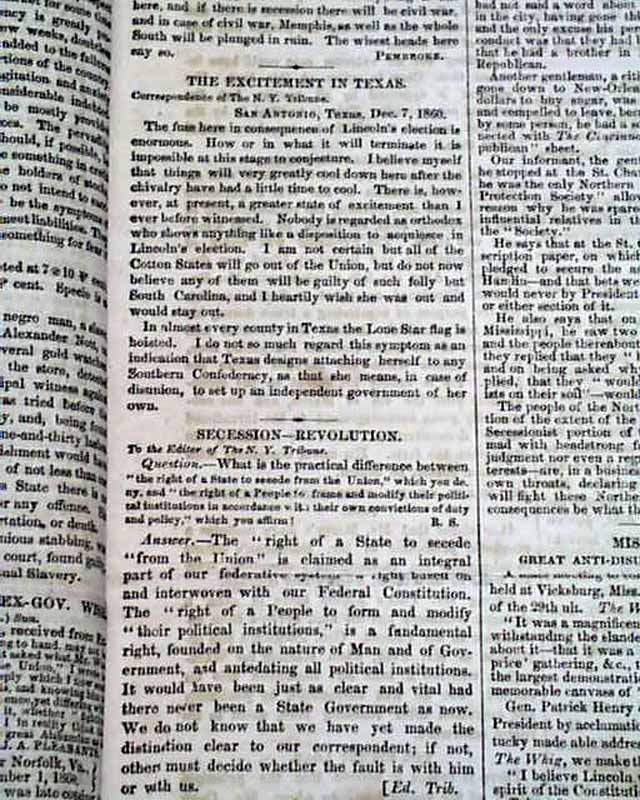
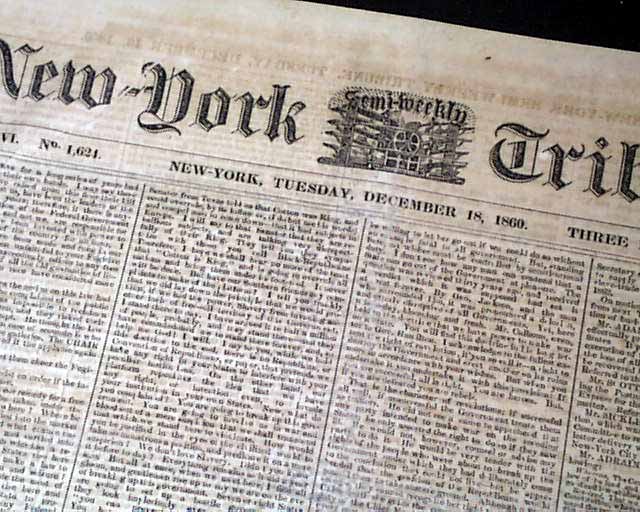
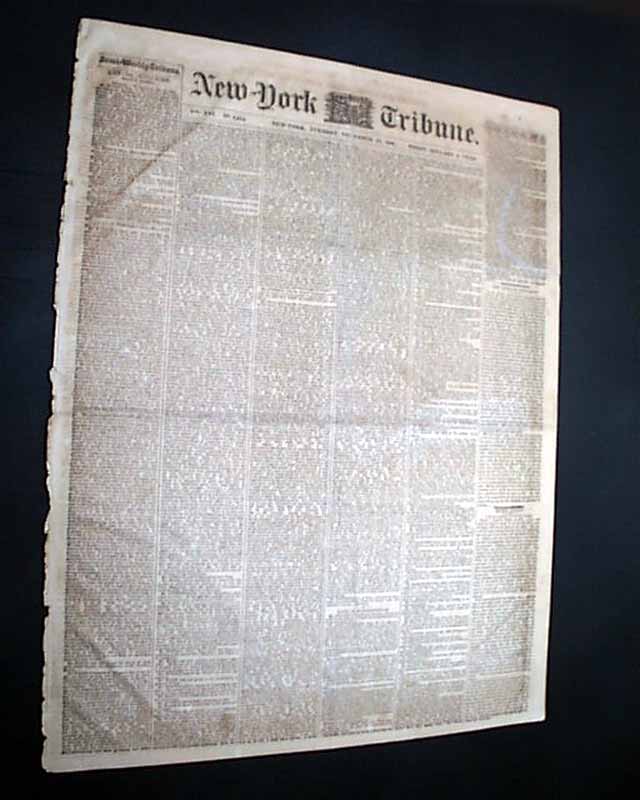
Much on the Southern states seceding from the Union...
NEW YORK SEMI-WEEKLY TRIBUNE, Dec. 18, 1860
- Southern secession movement
- Pre Civil War tensions arise
With Lincoln's election determined, much national focus is on the slavery issue and the secession of Southern states.
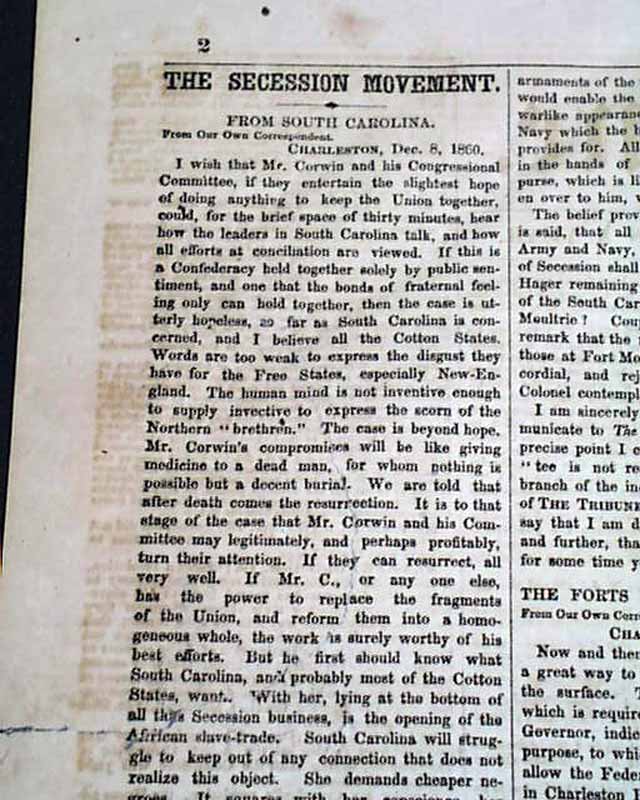
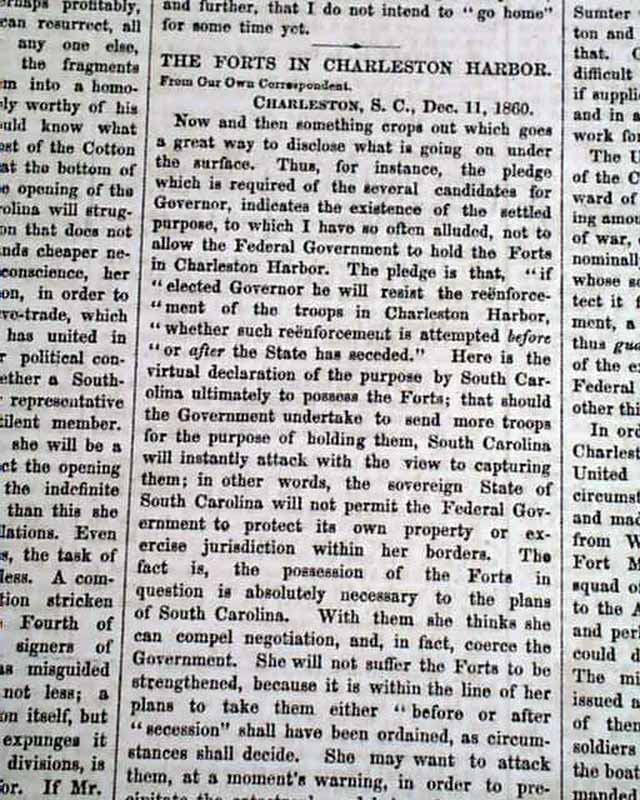
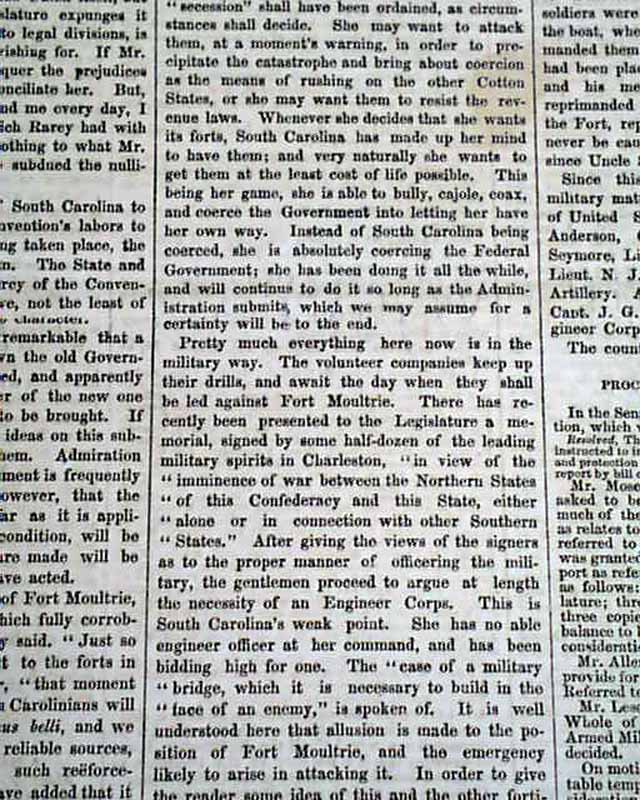
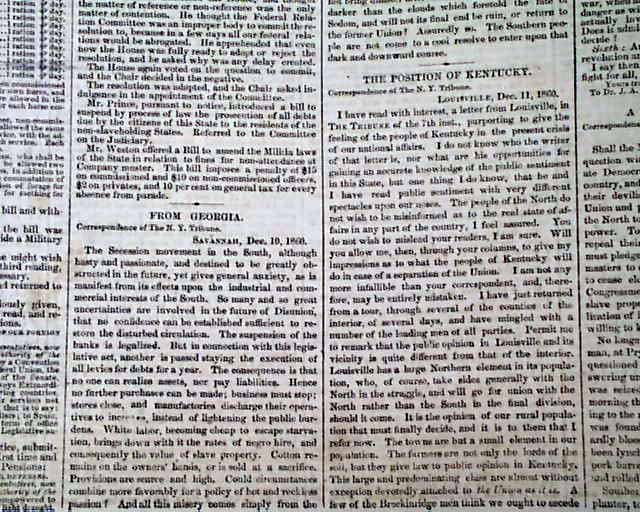
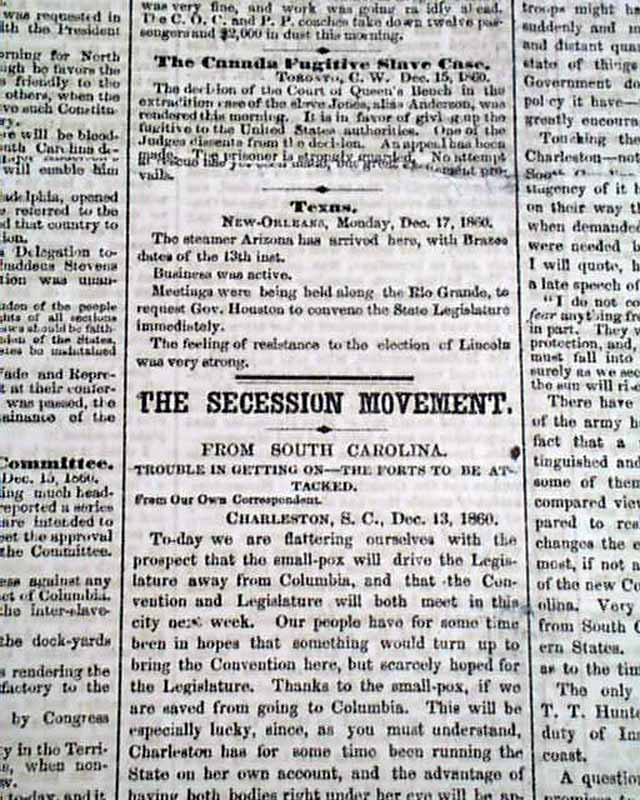
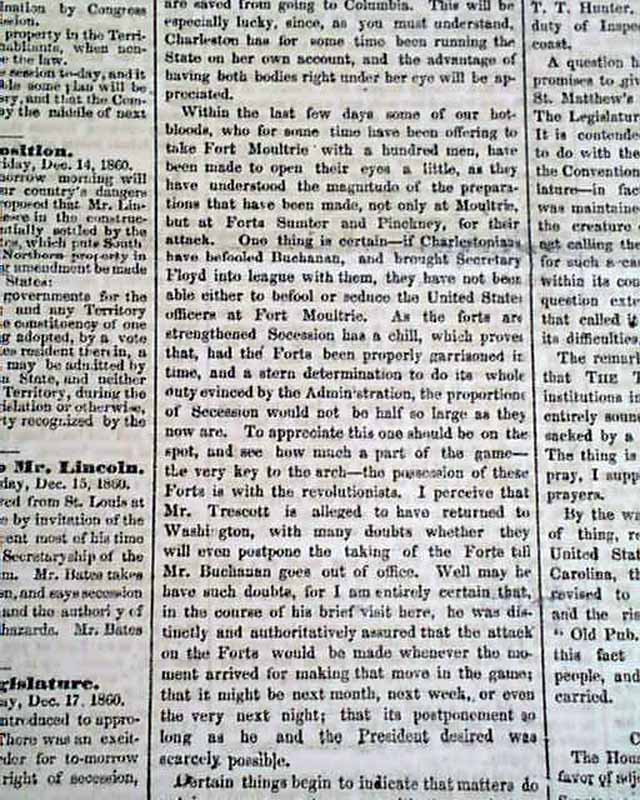
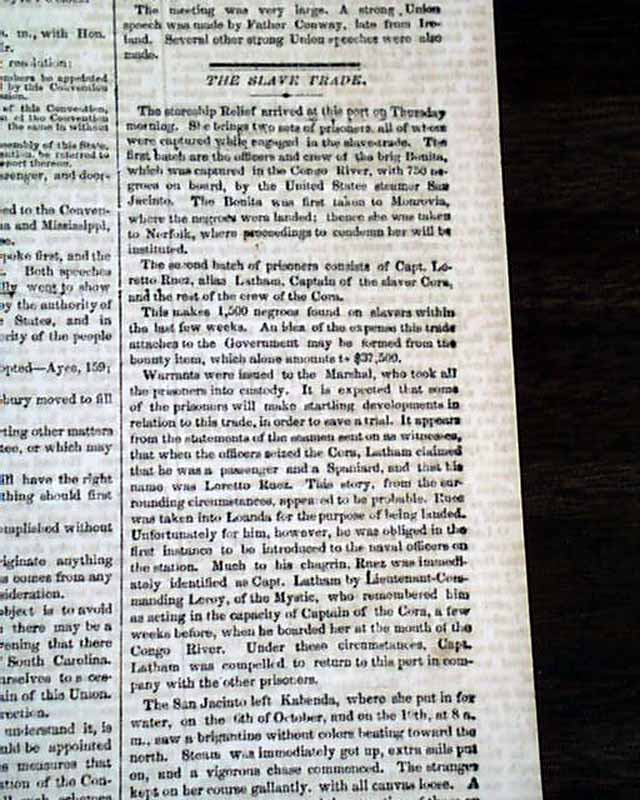
Most of page 2 is headed: "THE SECESSION MOVEMENT" "From South Carolina" and reports from other states as well. Also: "The Forts in Charleston Harbor" "the English on Secession" "
The Slave Trade" "The Canada Fugitive Slave Case" & more.
Eight pages, good condition.
Background: On December 8, 1860, the American secession crisis reached a critical point of internal collapse when Treasury Secretary Howell Cobb of Georgia resigned from President James Buchanan’s cabinet, an event that directly signaled the fracture of the federal government from within and accelerated the South's descent toward rebellion. A lifelong Unionist who had been radicalized by Abraham Lincoln’s election, Cobb's departure stripped the administration of a key southern moderate and coincided with a tense White House meeting that same day, where a South Carolina delegation delivered an ultimatum warning Buchanan that reinforcing federal forts in Charleston Harbor would be viewed as an act of war. The profound significance of December 8 lies in how these parallel events paralyzed the Buchanan administration; Cobb’s exit demonstrated that the federal executive branch could no longer function as a unified entity, while the Charleston ultimatum successfully trapped the weak-willed president into a policy of military inaction, effectively granting the Deep South the strategic time and political leverage it needed to orchestrate organized secession before Lincoln could ever take office.
Other issues you may like
§ related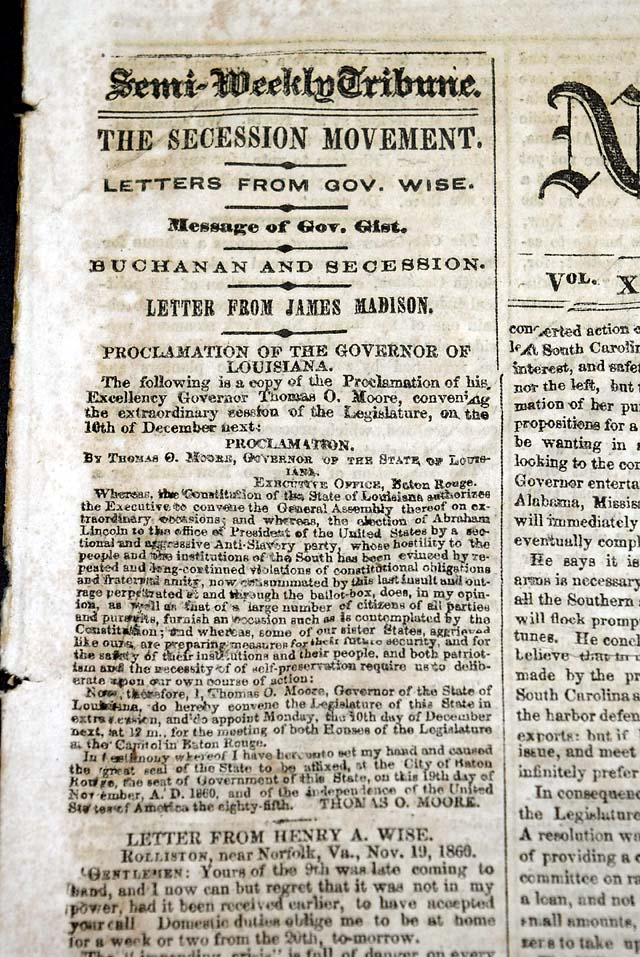
NEW YORK SEMI-WEEKLY TRIBUNE, Nov. 30, 1860 With Lincoln's election determined, much national focus is on the slavery issue and the secession of Southern
...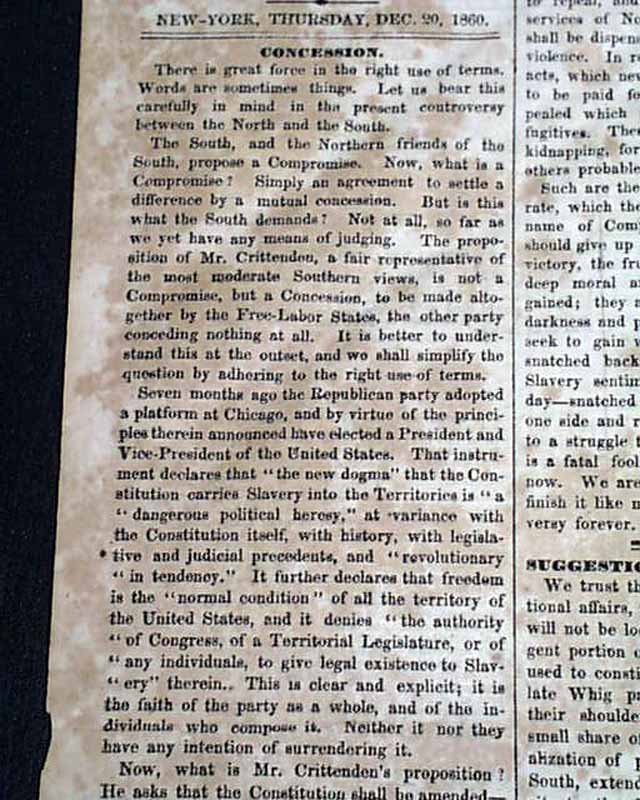
NEW YORK SEMI-WEEKLY TRIBUNE, Dec. 21, 1860
- South Carolina Ordinance of Secession
- Abraham Lincoln as president-elect
- Pre American Civil War Southern tensions
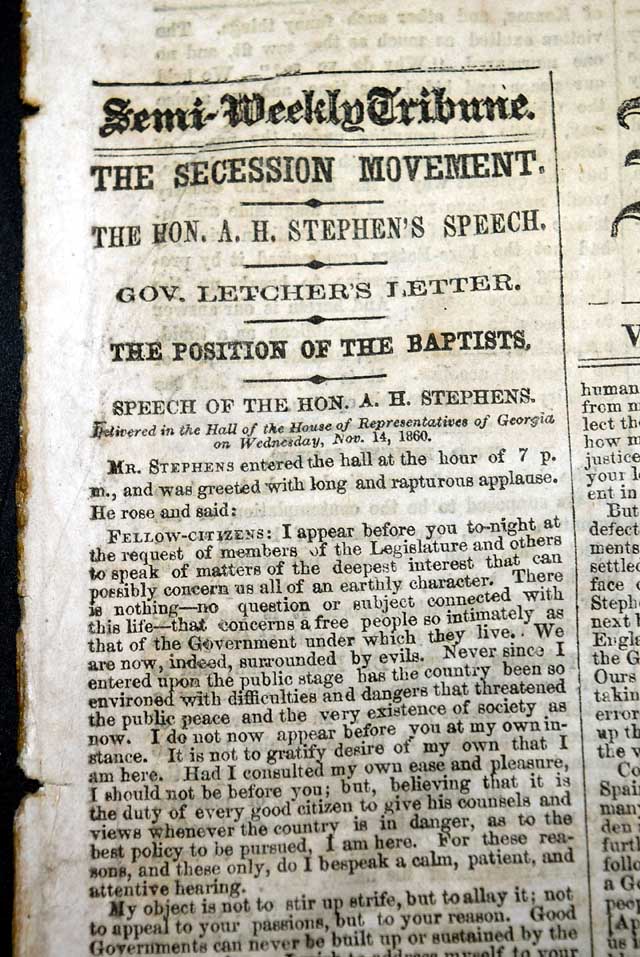
NEW YORK SEMI-WEEKLY TRIBUNE, Nov. 27, 1860 With Lincoln's election determined, much national focus is on the slavery issue and the secession of Southern
...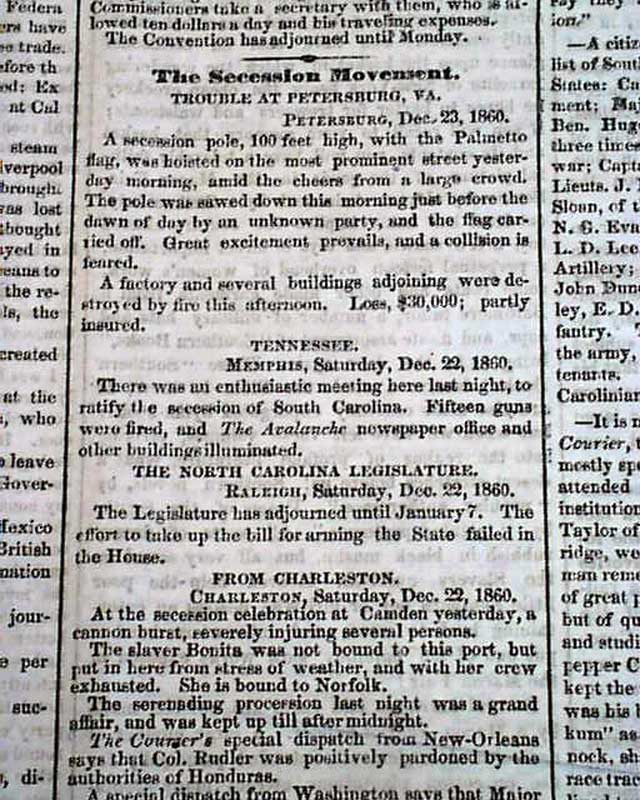
NEW YORK TRIBUNE, Dec. 24, 1860
- Southern crisis
- Secession talks
- Christmas eve
Considerable reporting on not just South Carolina leaving the Union, but other
...