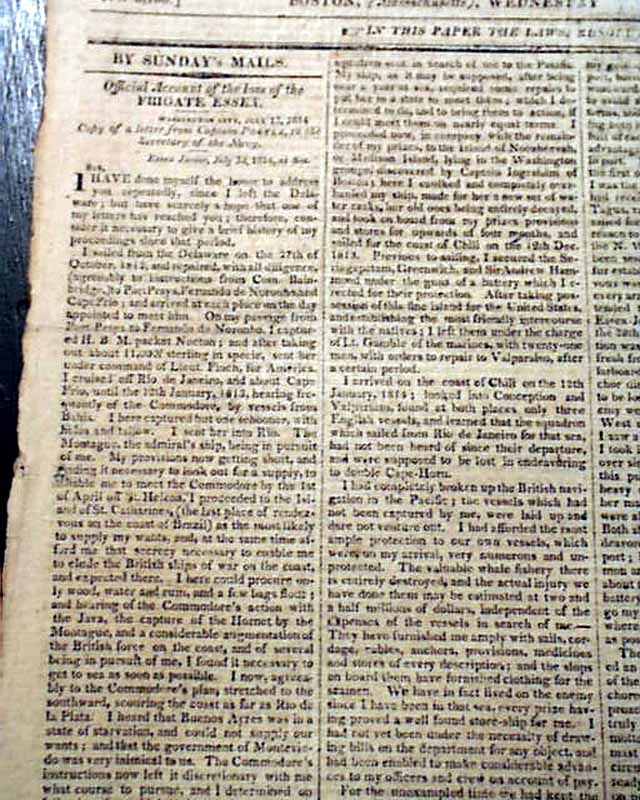
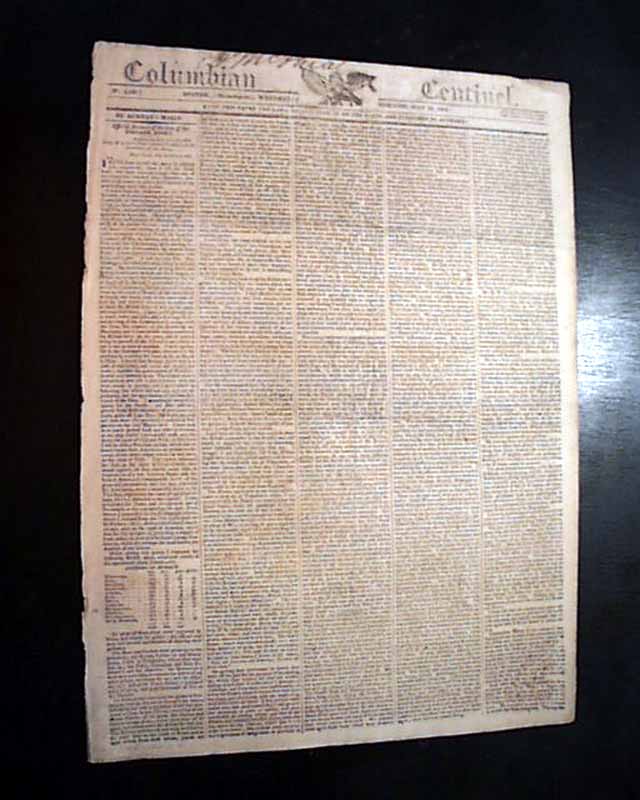
Excellent account of the loss of the Essex...
COLUMBIAN CENTINEL, Boston, July 20, 1814
- Battle of Valparaiso
- Loss of the USS Essex
- Captain David Porter
- Battle of Chippawa
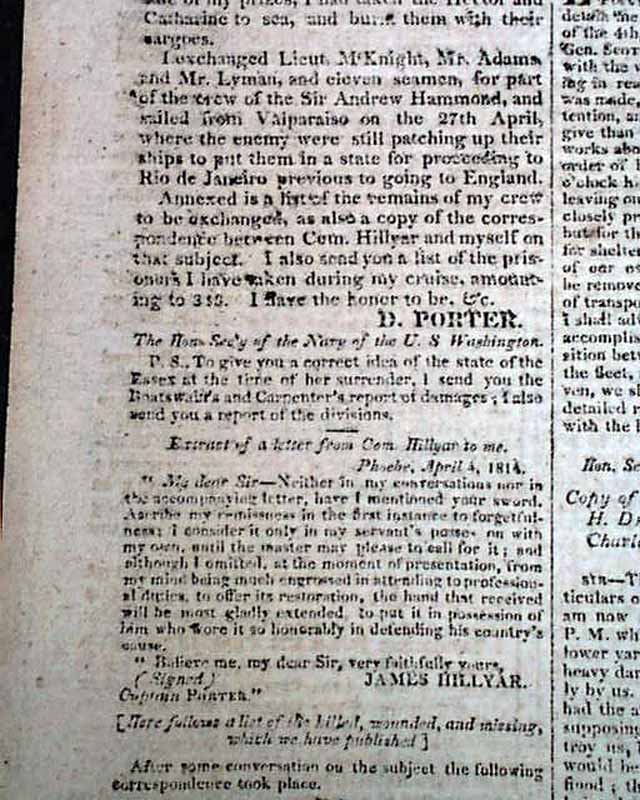
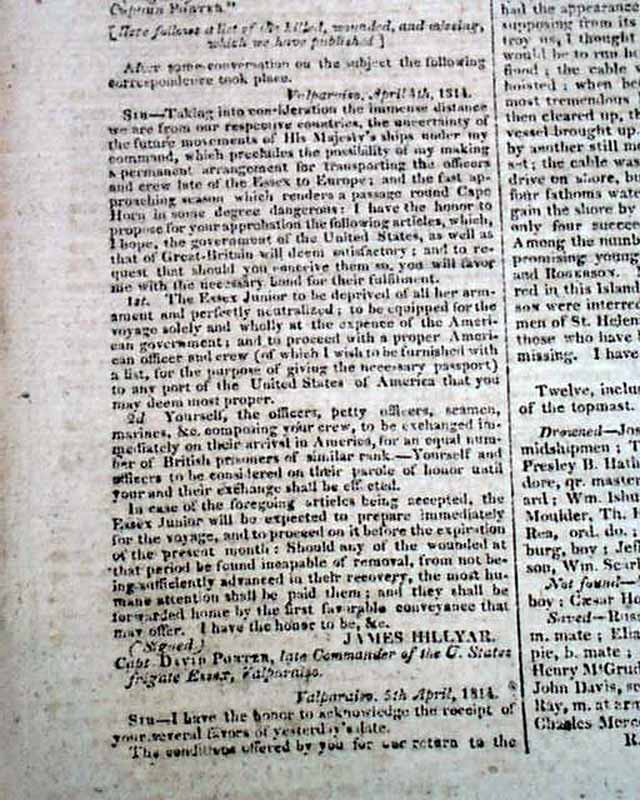
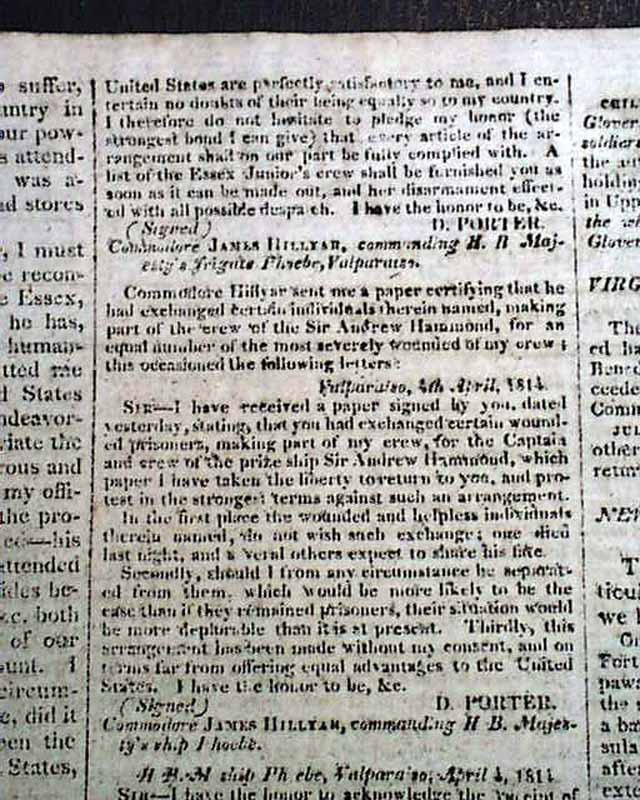
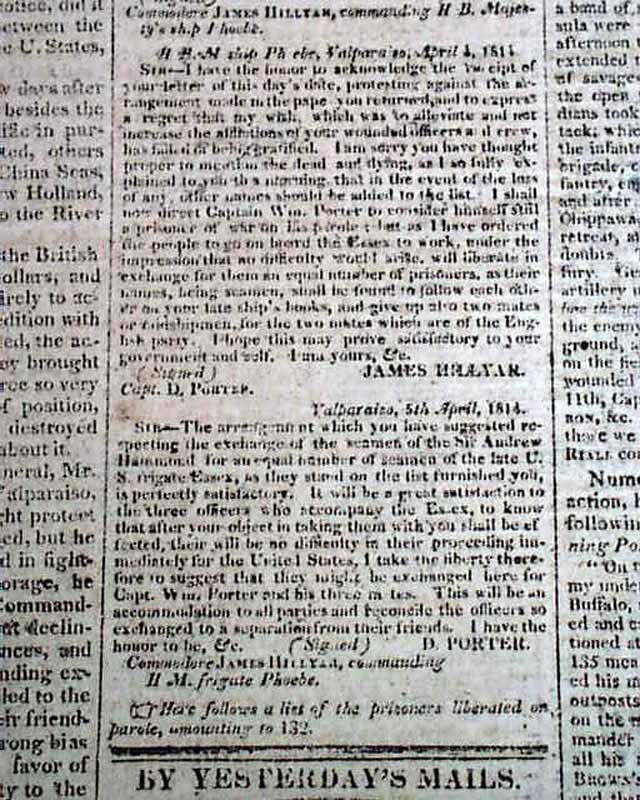
The entire front page & a portion of page 2 are taken up with an extremely detailed & lengthy letter being the: "Official Account of the Loss of the Frigate Essex", signed in type by its commander: D. Porter. This is followed by several letters between Porter & James Hillyar, the commander of the victorious British ship from the Battle of Valparaiso.
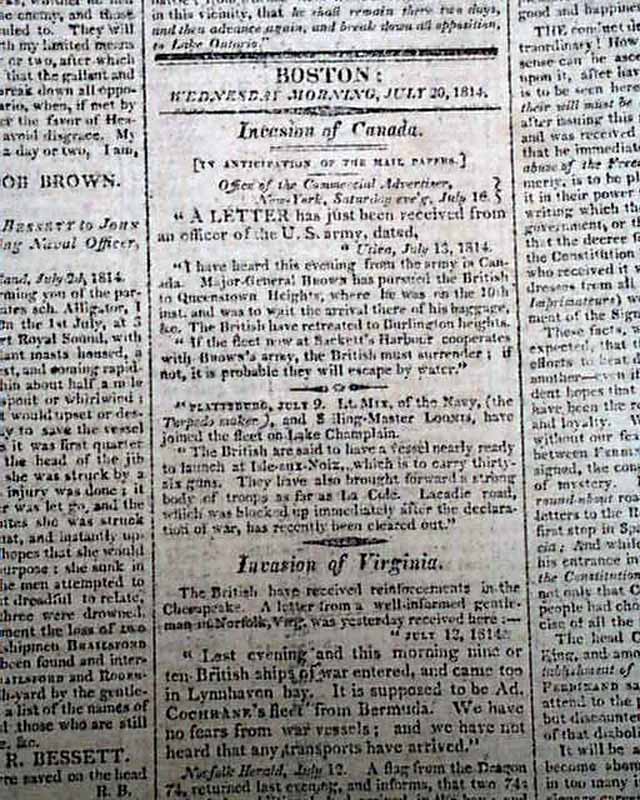
Page 2 has other war content including: "Invasion of Canada" "Invasion of Virginia" "Battle Near Chippewa" and "War in the Chesapeake" & more, but they pale in comparison to the excellent account of the loss of the Essex.
Four pages, very nice condition.
Background: The Battle of Valparaiso on March 28, 1814, holds immense historical significance as the tragic culmination of the USS Essex's groundbreaking commerce-raiding cruise, which had successfully crippled the British whaling industry in the Pacific and asserted early American naval ambition on a global scale. Cornered in neutral Chilean waters by the British ships HMS Phoebe and HMS Cherub, Captain David Porter faced disaster when a sudden squall crippled the Essex’s main topmast, stripping the vessel of its maneuverability. Exploiting this vulnerability, British Captain James Hillyar anchored his ships just out of range of the Essex’s short-range carronades and used his long guns to methodically bombard the defenseless American frigate for over two hours. Despite horrific casualties—with over half the crew killed, wounded, or missing—and the ship catching fire, Porter and his men mounted a legendary, defiant resistance before finally surrendering. The extensive official correspondence and action reports published in newspapers like the Columbian Centinel galvanized the American public, transforming a devastating tactical defeat into a powerful symbol of naval martyrdom and unyielding heroism during the darkest days of the War of 1812.
Other issues you may like
§ related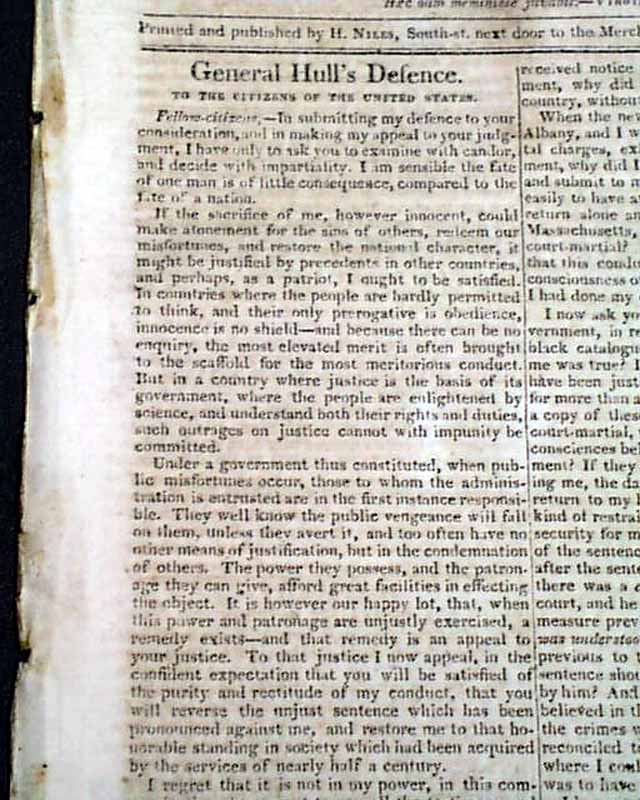
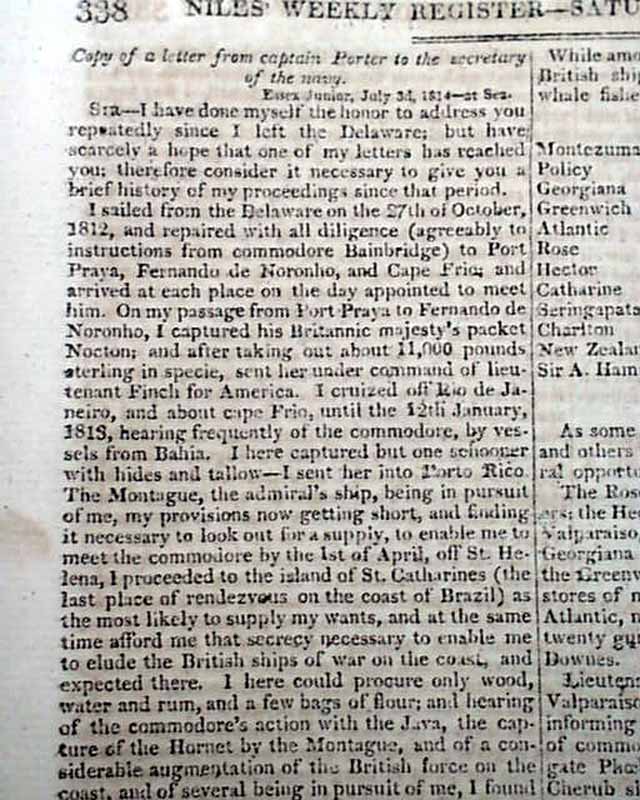
NILES' WEEKLY REGISTER, Baltimore, July 23, 1814
- Battle of Valparaiso
- Captain David Porter
- Battle of Chippawa
- War of 1812
The issue begins with: "General
...
THE WEEKLY REGISTER, Baltimore, July 16, 1814
- Battle of Chippawa - Ontario, Canada
- General Winfield Scott victory
- Loss of the USS Essex - David Porter
The
...
BOSTON PATRIOT, Dec. 8, 1813 V
- USS Essex - War of 1812
- Captain David Porter
- United States Navy
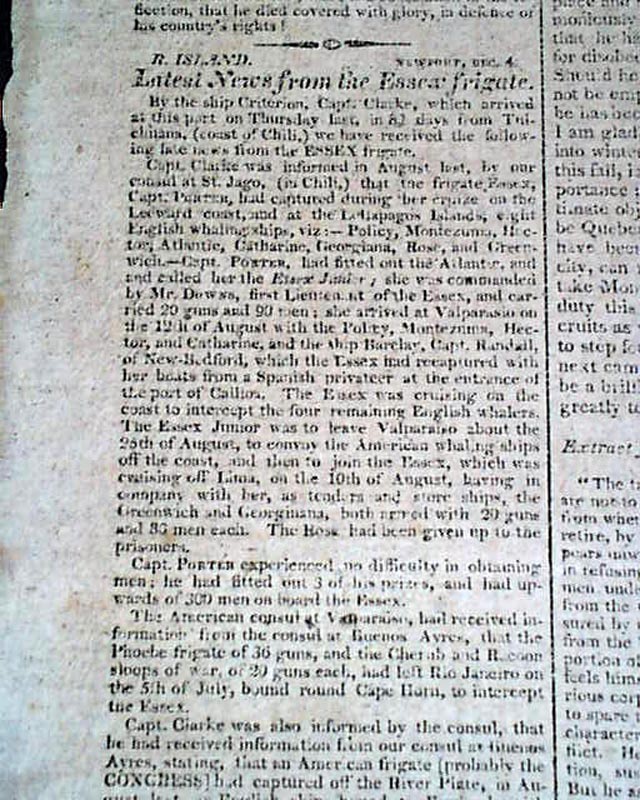
Various items on the War of 1812 including: "Latest New from
...
COLUMBIAN CENTINEL, Boston, Dec. 9, 1812
- USS United States vs. HMS Macedonian
- USS Wasp vs. HMS Frolic
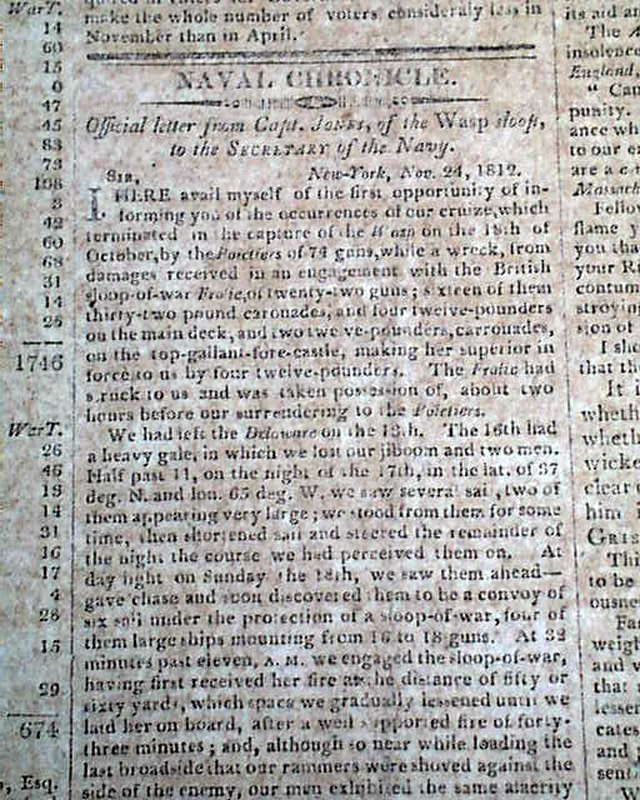
The middle of the front page has a nice letter under:
...