Charles Adams... John Quincy Adams' son...
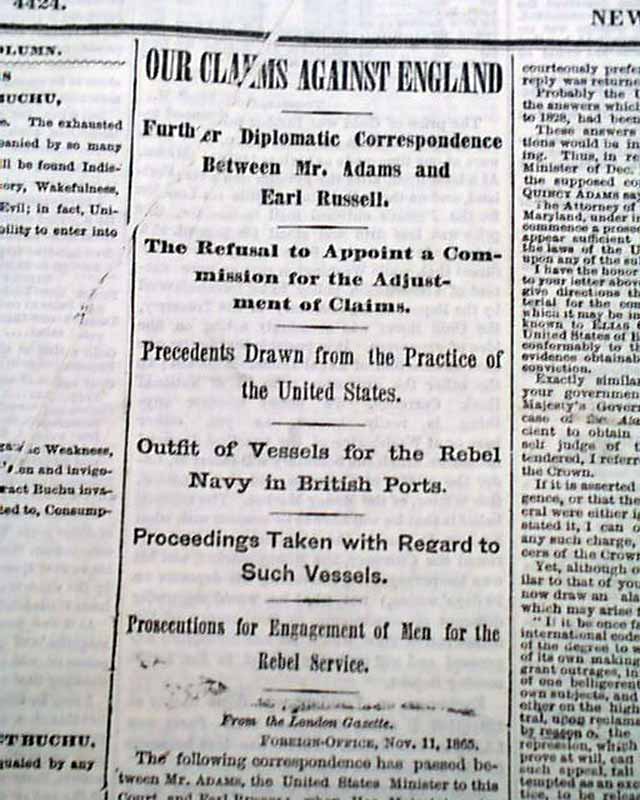
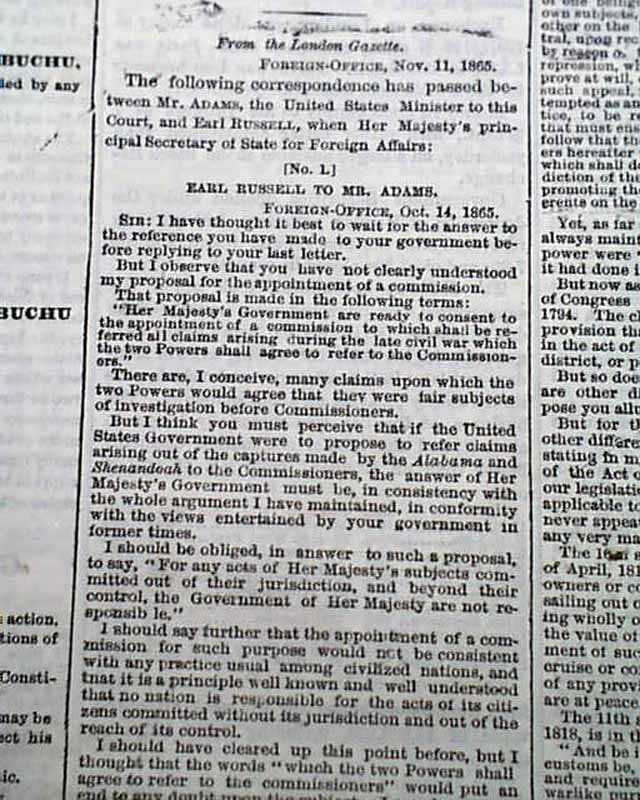
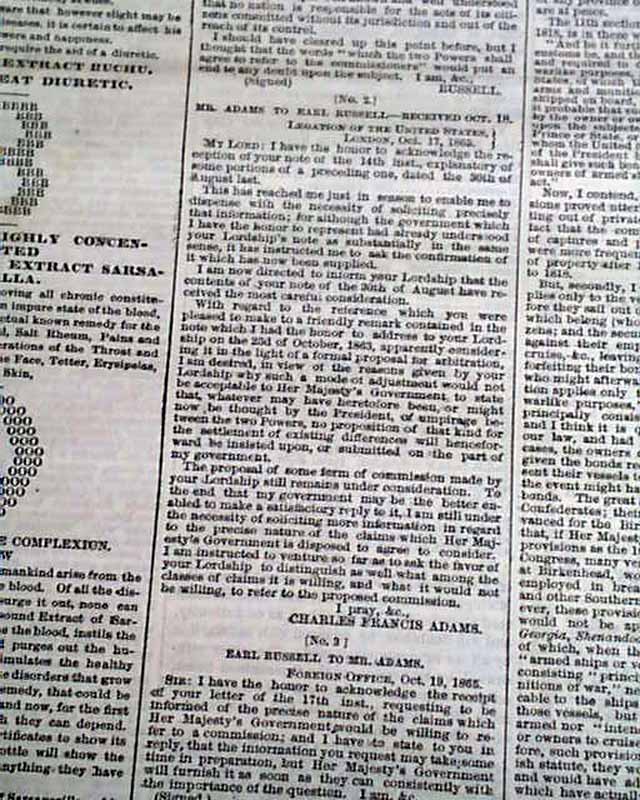
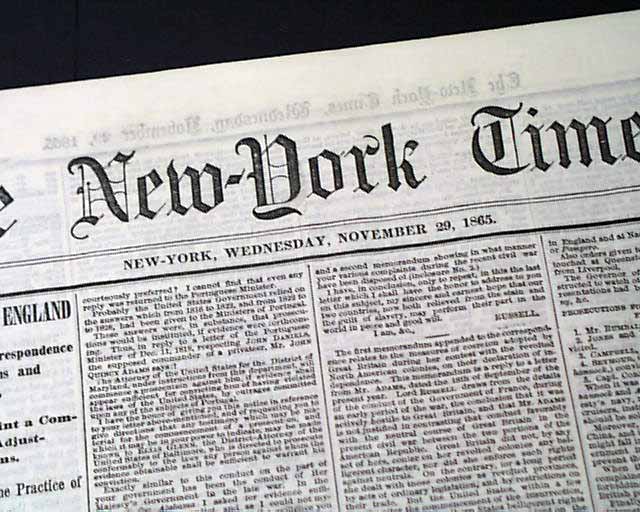
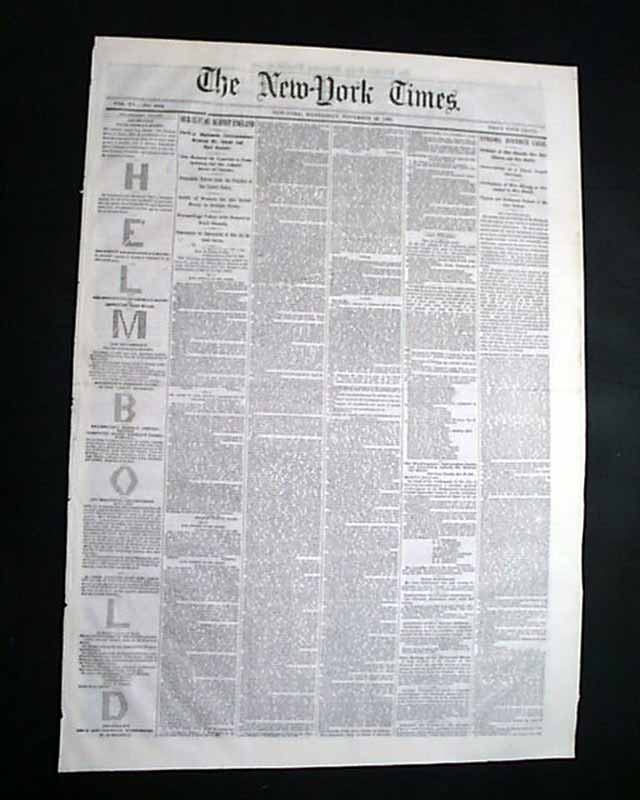
NEW YORK TIMES, Nov. 29, 1865 Front page column heads include: "OUR CLAIMS AGAINST ENGLAND" and "Further Diplomatic Correspondence Between Mr. Adams and Earl Russell", which provides the conversation between Mr. Adams and Earl Russell regarding debts related to the Civil War.
Eight pages, very nice condition.
Background: The Alabama Claims represented a watershed moment in international law, marking the first time major world powers resolved a high-stakes conflict through legal arbitration rather than the battlefield. Triggered by the U.S. government's demand for reparations over the CSS Alabama and other British-built Confederate commerce raiders, the dispute brought the two nations to the brink of a third war. Charles Francis Adams Sr. meticulously argued that British negligence had decimated the American merchant marine and extended the Civil War by years. The diplomatic correspondence you see in that 1865 edition laid the groundwork for the 1871 Treaty of Washington, which ultimately forced Great Britain to pay $15.5 million in gold to the United States. Beyond the monetary settlement, the event set a global precedent for the definition of "neutrality" and proved that international tribunals could successfully settle grievances between sovereign states, effectively birthing the modern era of global diplomacy and conflict resolution.
Other issues you may like
§ related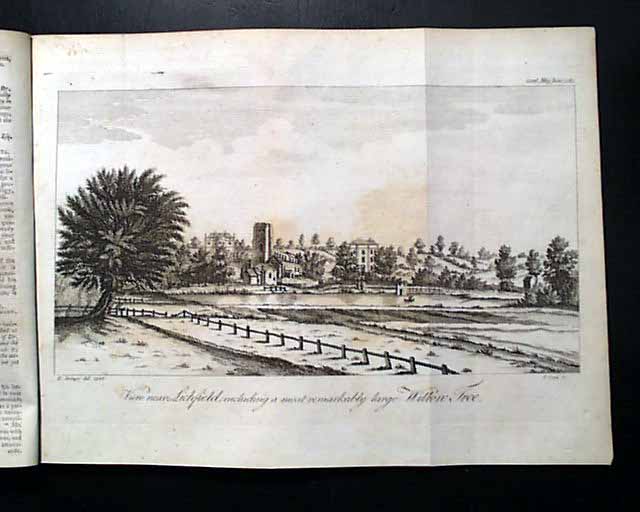
GENTLEMAN'S MAGAZINE, London, June, 1785 Among the articles are: "Curious Caves on the Elephanta Island" near India; "Epitaph Proposed by Dr. Fordyce for
...
COLUMBIAN CENTINEL, Boston, March 14, 1798
- President John Adams acts of Congress
- Thomas Jefferson and Increase Sumner
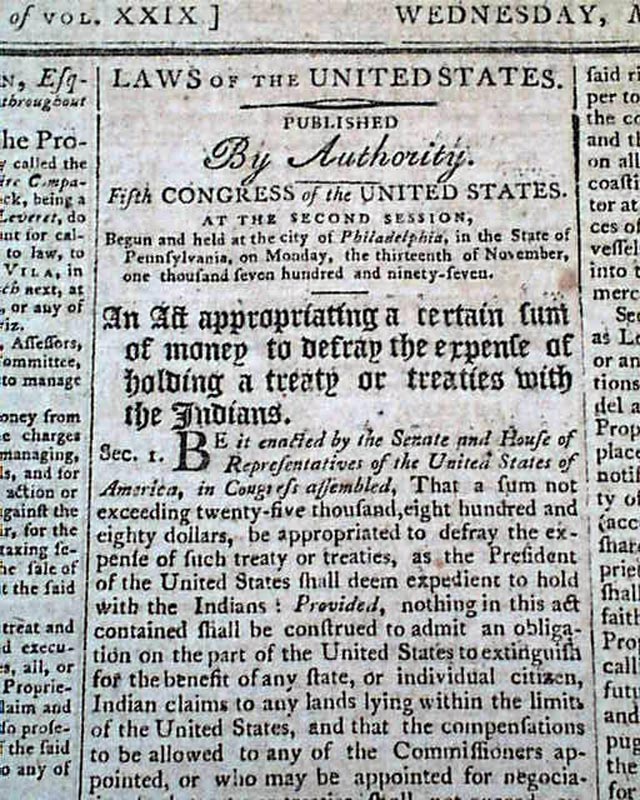
The front page features two Acts of
...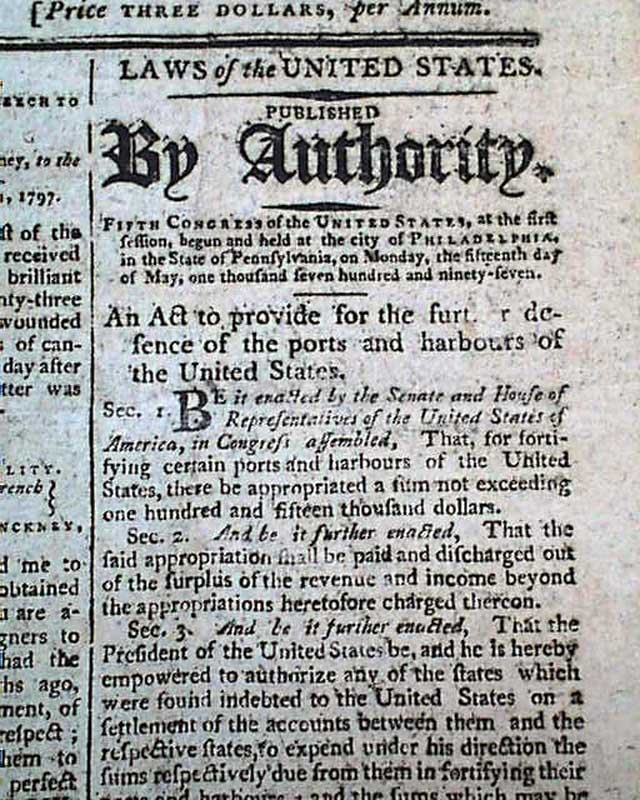
COLUMBIAN CENTINEL, Boston, July 8, 1797
- President John Adams
- Acts of Congress
The last column of the front page is taken up with two Acts of Congress, each
...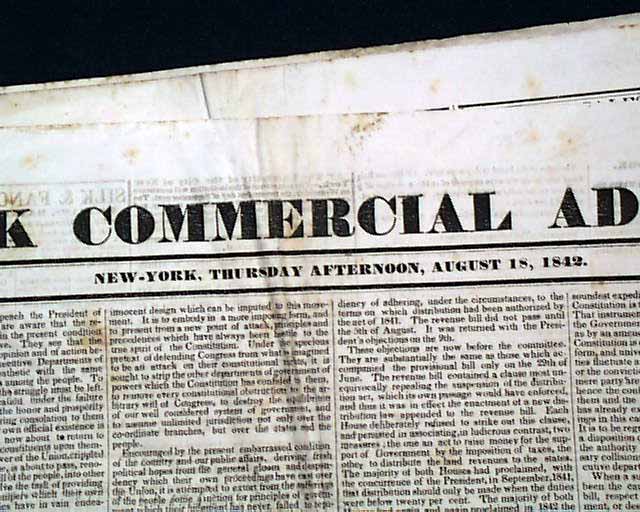
NEW-YORK COMMERCIAL ADVERTISER, Aug. 18, 1842
- John Quincy Adams
- Veto message
The front page has: Mr. Adams's Report On The Veto Message, signed in type: John
...