
Lou Gehrig ends his 2,130 game streak...
THE NORWICH SUN, Connecticut, May 3, 1939
- Lou Gehrig's games played streak ends
- New York Yankees - Major league baseball
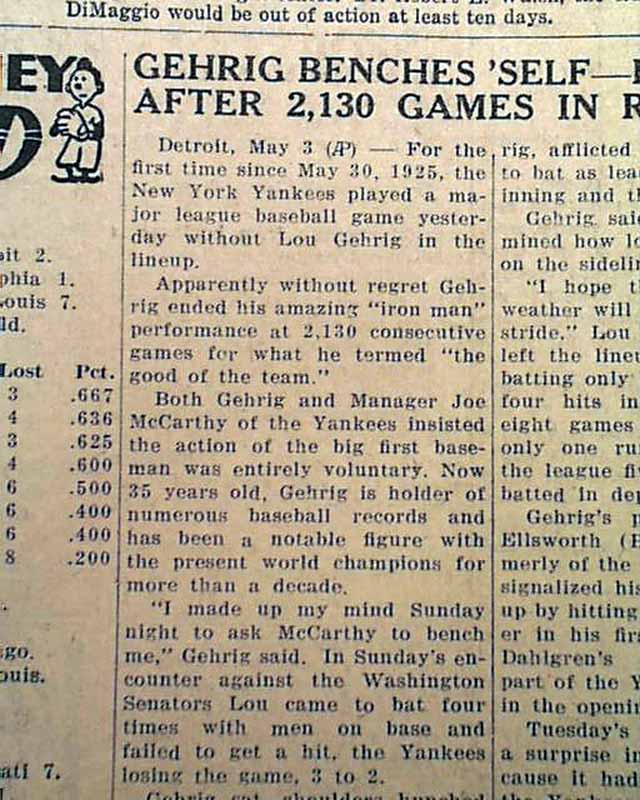
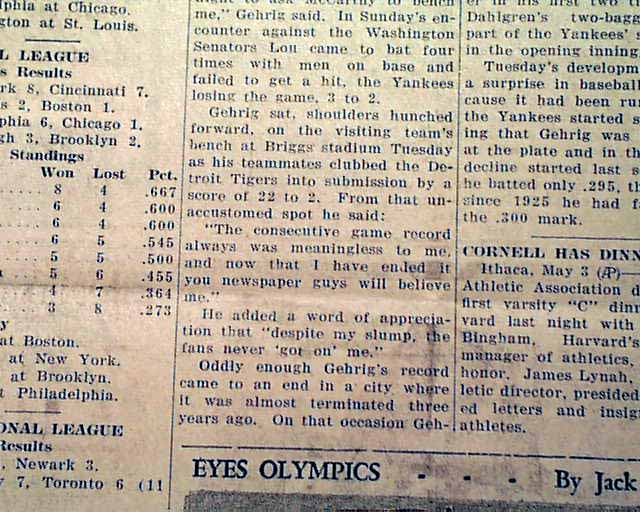
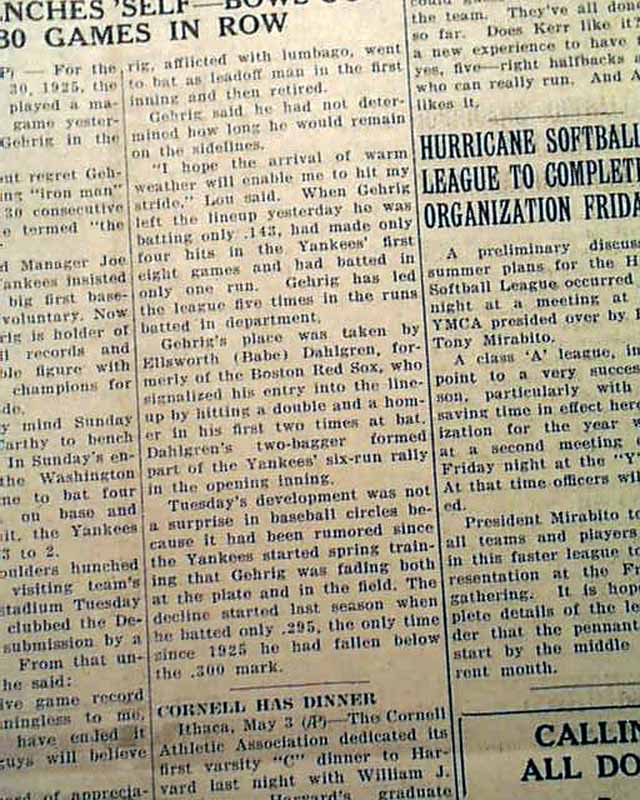
The sports page has a two line, 2 column head: "Gehrig Benches Self--Bows Out After 2,130 Games In Row" with a nice article beginning: "For the first time since May 30, 1925, the New York Yankees played a major league baseball game yesterday without Lou Gehrig in the lineup..." with more.
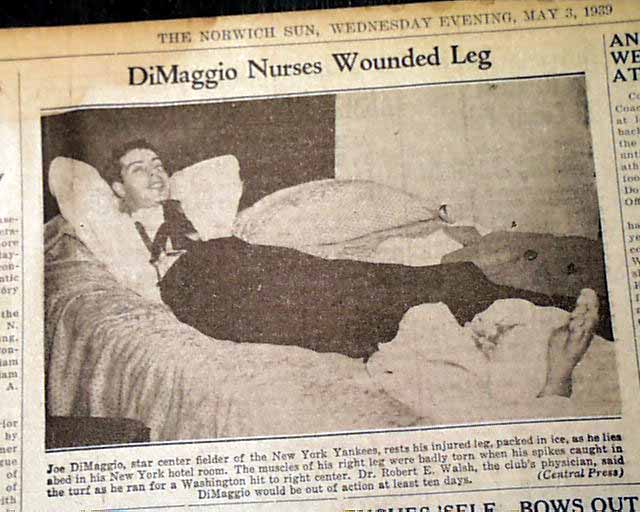
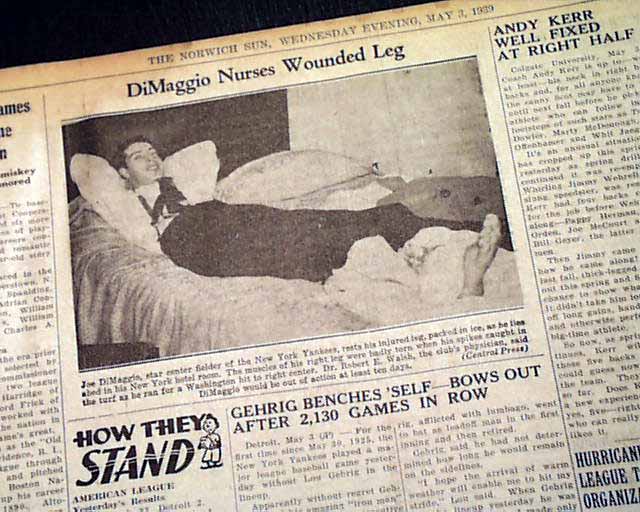
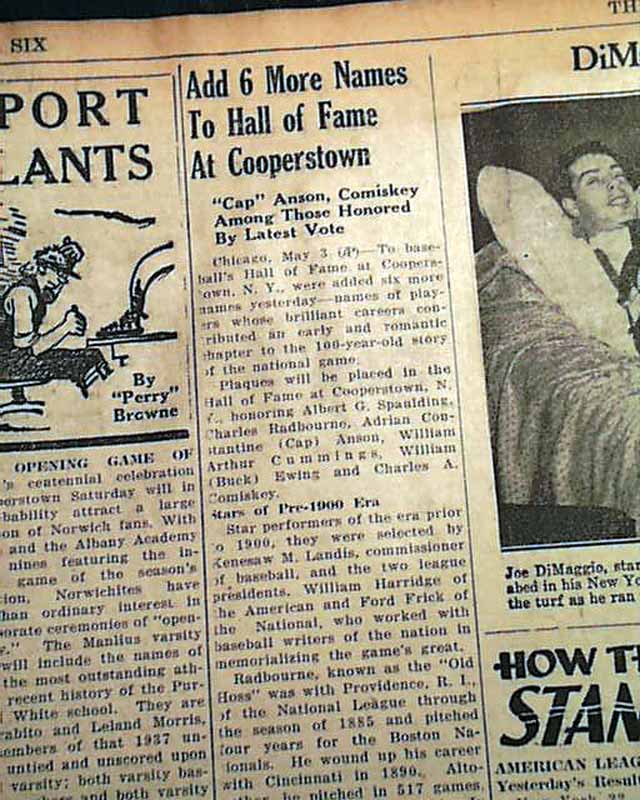
Curiously, above the article is a photo of the next generation's star Yankee, headed "DiMaggio Nurses Wounded Leg" with text in the caption. Also a one column report: "Add 6 More Names To Hall of Fame At Cooperstown".
Complete in 8 pages, light browning, minor margin wear, otherwise in good condition.
Background: The decision by Lou Gehrig to bench himself on May 2, 1939—as reported in The Norwich Sun the following day—remains one of the most poignant "changing of the guard" moments in American sports, marking the end of a record-breaking 2,130-consecutive-game streak that had defined baseball for fourteen years. By voluntarily stepping aside for Babe Dahlgren at Briggs Stadium in Detroit, Gehrig traded his "Iron Horse" persona for a display of profound humility, prioritizing the Yankees' success over his personal milestone as he grappled with the then-mysterious physical decline caused by Amyotrophic Lateral Sclerosis (ALS). This event was culturally amplified by the simultaneous injury of Joe DiMaggio and the induction of six new legends into the Hall of Fame at Cooperstown, effectively bridging three eras of baseball history in a single news cycle: the passing of the 1920s "Murderers' Row" dynasty, the rise of the mid-century star in DiMaggio, and the formalization of the sport’s heritage through the opening of its National Museum. Gehrig’s exit transformed him from a fading athlete into an eternal symbol of grace and fortitude, fundamentally shifting the public's perception of sports heroes from invincible figures to relatable, courageous human beings.
Other issues you may like
§ related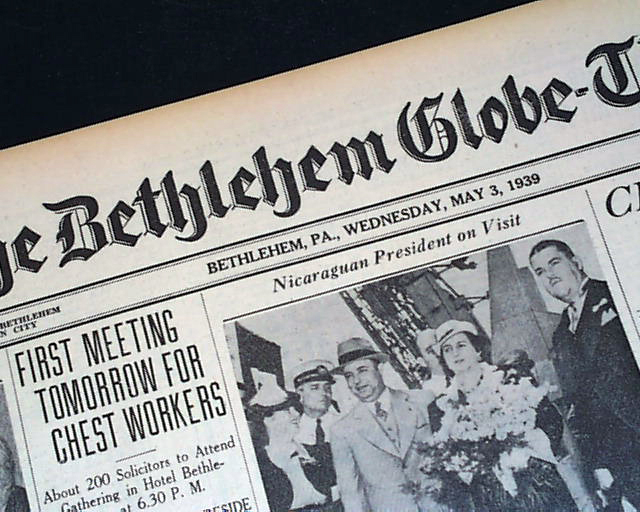
BETHLEHEM GLOBE-TIMES, Pa., May 3, 1939
- Lou Gehrig's games played streak ends (1st report)
- New York Yankees - Major league baseball
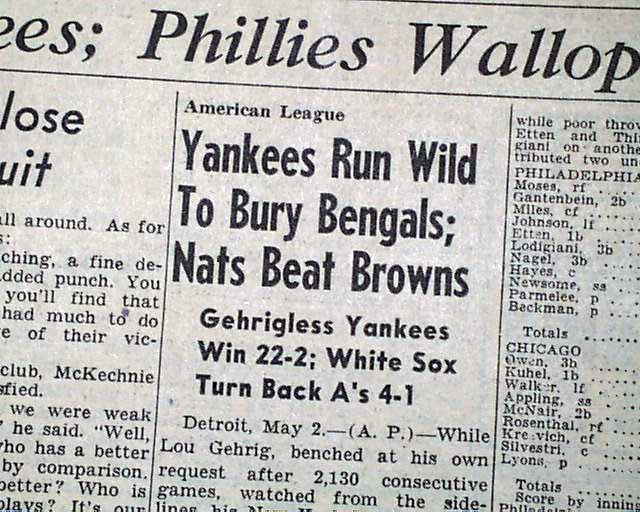
A very significant issue,
...
THE TOPEKA DAILY CAPITAL, Kansas, May 3, 1939
- Lou Gehrig's games played streak ends (1st report)
- New York Yankees - Major league baseball
A one column head
...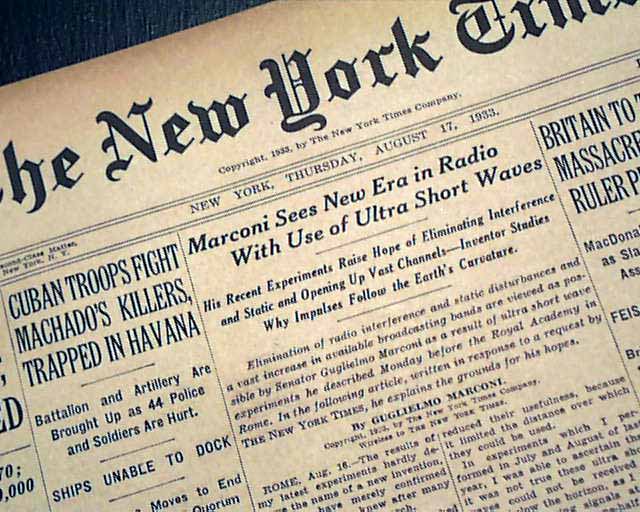
THE NEW YORK TIMES, New York, NY, August 17, 1933
- Lou Gehrig's consecutive games played record
- New York Yankees - MLB baseball
- Best title to have this in
This
...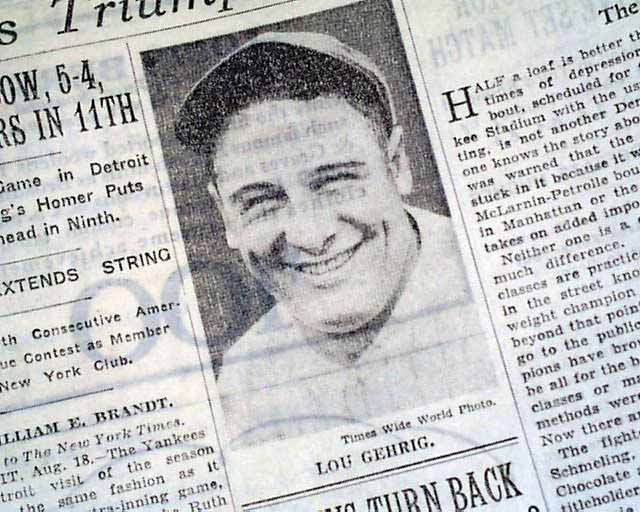
THE NEW YORK TIMES, New York, NY, August 19, 1931
- Lou Gehrig
- New York Yankees
- MLB baseball
This 44 page newspaper has a five column headline on page 26:
...