Who will lead after Joseph Smith?
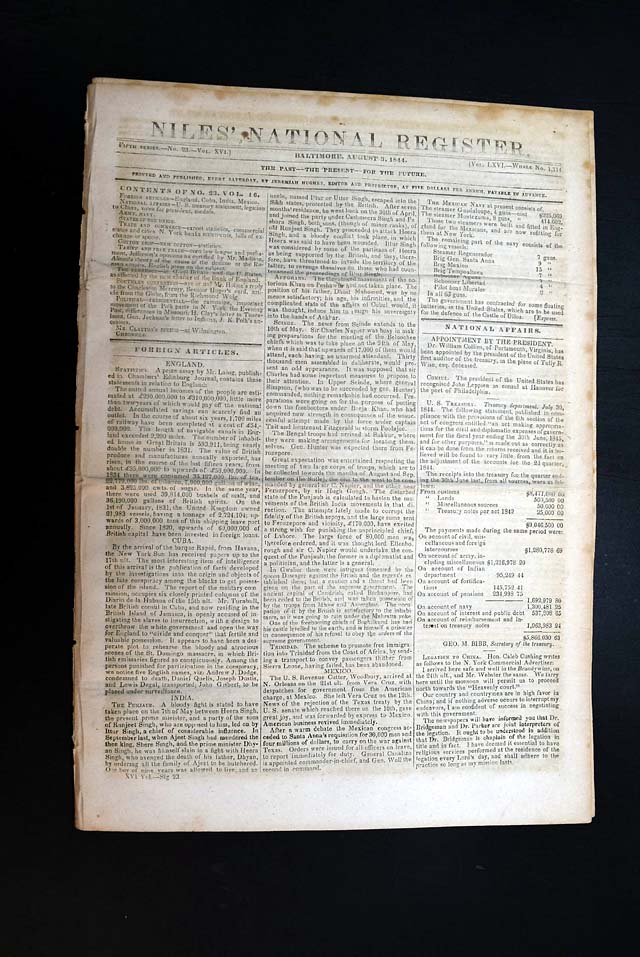
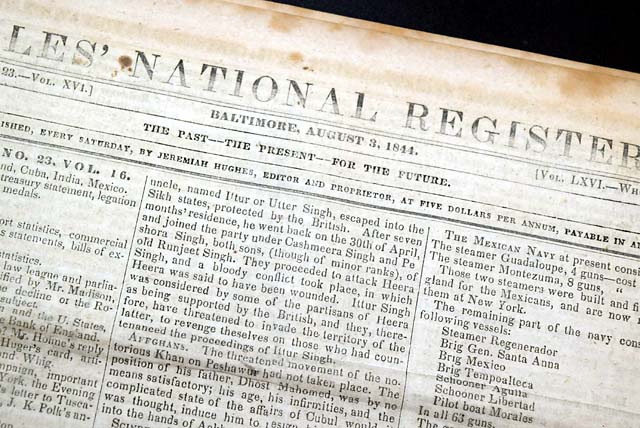
NILES' NATIONAL REGISTER, Baltimore, Aug. 3, 1844
- re. Joseph & Hyrum Smith assassinations
- Mormonism - Mormons - LDS leadership
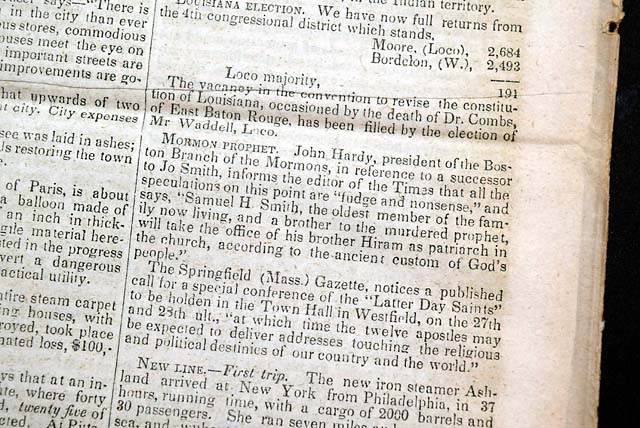
The back page has a relatively brief article with a small heading: "Mormon Prophet" which reads: "John Hardy, president of the Boston Branch of the Mormons, in reference to a successor to Jo Smith, informs the editor of the Times that all the speculation on this point are 'fudge and nonsense', and says, 'Samuel H. Smith, the oldest member of the family now living, and a brother to the murdered prophet, will take the office of his brother Hiram as patriarch in the church, according to the ancient custom of God's people.' "
This is followed by another small items concerning the Mormons.
Also within this issue are articles including: Appointment by the President" "States Of The Union" "Trade & Commerce" "Southern Convention" "The Presidential Campaign" "James K. Polk's Ancestors" and other items.
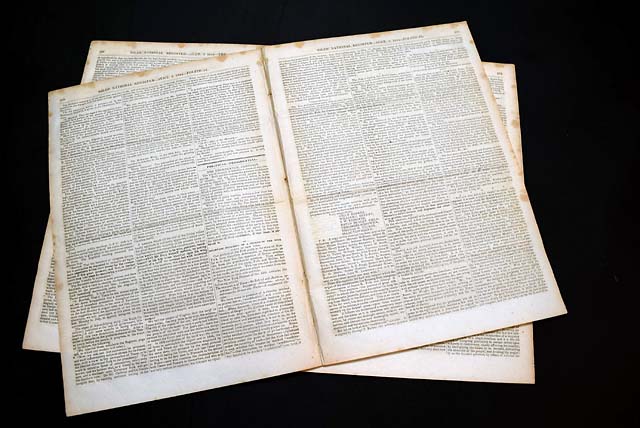
Sixteen pages, 8 1/2 by 12 inches, very nice condition.
Background: Published just over a month after the June 27, 1844 assassinations of Joseph and Hyrum Smith at Carthage Jail, this Niles' National Register item captures the immediate, chaotic succession debate before Brigham Young and the Quorum of the Twelve Apostles ultimately consolidated leadership. Quoting John Hardy, president of the church’s Boston branch, the article dismisses public speculation regarding Joseph's successor as "fudge and nonsense" and names Samuel H. Smith—Joseph's younger brother—as the proper candidate to inherit Hyrum's office of Presiding Patriarch under "the ancient custom of God's people." In a tragic historical irony, by the time eastern readers received this August 3 report, Samuel Smith was already dead; he succumbed on July 30, 1844, to a severe illness brought on by intense physical exhaustion while fleeing a hostile mob following his brothers' murders.
As noted in Wikipedia, this title: "...(was) one of the most widely-circulated magazines in the United States...Devoted primarily to politics...considered an important source for the history of the period."
Item from last month's catalog - #370 - released for September, 2026
Other issues you may like
§ related
NILES' NATIONAL REGISTER, Baltimore, June 22, 1844
- Mormons leader Joseph Smith
- Election campaign for president
- 1st presidential candidate to be killed
It is
...
NILES' NATIONAL REGISTER, Baltimore, Sept. 17, 1842
The back page has a brief yet rather rare report with a mini-head: "Joe Smith" stating: "This wonderful
...
NILES' NATIONAL REGISTER, Baltimore, May 18, 1844
- Mormons leader Joseph Smith
- Election campaign for president
- 1st presidential candidate to be killed
Page 2
...
NILES' NATIONAL REGISTER, Baltimore, July 22, 1843
- Mormons - Mormonism
- Earliest of Brigham Young
The back page has a heading: "The Mormon Prophet" which
...