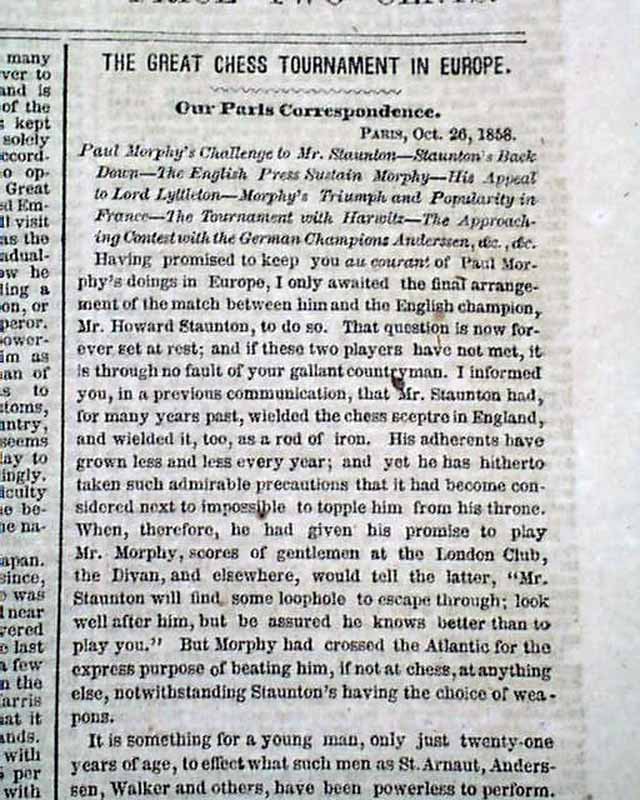
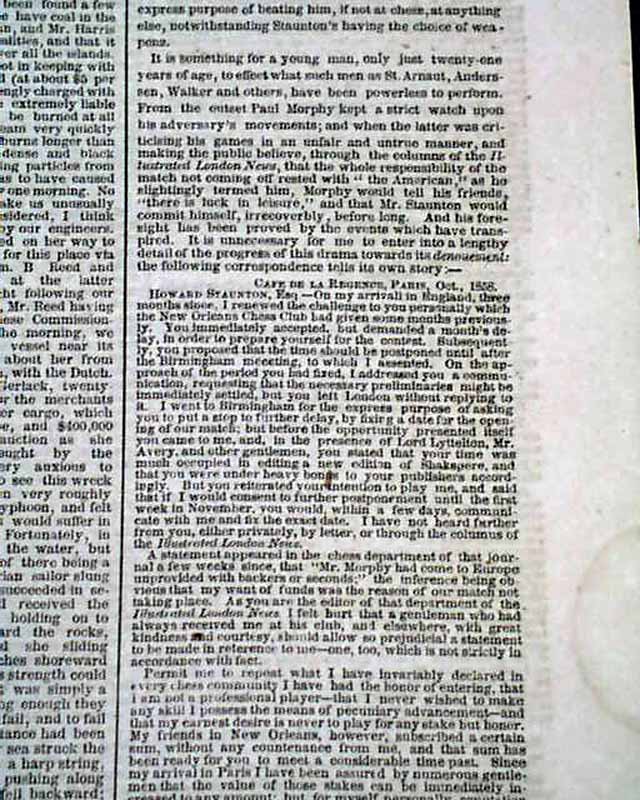
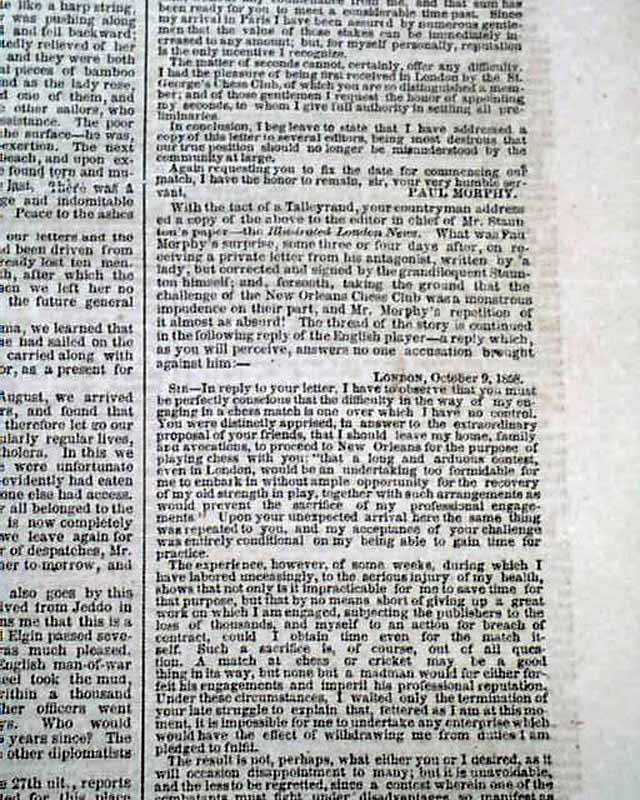
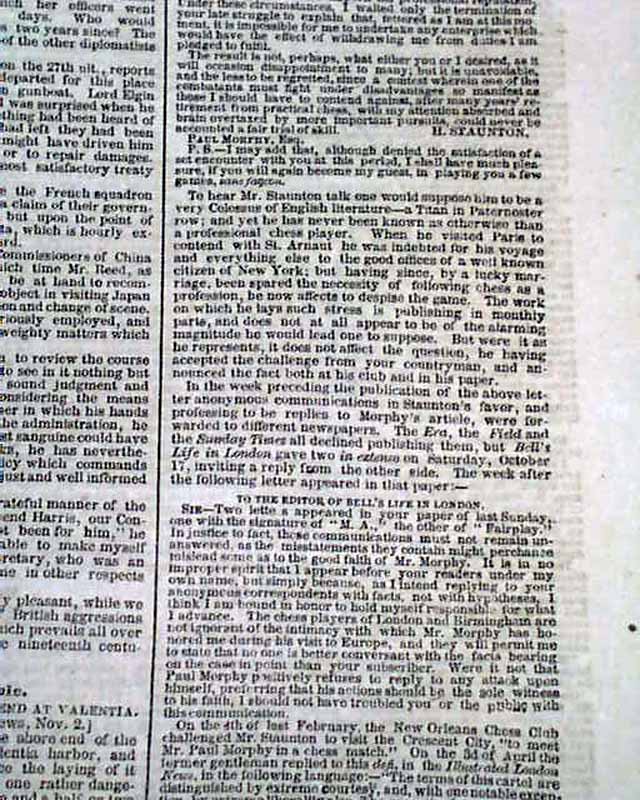
Great chess issue: Paul Morphy, Harry Staunton, and more...
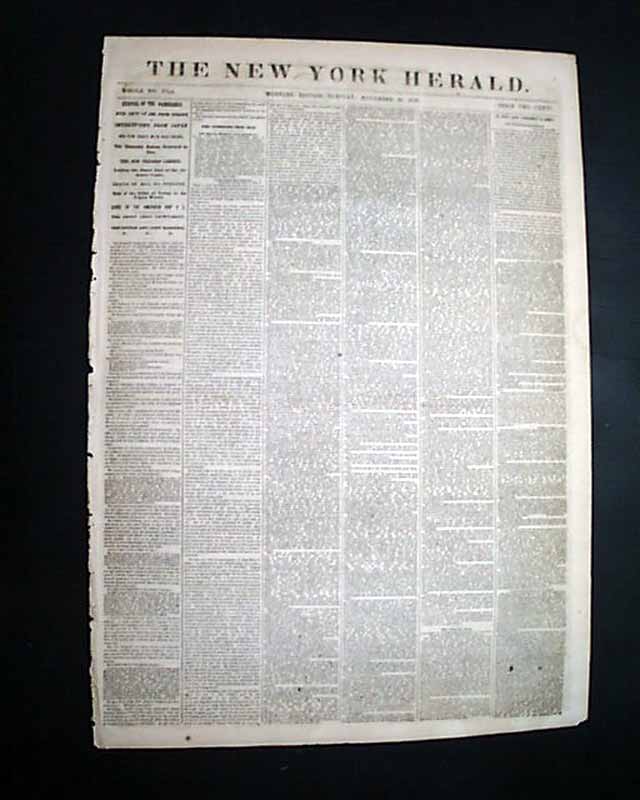
NEW YORK HERALD, Nov. 16, 1858
- Early game of Chess controversy
- Paul Morphy & Howard Staunton
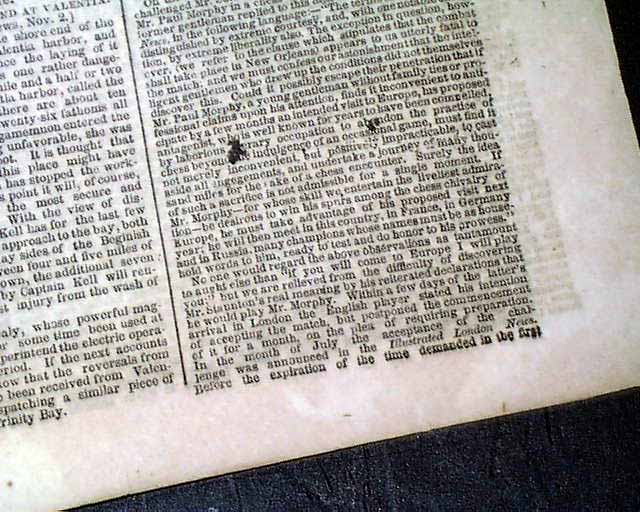
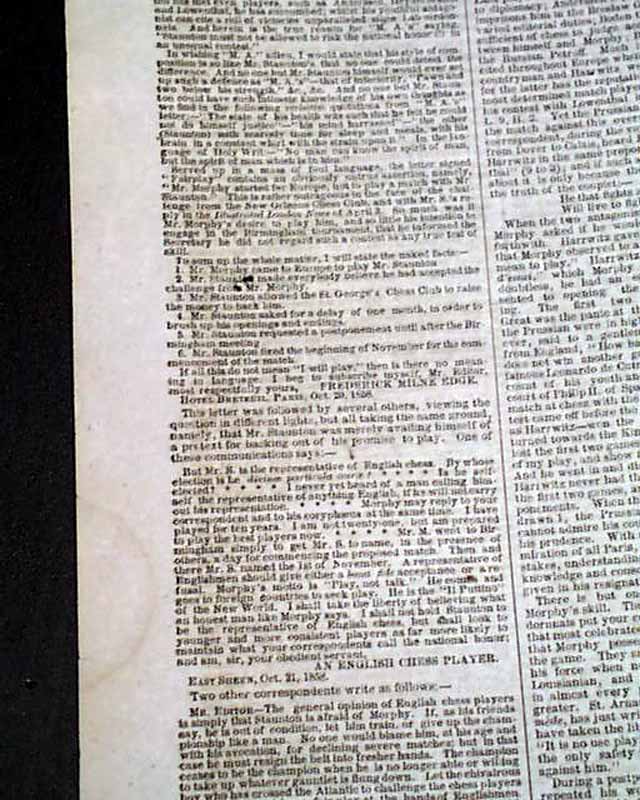
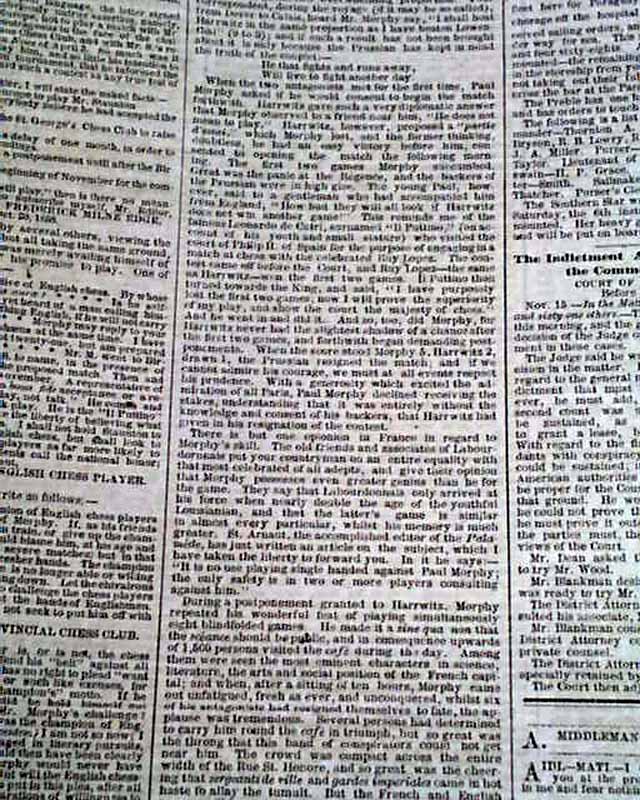
The last column on the front page has: "The Great Chess Tournament In Europe", with more than 2 1/2 columns regarding Paul Morphy's travel to Europe in 1858 to play Harry Staunton (a match which never took place), and an account of their correspondence related to what is now referred to as the Staunton-Morphy controversy.
A great issue for those who collect historic chess memorabilia.
Eight pages, a bit irregular at the blank spine from disbinding, good condition.
Background: The November 16, 1858, issue of the New York Herald captures the definitive climax of the Staunton-Morphy controversy, a pivotal moment in chess history that solidified Paul Morphy’s legacy as a tragic American folk hero and marked the unofficial passing of the global chess crown. Spanning over two and a half front-page columns, the article documents the tense, public correspondence between the 21-year-old American prodigy and Howard Staunton, the aging titan of mid-19th-century British chess. Having crossed the Atlantic to prove his supremacy, Morphy was met not with a checkmate on the board, but with months of evasion, financial moving of goalposts, and character assassination in Staunton’s Illustrated London News column. By November 1858, Staunton had officially aborted the match entirely, using his editorial commitments to Shakespeare as a shield. This media warfare, laid bare by the Herald, exposed a deep cultural rift between European institutional elitism and the raw, romantic genius of the New World. Because Morphy subsequently suffered a mental decline and never played competitive chess again, this specific newspaper stands as a monument to the greatest "what-if" in sports history—the exact moment America's first international chess superstar was denied the formal coronation he deserved, transforming him into an enduring symbol of unfulfilled perfection.
Other issues you may like
§ related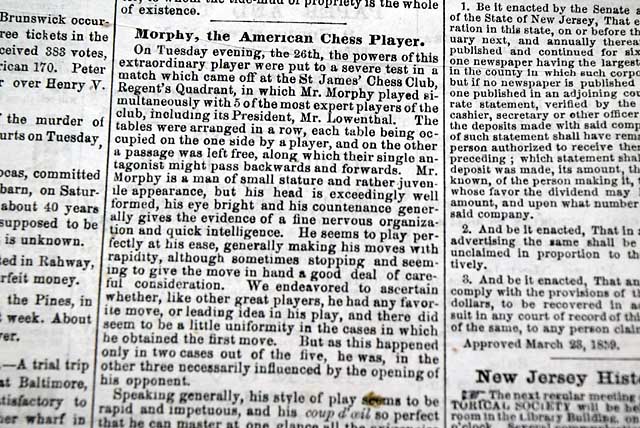
NEWARK DAILY ADVERTISER, New Jersey, May 12, 1859
- American Chess player Paul Morphy
- vs. 5 European masters in exhibition games
- At London's St. James Chess
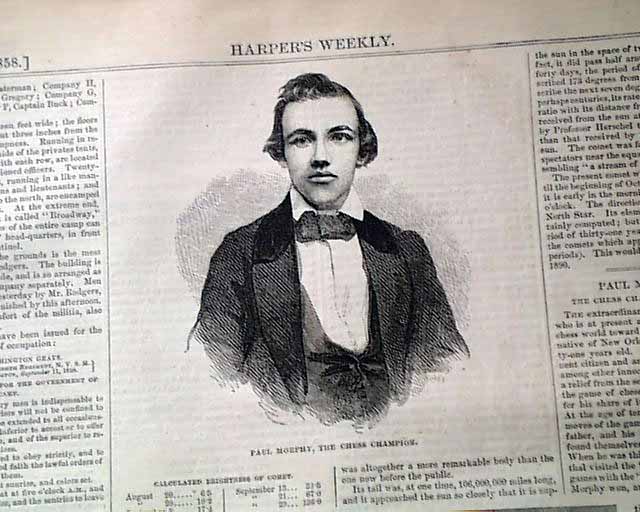
HARPER'S WEEKLY, New York, September 25, 1858
- Paul Morphy - American chess champion
- Early Salt Lake City, Utah view
The prime print would be the great and
...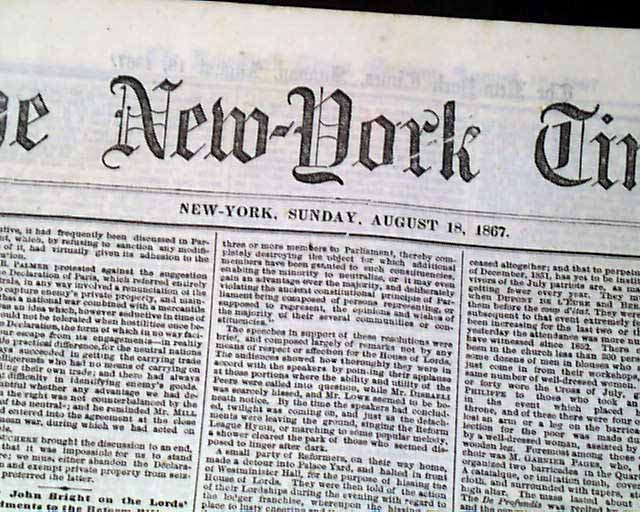
NEW-YORK TIMES, August 18, 1867
- The game of Chess
- Post civil war reporting
On the back page under "Chess" is a report:
- The Late Match Between Detroit &
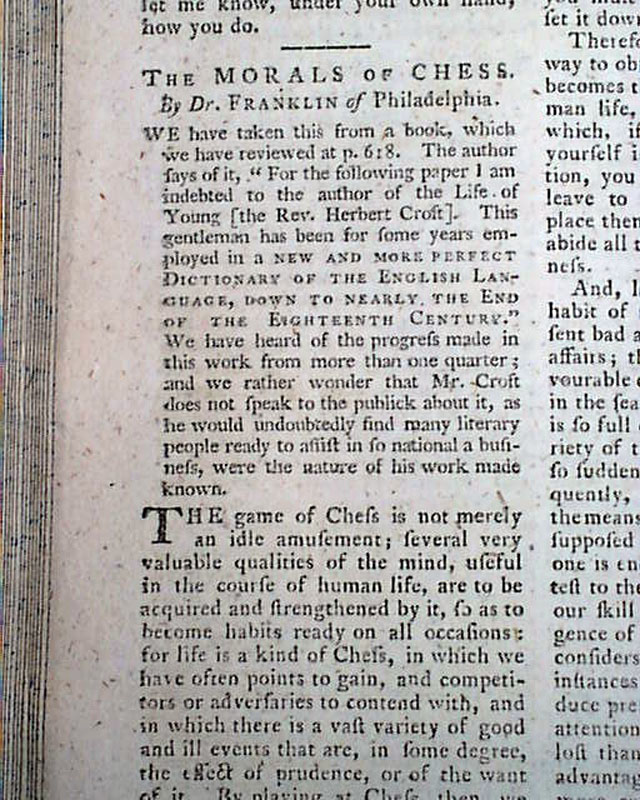
THE GENTLEMAN'S MAGAZINE, London, July, 1787
- Benjamin Franklin - Morals of Chess
- re. U.S. Constitution - George Washington
The most notable content is the
...