Trial of Wirz: the 'demon jailer of Andersonville'...
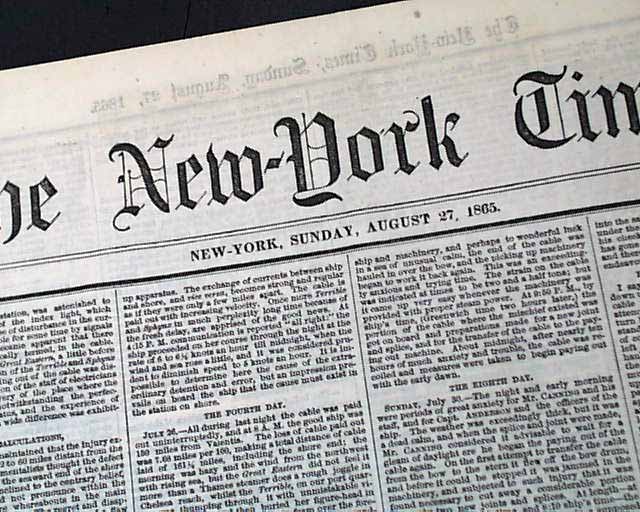
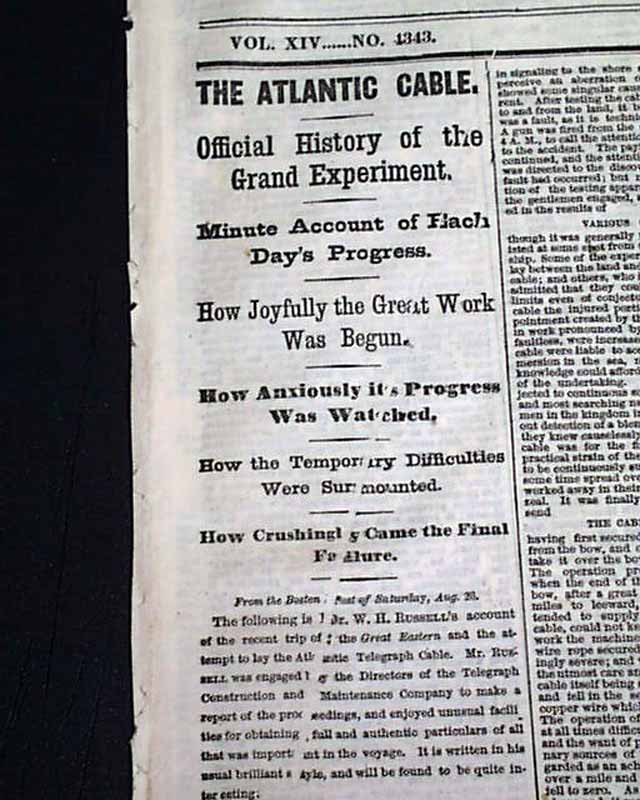
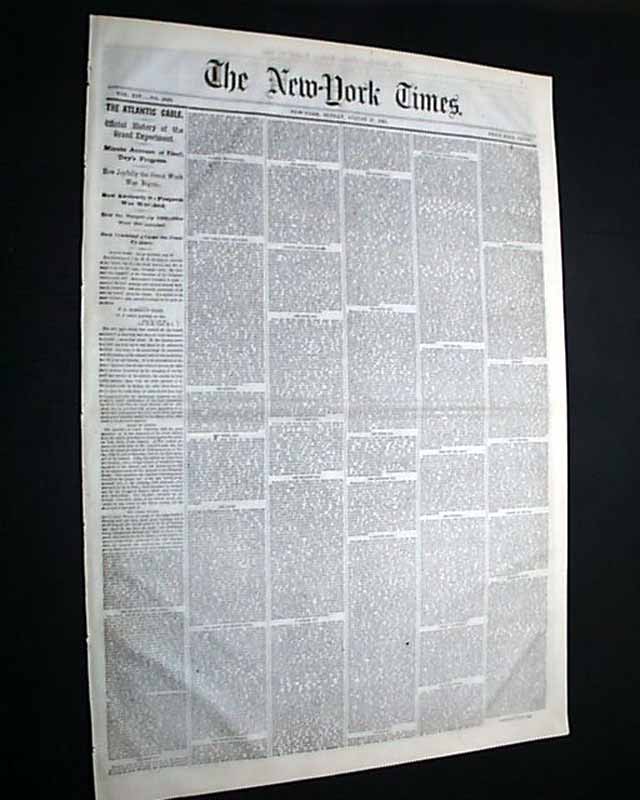
NEW YORK TIMES, Aug. 27, 1865
- Captain Henry Wirz Civil War crimes trial
- Andersonville Prison Camp in Georgia
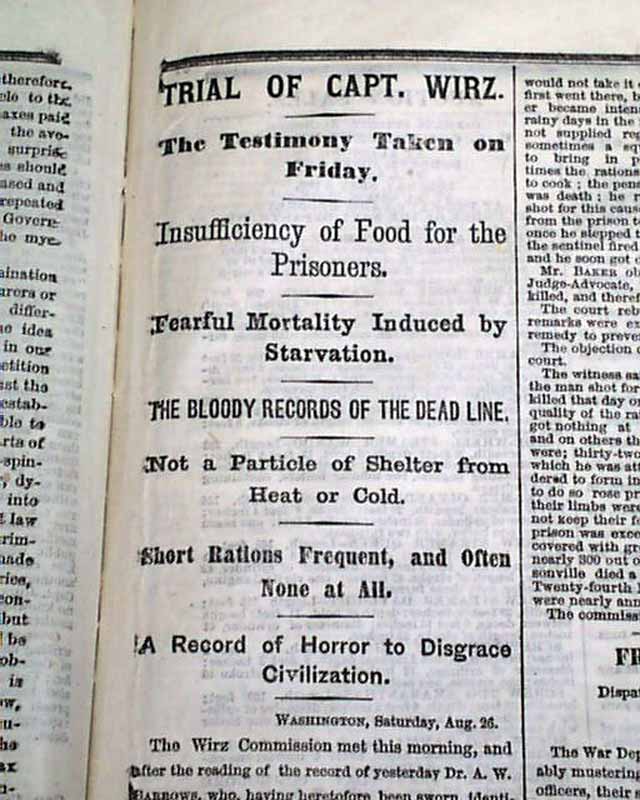
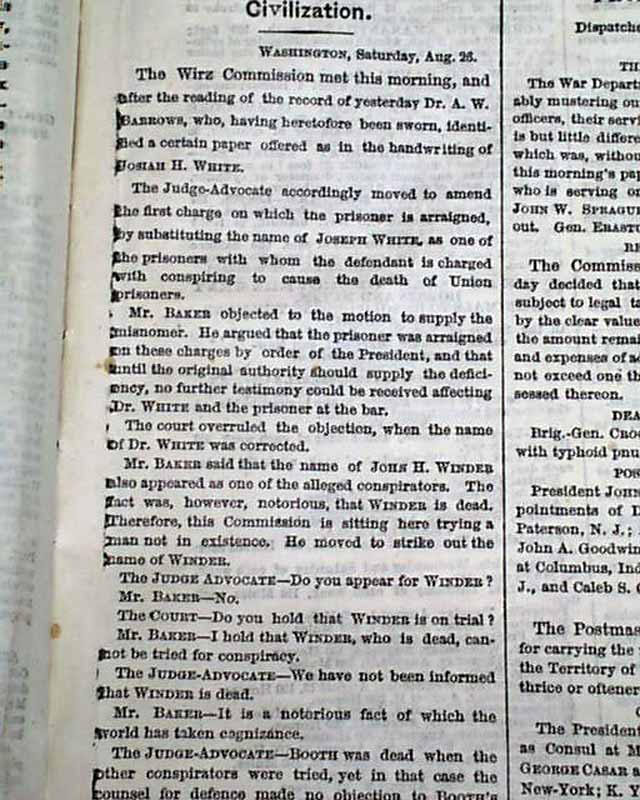
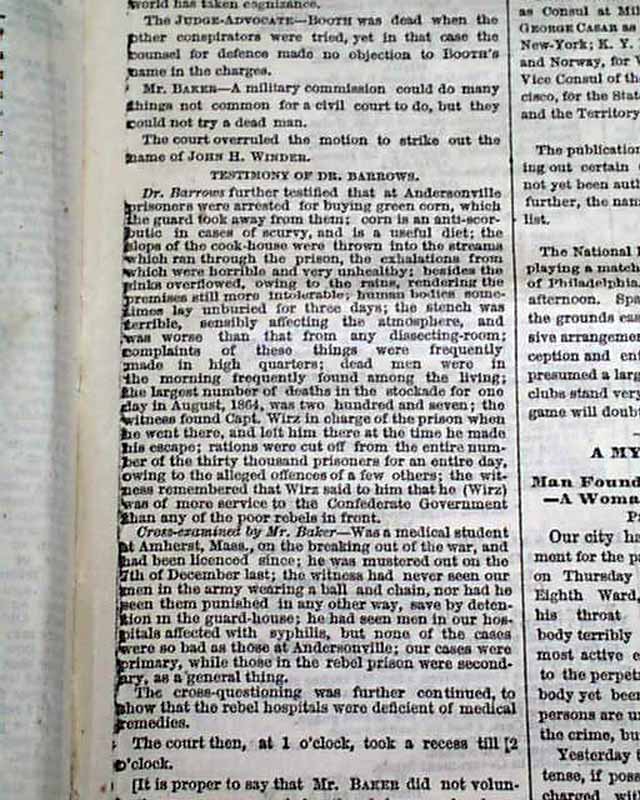
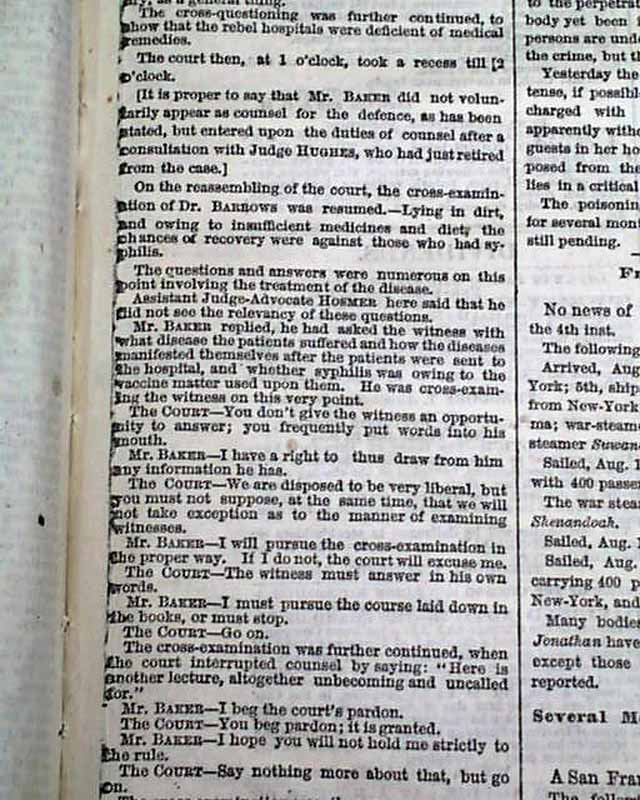
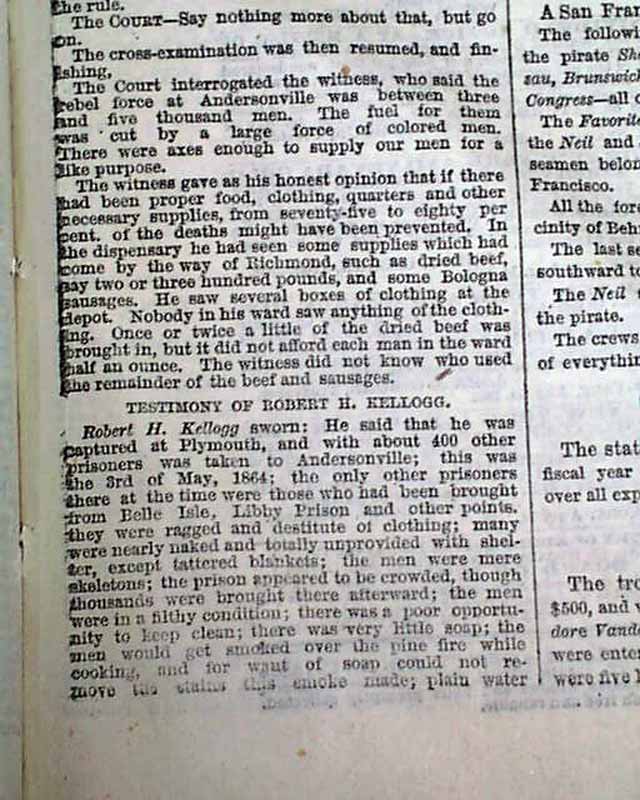
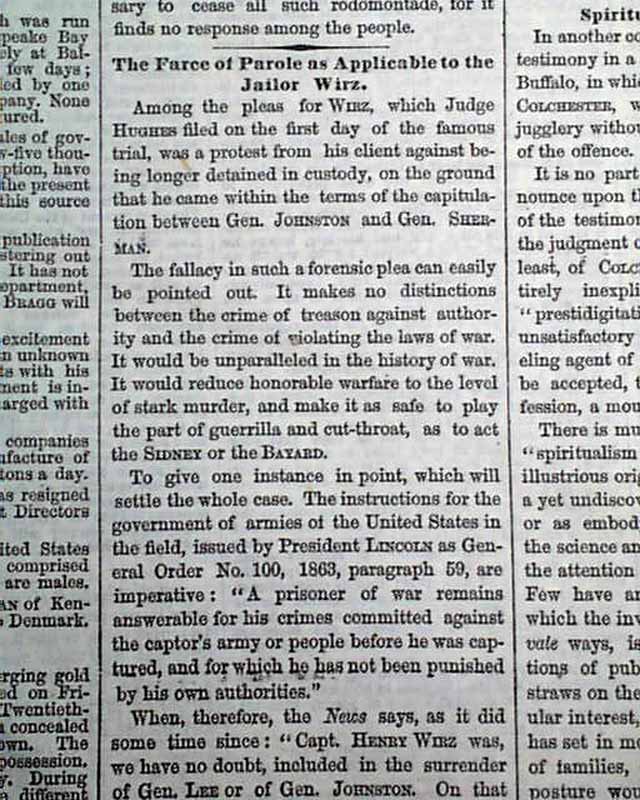
Page 5 has over a full column of reports on Captain Henry Wirz, the convicted war criminal who served as a Confederate Army officer.
He was the commandant of Andersonville Prison, a Confederate prisoner-of-war camp near Andersonville, Georgia, where nearly 13,000 Union Army prisoners of war died as a result of inhumane conditions. After the war, Wirz was tried and executed for conspiracy and murder relating to his command of the camp.
Column heads include: "TRIAL OF CAPT. WIRZ" "The Testimony Taken on Friday" "Insufficiency of Food for the Prisoners" "Fearful Mortality Induced by Starvation" "The Bloody Records of the Dead Line" "Not a Particle of Shelter from Heat or Cold" "Short Rations Frequent, and Often None at All" "A Record of Horror to Disgrace Civilization".
Eight pages, very nice condition.
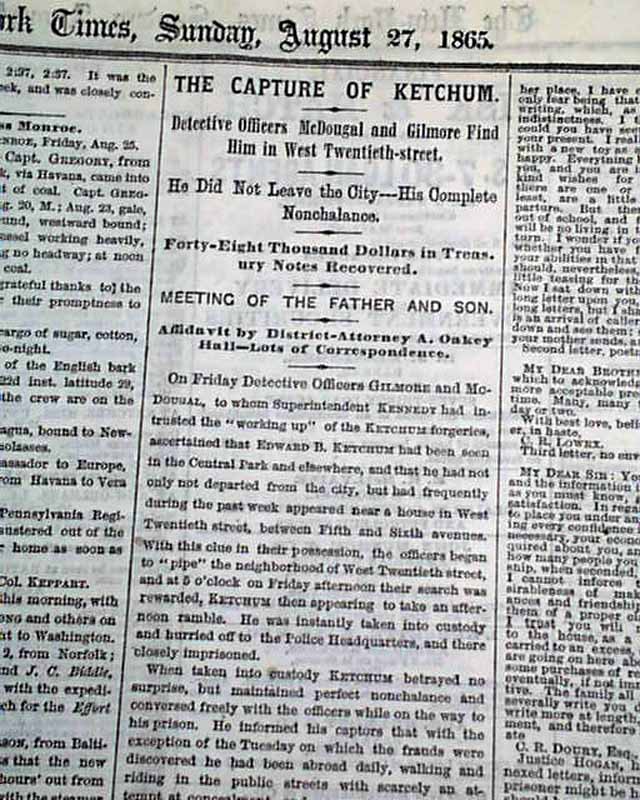
Background: This rare August 27, 1865 issue of The New York Times serves as an extraordinary primary historical artifact, capturing over a full column of intense coverage regarding the military tribunal of Captain Henry Wirz, the Confederate commandant who oversaw the infamous Andersonville Prison where nearly 13,000 Union soldiers died. As one of the few post-Civil War military war crimes trials, contemporary news printings of these proceedings are exceptionally scarce and historically significant. What makes this specific issue particularly notable is its raw, unvarnished presentation of eyewitness testimony through graphic, evocative subheadings—such as "Fearful Mortality Induced by Starvation," "The Bloody Records of the Dead Line," "Not a Particle of Shelter from Heat or Cold," and "A Record of Horror to Disgrace Civilization"—which exposed the horrifying extent of deliberate neglect, starvation, and summary executions directly to the 1865 public. Together, the extensive front-line reporting and visceral column headers transform this surviving vintage paper into a rare, tangible chronicle of the atrocities at Camp Sumter and the historic legal effort that ultimately led to Wirz's conviction and execution for war crimes.
Item from last month's catalog - #369 - released for August, 2026
Other issues you may like
§ related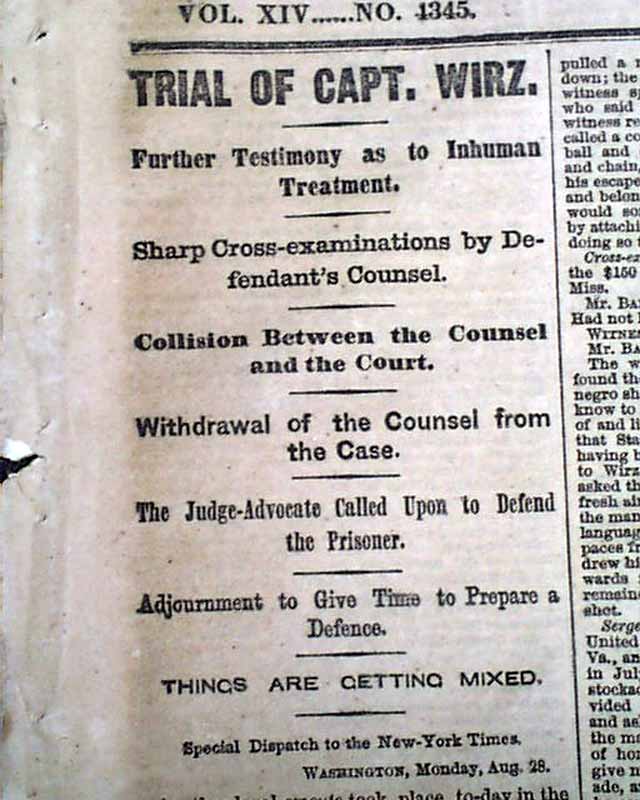
NEW YORK TIMES, Aug. 29, 1865
- Andersonville prison trial
- Barbarities by Henry Wirz
The front page has much on the trial of Henry Wirz.
Wirz was a Confederate
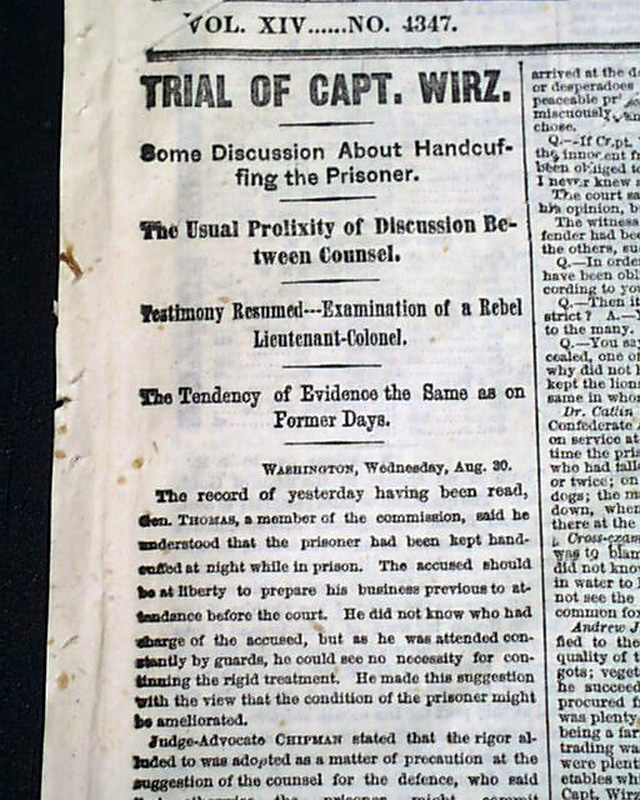
NEW YORK TIMES, Aug. 31, 1865
- Andersonville Prison - Camp Sumter
- Captain Henry Wirz trial - Georgia
The front page has much on the trial of Captain Wirz.
...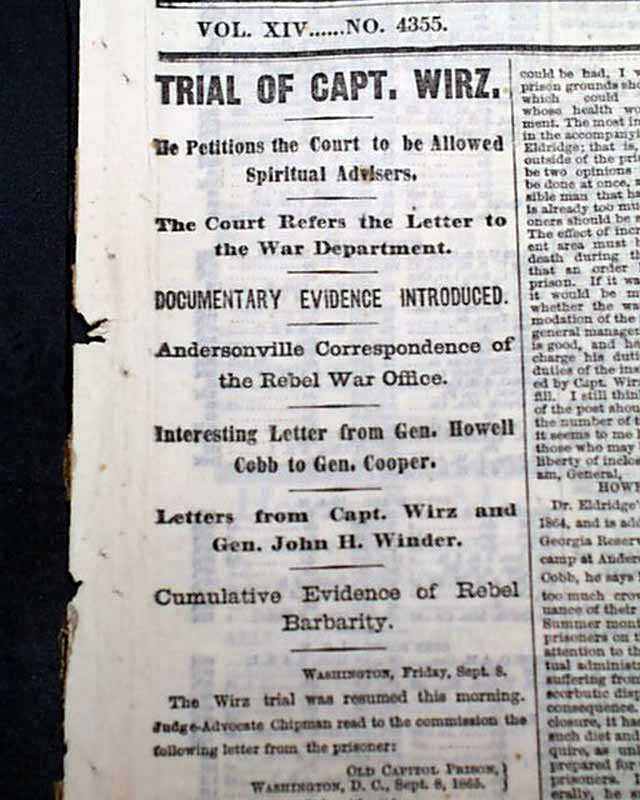
NEW YORK TIMES, Sept. 9, 1865
- Captain Henry Wirz barbarity trial
- Infamous Andersonville Prison - Georgia
Over two columns of the front page are taken up
...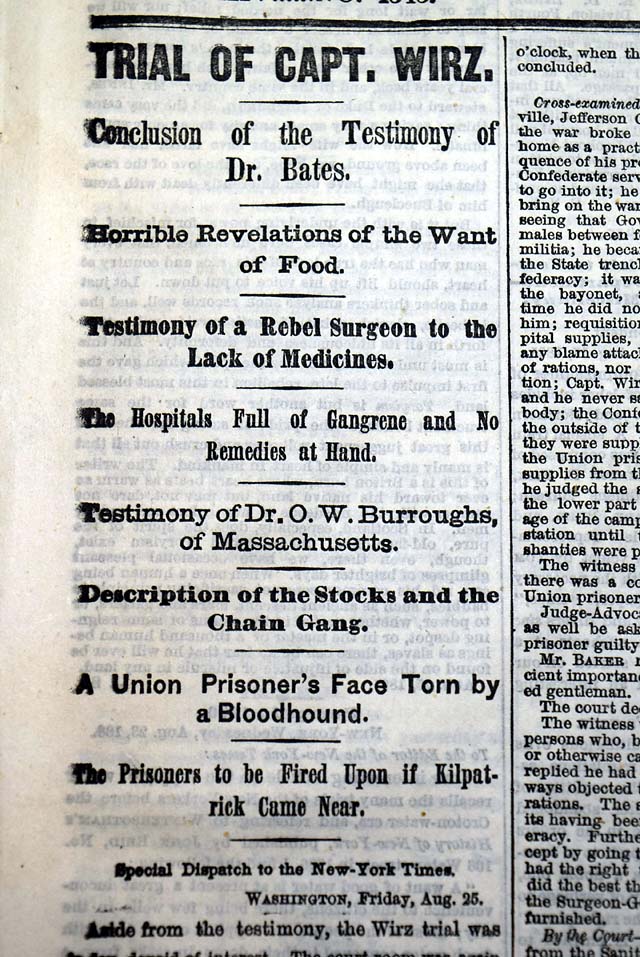
NEW YORK TIMES, Aug. 26, 1865 The front page has much reporting on the trial of Captain Henry Wirz.
Wirz was a Swiss-American convicted war criminal who