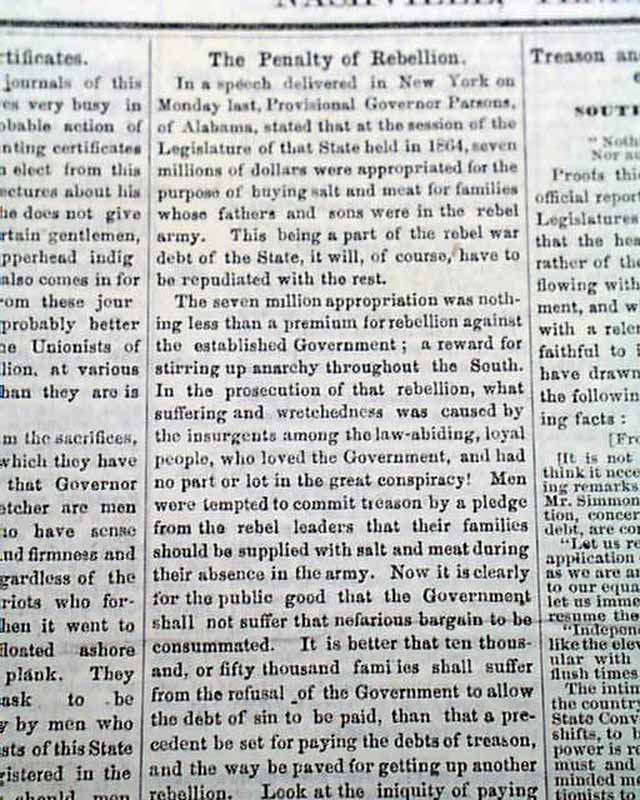
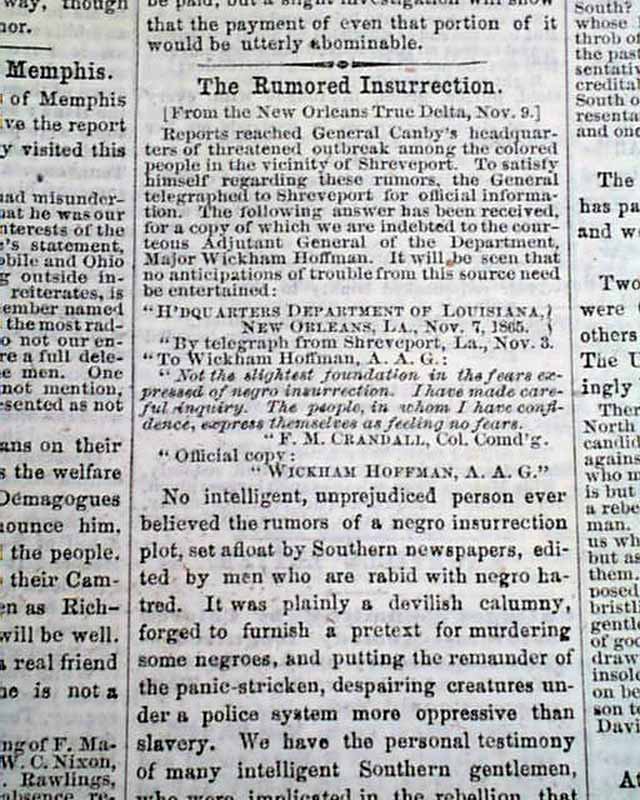
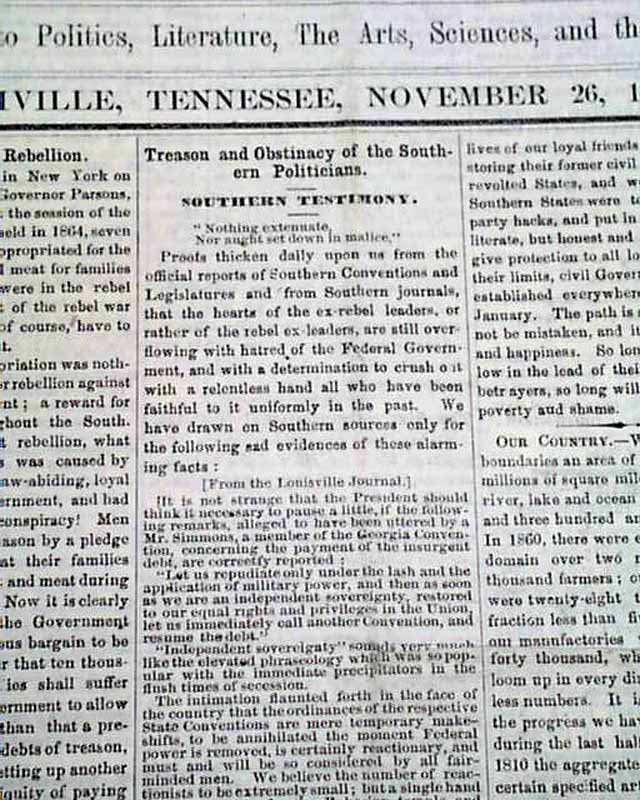
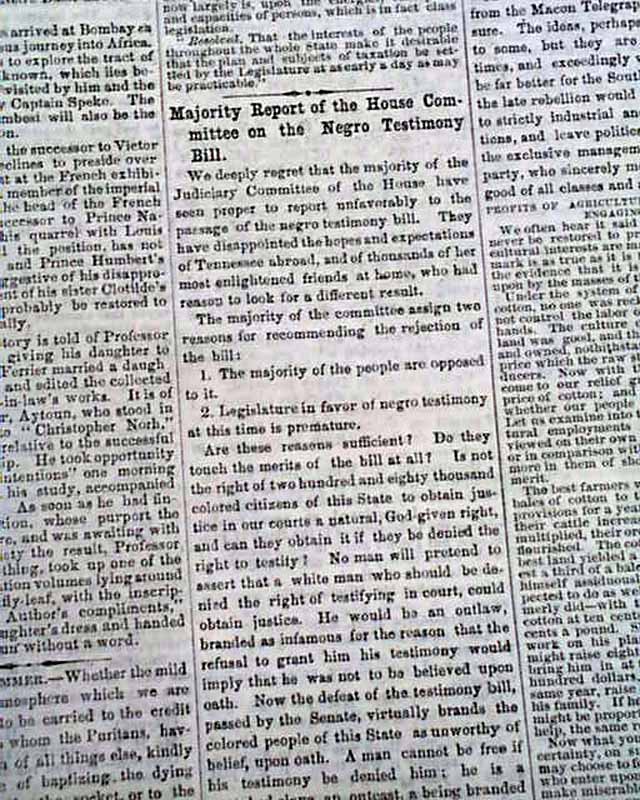
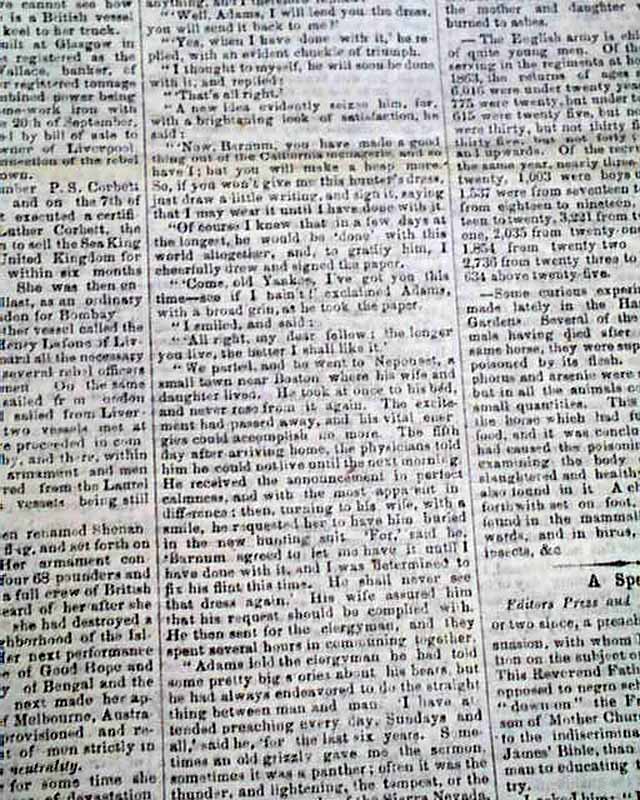
Nashville, shortly after the Civil War... The real Grizzly Adams...
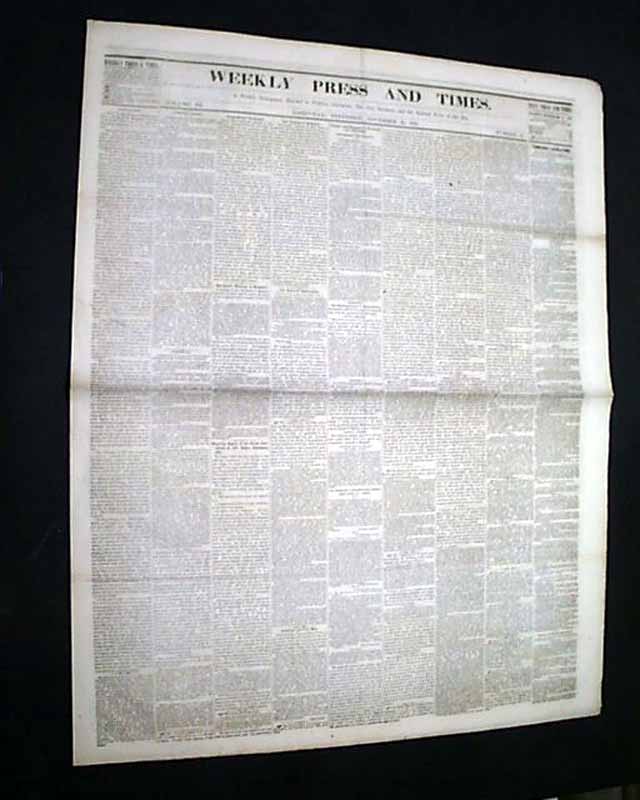
WEEKLY PRESS & TIMES, Nashville, Tennessee, Nov. 26, 1865
- Post Civil War reconstruction
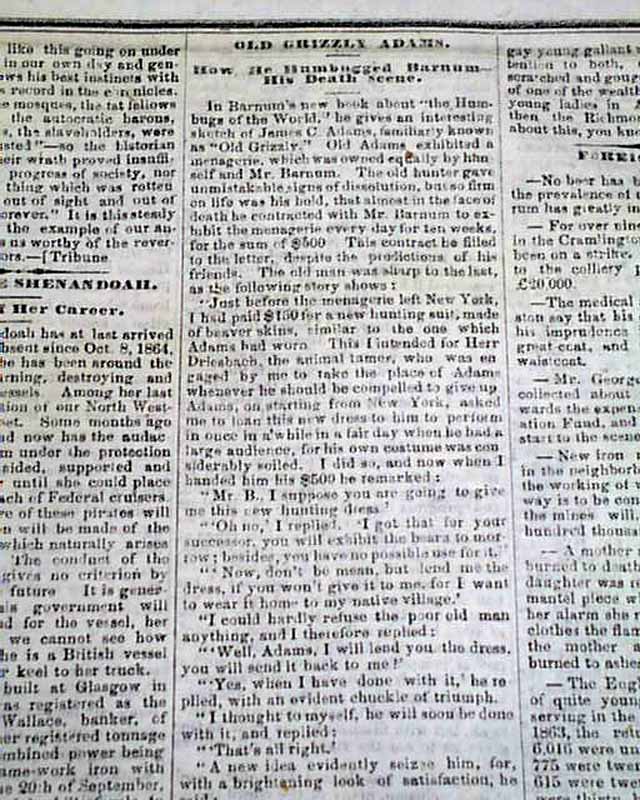
- re. John "Grizzly" Adams death
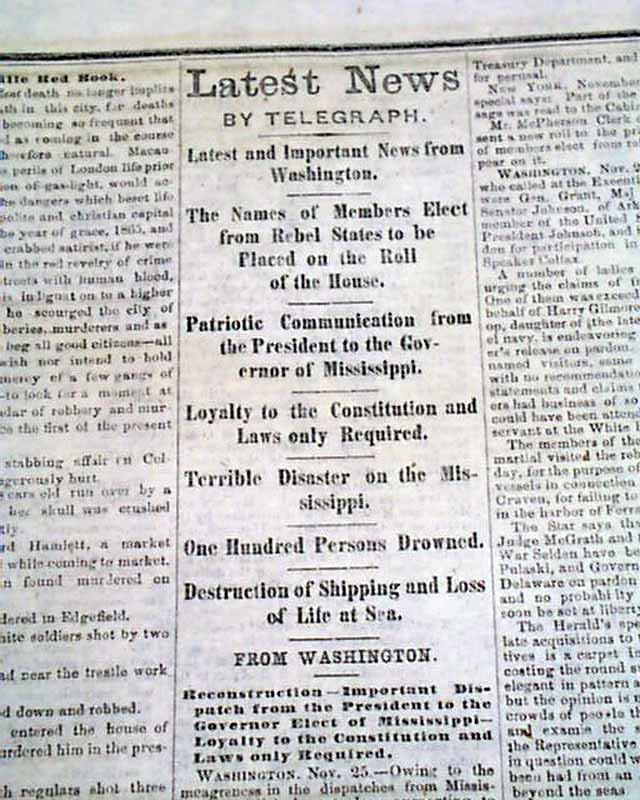
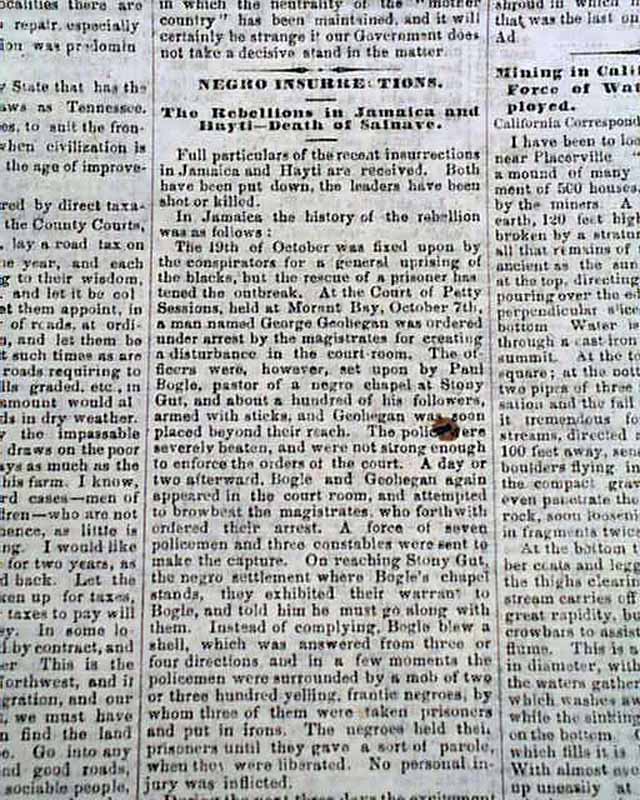
Various reports from shortly after the end of the city, much relating to Reconstruction efforts to re-join the nation as is evidenced in the photos. And page 3 has an article: "Old Grizzly Adams - How He Humbugged Barnum - His Death Scene". A television show would be based on him.
Four pages, never bound nor trimmed, nice condition. Folder size noted is for the issue folded in half.
Background: John "Grizzly" Adams remains a significant figure in American history as a bridge between the era of the wild mountain man and the birth of modern animal showmanship. His historical importance lies in his transition from a traditional trapper to a pioneer of ethology—the study of animal behavior—demonstrating for the first time that North American grizzly bears could be tamed, trained, and integrated into human society rather than merely hunted for food or pelts. Between 1852 and 1860, Adams defied the prevailing view of the wilderness as a place of pure hostility by living in the Sierra Nevadas with his bears, Lady Washington and Ben Franklin, who acted as companions and pack animals. His eventual partnership with P.T. Barnum in New York City brought the rugged reality of the Western frontier to the urban East, helping to shape the mythos of the "Wild West" while simultaneously ushering in a new era of public fascination with natural history. His death in 1860, caused by an infection from a head wound repeatedly reopened by his animal charges, serves as a grimly poetic testament to the unpredictable nature of the frontier life he helped popularize.
Other issues you may like
§ related
NEW HAMPSHIRE PATRIOT AND STATE GAZETTE, Concord, Sept., 29, 1852. The back page has: The Grisly Bear of California with the report beginning: One of the
...
OAKLAND HOME JOURNAL, California, Feb. 8, 1873 Page 2 has an interesting article on: "Mountain George, the Hunter" who apparently was somewhat of a Grizzly
...
WEEKLY PRESS AND TIMES, Nashville, Tennessee, July 29, 1866
- Uncommon title
The front page has: "Outrageous Treatment of a Freed Girl in Virginia" amongst
...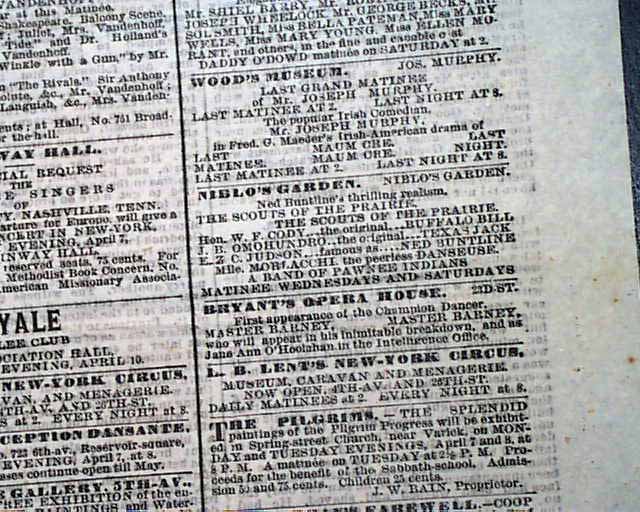
NEW YORK TIMES, April 5, 1873
- Buffalo Bill - William F. Cody
The front page has: "Indian Massacres - Murder of a Mail Carrier..." "Murder of Five Surveyors
...