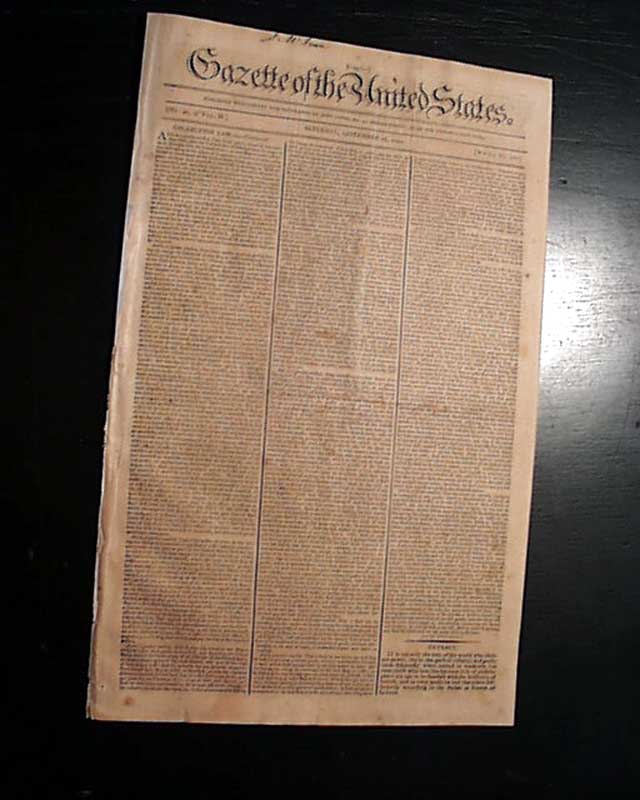
Washington's Proclamation, with the Indian Treaty... Trumbull's famous portrait of Washington...
Item # 705353
·
Sorry, but this item is no longer available. Please be in touch at info@rarenewspapers.com if you would like to be placed on a want list or are interested in a potential alternate issue.
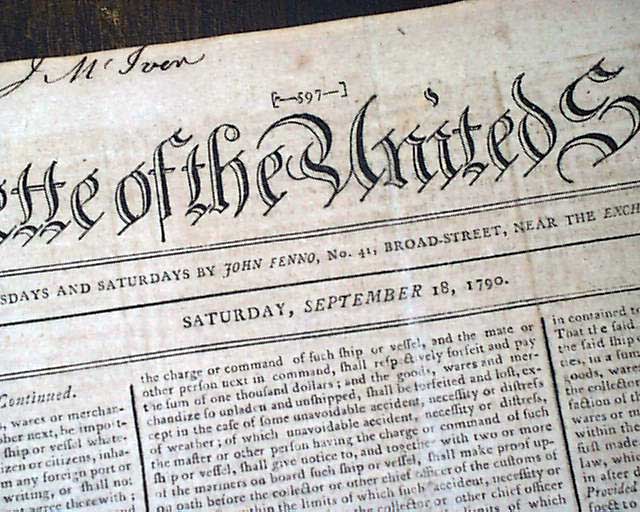
GAZETTE OF THE UNITED STATES, Philadelphia, Sept. 18, 1790
* President George Washington
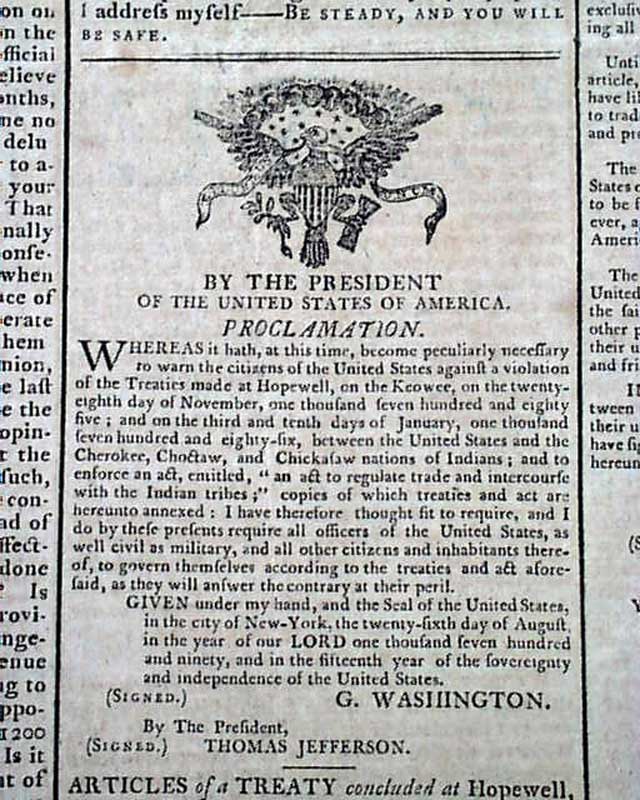
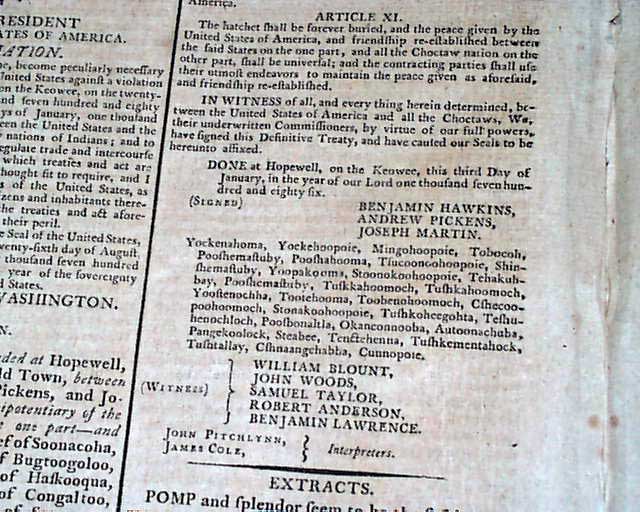
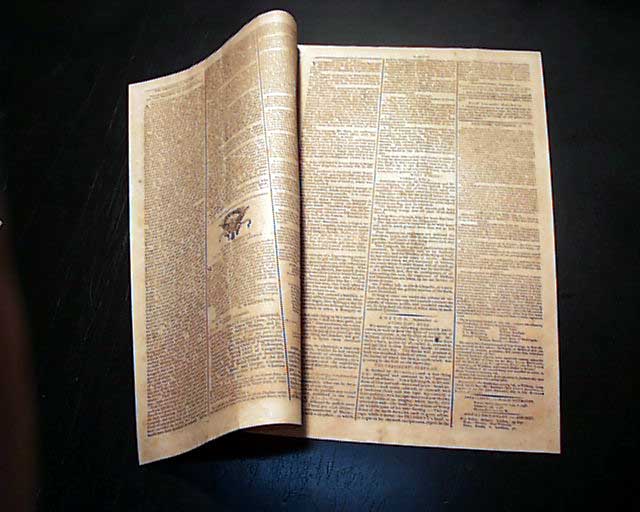
Page 2 has a patriotic engraving of a heraldic eagle above a: "Proclamation" issued by the President warning citizens not to violate an 1785 treaty with the Cherokee, Choctaw, and Chickasaw Indians, signed in type: G. Washington.
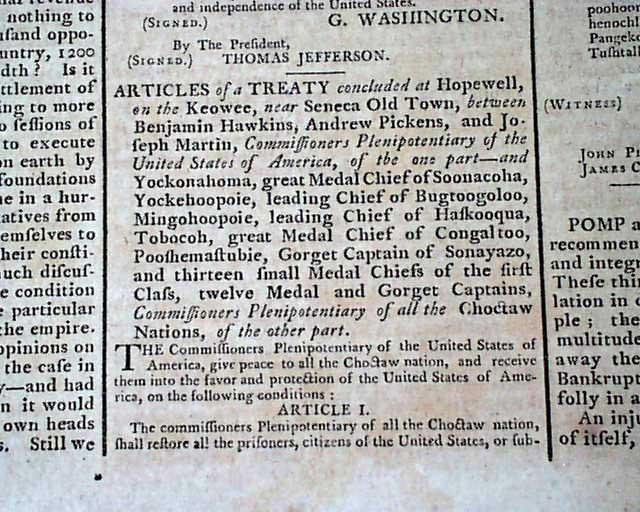
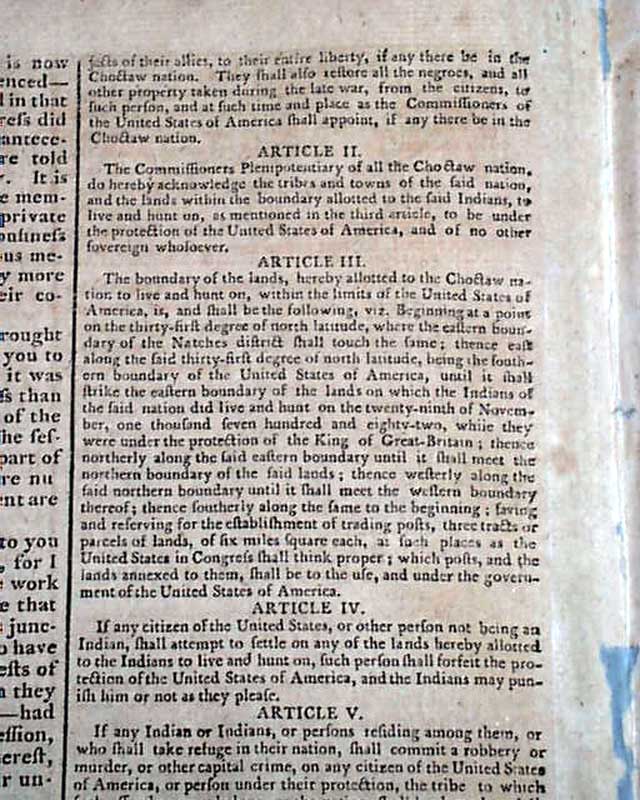
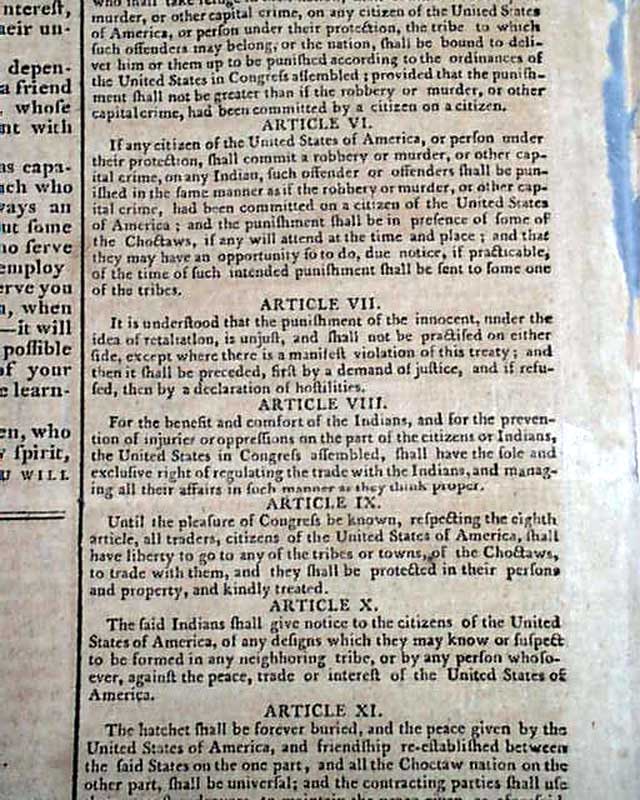
Following this text are the full Articles of the treaty taking an entire column.
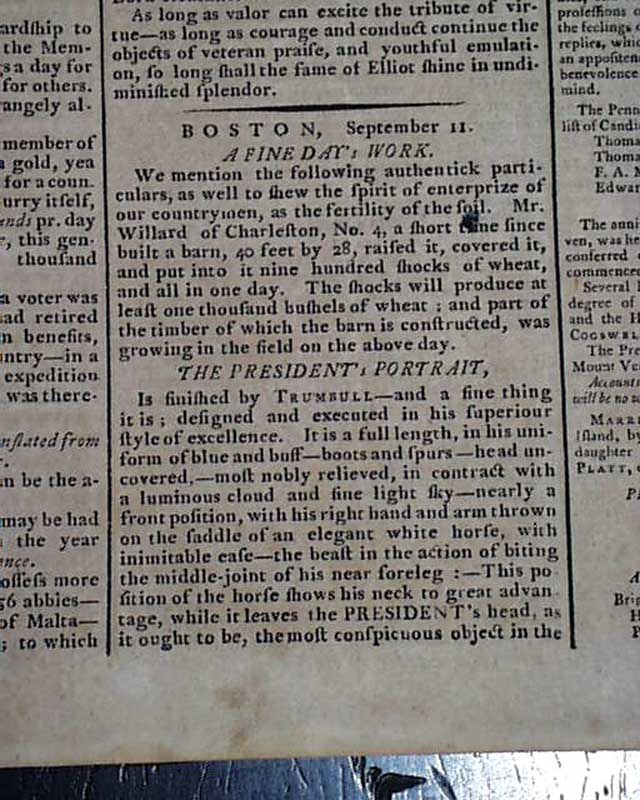
Page 3 has: "The President's Portrait" which is a very nice, descriptive account of Trumbull's famous 1790 portrait of George Washington, about which much has been written.
Four pages, some archival strengthening at the blank spine, nice condition.
background: On August 26, 1790, President George Washington issued a proclamation aimed at maintaining peace and order on the western frontier by reaffirming the federal government’s exclusive authority to negotiate treaties with Native American tribes. This proclamation came at a time of heightened tensions between Native Americans and American settlers in the Northwest Territory, as westward expansion increasingly encroached on indigenous lands. Washington emphasized that no individual or state had the right to interfere with or settle on Indian territories without the explicit consent of the United States government. He warned settlers and officials against unauthorized land seizures or violence, highlighting that such actions would provoke conflict and undermine peace efforts. The proclamation underscored the importance of respecting treaties as binding agreements and called for peaceful coexistence, reflecting Washington’s broader policy of managing Indian affairs through negotiation and legal frameworks rather than force alone. By asserting federal control over Indian relations, the proclamation sought to prevent unauthorized aggression, stabilize the frontier, and create conditions for peaceful expansion under the rule of law.
* President George Washington
Page 2 has a patriotic engraving of a heraldic eagle above a: "Proclamation" issued by the President warning citizens not to violate an 1785 treaty with the Cherokee, Choctaw, and Chickasaw Indians, signed in type: G. Washington.
Following this text are the full Articles of the treaty taking an entire column.
Page 3 has: "The President's Portrait" which is a very nice, descriptive account of Trumbull's famous 1790 portrait of George Washington, about which much has been written.
Four pages, some archival strengthening at the blank spine, nice condition.
background: On August 26, 1790, President George Washington issued a proclamation aimed at maintaining peace and order on the western frontier by reaffirming the federal government’s exclusive authority to negotiate treaties with Native American tribes. This proclamation came at a time of heightened tensions between Native Americans and American settlers in the Northwest Territory, as westward expansion increasingly encroached on indigenous lands. Washington emphasized that no individual or state had the right to interfere with or settle on Indian territories without the explicit consent of the United States government. He warned settlers and officials against unauthorized land seizures or violence, highlighting that such actions would provoke conflict and undermine peace efforts. The proclamation underscored the importance of respecting treaties as binding agreements and called for peaceful coexistence, reflecting Washington’s broader policy of managing Indian affairs through negotiation and legal frameworks rather than force alone. By asserting federal control over Indian relations, the proclamation sought to prevent unauthorized aggression, stabilize the frontier, and create conditions for peaceful expansion under the rule of law.
Categories: The 1600's and 1700's, American
No Longer Available
100% Authentic: Original printing, never a reproduction.
Other issues you may like
§ related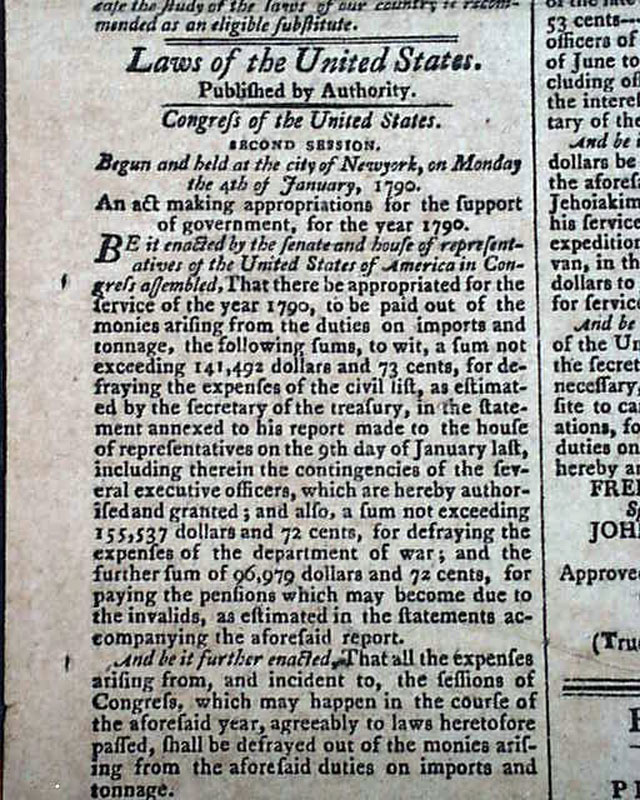
Washington, Jefferson & Adams sign an Act of Congress...
THE CONCORD HERALD & NEW HAMPSHIRE INTELLIGENCER, Sept. 7, 1790
* Treaty of New York
* Creek Nation - Indians
* President George Washington
...* Treaty of New York
* Creek Nation - Indians
* President George Washington
Sep 1790
$596
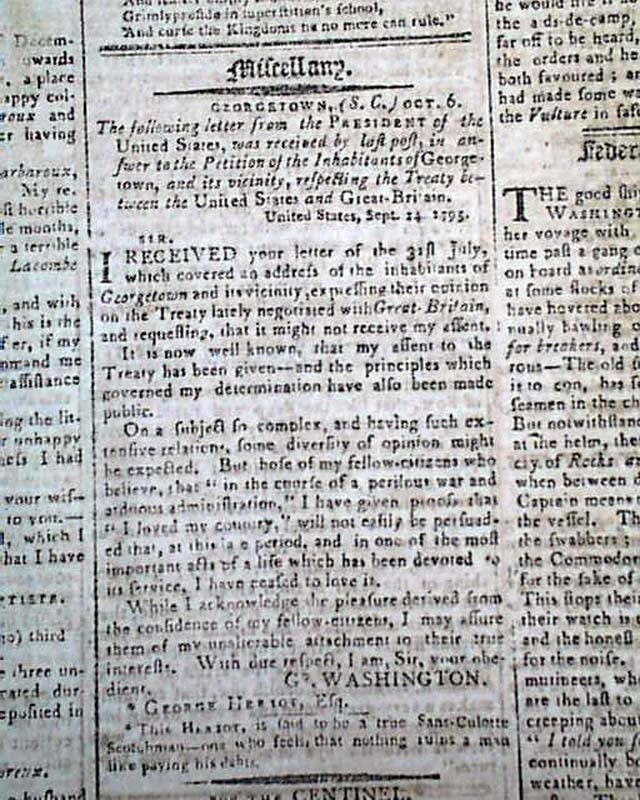
The Jay Treaty with England - Washington's response signed in type...
COLUMBIAN CENTINEL, Boston, Nov. 14, 1795
* George Washington letter
* re. John Jay's Treaty
The front page has a letter from the President to the...
* George Washington letter
* re. John Jay's Treaty
The front page has a letter from the President to the...
Nov 1795
$75
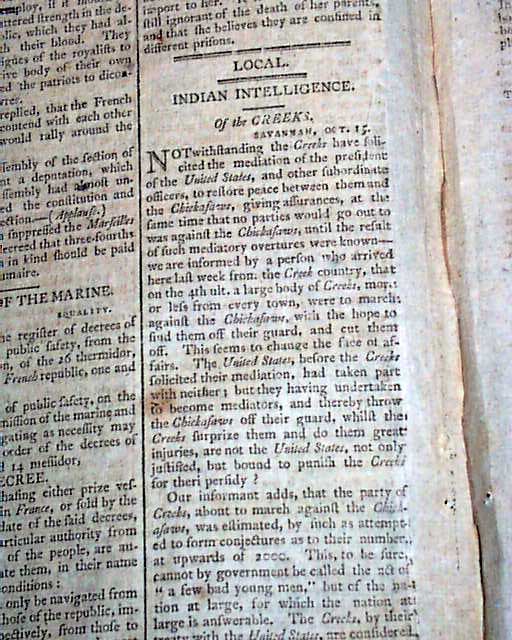
George Washington writes concerning the Jay Treaty...
FEDERAL ORRERY, Boston. Nov. 12. 1795
* President George Washington
Page 2 has: "Indian Intelligence - Of the Creeks" which is most of a column with...
* President George Washington
Page 2 has: "Indian Intelligence - Of the Creeks" which is most of a column with...
Nov 1795
$77
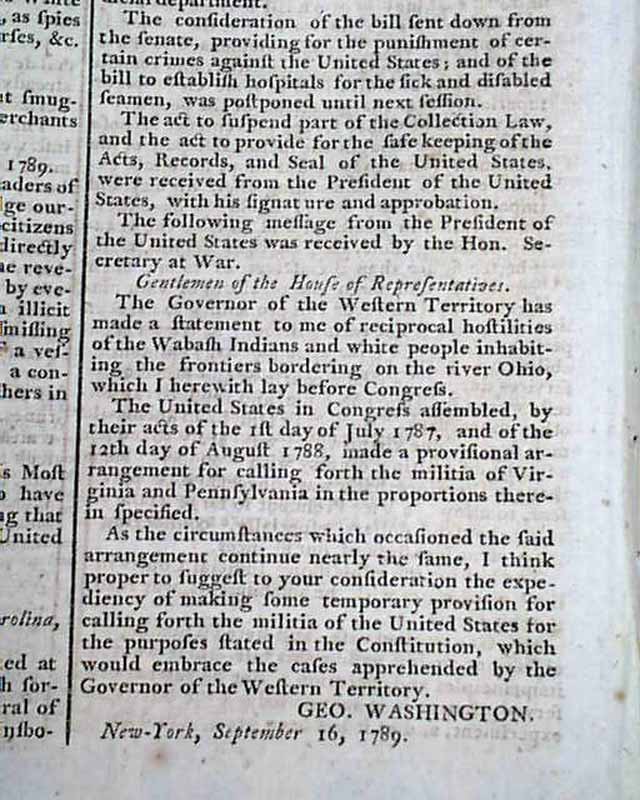
Two items signed by George Washington...
GAZETTE OF THE UNITED STATES, New York, Sept. 19, 1789
* President George Washington
* Arthur St. Clair - Wabash Indians
* Federal government in its infancy
Pa...
* President George Washington
* Arthur St. Clair - Wabash Indians
* Federal government in its infancy
Pa...
Sep 1789
$144