Virginia on the Constitution... Patrick Henry a dissenter...
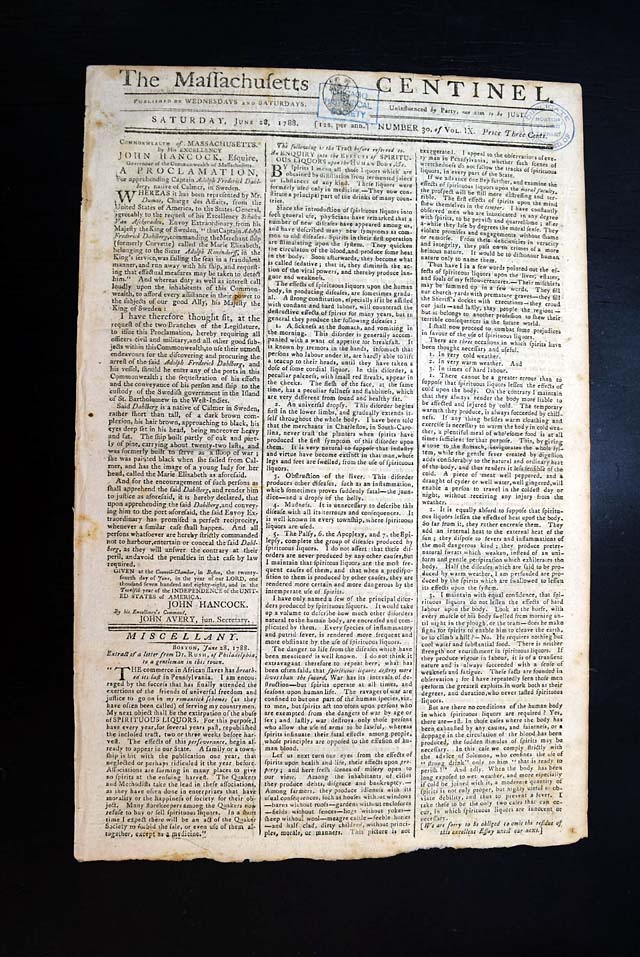
THE MASSACHUSETTS CENTINEL, Boston, June 28, 1788
- United States Constitution (Virginia)
- Patrick Henry & John Hancock
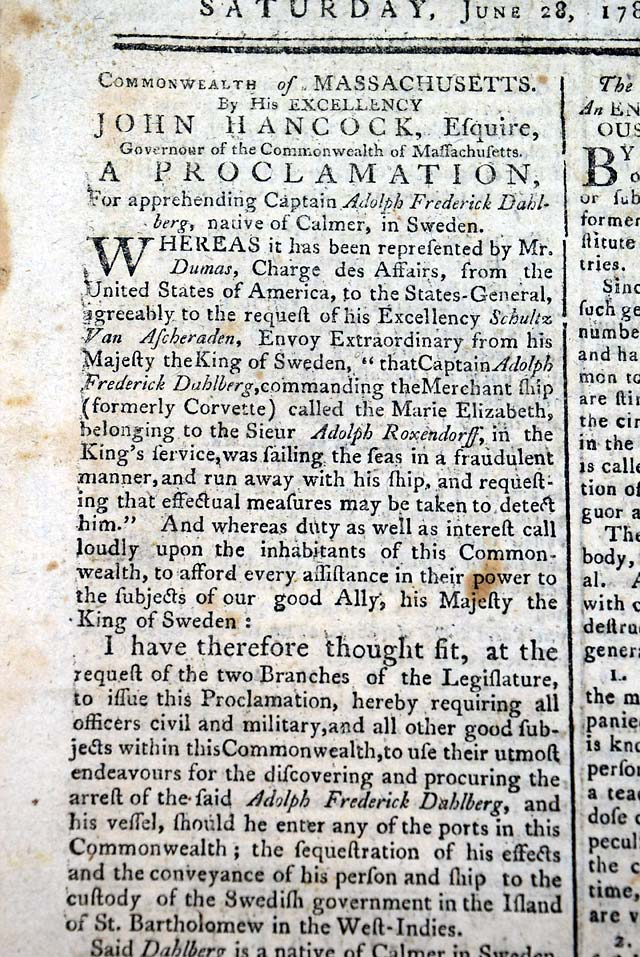
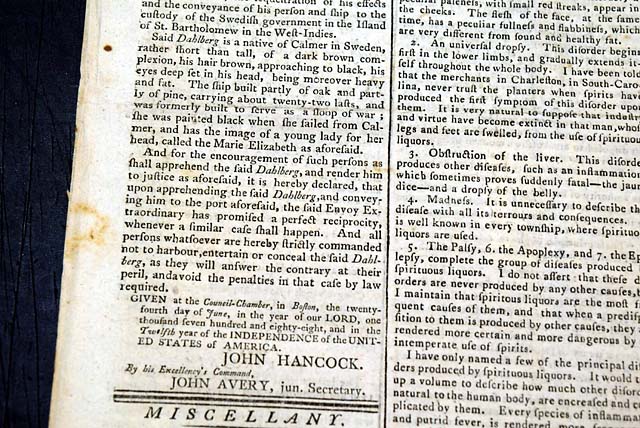
Most of the first column on the front page is taken up with: "A PROCLAMATION" signed in type by: John Hancock.
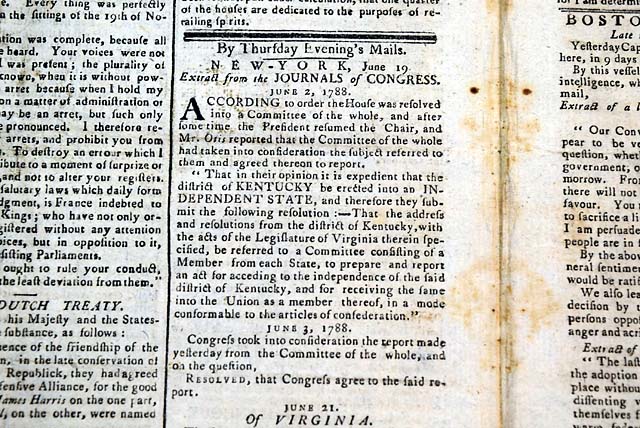
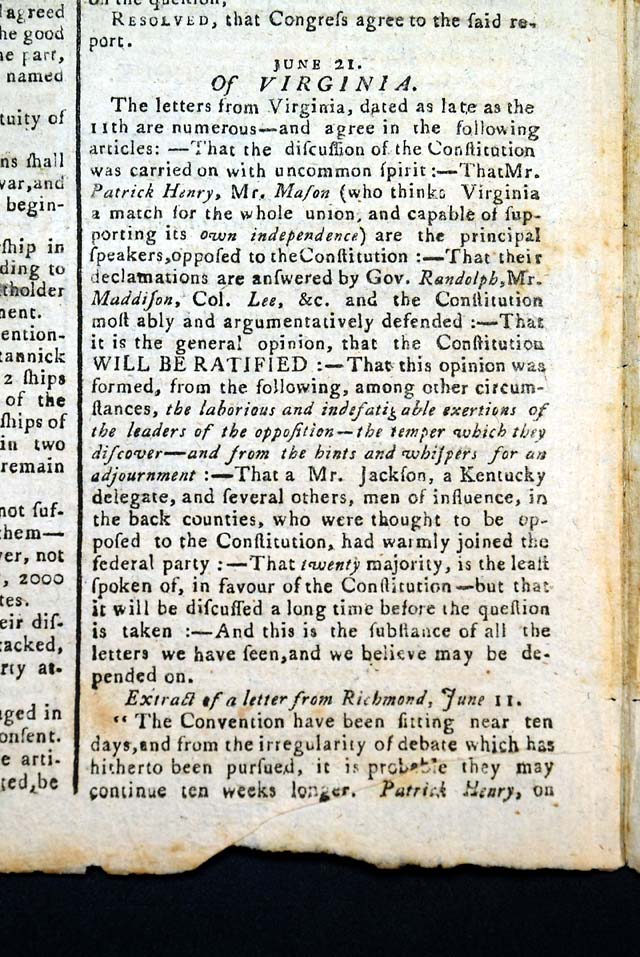
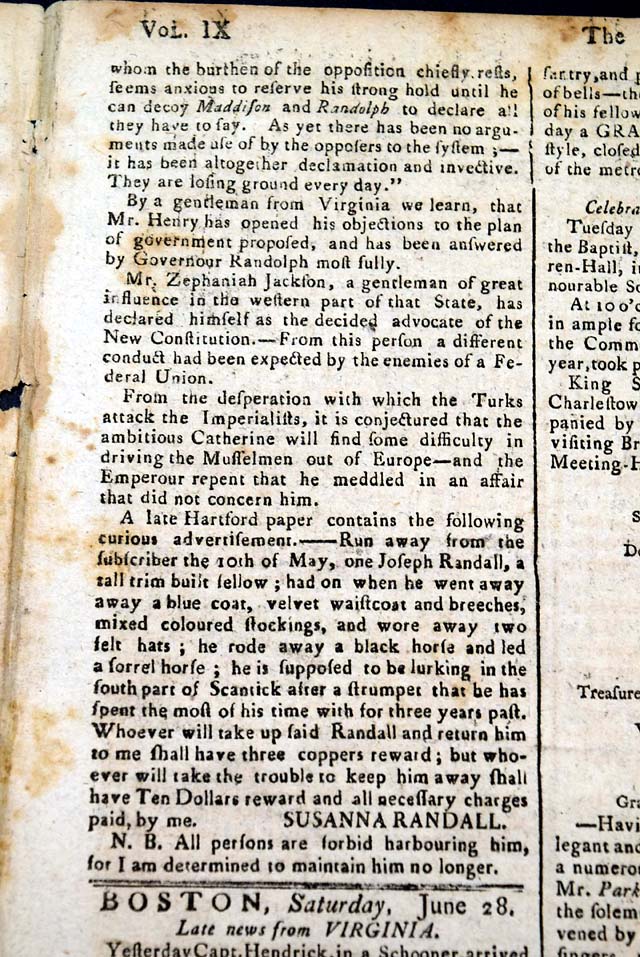
Page 2 contains a report from Congress in New York: "...That in their opinion it is expedient that the district of KENTUCKY be erected into an INDEPENDENT STATE & therefore they submit the following resolution..." which follows. Kentucky would not join the union until 1792. This is followed by a report: "Of Virginia" noting in part: "...That the discussion of the Constitution was carried on with uncommon spirit: That Mr. Patrick Henry, Mr. Mason (who thinks Virginia a match for the whole union & capable of supporting its own independence) are the principal speakers opposed to the Constitution...That it is the general opinion that the Constitution WILL BE RATIFIED:..." with more. The articles carries on & has two more mentions of Patrick Henry, rare in period newspapers.
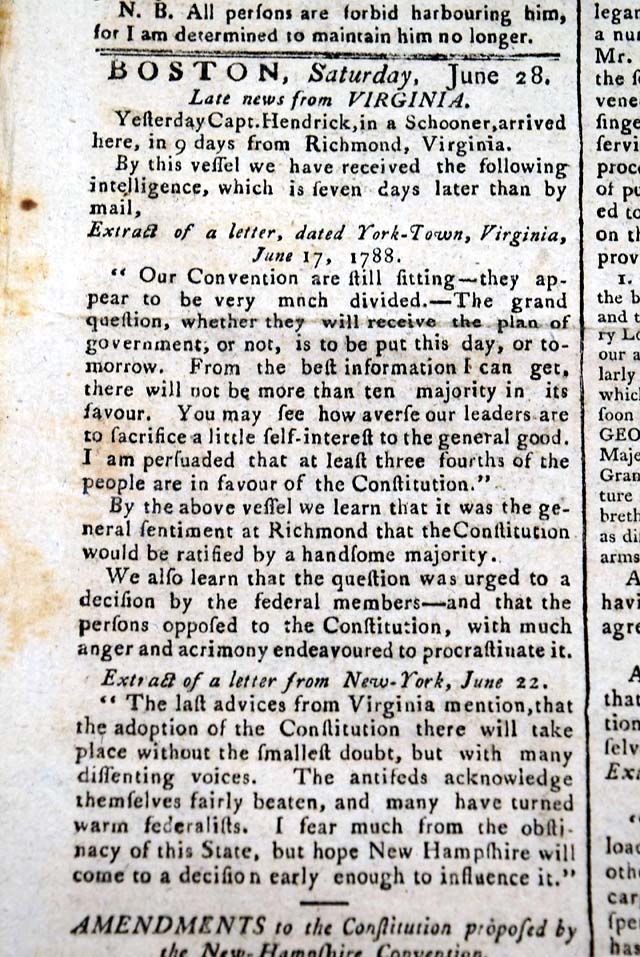
Page 3 has more on the Constitution, with: "Late News from Virginia" which includes: "Our Convention are still sitting--they appear to be very much divided--The grand question, whether they will receive the plan of government or not, is to be put this day, or tomorrow..." with more.
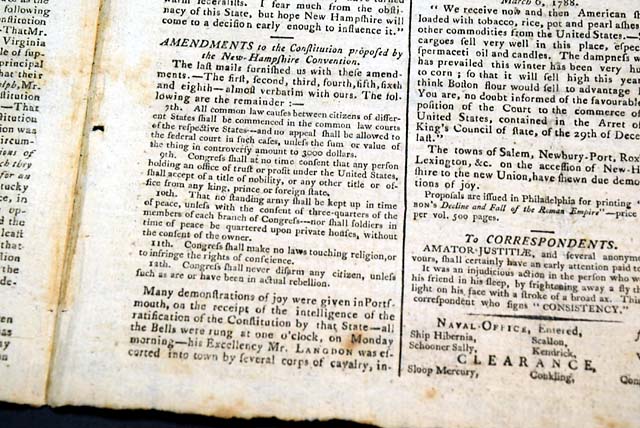
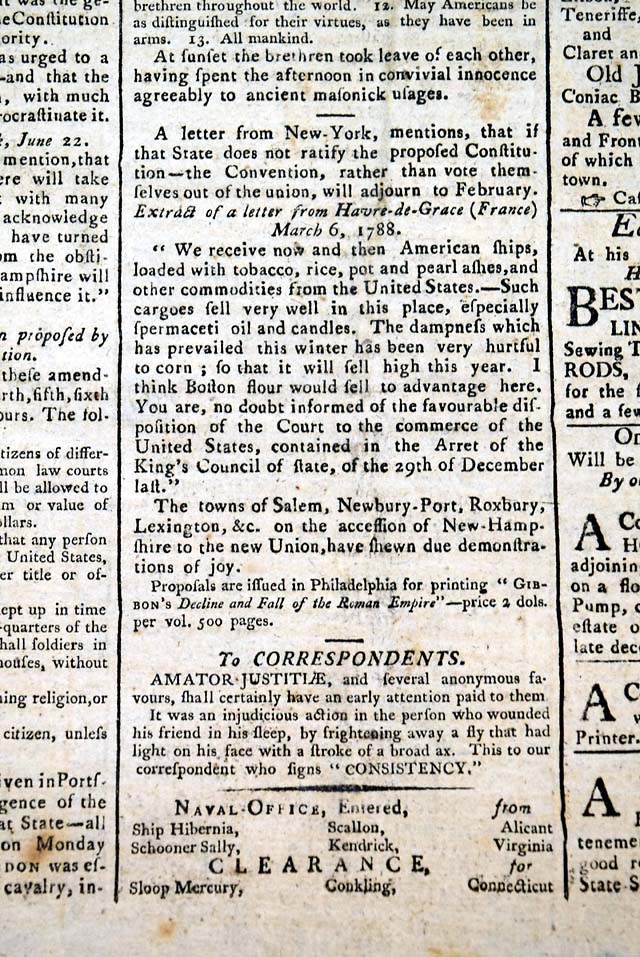
Also, from New York: "The last advices from Virginia mention that the adoption of the Constitution there will take place without the smallest doubt, but with many dissenting voices..." and this is followed by: "Amendments to the Constitution Proposed by the New Hampshire Convention".
A great Constitution-related issue with some notable reporting.
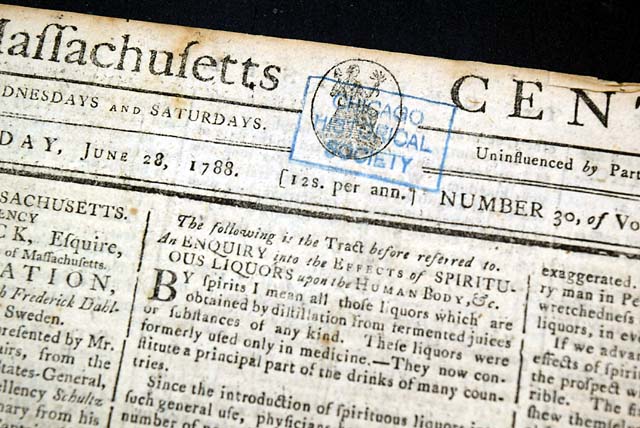
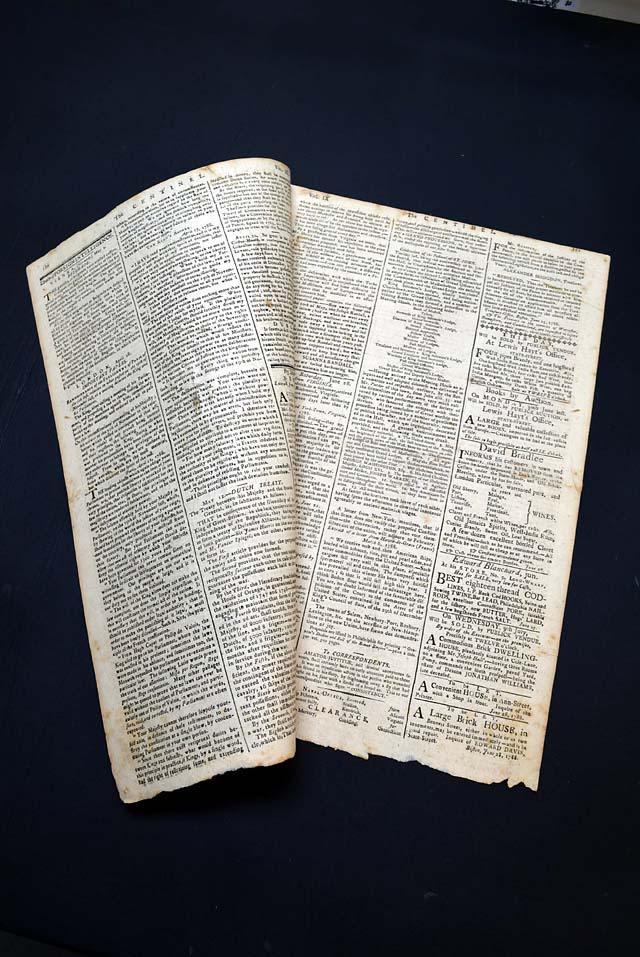
Four pages, two small library stamps in the masthead, very nice condition.
Background: This June 28, 1788 issue of The Massachusetts Centinel provides an extraordinary, real-time snapshot of the foundational debates shaping the early United States, beginning on the front page with a prominent official proclamation signed in type by Governor John Hancock. Moving to page two, the paper details Congress's early deliberations on erecting the District of Kentucky into an independent state—a process that began in the late 1780s but was delayed by constitutional transitions until Kentucky officially joined the Union as the 15th state in 1792. The issue shines brightest in its extensive coverage of the tense constitutional debates unfolding across the nation: page two captures the fierce arguments in Virginia, explicitly naming Anti-Federalist heavyweights Patrick Henry and George Mason—the latter recorded as declaring Virginia a match for the entire Union—while correctly predicting that ratification would ultimately pass despite bitter opposition. Page three carries late-breaking dispatches from both New York and Virginia as the state convention hung in the balance (unbeknownst to Boston readers, Virginia had narrowly ratified just three days prior on June 25), alongside the freshly proposed amendments from the New Hampshire Convention, which on June 21 had just become the crucial ninth state to officially bring the U.S. Constitution into legal effect.
Item from last month's catalog - #370 - released for September, 2026
Other issues you may like
§ related
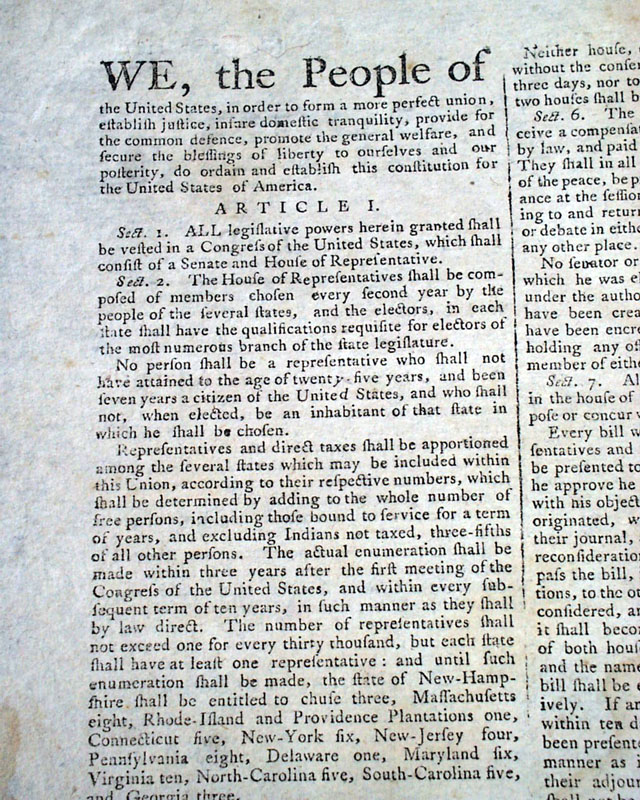
THE VIRGINIA GAZETTE (with Supplement), Williamsburg, Mar. 17, 1775
- Very rare Colonial Virginia publication
- Election of Patrick Henry
This newspaper was
...
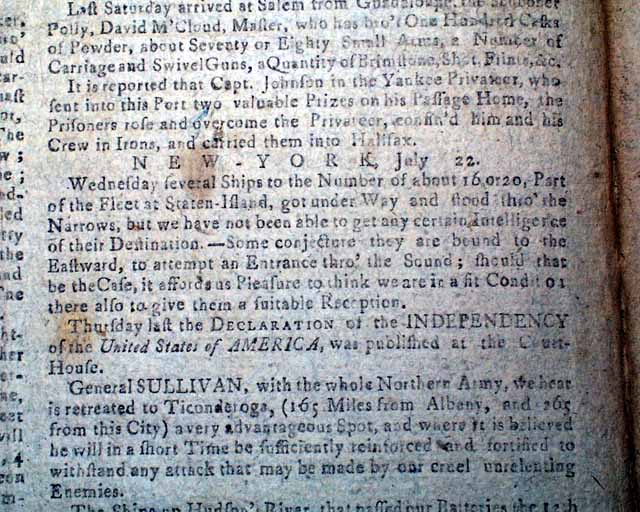
CONNECTICUT COURANT, Hartford, Oct. 1, 1787
- Historic United States Constitution
- Constitutional Convention - Congress
- President George Washington signs
Here is
...
THE CONNECTICUT JOURNAL, New Haven, July 24, 1776
- News of the Declaration of Independence spreads
- Battle of Sullivan's Island - General Charles Lee
- American
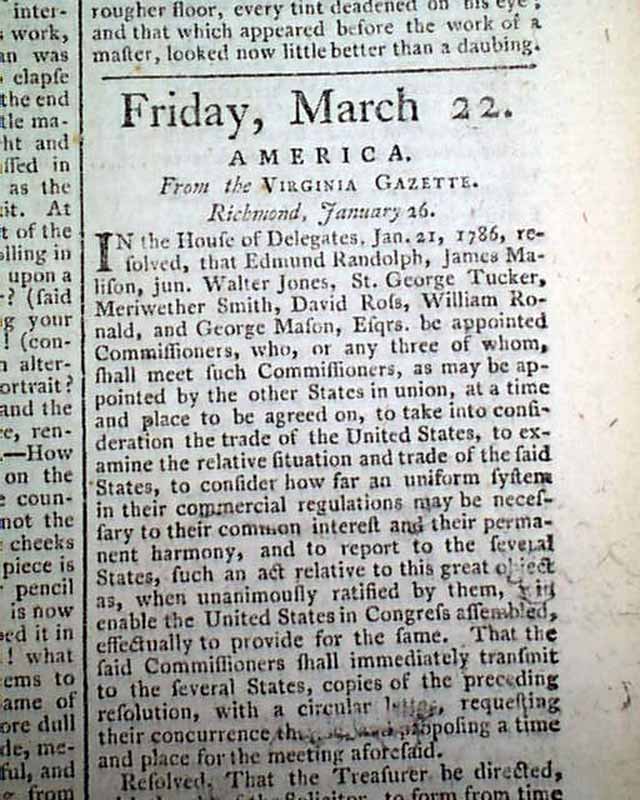
THE LONDON CHRONICLE, England, March 25, 1786 The front page contains a very historic report, headed: "America - From the Virginia Gazette" with a
...