Thomas Edison invents the phonograph...
SCIENTIFIC AMERICAN, New York, March 30, 1878
- Historic Phonograph invention
- Thomas Edison - inventor
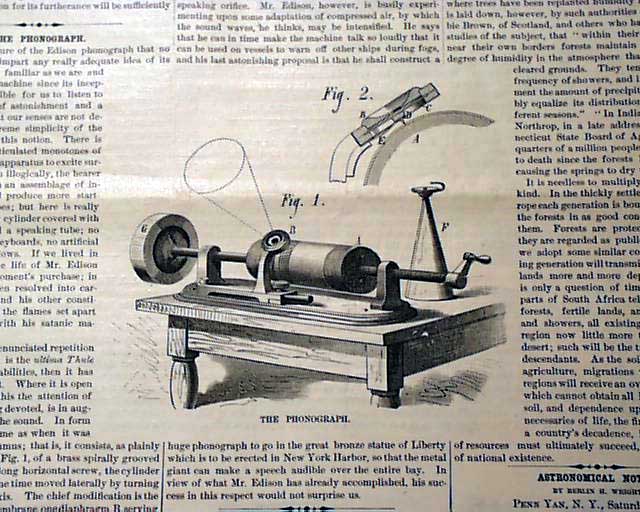
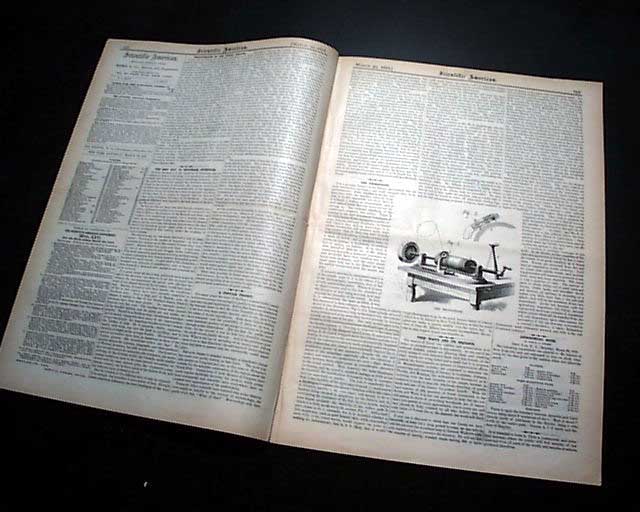
Page 3 has a nice 4 1/2 by 4 1/2 inch illustration of Edison's recent invention--the phonograph.
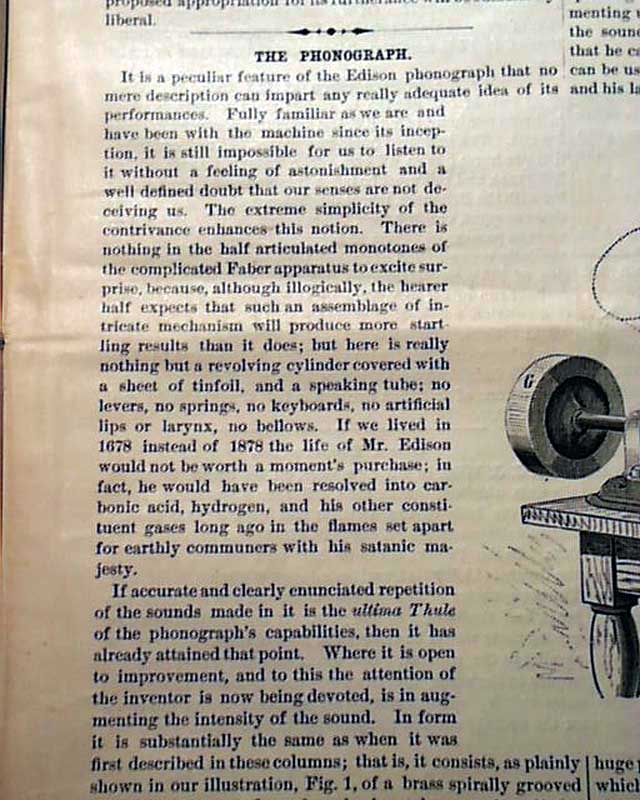
Amazed by this uncomplicated apparatus, the report begins: "It is a peculiar feature of the Edison phonograph that no mere description can impart any real adequate idea of its performances. Fully familiar as we are and have been with the machine since its inception, it is still impossible for us to listen to it without a feeling of astonishment and a well defined doubt that our senses are not deceiving us. The extreme simplicity of the contrivance enhances this notice...".
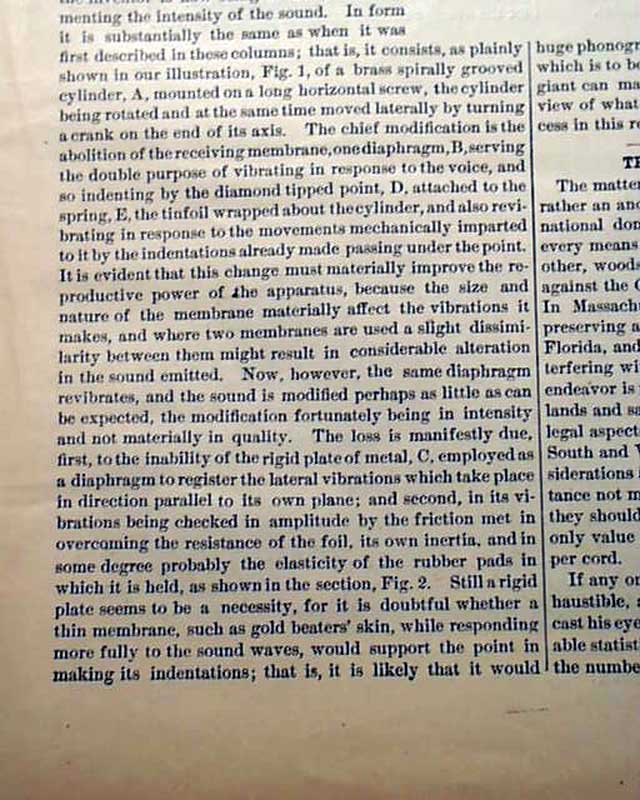
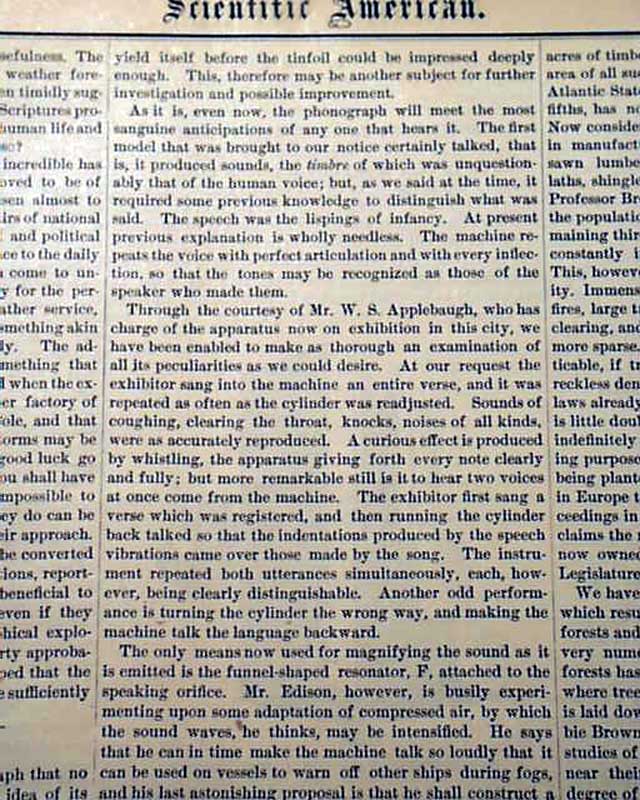
The report continues providing a detailed description of how the phonograph actually works. Included in this issue as well is the patent Edison received for the phonograph.
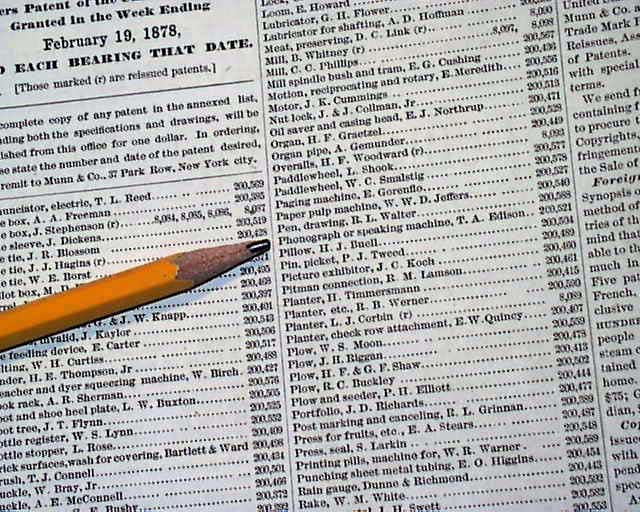
At the end is the "Official Index Of Inventions For Which Letters Patent of the U. S. were Granted in the Week Ending February 19, 1878" with a listing for "Phonograph or speaking machine, T. A. Edison...200,521."
A doubly nice & historic issue and a cornerstone piece for any collector of phonographs.
Complete in 16 pages, very nice condition.
Background: The publication of Thomas Edison’s phonograph patent alongside its feature in the March 30, 1878 issue of Scientific American marks a pivotal watershed moment in human history: the birth of recorded sound. Prior to Patent No. 200,521, acoustic expression was entirely ephemeral, permanently lost to time the moment it ceased; Edison's deceptively simple tinfoil apparatus fundamentally transformed human culture by proving that sound could be captured, preserved, and replicated at will. This breakthrough laid the foundational cornerstone for the modern global music, entertainment, and communications industries, while permanently altering how humanity documents its own history. By capturing the immediate, profound astonishment of contemporaries who felt their own senses were deceiving them, this specific media coverage documents the exact cultural flashpoint where sound shifted from a fleeting physical phenomenon into a permanent, transmissible medium.
Other issues you may like
§ related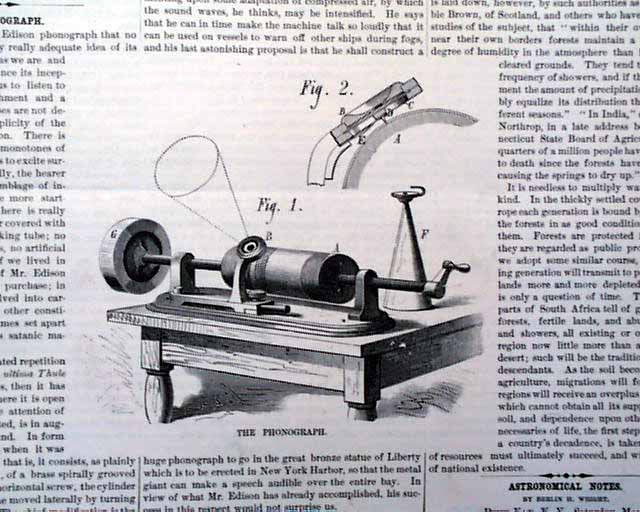
SCIENTIFIC AMERICAN, New York, March 30, 1878
- Historic Phonograph invention
- Thomas Edison - inventor
Page 3 has a nice 4 1/2 by 4 1/2 inch illustration of
...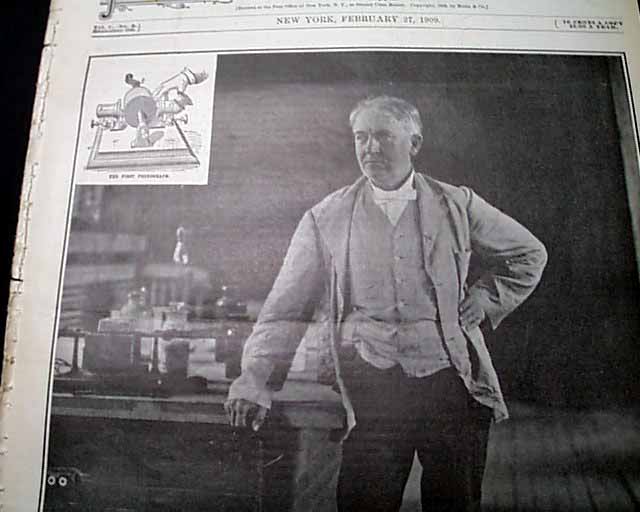
SCIENTIFIC AMERICAN, New York, Feb. 27, 1909
- Inventor Thomas A. Edison cover
- Upgrades of "The Phonograph"
A great front page as it is entirely taken up with
...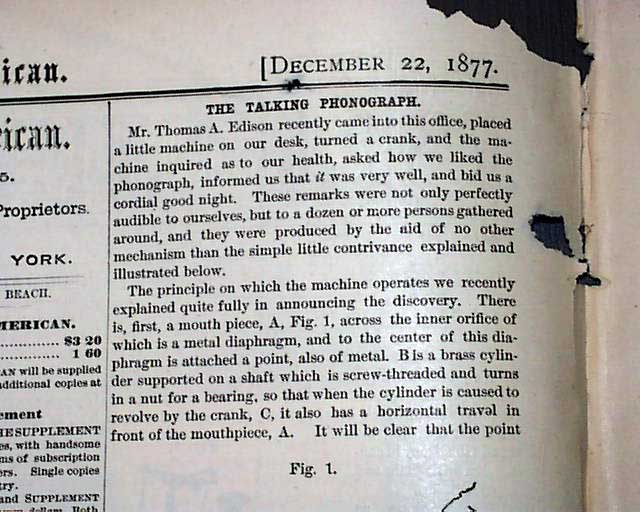
SCIENTIFIC AMERICAN, New York, Dec. 22, 1877
- Inventor Thomas Edison
- The phonograph invented
- Best title to have this in ?
Page 2 has an extremely significant
...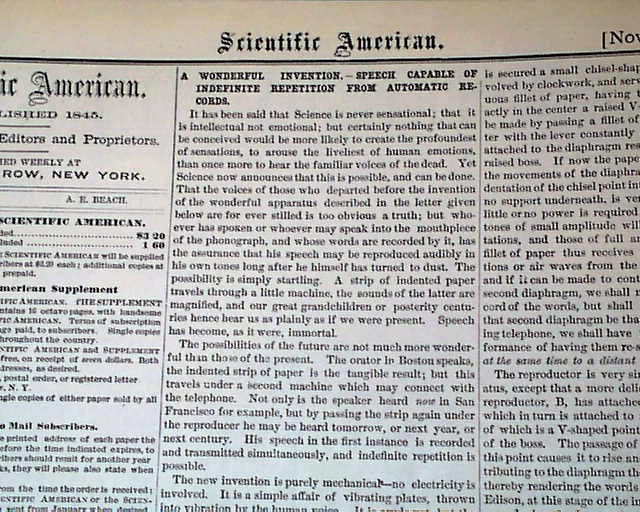
SCIENTIFIC AMERICAN, New York, Nov. 17, 1877
- Historic Phonograph invention
- Early Pre-public unveiling
- Thomas Edison - inventor
- Early baseball science
A page 2
...