Trial of Abraham Lincoln's assassins...
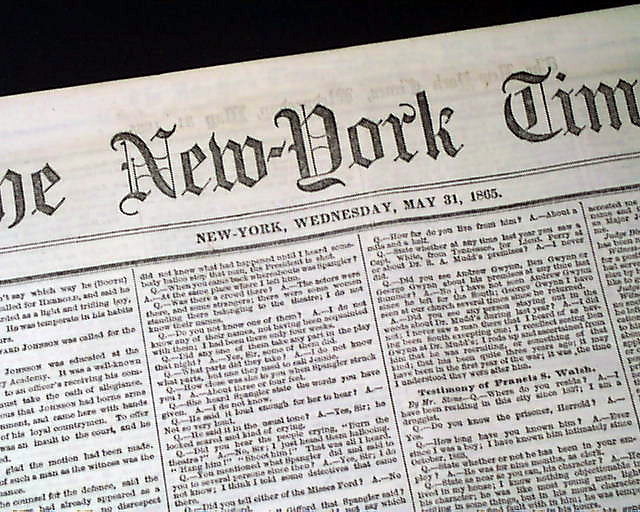
NEW YORK TIMES, May 31, 1865
- Abraham Lincoln assassination
- Trial of the conspirators - assassins
- Loads of in court testimony
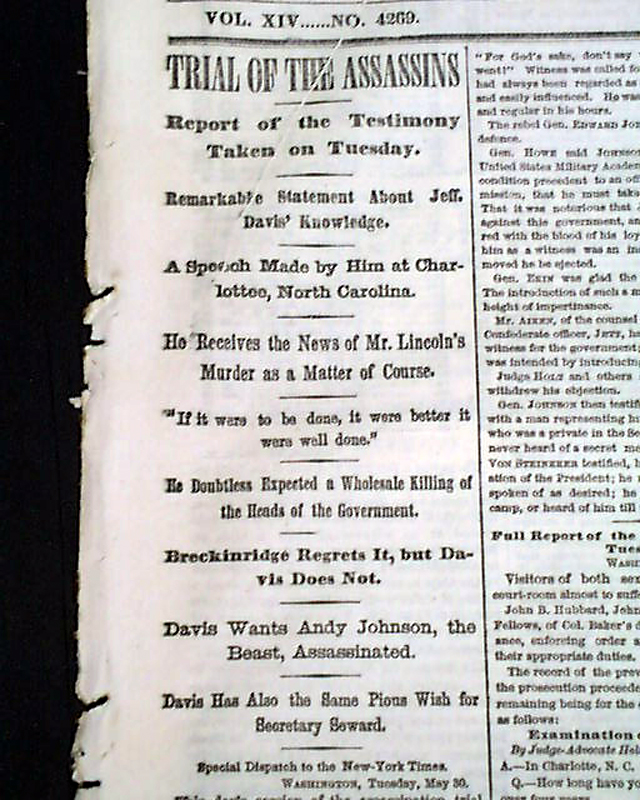
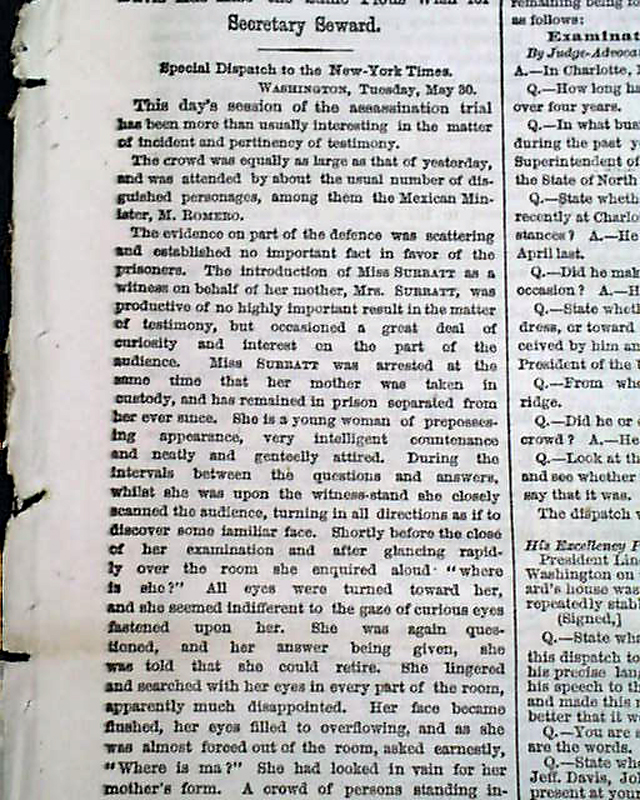
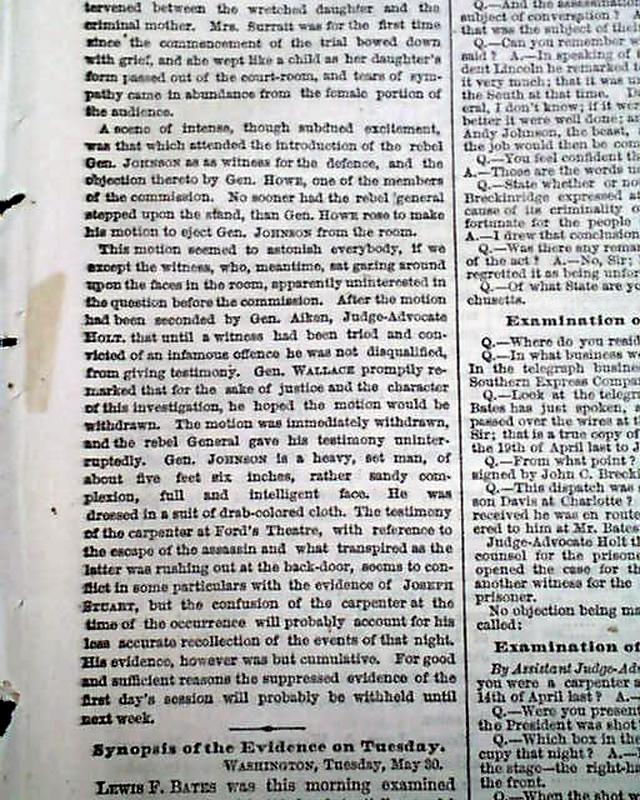
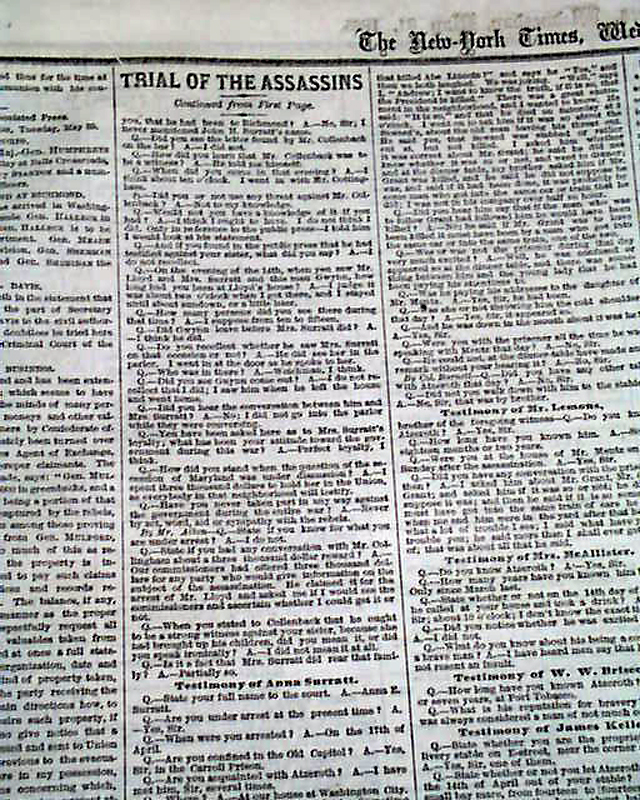
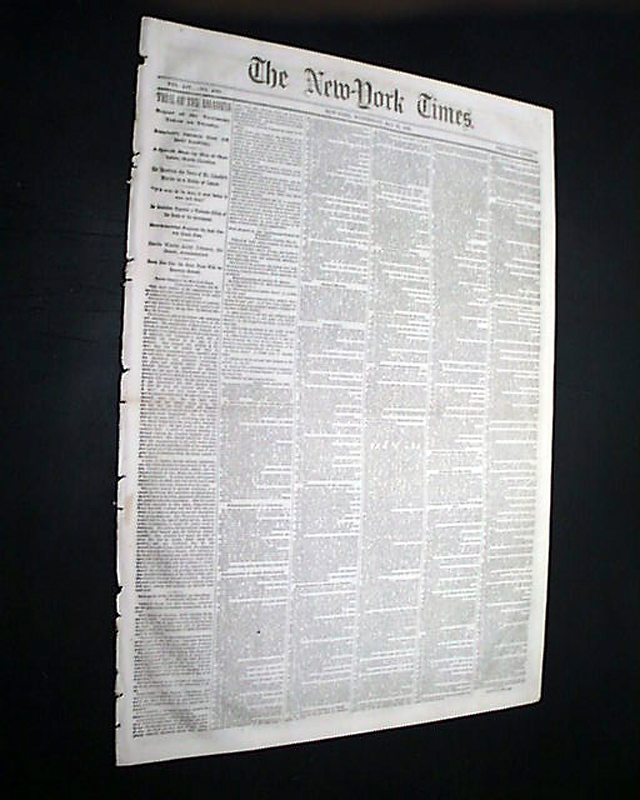
A great issue as the entire front page & some of page 5 are taken up with the reports on the trial of the conspirators against Abraham Lincoln.
Among the front page column heads: "TRIAL OF THE ASSASSINS" "Remarkable Statement About Jeff. Davis' Knowledge" "A Speech Made by Him at Charlotte, North Carolina" "He Receives the News of Mr. Lincoln's Murder as a Matter of Course" "If it were to be done, it were better it were well done." "He Doubltess Expected A Wholesale Killing of the Heads of the Government" "Breckinridge Regrets It, but Davis Does Not" "Davis Wants Andy Johnson, the Beast, Assassinated" "Davis Has Also the Same Pious Wish for Secretary Seward".
The text with verbatim testimony is terrific reading. This is one of the better issues on the trial we have offered.
Eight pages, small binding slits at the blank spine, very nice condition.
Background: This historic May 1865 newspaper stands out as a particularly rare and desirable primary source due to its extensive, verbatim front-page and interior coverage detailing the Military Commission trial of the Abraham Lincoln assassination conspirators. What elevates this specific issue above typical trial reports is its extraordinary focus on sensational, high-stakes testimony attempting to directly implicate Confederate President Jefferson Davis and his cabinet in the conspiracy. The bold column heads feature explosive sensationalism from the era—alleging Davis expressed cold indifference or approval upon receiving the news of Lincoln's murder in Charlotte, quoting him invoking Shakespearean phrasing ("If it were to be done, it were better it were well done"), and claiming he actively wished for the targetings of Vice President Andrew Johnson and Secretary of State William Seward. By contrasting Davis’s alleged enthusiasm for a "wholesale killing" of Union leadership with Confederate Secretary of War John C. Breckinridge’s reported regret, this issue captures a pivotal moment of post-war northern media fervor and government efforts to frame the assassination as a top-level Confederate plot, making its comprehensive front-page and continuation text a remarkable piece of 19th-century journalism.
Item from last month's catalog - #369 - released for August, 2026
Other issues you may like
§ related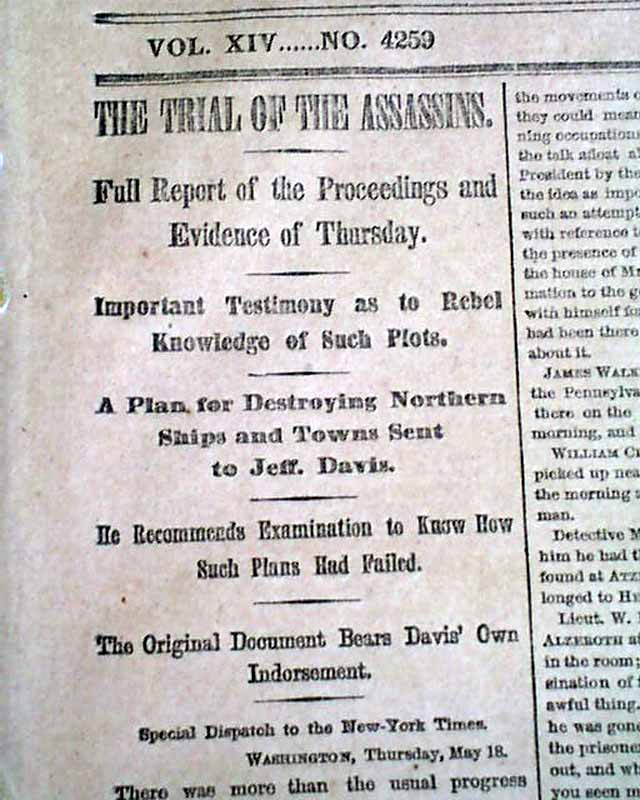
NEW YORK TIMES, May 19, 1865
- Abraham Lincoln assassination
- Trial of the conspirators - assassins
- Loads of testimony in court
Among the front page first column
...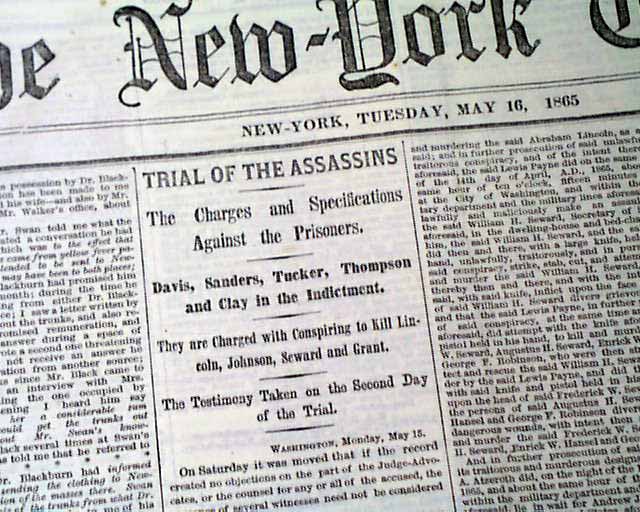
NEW YORK TIMES, May 16, 1865
- Abraham Lincoln Murder
- Trial of the Assassins
- Indictment of the assassins
- Confederate yellow fever plot
Among the front page
...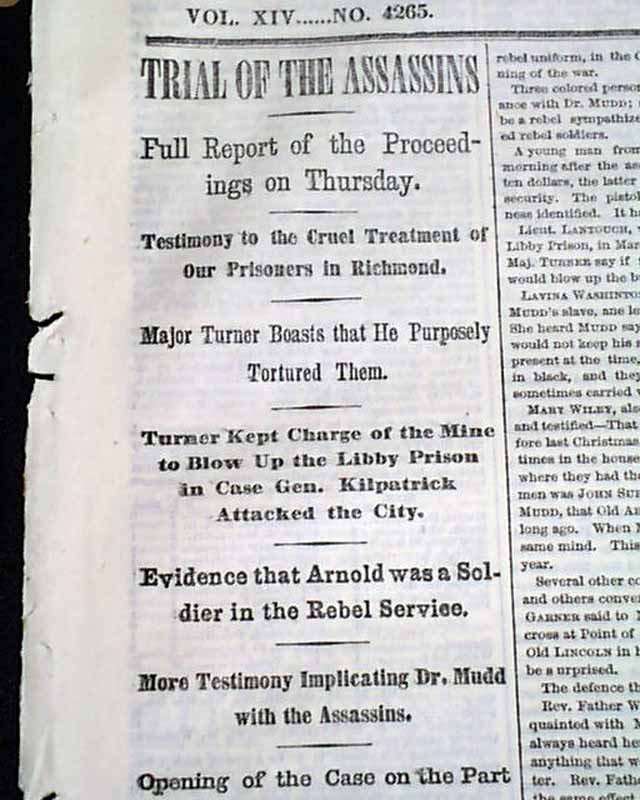
NEW YORK TIMES, May 26, 1865
- Abraham Lincoln Murder - Trial of the conspirators
- re. Jefferson Davis capture - Woman's clothes dispute
The entire front page
...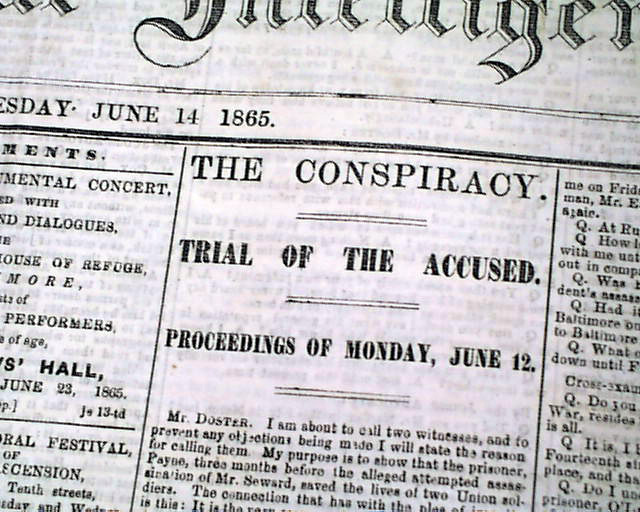
DAILY NATIONAL INTELLIGENCER, Washington, D.C., June 14, 1865
- Trial of the conspirators - assassins
- re. Abraham Lincoln's assassination
The top of the front
...