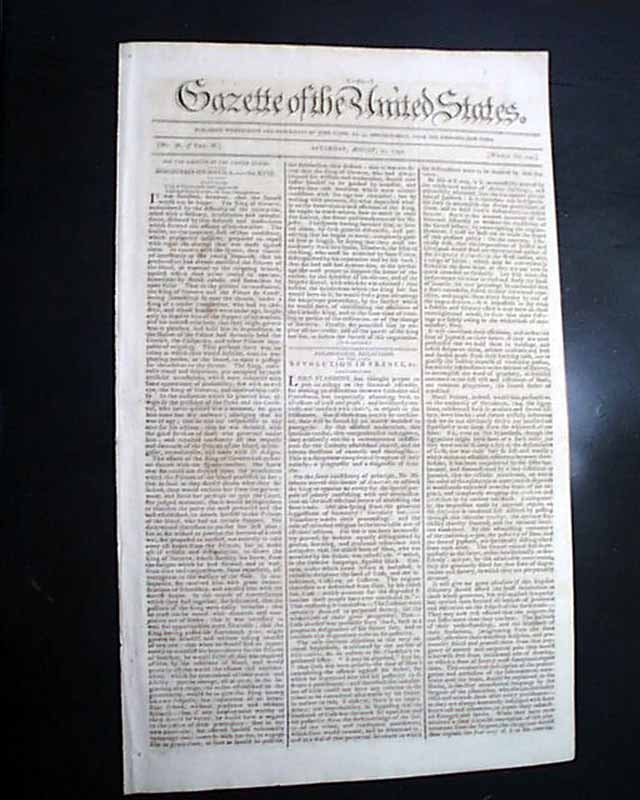
Act of Congress signed by Washington, Jefferson and Adams...
Item # 701459
·
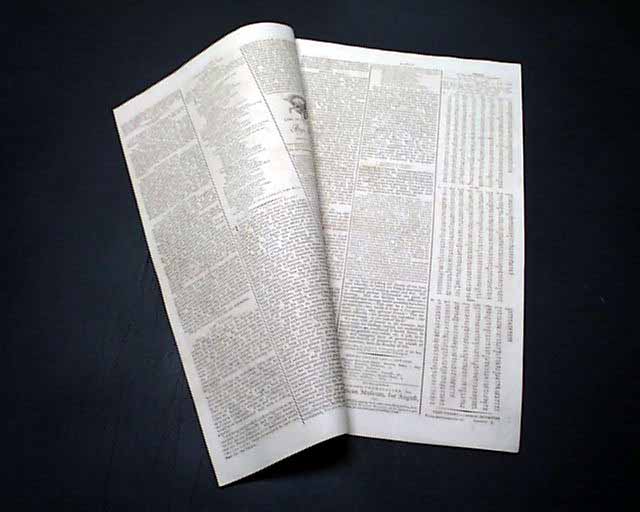
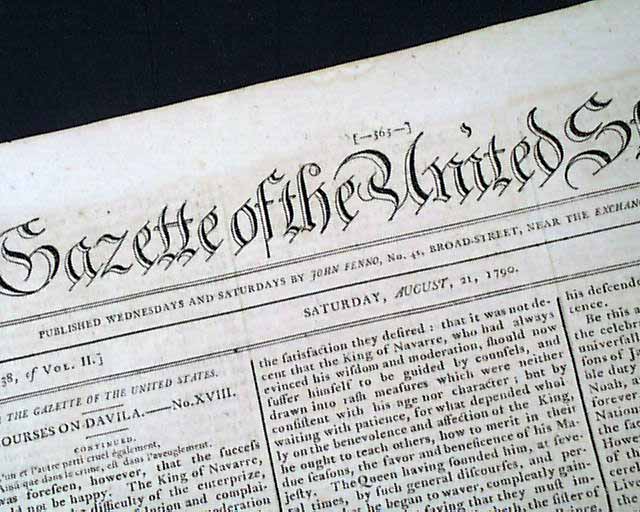
GAZETTE OF THE UNITED STATES, New York, Aug. 21, 1790
* President George Washington
* John Adams & Thomas Jefferson
Over half of the front page is taken up with: "Philosophical Reflections on the Late Revolution in France".
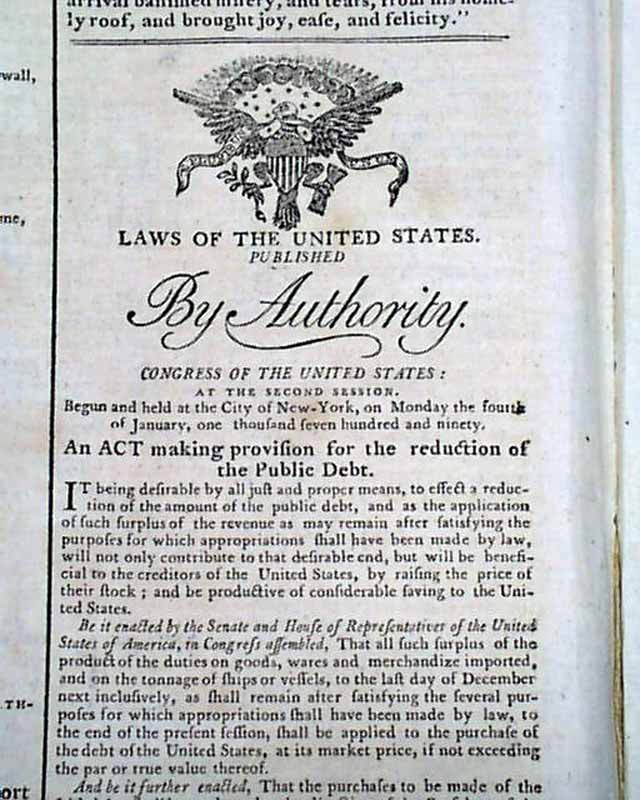
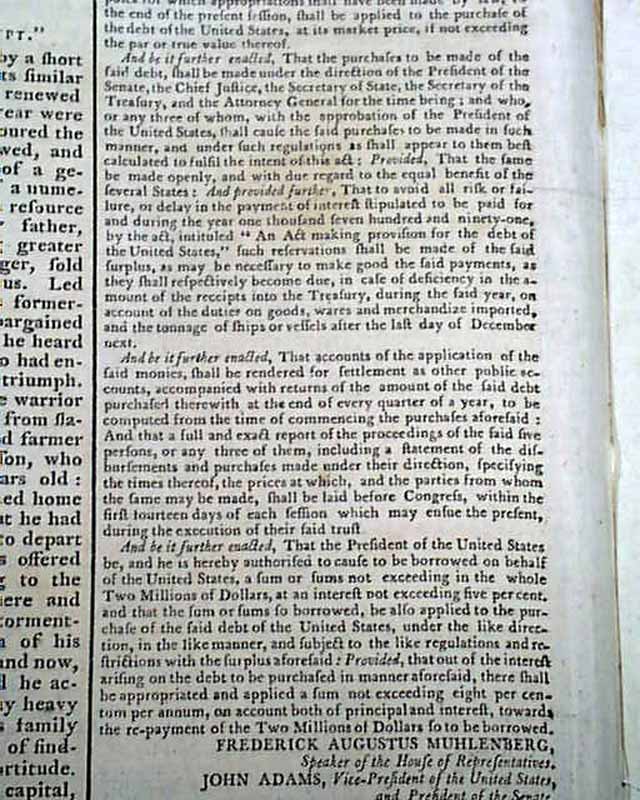
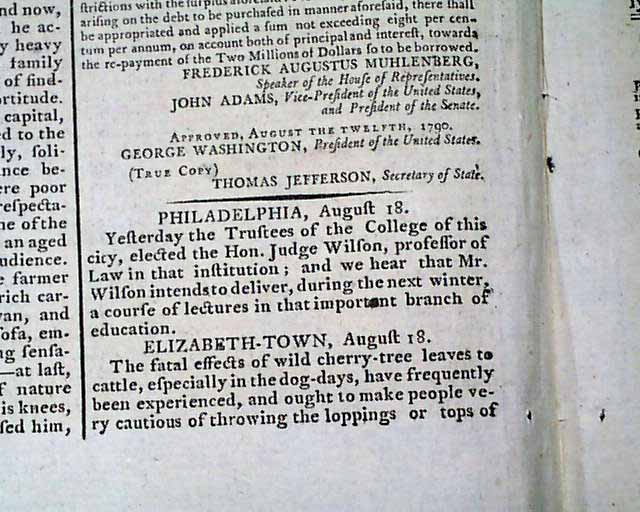
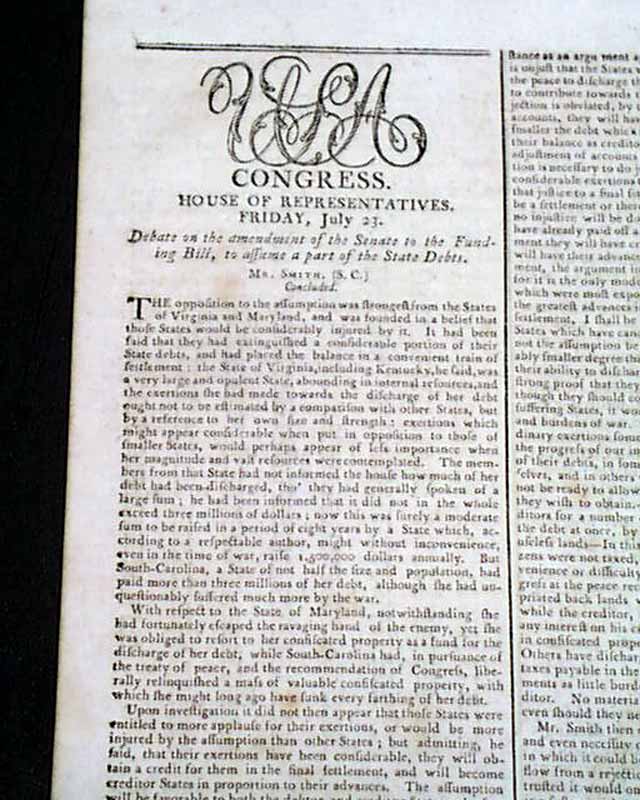
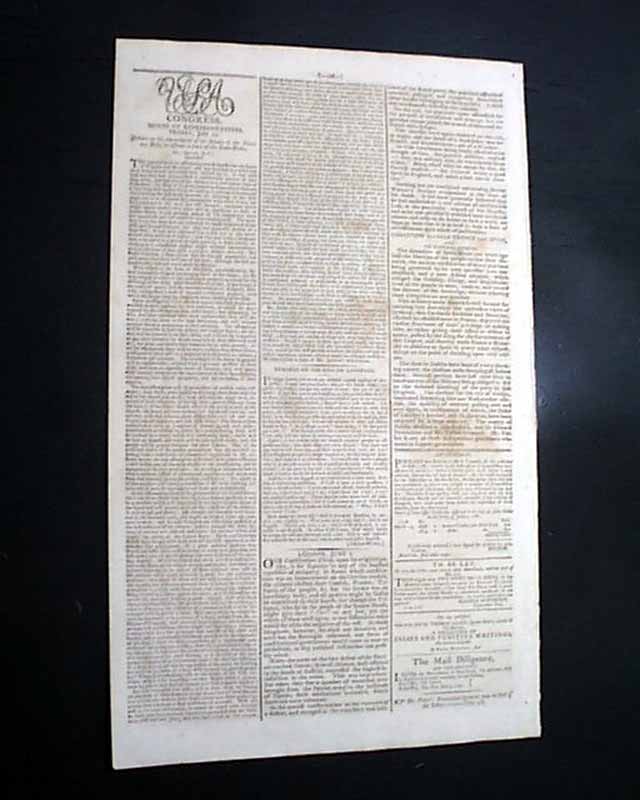
Page 2 has a very nice Act of Congress for: "...making provision for the reduction of the Public "Debt." which is headed by an ornate heraldic eagle engraving, some ornate letters, and is signed in type by the President: George Washington as well as by John Adams and Thomas Jefferson.
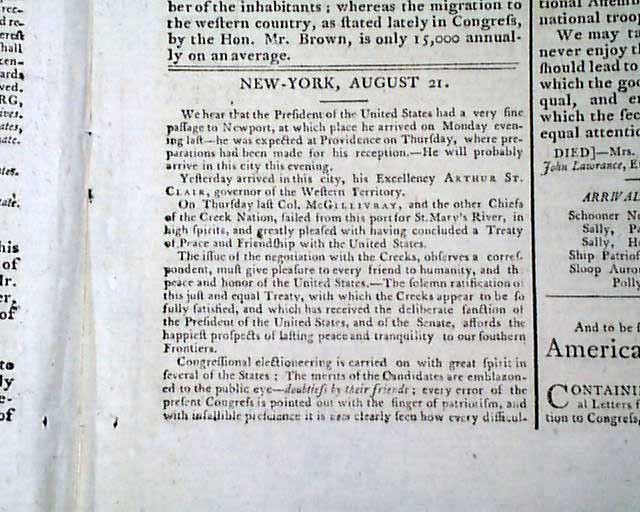
Page 3 has some reports from New York beginning: "We hear that the President of the United States had a very fine passage to Newport...".
Most of the back page is taken up with debates in Congress.
Four pages, great condition.
Background: The August 21, 1790, issue of the Gazette of the United States captures a pivotal moment of transition as the young American republic moved from revolutionary chaos toward institutional stability. The prominent front-page reflections on the French Revolution underscore a period of intense ideological anxiety, where American leaders watched their allies with a mix of kinship and caution, fearing the "contagion" of radicalism. Central to the paper's significance is the printing of the Funding Act of 1790, a cornerstone of Alexander Hamilton’s financial program that established the federal government’s credit by assuming state debts—a move that effectively "cemented" the Union by tying the interests of wealthy creditors to the success of the national government. This legislative milestone is framed by the symbolic reporting of George Washington’s visit to Newport, Rhode Island; this journey served as a diplomatic "closing of the circle," welcoming the final holdout colony into the constitutional fold. Collectively, the document serves as a primary testament to the "Federalist Era," showcasing the synchronized efforts of Washington, Adams, and Jefferson to transform a fragile collection of states into a solvent, unified, and internationally recognized sovereign power.
* President George Washington
* John Adams & Thomas Jefferson
Over half of the front page is taken up with: "Philosophical Reflections on the Late Revolution in France".
Page 2 has a very nice Act of Congress for: "...making provision for the reduction of the Public "Debt." which is headed by an ornate heraldic eagle engraving, some ornate letters, and is signed in type by the President: George Washington as well as by John Adams and Thomas Jefferson.
Page 3 has some reports from New York beginning: "We hear that the President of the United States had a very fine passage to Newport...".
Most of the back page is taken up with debates in Congress.
Four pages, great condition.
Background: The August 21, 1790, issue of the Gazette of the United States captures a pivotal moment of transition as the young American republic moved from revolutionary chaos toward institutional stability. The prominent front-page reflections on the French Revolution underscore a period of intense ideological anxiety, where American leaders watched their allies with a mix of kinship and caution, fearing the "contagion" of radicalism. Central to the paper's significance is the printing of the Funding Act of 1790, a cornerstone of Alexander Hamilton’s financial program that established the federal government’s credit by assuming state debts—a move that effectively "cemented" the Union by tying the interests of wealthy creditors to the success of the national government. This legislative milestone is framed by the symbolic reporting of George Washington’s visit to Newport, Rhode Island; this journey served as a diplomatic "closing of the circle," welcoming the final holdout colony into the constitutional fold. Collectively, the document serves as a primary testament to the "Federalist Era," showcasing the synchronized efforts of Washington, Adams, and Jefferson to transform a fragile collection of states into a solvent, unified, and internationally recognized sovereign power.
Categories: The 1600's and 1700's, American
Price
$198
100% Authentic: Original printing, never a reproduction.
Other issues you may like
§ related
Three Acts of Congress signed by George Washington...
GAZETTE OF THE UNITED STATES, New York, July 7, 1790
* President George Washington
* Three Acts of U.S. Congress
Most of the middle column on page 2...
* President George Washington
* Three Acts of U.S. Congress
Most of the middle column on page 2...
Jul 1790
$192

Two Acts of Congress signed by George Washington, Thomas Jefferson, and John Adams...
GAZETTE OF THE UNITED STATES, Philadelphia, April 2, 1791
* President George Washington
* John Adams & Thomas Jefferson
* Two Acts of United States...
* President George Washington
* John Adams & Thomas Jefferson
* Two Acts of United States...
Apr 1791
$157
Signed by Washington, Adams, Jefferson and Hamilton... On the death of Ben Franklin...
GAZETTE OF THE UNITED STATES, New York, Aug. 25, 1790
* Death of Benjamin Franklin
* President George Washington
* John Adams & Thomas Jefferson
Page 2 has
Aug 1790
$325
Two items signed by George Washington...
GAZETTE OF THE UNITED STATES, New York, Sept. 19, 1789
* President George Washington
* Arthur St. Clair - Wabash Indians
* Federal government in its infancy
Pa...
* President George Washington
* Arthur St. Clair - Wabash Indians
* Federal government in its infancy
Pa...
Sep 1789
$144