John Dickinson responds... Supplement issue also...
Item # 701425
·
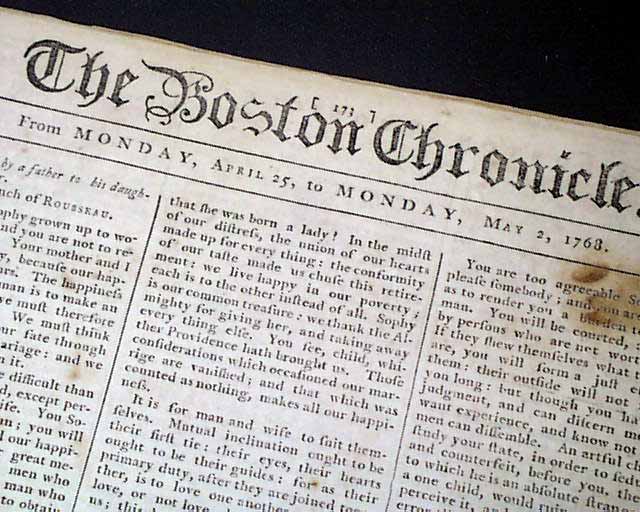
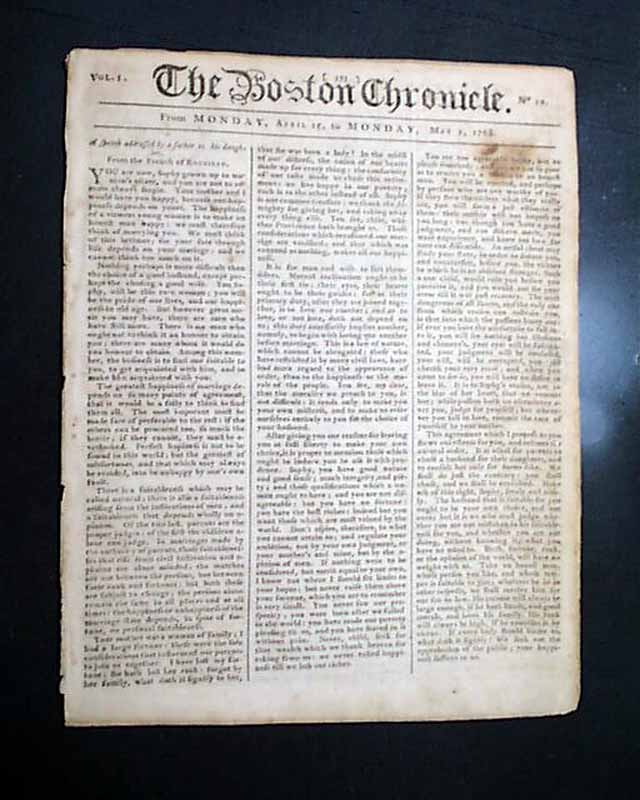
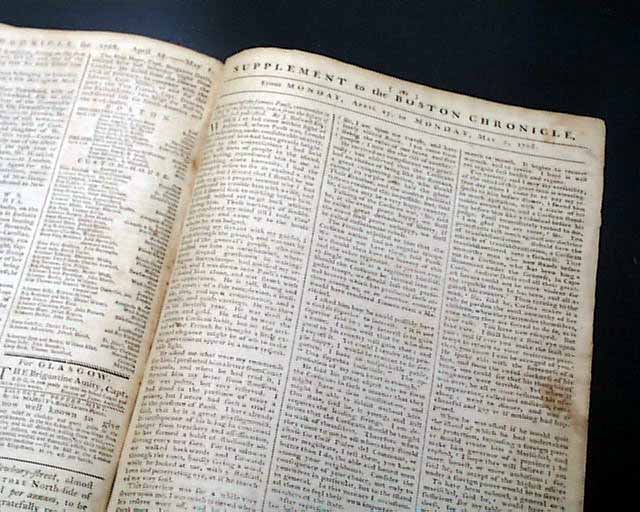
THE BOSTON CHRONICLE, with the "Supplement" as well, May 2, 1768
* John Dickinson
* Colonial Boston
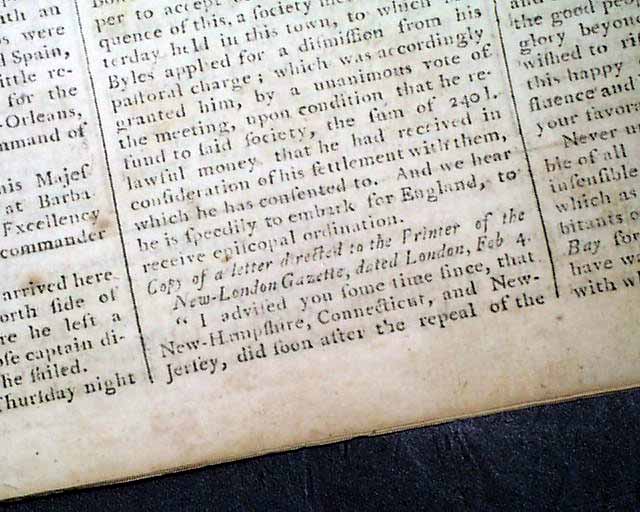
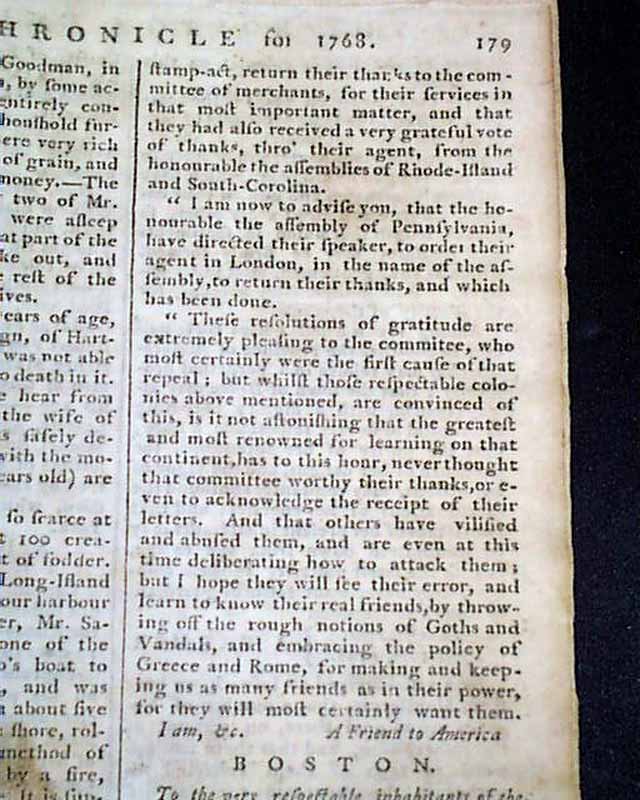
Inside pages have various reports from colonial cities with one item from New London noting: "...that New Hampshire, Connecticut and New Jersey did soon after the repeal of the stamp act, return their thanks to the committee of merchants for their services in that most important matter..." with more.
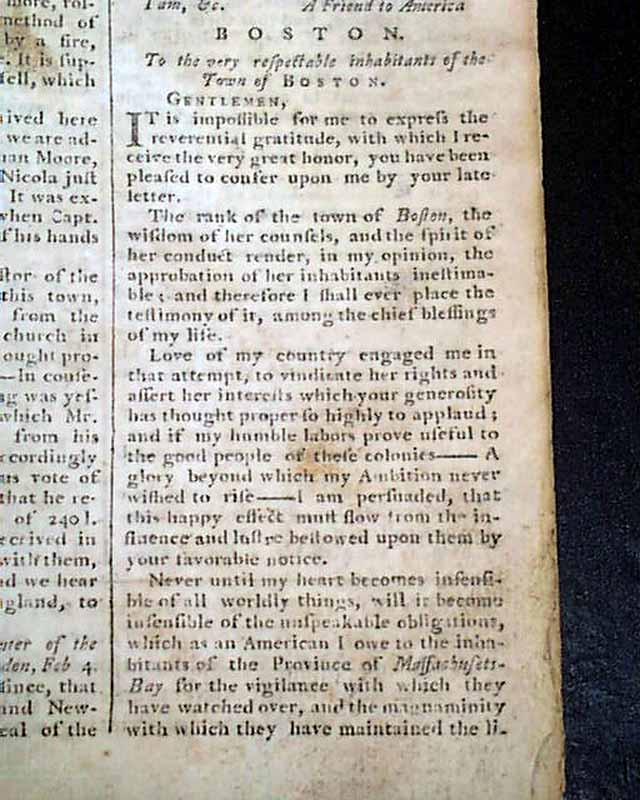
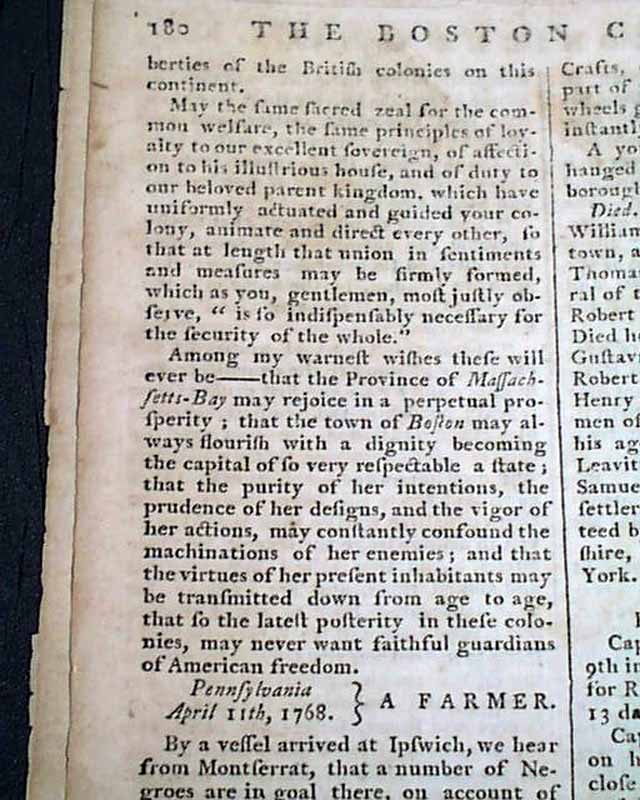
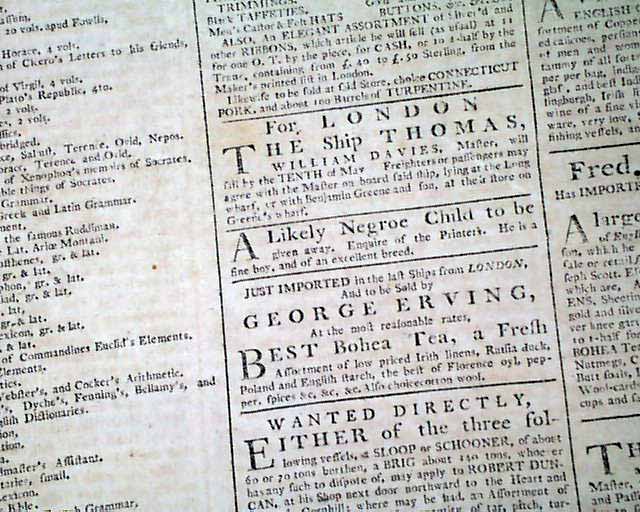
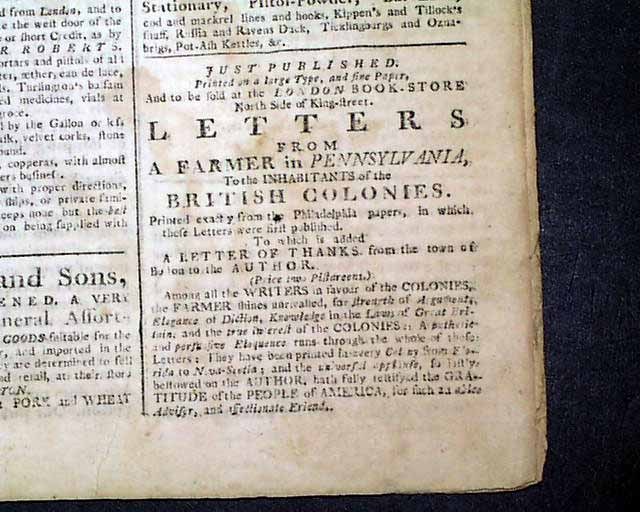
There is also a letter of gratitude headed: "To the Very Respectable Inhabitants of the Town of Boston" which is signed by: "A Farmer", datelined Pennsylvania, April 11, 1768. This was John Dickinson, the author of the famed series of 11 letters titled "Letters From a Farmer in Pennsylvania". Curiously a prior page has an advertisement for the printing of the: "Letters From A Farmer in Pennsylvania".
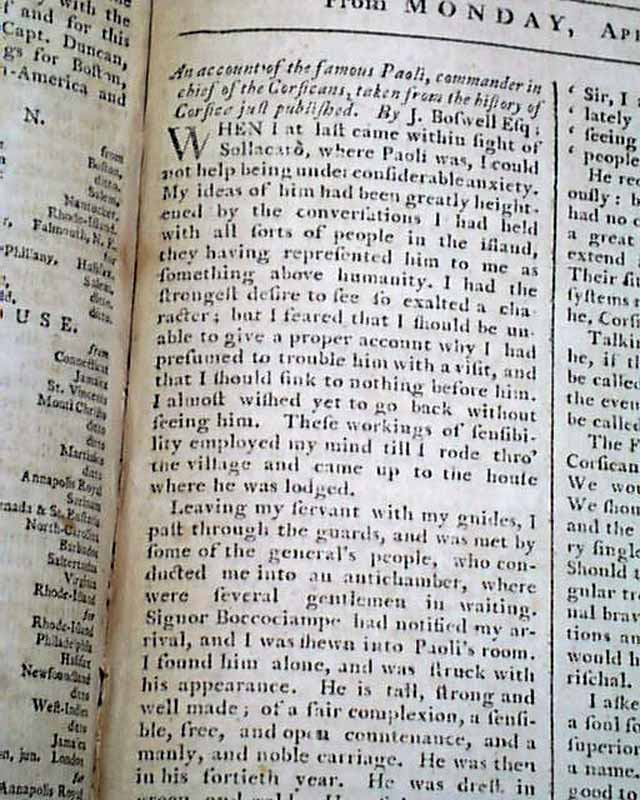
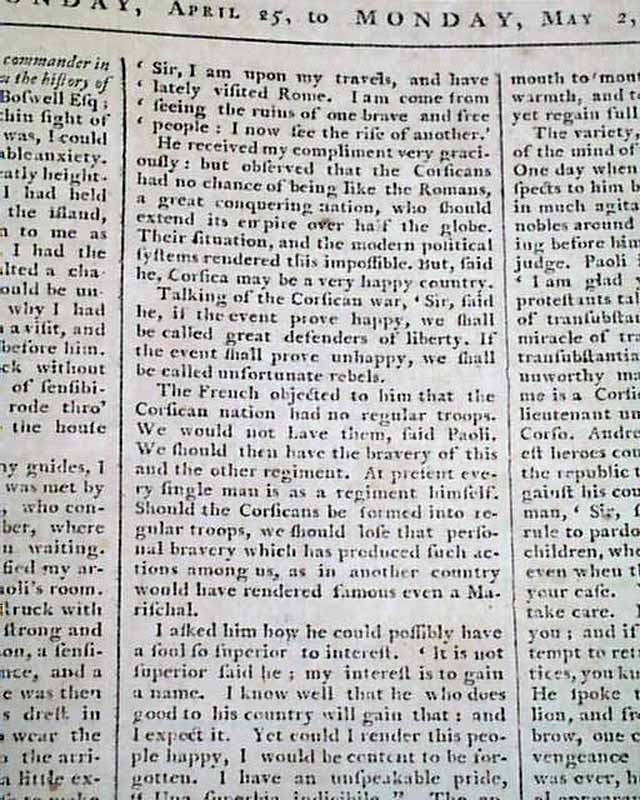
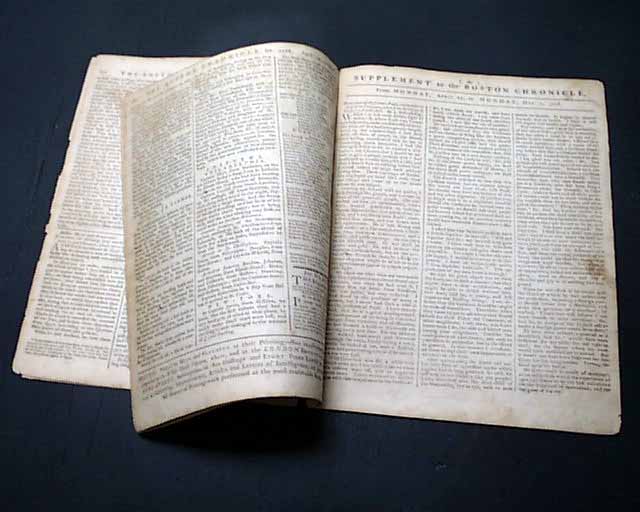
The "Supplement To the Boston Chronicle" is attached at the back, has 4 pages, and is mostly taken up with: "An Account of the famous Paoli, Commander in Chief of the Corsicans, taken from the History of Corsica just published".
Complete in 12 pages with the "Supplement", measures 8 1/4 by 10 1/4 inches, some minor margin tears to the first leaf, nice condition.
Background: This May 2, 1768, issue of The Boston Chronicle, complete with its four-page supplement, serves as a vital historical microcosm of the shifting tide of colonial resistance as Americans transitioned from celebrating the repeal of the 1765 Stamp Act to organizing against the newly imposed Townshend Acts. The publication’s unique 12-page quarto layout allows for an extraordinary convergence of revolutionary media, featuring an advertisement for John Dickinson’s immensely influential Letters From a Farmer in Pennsylvania alongside a deeply personal letter of gratitude from Dickinson himself ("A Farmer") honoring the "Respectable Inhabitants of the Town of Boston" for leading the charge against British overreach. By pairing this domestic solidarity with a massive supplement detailing the exploits of Pasquale Paoli—the Corsican freedom fighter whom American Sons of Liberty idolized as a global symbol of resistance against tyranny—the issue underscores how deeply the colonists viewed their struggle as part of a grander, universal fight for liberty. Ultimately, this specific artifact captures the American colonies at a critical psychological turning point, documenting the precise moment when localized protests were coalescing into a sophisticated, interconnected, and highly literate trans-Atlantic movement that would launch the Revolutionary War just seven years later.
This newspaper published only briefly from December 21, 1767 until 1770. The publishers, John Mein and John Fleeming, were both from Scotland. The Chronicle was a Loyalist paper in the time before the American Revolution. In its second year, Mein printed names in the paper that accused some colonial merchants of breaking a British non-importation agreement. In response, Mein's name appeared on a list of merchants who violated the trade agreement. Mein retaliated by accusing the Merchants' Committee of using the non-importation agreement for illegal profiteering. The irritated readership ransacked the offices of the Chronicle, and ultimately, it ceased operations in 1770. (credit Wikipedia)
* John Dickinson
* Colonial Boston
Inside pages have various reports from colonial cities with one item from New London noting: "...that New Hampshire, Connecticut and New Jersey did soon after the repeal of the stamp act, return their thanks to the committee of merchants for their services in that most important matter..." with more.
There is also a letter of gratitude headed: "To the Very Respectable Inhabitants of the Town of Boston" which is signed by: "A Farmer", datelined Pennsylvania, April 11, 1768. This was John Dickinson, the author of the famed series of 11 letters titled "Letters From a Farmer in Pennsylvania". Curiously a prior page has an advertisement for the printing of the: "Letters From A Farmer in Pennsylvania".
The "Supplement To the Boston Chronicle" is attached at the back, has 4 pages, and is mostly taken up with: "An Account of the famous Paoli, Commander in Chief of the Corsicans, taken from the History of Corsica just published".
Complete in 12 pages with the "Supplement", measures 8 1/4 by 10 1/4 inches, some minor margin tears to the first leaf, nice condition.
Background: This May 2, 1768, issue of The Boston Chronicle, complete with its four-page supplement, serves as a vital historical microcosm of the shifting tide of colonial resistance as Americans transitioned from celebrating the repeal of the 1765 Stamp Act to organizing against the newly imposed Townshend Acts. The publication’s unique 12-page quarto layout allows for an extraordinary convergence of revolutionary media, featuring an advertisement for John Dickinson’s immensely influential Letters From a Farmer in Pennsylvania alongside a deeply personal letter of gratitude from Dickinson himself ("A Farmer") honoring the "Respectable Inhabitants of the Town of Boston" for leading the charge against British overreach. By pairing this domestic solidarity with a massive supplement detailing the exploits of Pasquale Paoli—the Corsican freedom fighter whom American Sons of Liberty idolized as a global symbol of resistance against tyranny—the issue underscores how deeply the colonists viewed their struggle as part of a grander, universal fight for liberty. Ultimately, this specific artifact captures the American colonies at a critical psychological turning point, documenting the precise moment when localized protests were coalescing into a sophisticated, interconnected, and highly literate trans-Atlantic movement that would launch the Revolutionary War just seven years later.
This newspaper published only briefly from December 21, 1767 until 1770. The publishers, John Mein and John Fleeming, were both from Scotland. The Chronicle was a Loyalist paper in the time before the American Revolution. In its second year, Mein printed names in the paper that accused some colonial merchants of breaking a British non-importation agreement. In response, Mein's name appeared on a list of merchants who violated the trade agreement. Mein retaliated by accusing the Merchants' Committee of using the non-importation agreement for illegal profiteering. The irritated readership ransacked the offices of the Chronicle, and ultimately, it ceased operations in 1770. (credit Wikipedia)
Item from last month's catalog - #366 - released for May, 2026
Categories: The 1600's and 1700's, American
Price
$210
100% Authentic: Original printing, never a reproduction.
Other issues you may like
§ related
Would reject independence if offered... Regarding representation in Parliament...
THE BOSTON CHRONICLE, Massachusetts, April 4, 1768 Inside has most of a page taken up with a letter from the Speaker of the Mass. Assembly to one of the...
Apr 1768
$194
Many reports indicate troubles are ahead for America and the mother country...
THE PENNSYLVANIA CHRONICLE & UNIVERSAL ADVERTISER, Philadelphia, Sept. 26, 1768
* Pre Revolutionary War tensions
This newspaper was a primary means of...
* Pre Revolutionary War tensions
This newspaper was a primary means of...
Sep 1768
$135
Boston newspaper with Loyalist leanings... Opinions on Massachusetts clergy re the Charter...
THE BOSTON CHRONICLE, December 26, 1768 The publisher of this newspaper had Loyalist leanings, causing its demise before the formal outbreak of the...
Dec 1768
$155