Nice--and controversial--on the Boston Non-Importation Agreement: squabble between publishers...
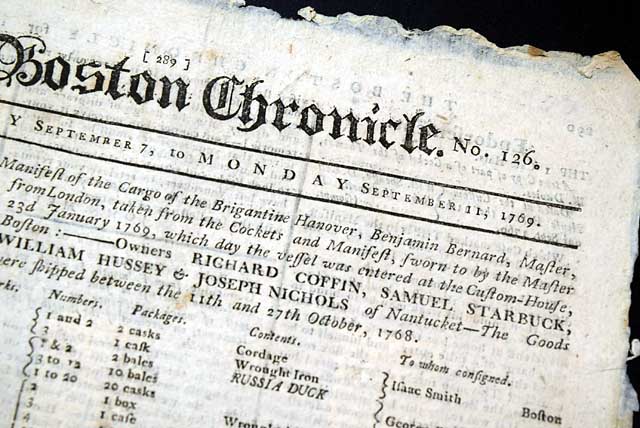
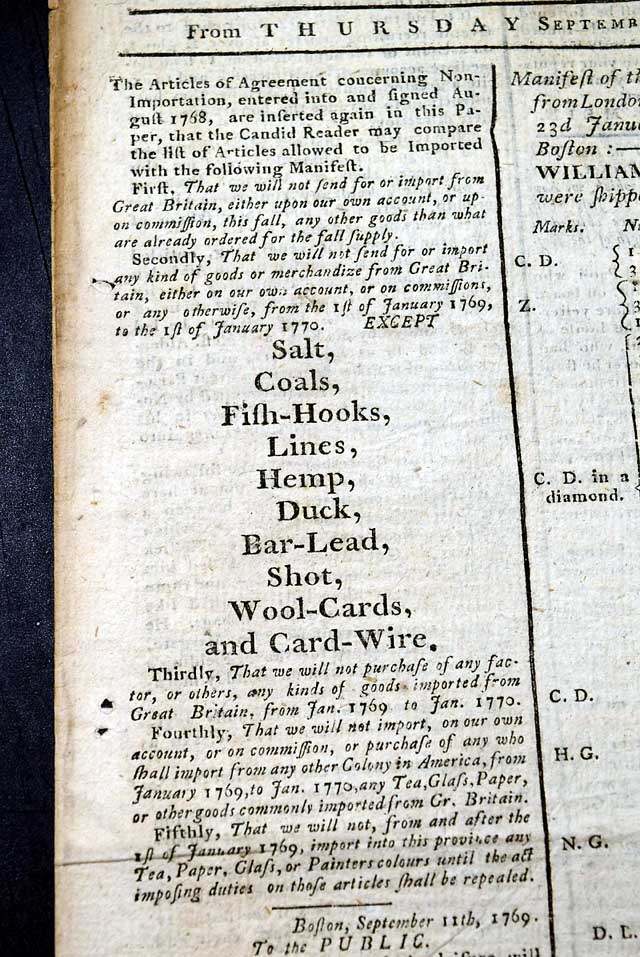
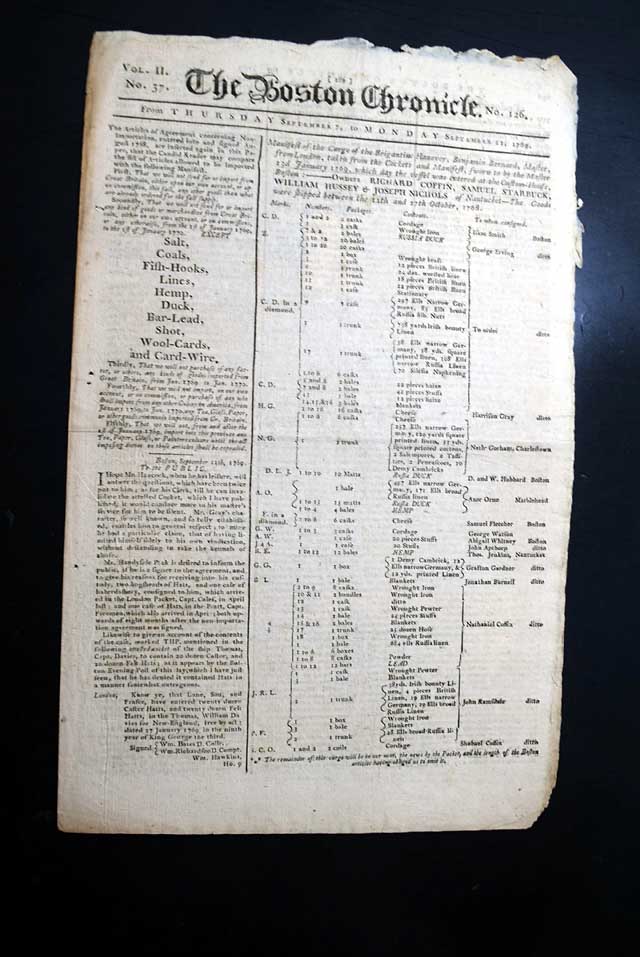
THE BOSTON CHRONICLE, Sept. 11, 1769 The front page begins with the list of the five points of historic Boston Non-Importation Agreement.
The merchants of Boston, taking into consideration the deplorable situation of the trade, and the many difficulties it presents for the American colonists, and the large sums collected by the officers of the customs for duties on goods imported, the heavy taxes levied to pay the debts contracted by the government in the French & Indian War, decided to act and agree to not import goods from England. The brief list of those items exempted from the Agreement are listed in bold type.
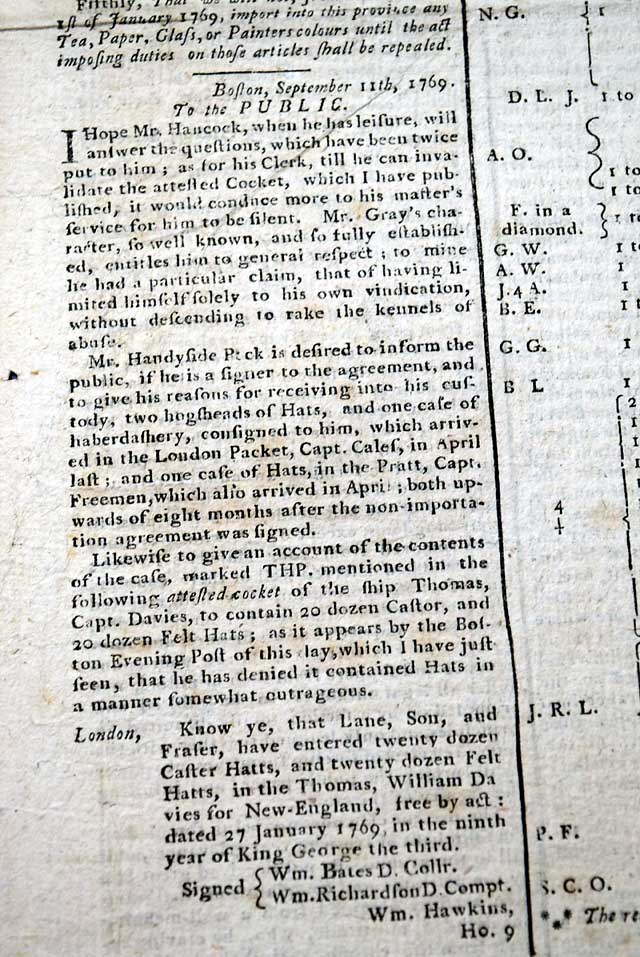
Then an accusatory letter: "To the Public" which begins: "I hope Mr. Hancock, when he has leisure, will answer the questions, which have b been twice put to him; as for his Clerk till he can invalidate the attested docket which I have published...", Hancock being accused of violating the Agreement.
The balance of the front page is taken up with a large list of items imported by the publisher of the Boston Gazette (a rival publisher) which appear to violate the Agreement. The text implicates John Hancock as well.
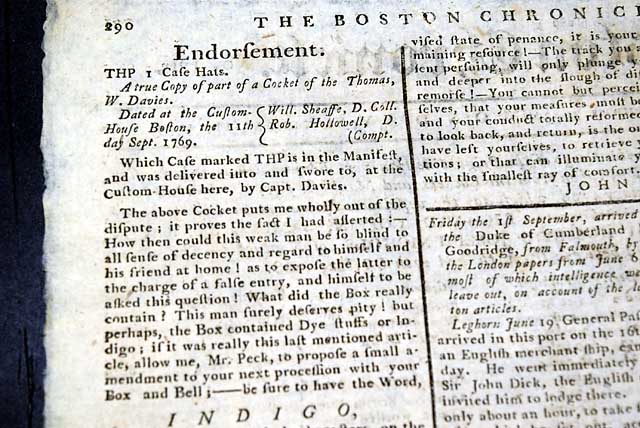
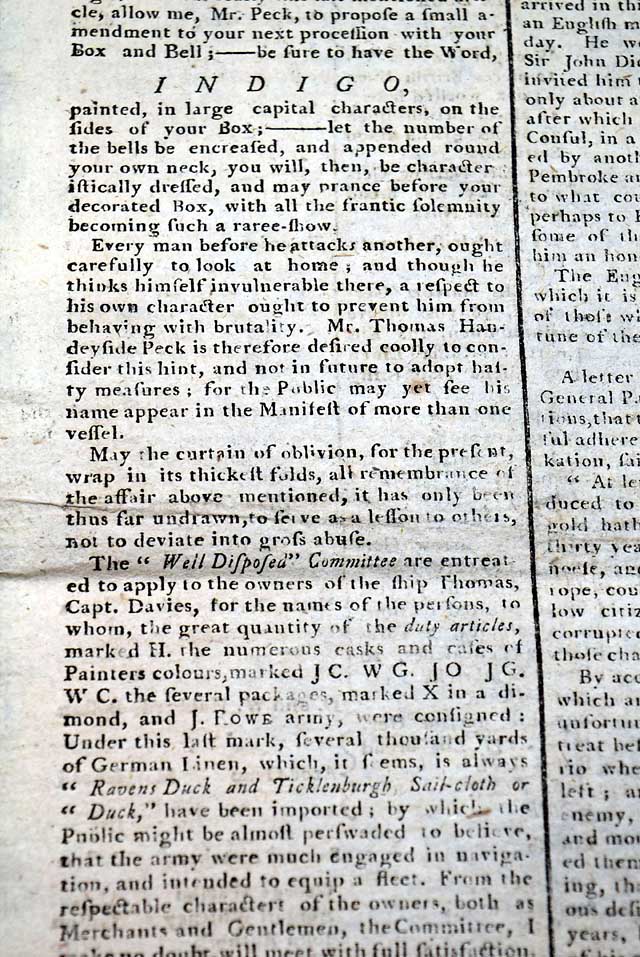
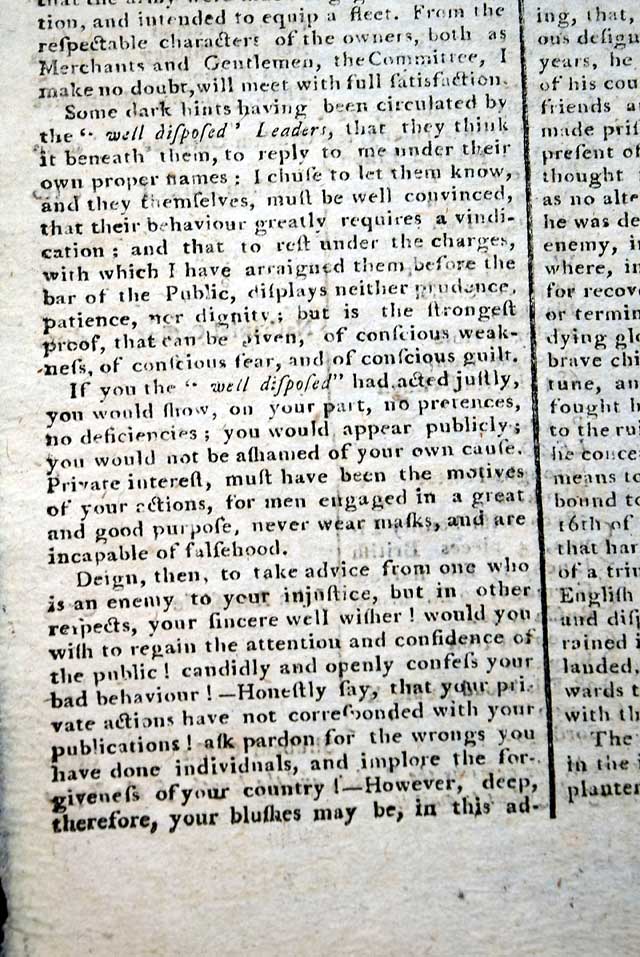
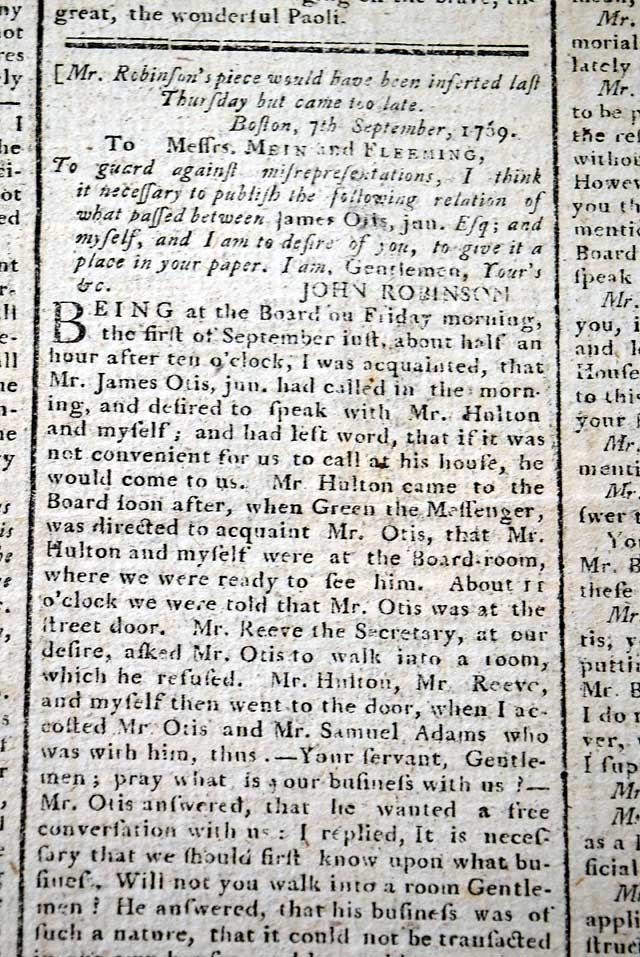
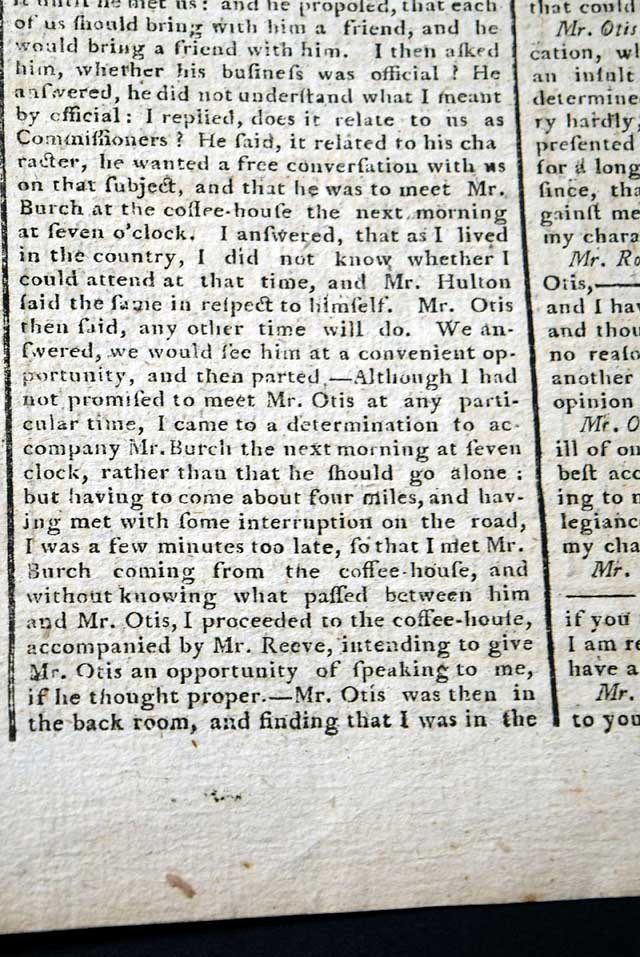
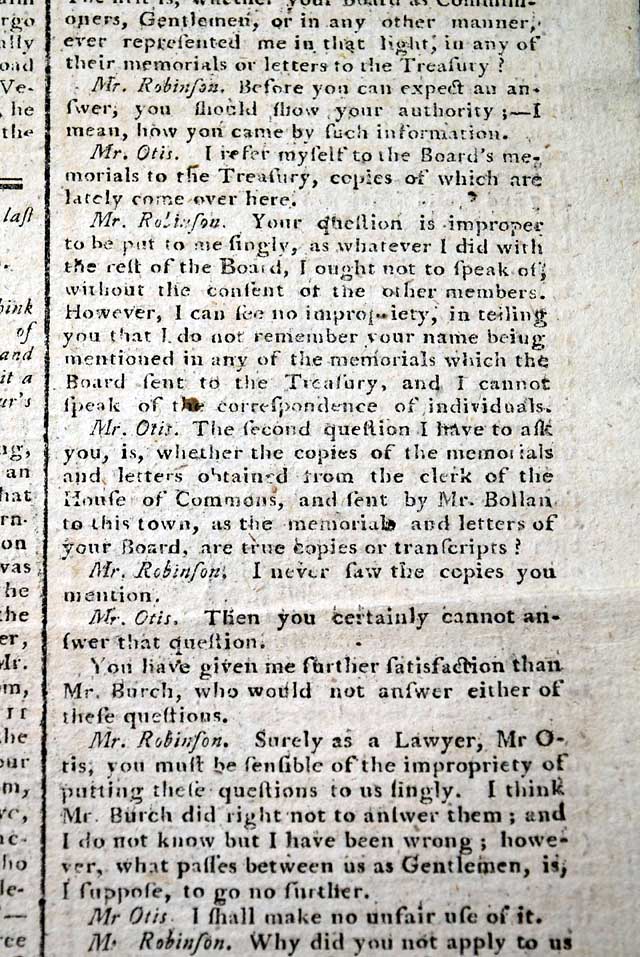
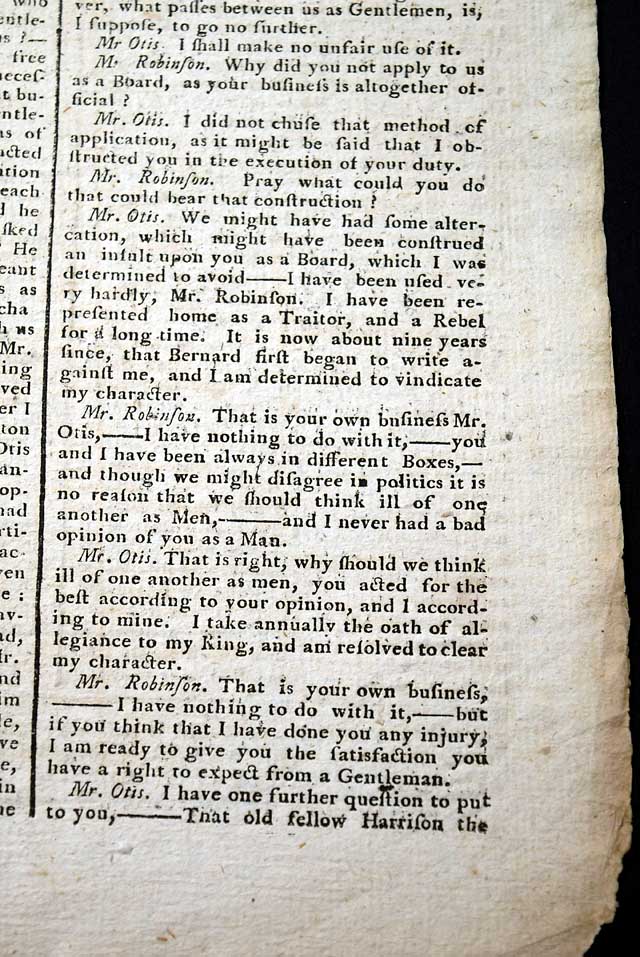
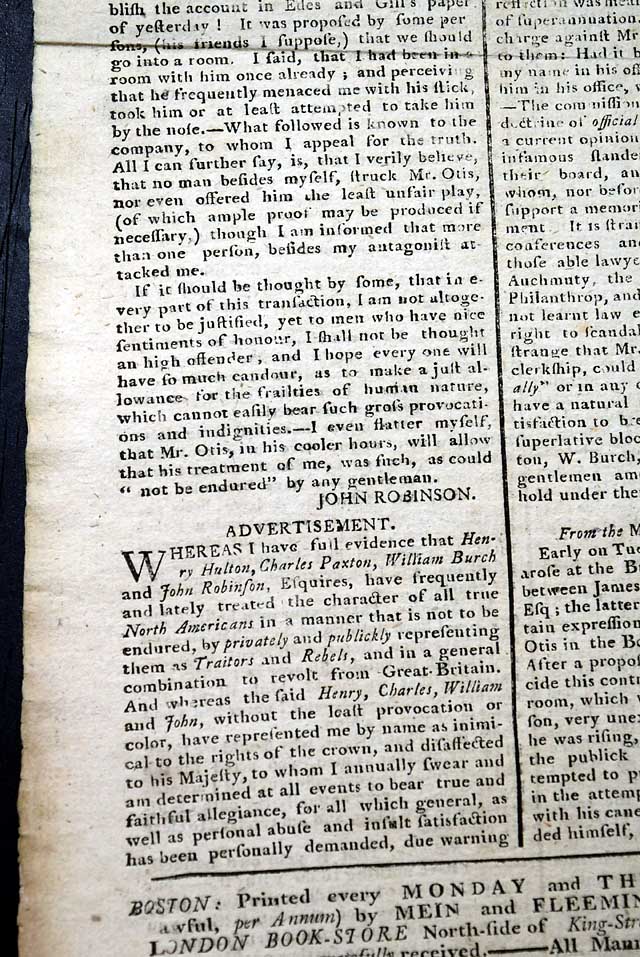
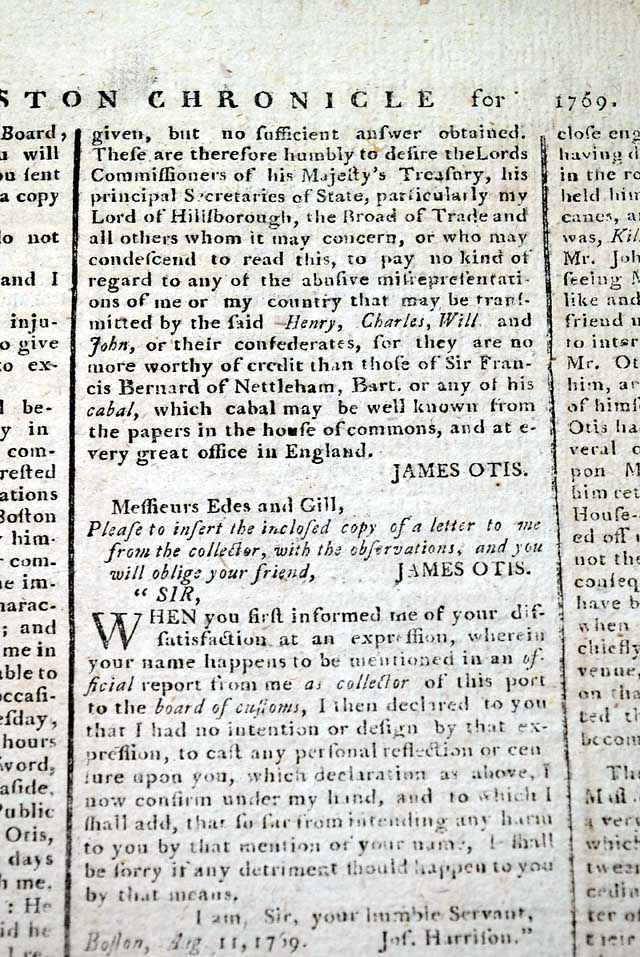
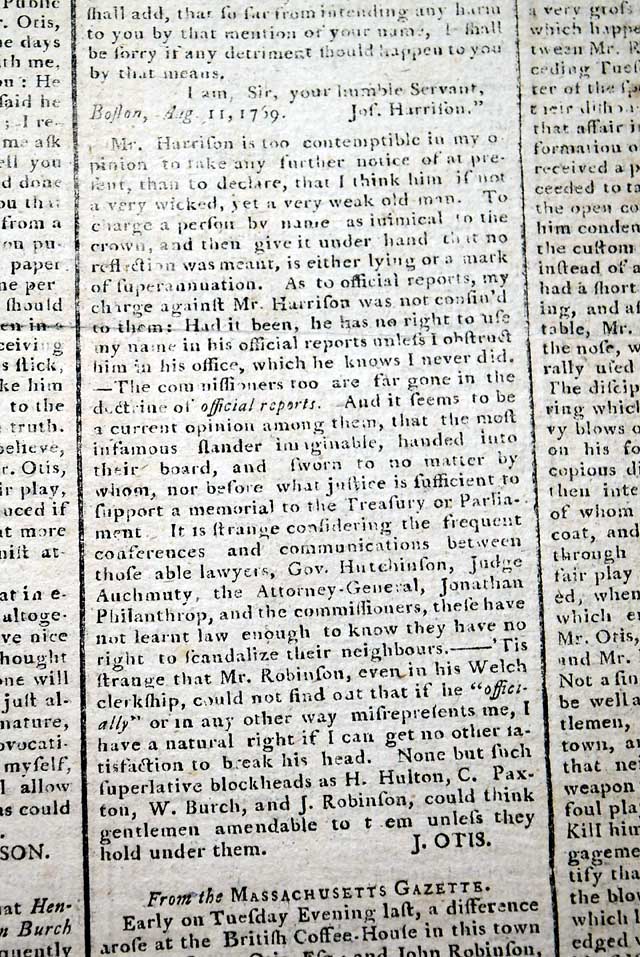
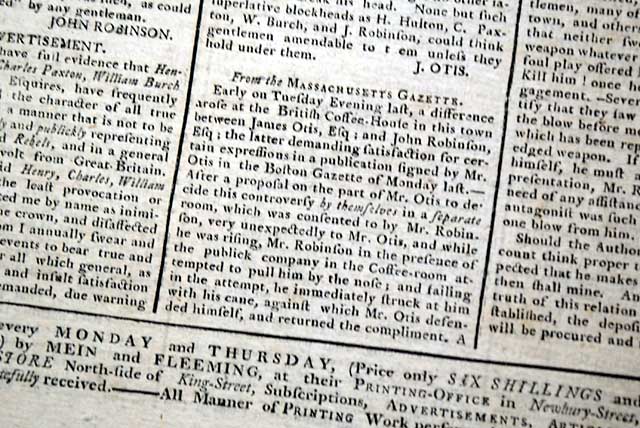
The accusations continue on to page 2\, and then most of pages 3 & 4 have considerable text--some verbatim--on the disagreements between John Mein and James Otis (supportive of the Boston Gazette publisher).
As a bit of background, The Boston Chronicle was a Tory (Loyalist) newspaper published by John Mein, supportive of the King & the British Parliament. The Boston Gazette wrote a letter, probably written by James Otis, attacking the views of the Chronicle. Opposed to boycotting goods subject to stamp duties, Mein wrote in the Chronicle in support of the colonial policy of the British government including, in 1769, lists of names that accused colonial merchants of breaking a British nonimportation agreement (see this issue being offered).
In retaliation, Mein's name appeared on a list of merchants who violated the trade agreement. Mein responded by publishing another letter, this time accusing the Merchants' Committee of using the nonimportation agreement for illegal profiteering. The irritated public ransacked the Chronicle and Mein's office in October of 1769. In the scuffle, Mein shot a grenadier. He sought safety on a ship in the harbor which sailed for Great Britain a few days later. The newspaper would cease to exist before the middle of the following year, publishing for just 2 1/2 years in total.
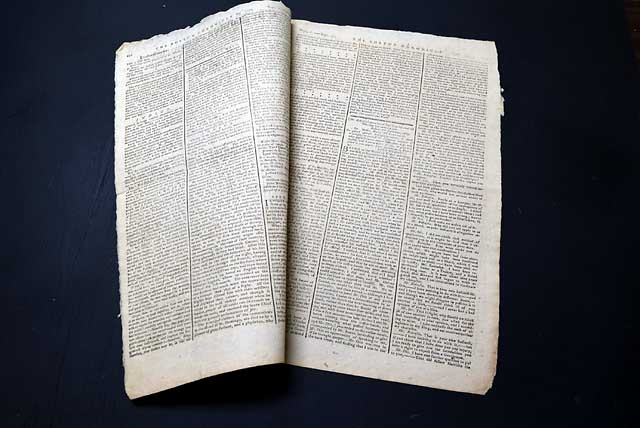
Four pages, never bound nor trimmed, folio size measuring 9 3/4 by 15 inches (it was a smaller paper in 1768), very nice condition.
Item from our new catalog - #372, released for November, 2026
Other issues you may like
§ related
THE PENNSYLVANIA CHRONICLE & UNIVERSAL ADVERTISER, Philadelphia, May 15, 1769
- The Boston Non-Importation Agreement
- Boycott of British goods b merchants &
THE BOSTON CHRONICLE, December 26, 1768 The publisher of this newspaper had Loyalist leanings, causing its demise before the formal outbreak of the
...
THE LONDON CHRONICLE, England, Sept. 22, 1770
- Non-importation agreement
The top of page 3 has an item headed: "Intelligence True & Extraordinary" which is a
...
THE LONDON CHRONICLE, England, Nov. 30, 1769
- Non-Importation agreement
Page 6 has most of a column headed: "America" with reports from Boston, New Haven and
...