Grant and Sherman...
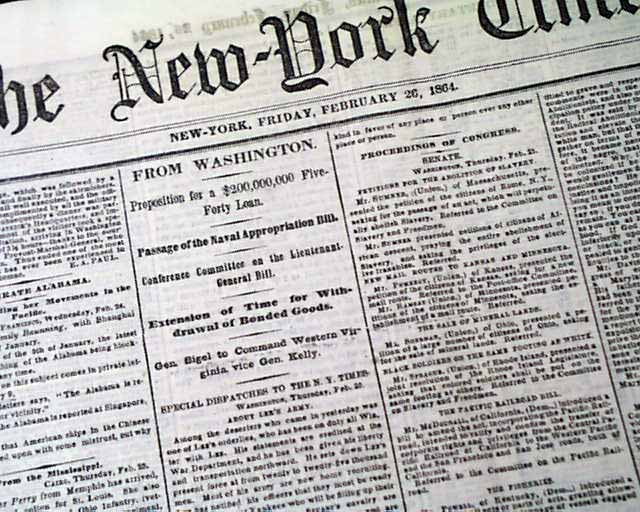
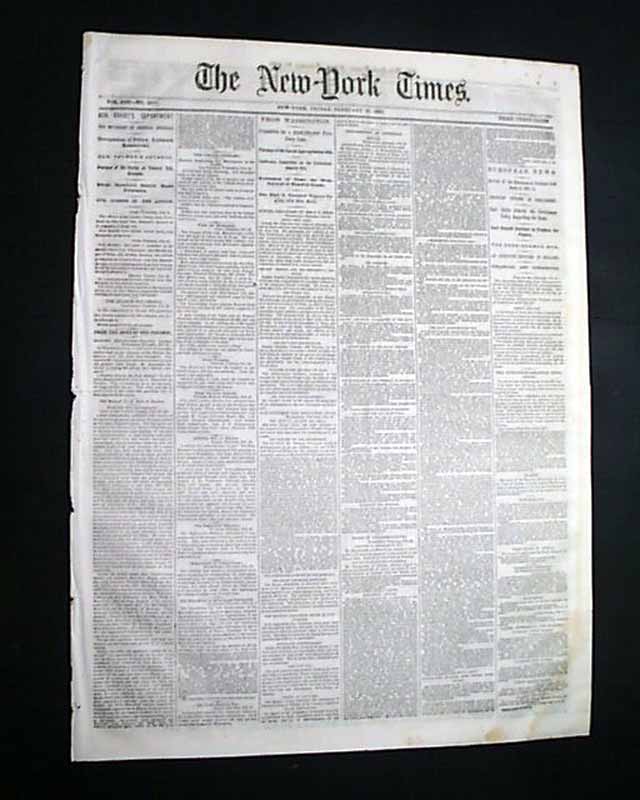
NEW YORK TIMES, Feb. 26, 1864
- Selma, Alabama
- Tunnel Hill, Georgia
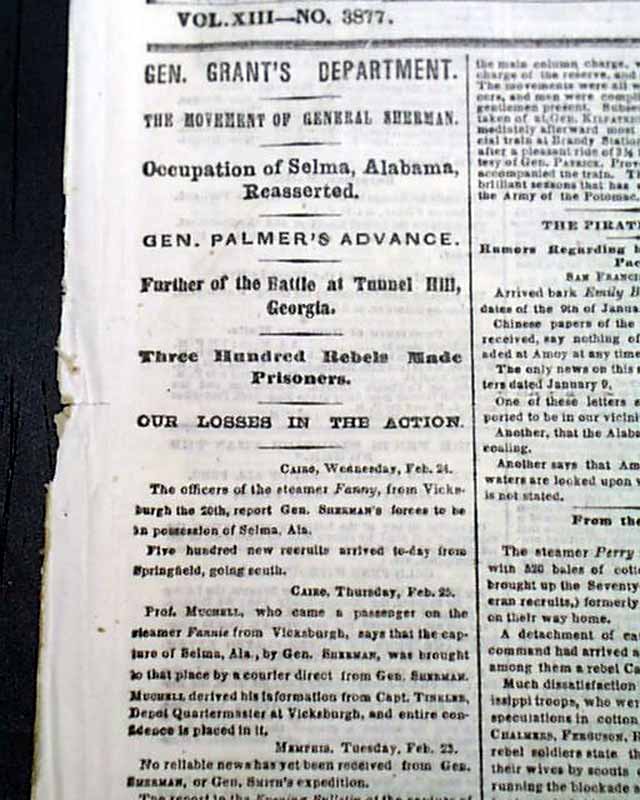
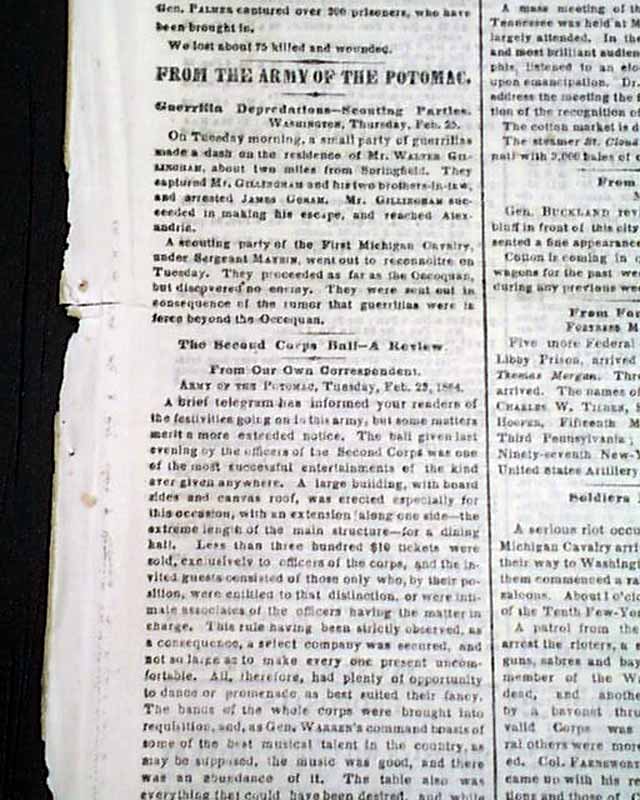
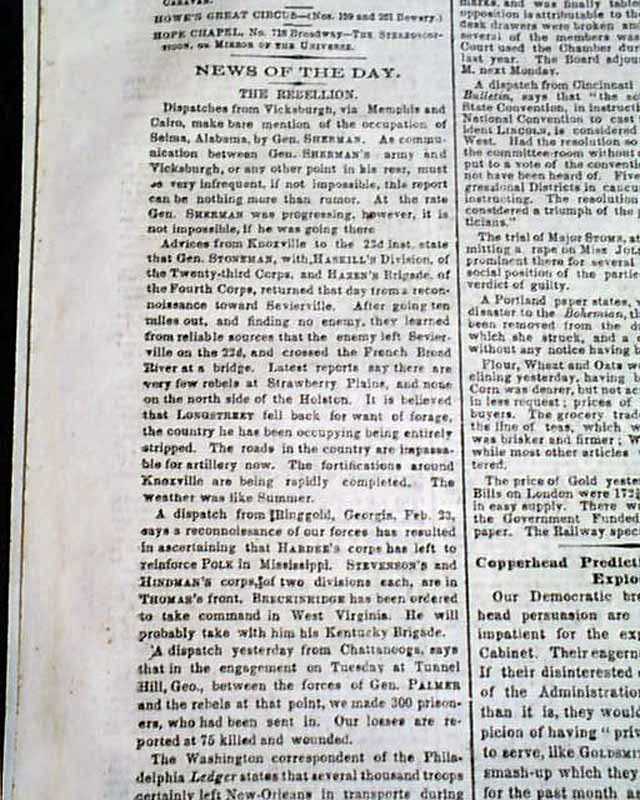
Among the front page column heads on the Civil War are: "GEN. GRANT'S DEPARTMENT" "The Movement of General Sherman' "Occupation of Selma, Alabama, Reasserted" "Gen. Palmer's Advance" "Further of the Battle at Tunnel Hill, Georgia" "300 Rebels Made Prisoners" and more.
Eight pages, minor loss to an upper, blank corner, good condition.
Background: The February 26, 1864, edition of the New York Times serves as a real-time window into the Meridian Campaign and the preliminary maneuvers of the Atlanta Campaign, marking a crucial transition in Union grand strategy toward "total war." At this moment, the Union high command was shifting focus toward destroying the South's industrial capacity and rail infrastructure, as evidenced by the reports on General Sherman’s destructive march through Mississippi and General Palmer’s tactical probing at Tunnel Hill, Georgia. The "reasserted" occupation of Selma—though strategically premature as the city remained a Confederate stronghold for another year—underscores the North's fixation on crippling the "Arsenal of the Confederacy." Furthermore, the prominent placement of "Gen. Grant's Department" signaled to a weary public that Ulysses S. Grant was consolidating the power necessary to launch his coordinated spring offensives, effectively beginning the endgame of the war by tightening the noose around both the Western and Eastern theaters simultaneously.
Other issues you may like
§ related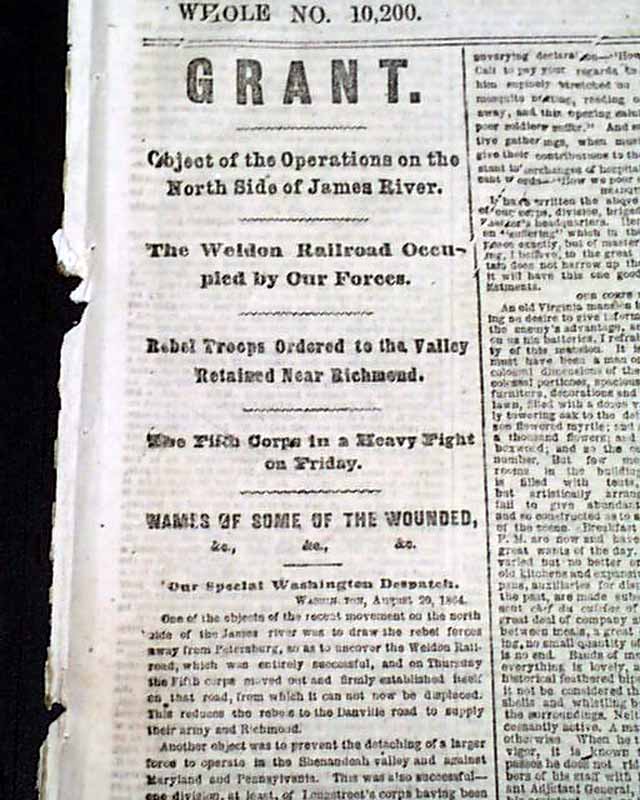
NEW YORK HERALD, Aug. 21, 1864 Among the front page column heads of the Civil War are: "GRANT" "Rebel Troops Ordered to the Valley Retained Near Richmond"
...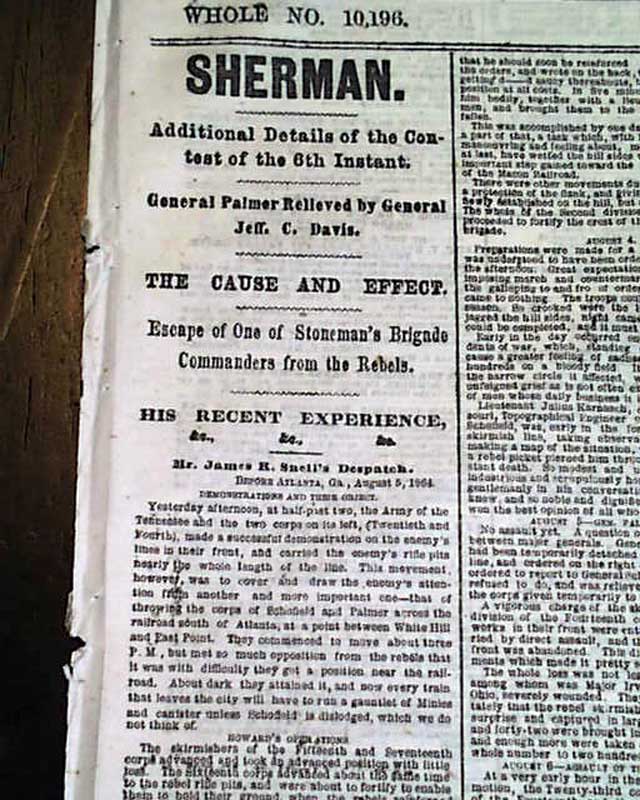
NEW YORK HERALD, Aug. 17, 1864
- William T. Sherman
- Ulysses S. Grant
Among the front page one column heads on the Civil War are: "SHERMAN" "Additional Details
...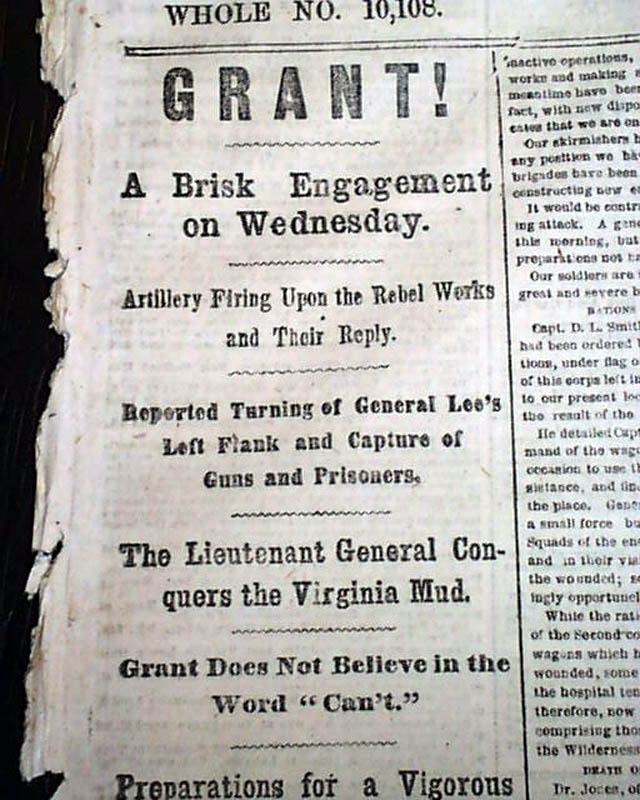
NEW YORK HERALD, May 20, 1864 The front page features very nice column heads on the Civil War including: "GRANT ! " "Reported Turning of General Lee's
...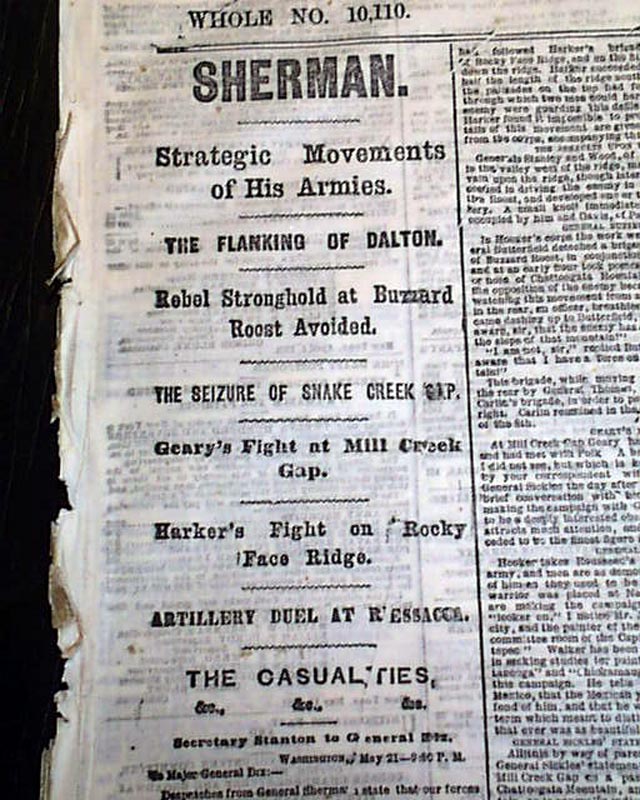
NEW YORK HERALD, May 22, 1864
- General William T. Sherman
- Snake Creek Gap - Georgia
- Battle of Buzzard Roost
- Battle of Rocky Face Ridge
Among the front page
...