How to treat other countries, or a veil to the situation in America...
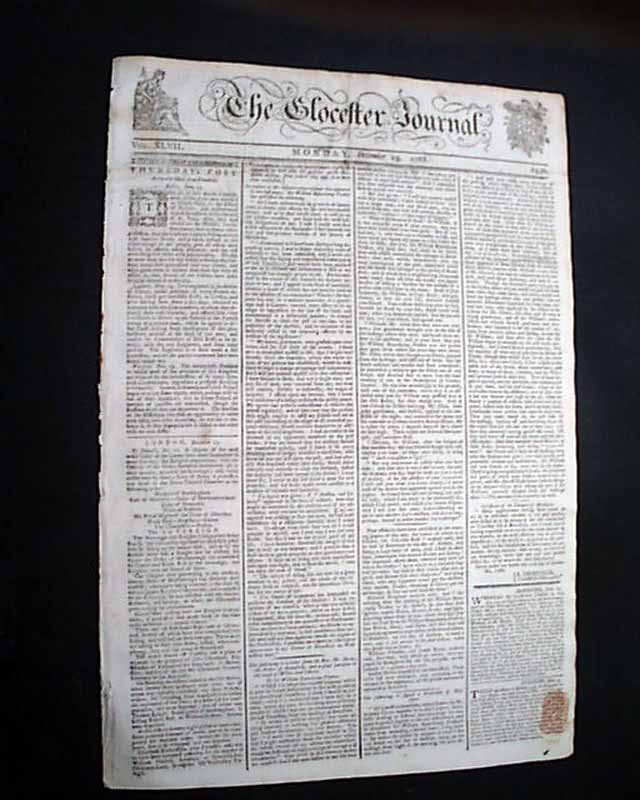
THE GLOCESTER JOURNAL, England (now spelled Gloucester), Dec. 19, 1768
- Pre Revolutionary War
- Nice masthead for display
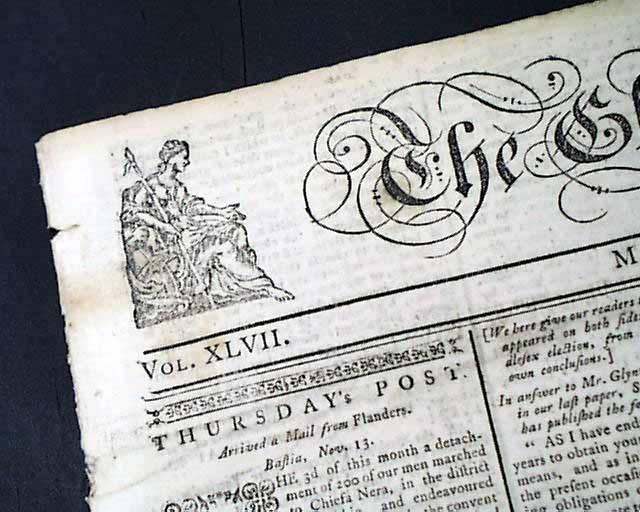
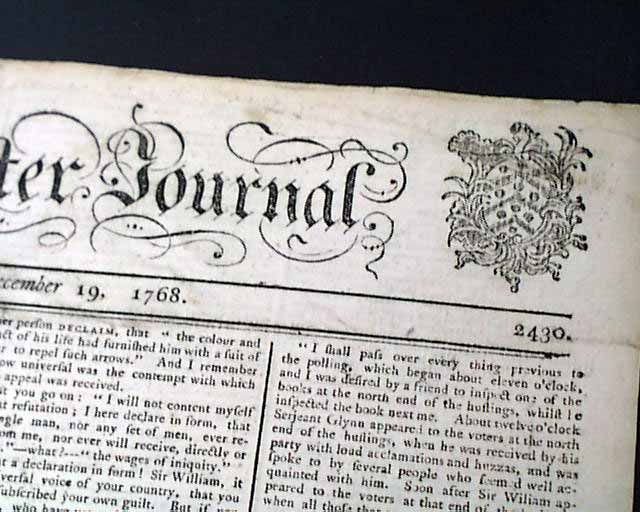
Various British news reports throughout, with its finest feature being the handsome masthead with two detailed engravings and the ornate lettering. This is from the period when the troubling relationship between England and America was coming to a head. The Boston Massacre would be less than 2 years away.
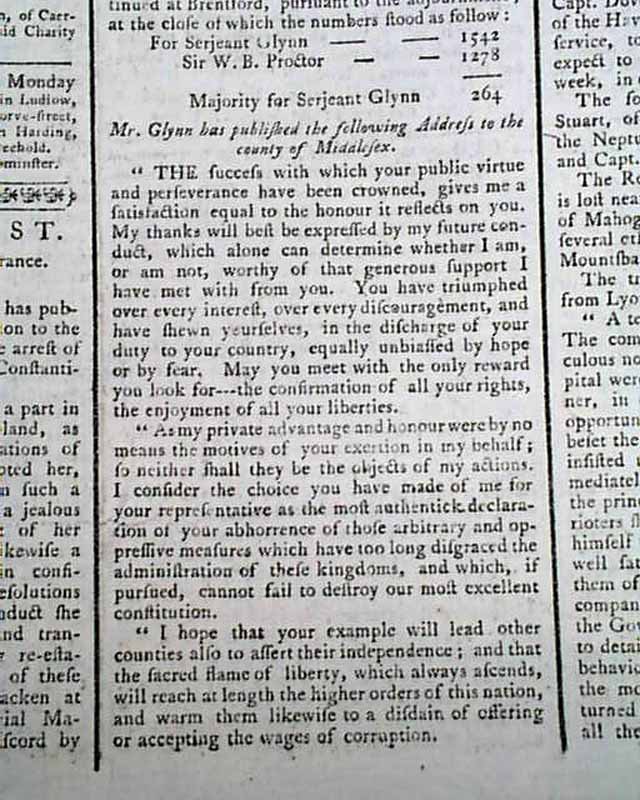
Page 2 has a piece of a letter, not specific to America but rather to the administration of some counties in England, although there are overtones on his the American colonies are being treated: "...I consider the choice you have made of me for your representative was the most authentic, declaration of your abhorrence of those arbitrary & oppressive measures which have too long disgraced the administration of these kingdoms, and which, if pursued, cannot fail to destroy our most excellent constitution. I hope that your example will lead other counties also to assert their independence; and that the sacred flame of liberty, which always ascends, will reach at lengthy the higher orders of this nation, and warm them likewise to a disdain of offering or accepting the wages of corruption."
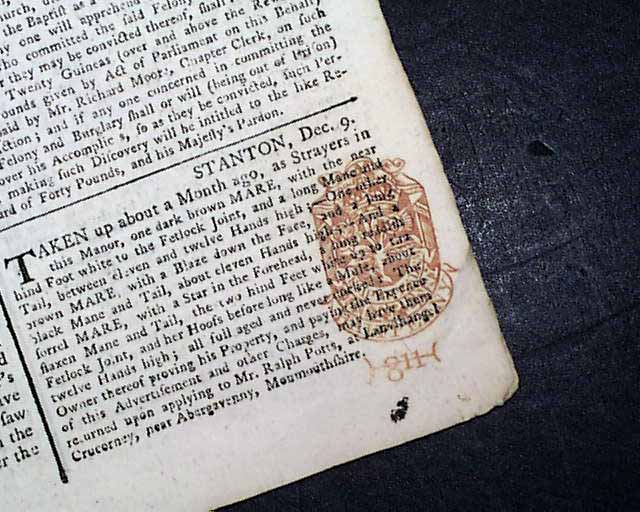
Four pages, full red tax stamp on the front page, very nice condition.
Background: This December 1768 issue of The Glocester Journal possesses immense historical significance because it serves as a pristine, real-time capsule of the ideological pressure cooker that immediately preceded the American Revolution. Printed just two months after British troops occupied Boston to enforce the loathed Townshend Acts, and a mere fifteen months before the Boston Massacre, the newspaper captures a pivotal moment when the British Empire began fracturing from within. The striking inclusion of the red domestic tax stamp provides a physical manifestation of the exact fiscal policies over taxation and parliamentary overreach that infuriated colonists across the Atlantic. Crucially, the radical political rhetoric on page 2—which decries the "arbitrary & oppressive measures" of the King's ministers and praises English counties that "assert their independence"—proves that the fight for "liberty" and the defense of the British Constitution against government corruption was not merely a localized American rebellion, but a fierce, interconnected transatlantic crisis that threatened to tear the entire empire apart.
Other issues you may like
§ related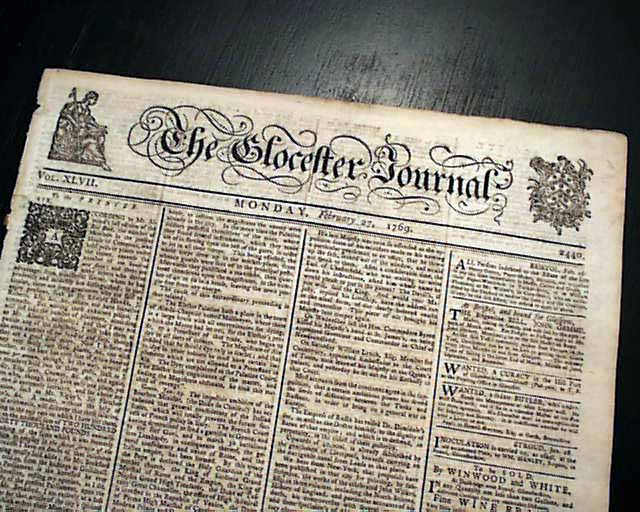
THE GLOCESTER JOURNAL, England (now spelled Gloucester), Feb . 27, 1769
- Pre American Revolutionary War
- Nice masthead for display
Various British news reports
...
THE GLOCESTER JOURNAL, England, 1769 (currently spelled Gloucester). Here is a very nice, four page issue from just a few years before the outbreak of the
...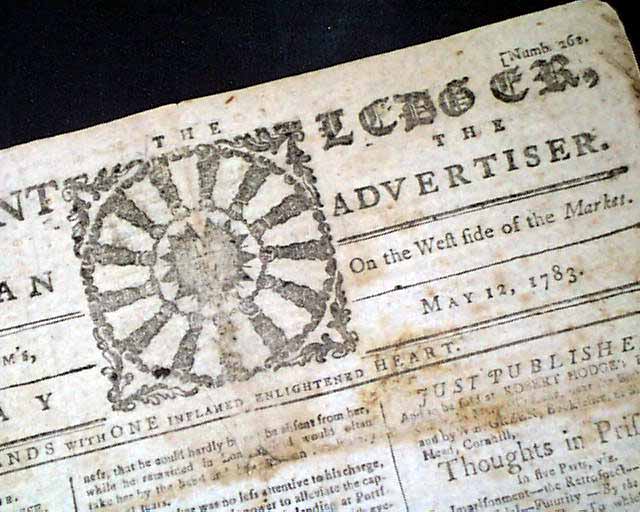
THE INDEPENDENT LEDGER & AMERICAN ADVERTISER, Boston, May 12, 1783
- "Great Expulsion" of American Loyalists
- The Fall of Count de Grasse - The Saintes
- American
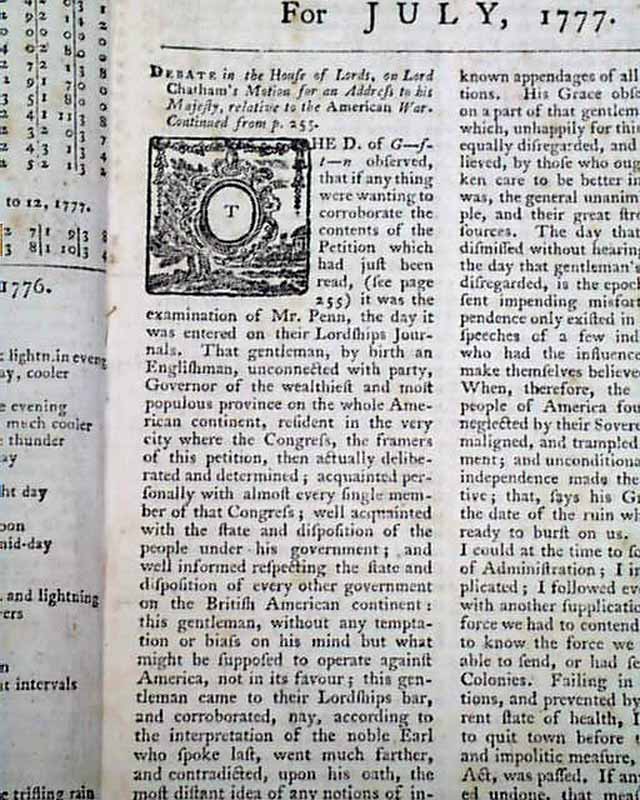
THE GENTLEMAN'S MAGAZINE, London, July, 1777
- General William Howe
- Charles Cornwallis
- American Independence ?
The issue begins with a continuation of the:
...