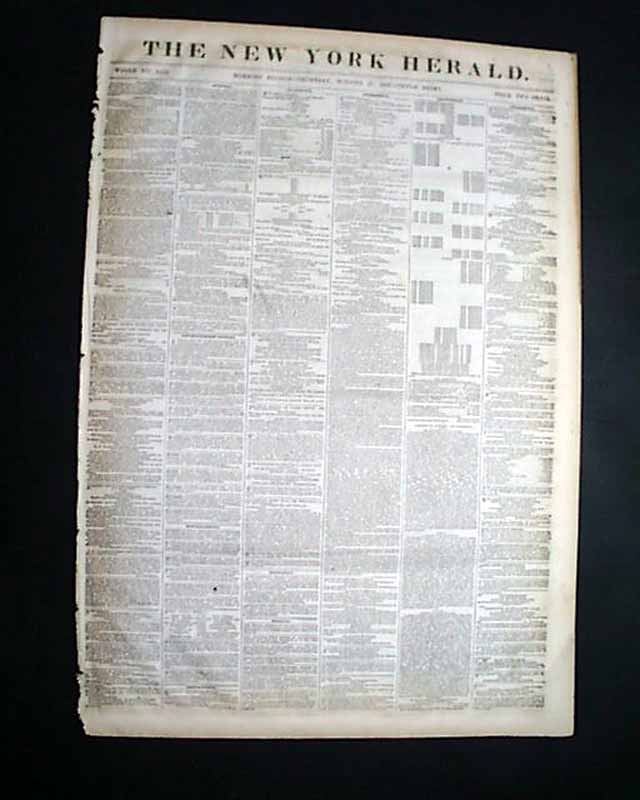
Nice reports on the John Brown Harper's Ferry insurrection...
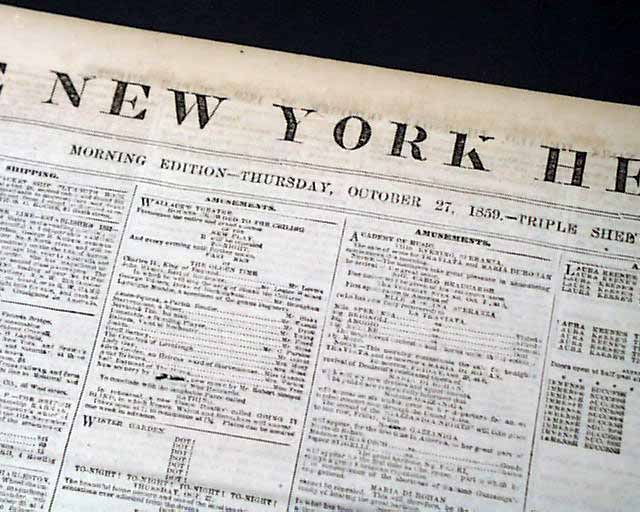
NEW YORK HERALD, Oct. 27, 1859
- John Brown's insurrection - invasion - raid
- Harpers Ferry, West Virginia trial
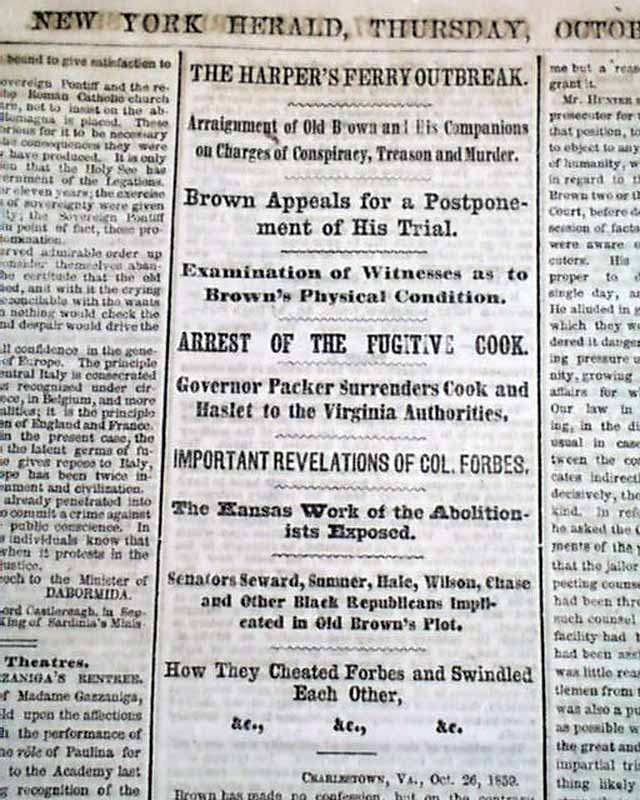
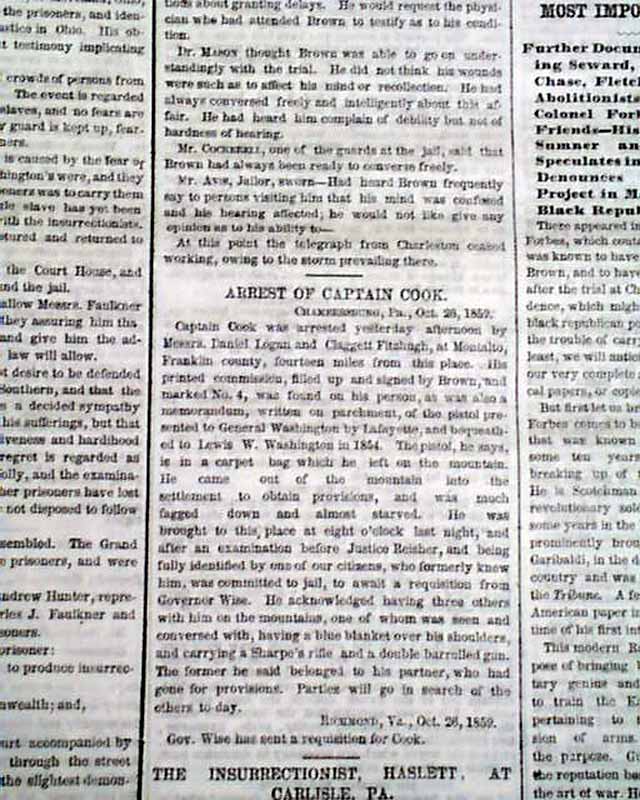
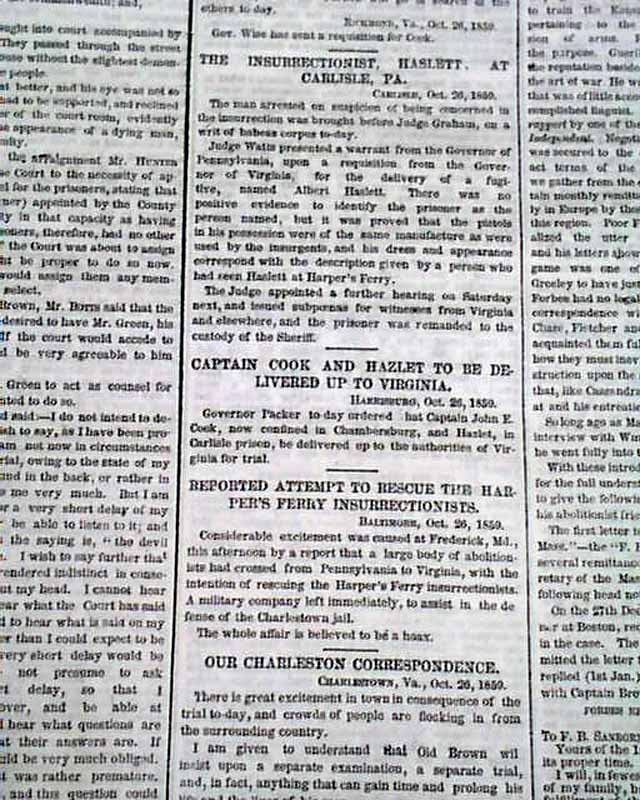
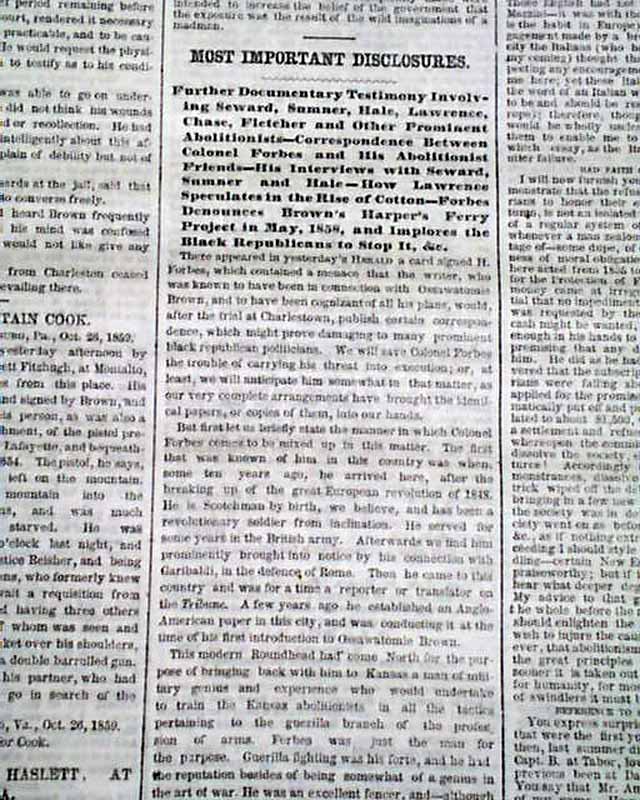
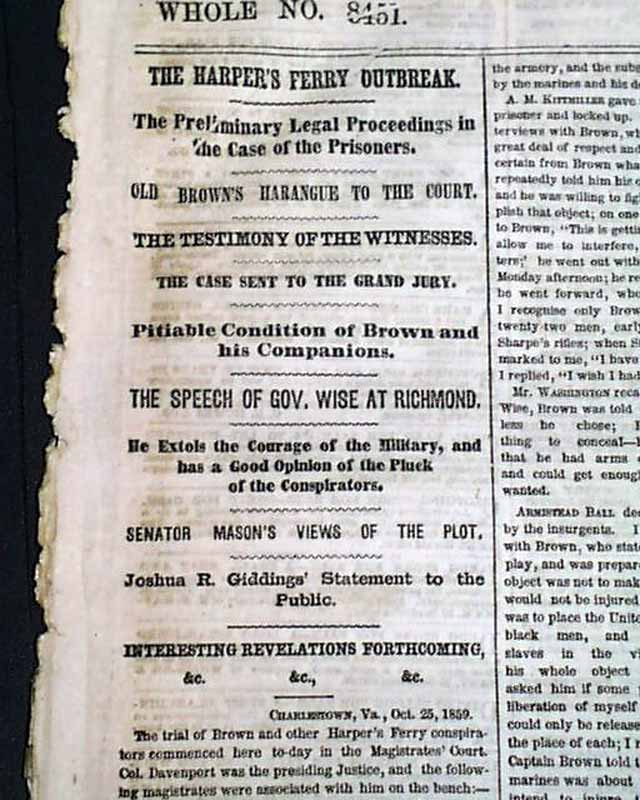
The top of page 3 has many nice column heads including: "The Harper's Ferry Outbreak" "Arraignment of Old Brown and His Companions on Charges of Conspiracy, Treason and Murder" "Brown Appeals for a Postponement of His Trial" "Arrest of the Fugitive Cook" The Kansas Work of the Abolitionists Exposed" and more.
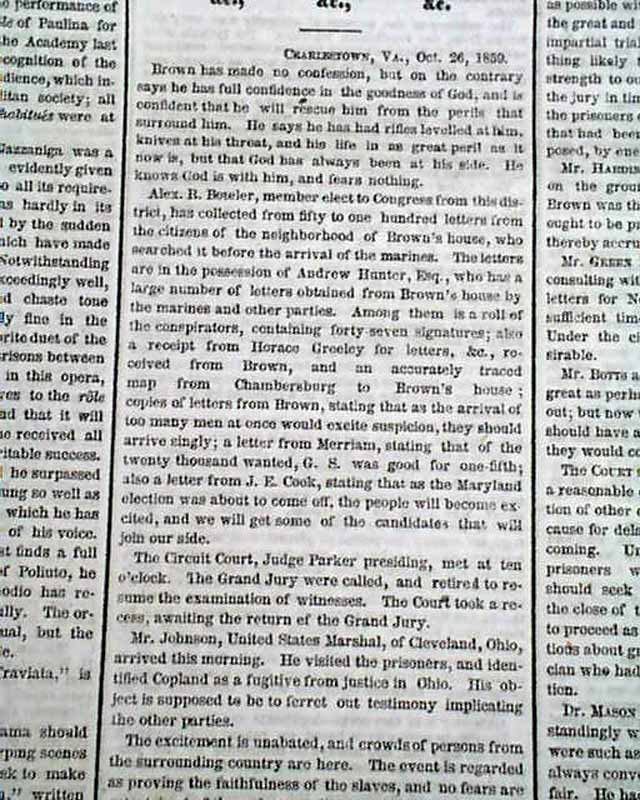
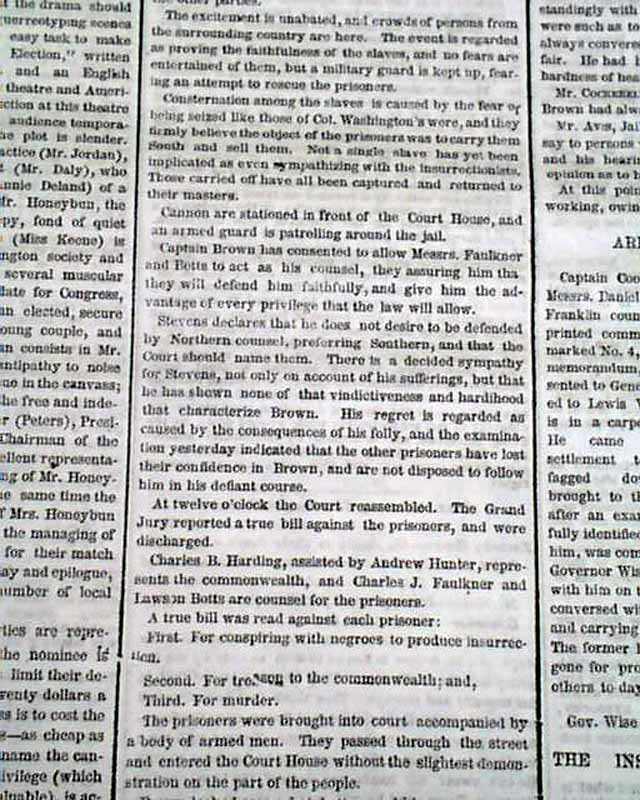
Over half of page 3 is taken up with a wealth of reports on the Harper's Ferry situation, photos showing just portions. Additionally, page 4 continues with the reports with many subheads, and then page 6 as well, which includes: "More Disclosures from Harper's Ferry-- Two Years'
Secret History of Abolitionism" and: "The Abolition Invasion of Harper's Ferry--A Lesson from the Slaves".
An uncommonly great amount of reporting in this issue
Twelve pages, irregular at the bottom of the spine, nice condition.
Background: This October 27, 1859 issue of the New York Herald serves as a crucial historical time capsule, capturing the immediate, chaotic aftermath of John Brown’s raid on Harpers Ferry just as his trial for treason, conspiracy, and murder was getting underway. The extraordinary depth of the reporting—spanning over half of page three and bleeding heavily onto pages four and six—underscores how completely the event paralyzed and polarized a nation already on the brink of fracture. By highlighting headlines like "Brown Appeals for a Postponement" and the arrest of "Fugitive Cook," the paper documents a wounded Brown forced to plead his case from a cot in a rushed Virginia courtroom, while simultaneously revealing the shockwaves sent through the country by the discovery of his secret correspondence with wealthy Northern abolitionists. Crucially, the Herald's pro-Southern, anti-abolitionist editorial slant heavily shapes the narrative; by framing the raid as a lawless "Abolition Invasion" and mocking its failure with "A Lesson from the Slaves," the publication reflects the deep-seated Northern commercial anxieties and fierce Southern fury of the era. Ultimately, the significance of this specific publication lies in its raw, real-time reflection of the exact moment the American sectional crisis became irreconcilable, transforming John Brown into an immediate martyr-or-terrorist lightning rod and lighting the final fuse that led directly to the outbreak of the American Civil War less than two years later.
Other issues you may like
§ related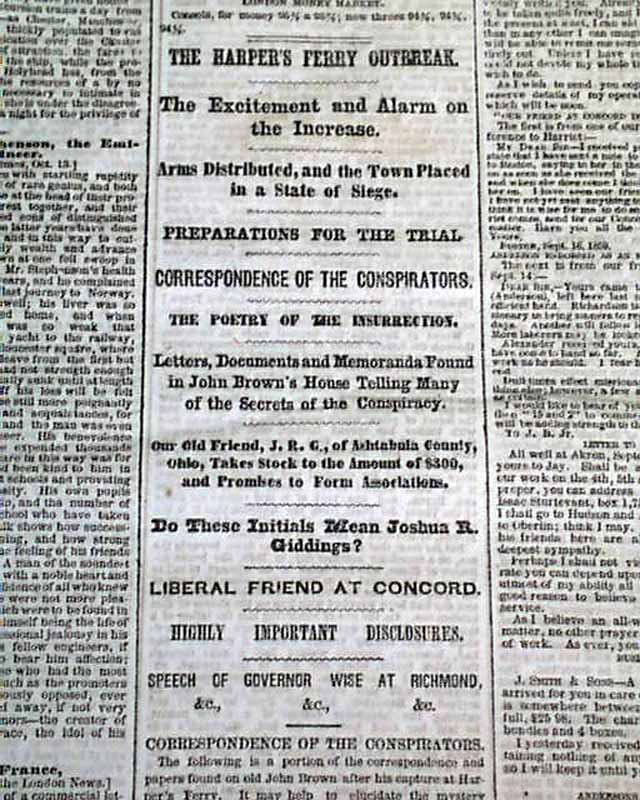
NEW YORK HERALD, Oct. 25, 1859
- John Brown's Negro insurrection
- Harpers Ferry WV West Virginia
Over half of page 4 is taken up with detailed reporting of
...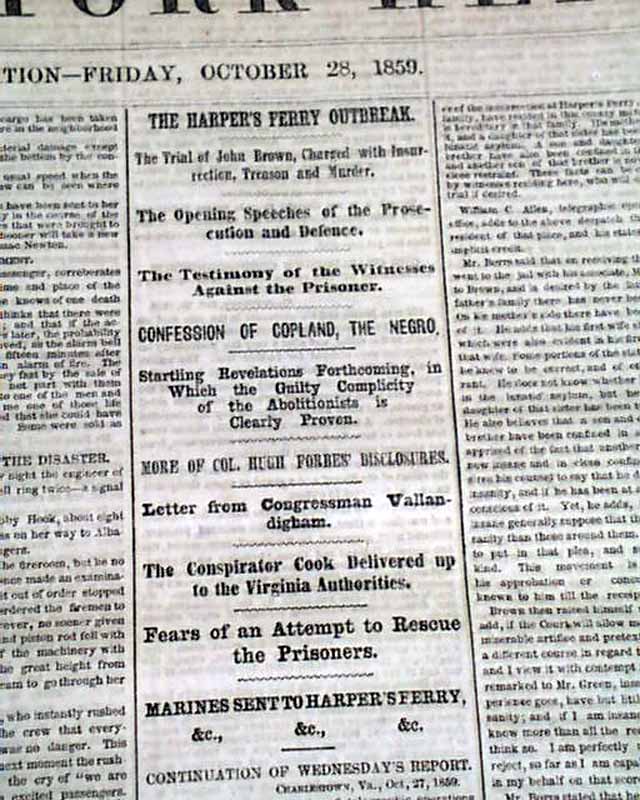
NEW YORK HERALD, Oct. 28, 1859
- John Brown's insurrection - invasion - raid
- Harpers Ferry, West Virginia criminal trial
- Underground Railroad & Frederick
DAILY NATIONAL INTELLIGENCER, Washington, D.C., Oct. 27, 1859
- John Brown's insurrection - invasion - raid
- Harpers Ferry, West Virginia trial
Page 3 has over
...
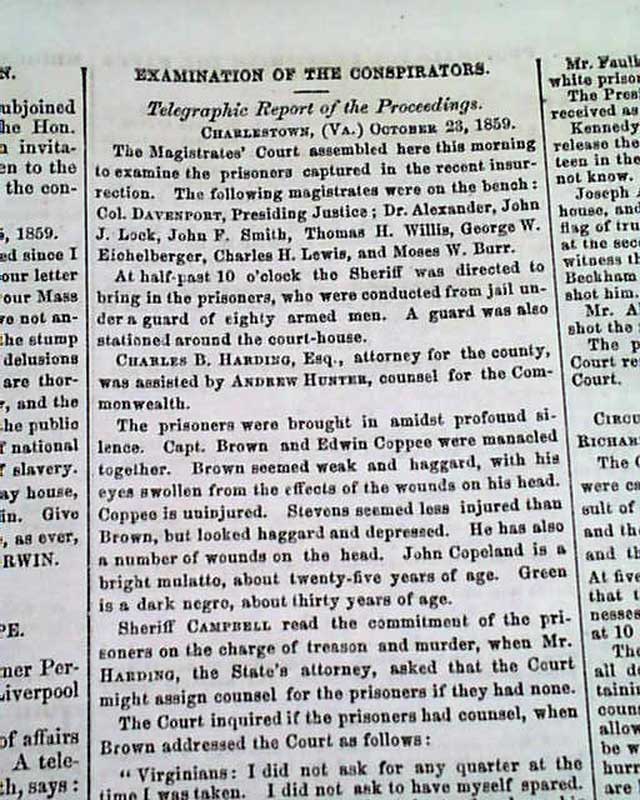
NEW YORK HERALD, Oct. 26, 1859
- John Brown's Negro insurrection
- Harpers Ferry WV West Virginia
Among the first column heads on the front page are: "The
...