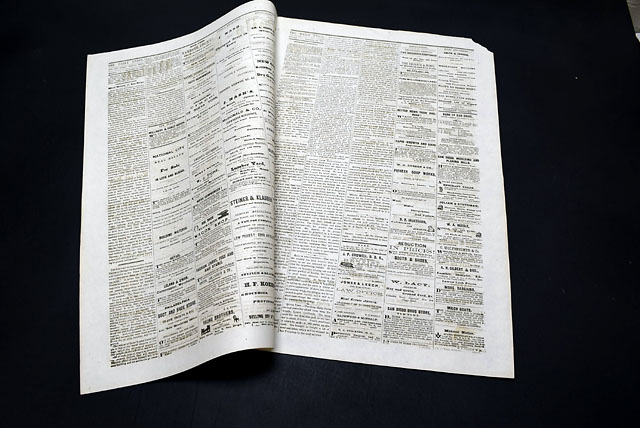
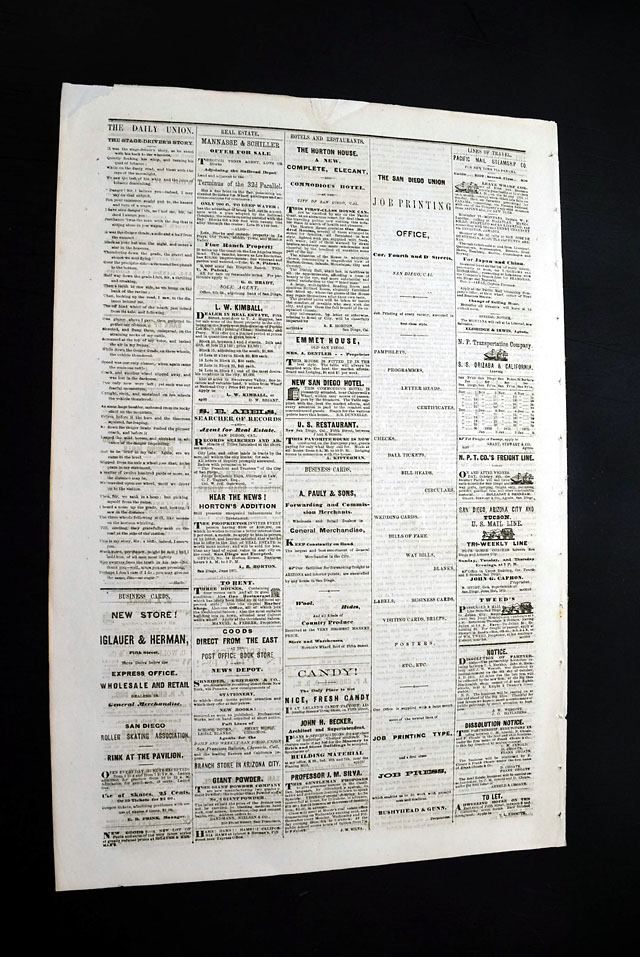
Early from San Diego... Attack by the Apache Indians on a stagecoach...
SAN DIEGO DAILY UNION, California, Nov. 19, 1871
- Wickenburg Massacre - Arizona Territory
- Stagecoach murders by Yavapai Indian warriors
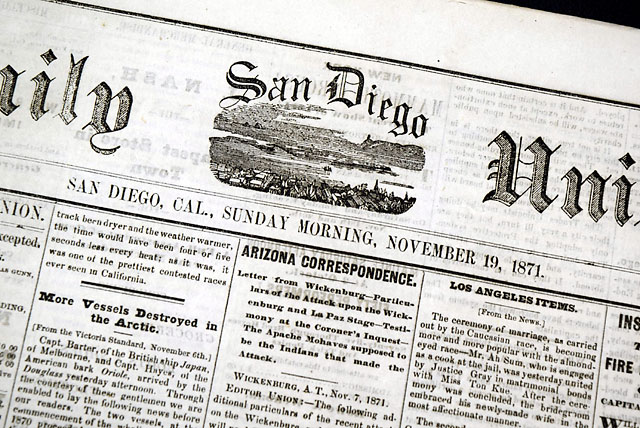
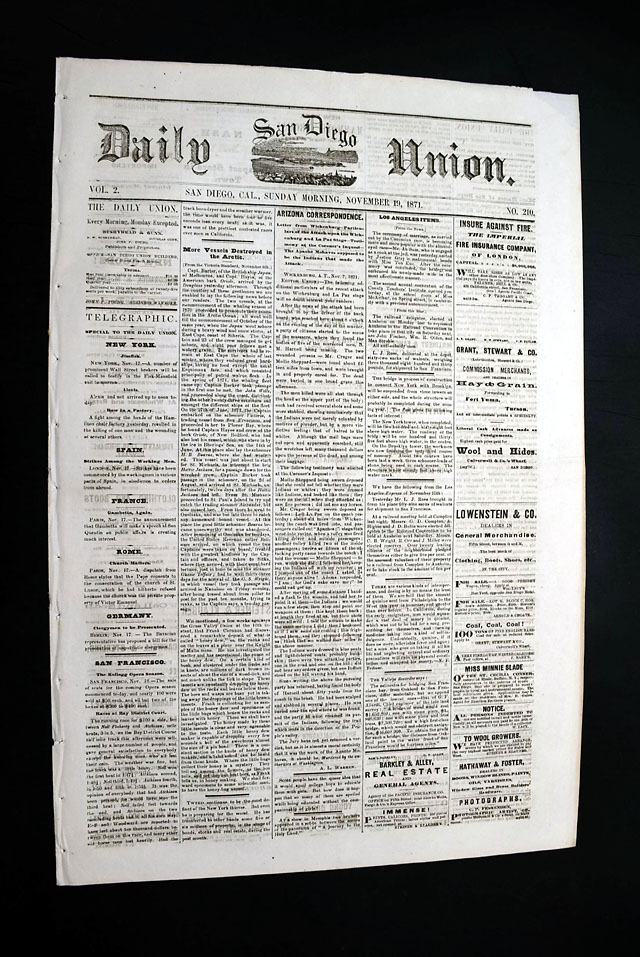
Very early from San Diego--a volume 2 issue--when the population was just 2300, with a nice engraving of the harbor in the masthead.
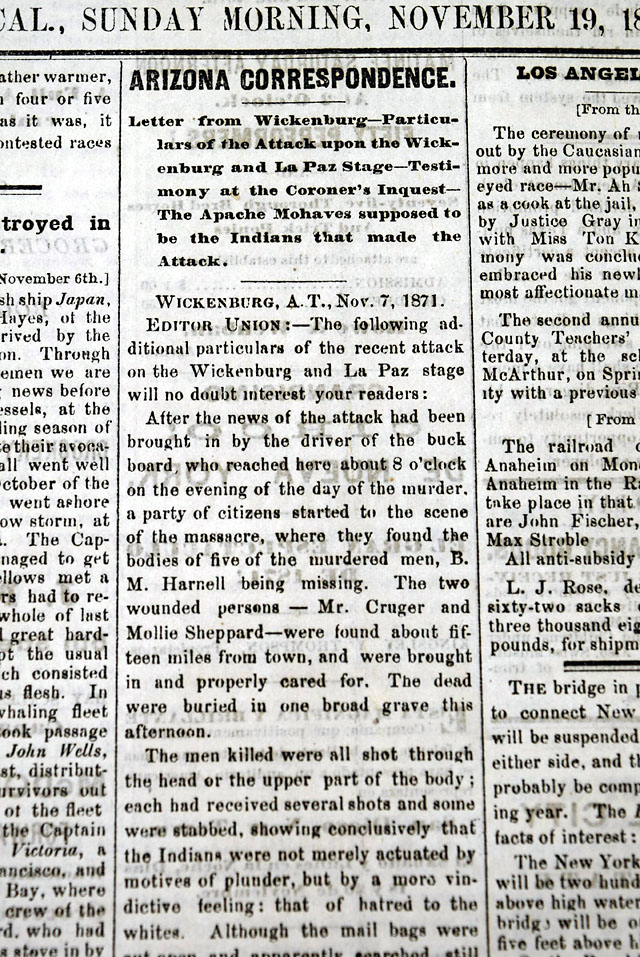
The front page has: "Arizona Correspondence--Particulars of the Attack Upon the Wickenburg & LaPaz Stage--The Apache Mojave's Supposed to be the Indians that Made the Attack".
Four pages, 12 by 18 inches, printed on high-quality newsprint, very nice condition.
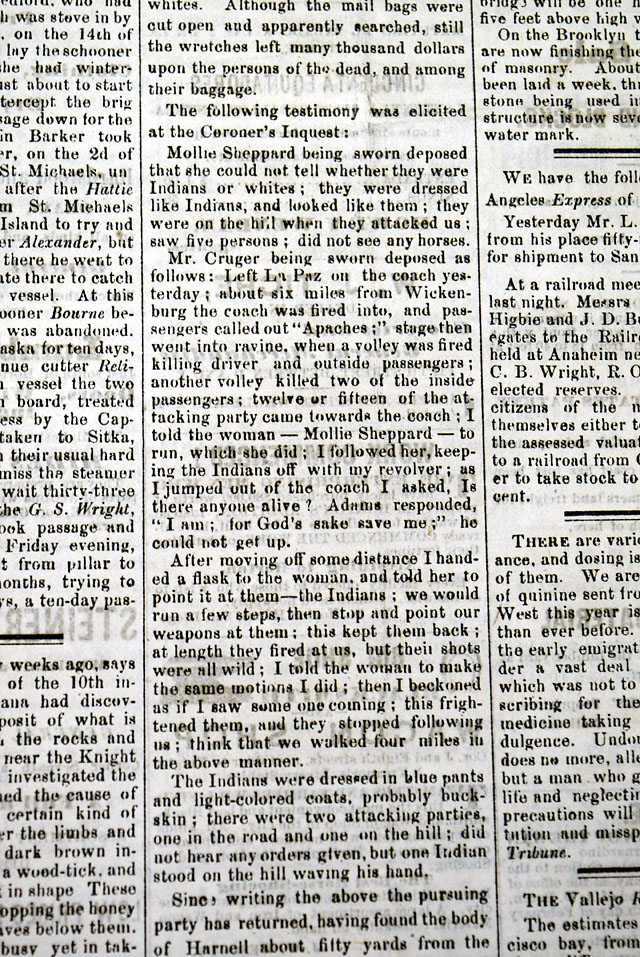
Background: On November 5, 1871, roughly seven miles west of Wickenburg, Arizona Territory, gunmen ambushed a westbound Concord stagecoach along the La Paz Road, shooting the lead horses to immobilize the vehicle before firing at least seventeen rounds into the passengers. Six men died at the scene—including driver John Lanzabel, Prescott residents C.S. Adams, W.G. Salmon, and Fred Shoholm, Wheeler Survey topographer P.W. Hamel, and 23-year-old Harvard-educated Boston journalist Frederick Wadsworth Loring—while civilian Army clerk William Kruger and Prescott brothel owner Mollie Sheppard survived despite each being shot three times, returning revolver fire and fleeing on foot (though Sheppard later died from wound-related infections). Loring’s prominence transformed what might have remained a regional frontier tragedy into national front-page news, eroding East Coast support for President Ulysses S. Grant’s "Peace Policy" that had gained momentum after the Camp Grant Massacre earlier that spring. Although military authorities blamed Yavapai warriors from the Camp Date Creek reservation—using the attack to justify General George Crook’s 1872–1873 Tonto Basin military campaign against the Yavapai and Tonto Apache—the untouched valuables (including roughly $15,000 in cash and jewelry carried by Sheppard), Kruger’s shifting testimony, and footprints doubling back toward Wickenburg fueled enduring historical debate over whether the ambush was actually a botched robbery by disguised local or Mexican outlaws.
Item from last month's catalog - #371, released for October, 2026
Other issues you may like
§ related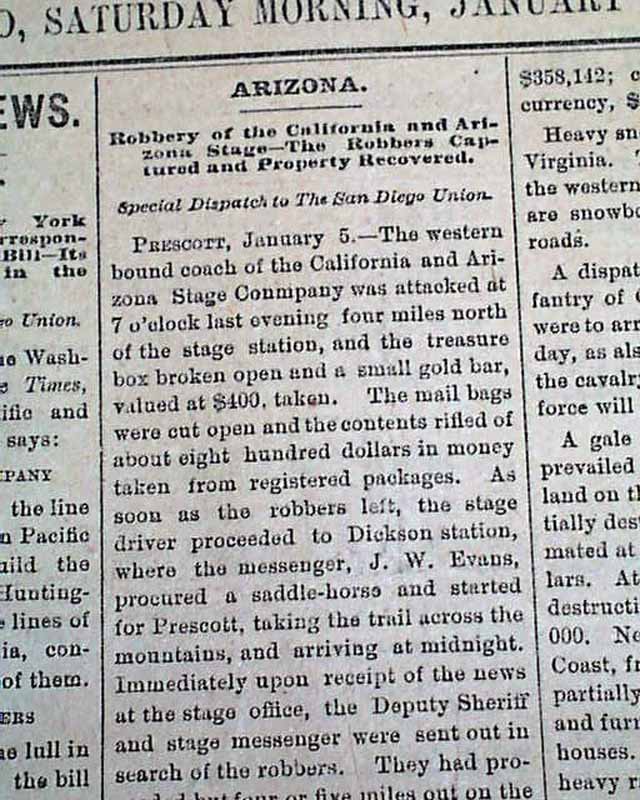
THE SAN DIEGO UNION, California, Feb. 6, 1877
- Old West publication
- Arizona crime
Among the front page articles is: "Arizona" "Robbery of the California and
...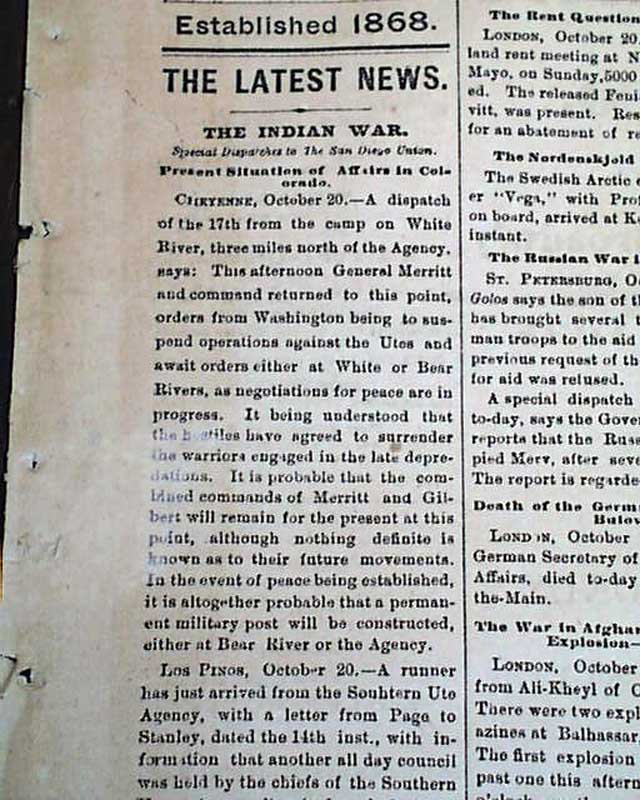
THE SAN DIEGO UNION, California, Oct. 21, 1879 The top of the first column is headed: "The Indian War" "Present Situation of Affairs in Colorado" which has
...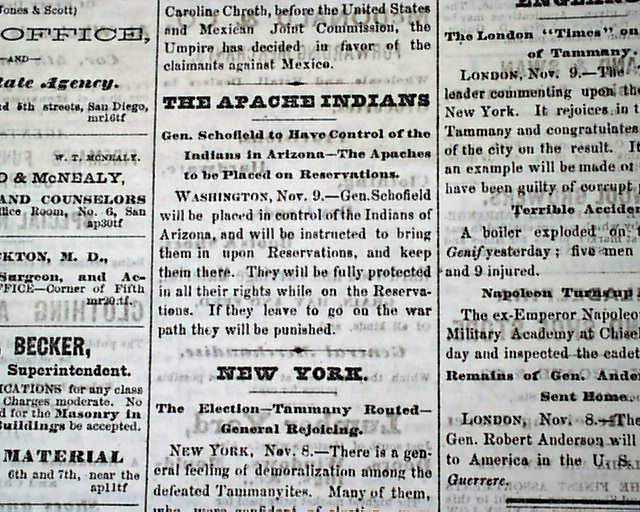
SAN DIEGO DAILY UNION, California, Nov. 10, 1871
- Apache Indians of Arizona
- Early Southern California
Very early from San Diego--a volume 2 issue--when the
...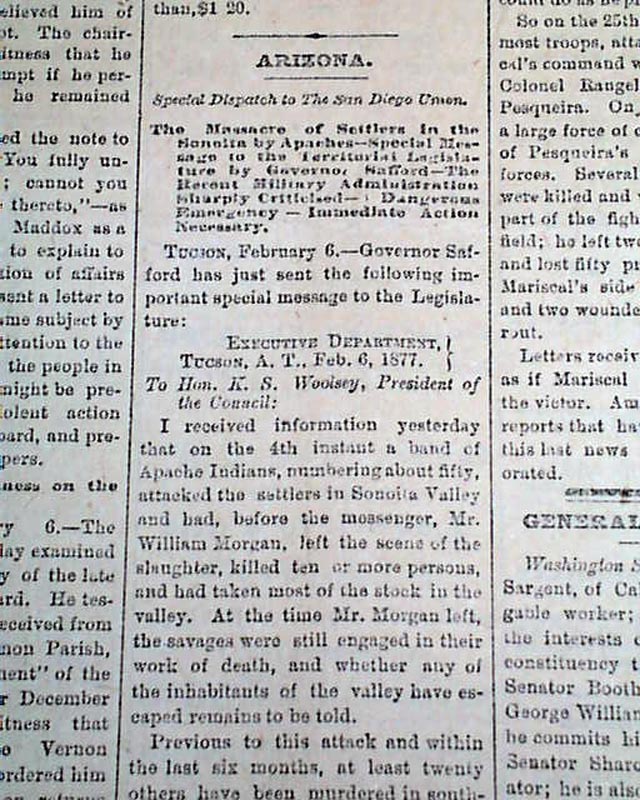
THE SAN DIEGO UNION, California, Feb. 7, 1877 Among the front page articles is: "Arizona" "The Massacre of Settlers in the Sonoita by Apaches--Special
...