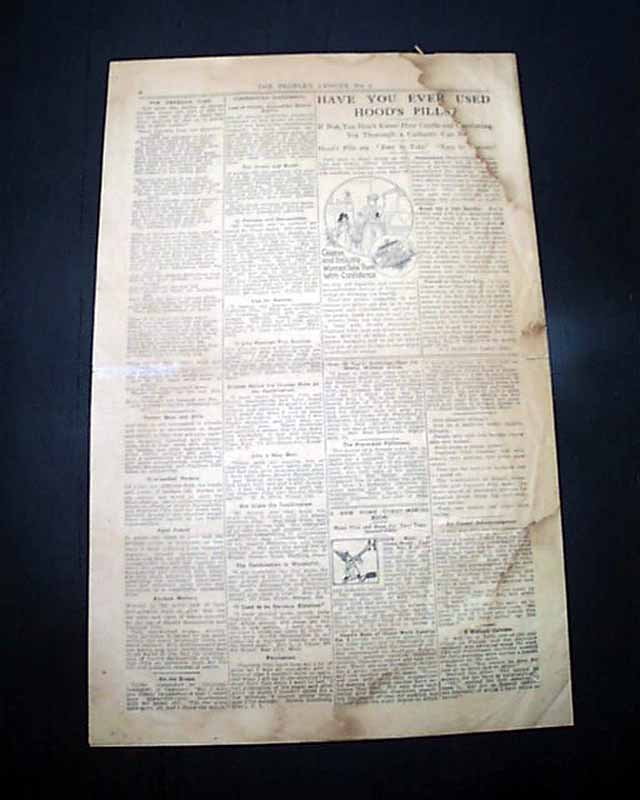
Promotional newsletter for the W. I. Hood Company...
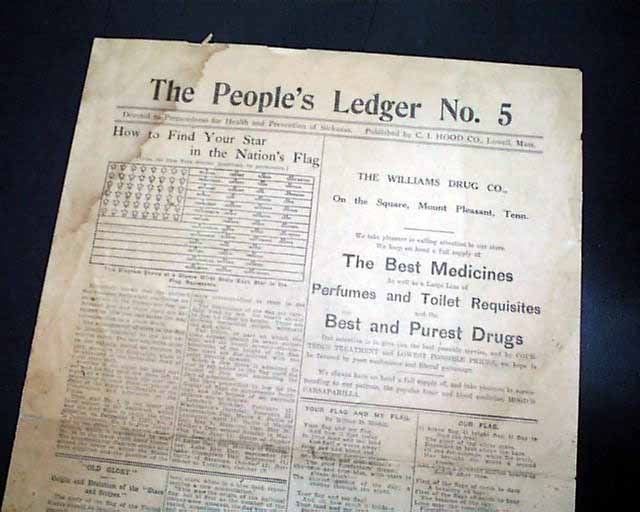
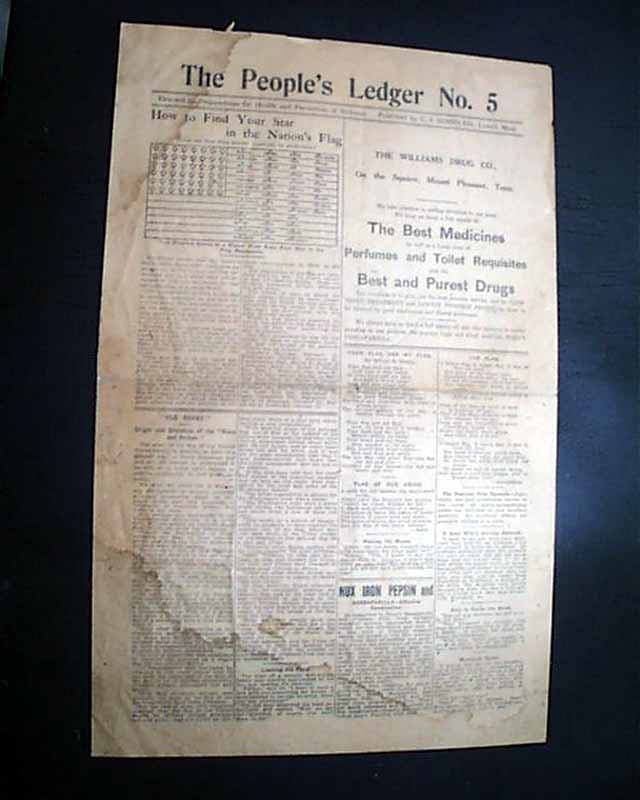
THE PEOPLE'S LEDGER NO. 5, Lowell Massachusetts A newsletter "Devoted to Preparedness for Health & Prevention of Sickness" as noted in the dateline, which--by the way--has no date. But a bit of investigating indicates the date is about January, 1916. It is produced by the "C. I. Hood Company" which makes a variety of health-related products, most receiving some attention within this issue.
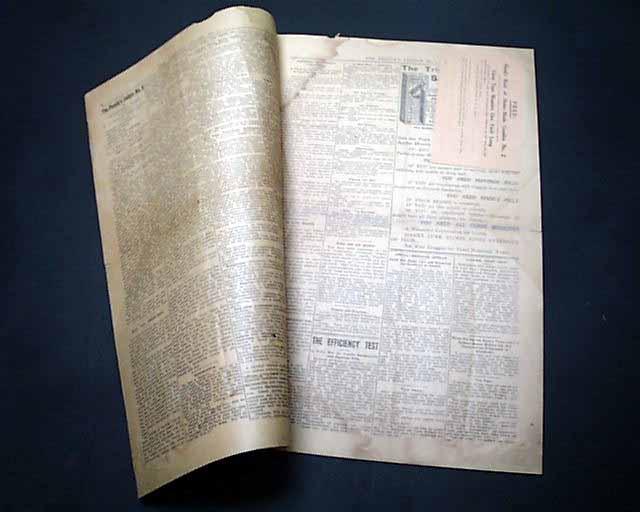
Still attached is a postcard to be mailed in to receive free information.
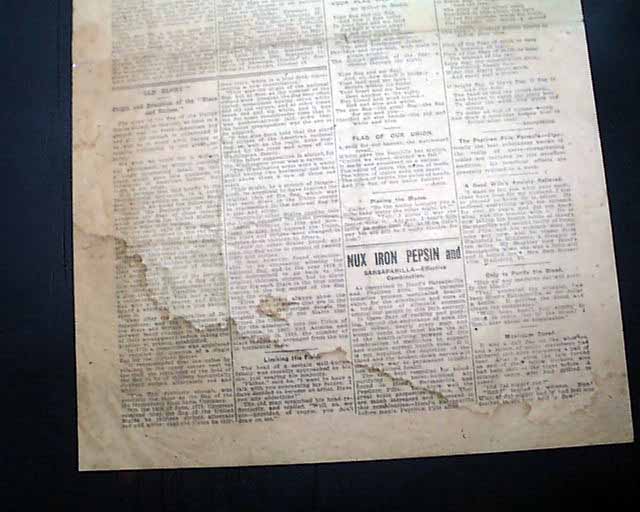
Four pages, 10 1/2 by 16 3/4 inches, some light dirtiness and water stains, minor margin tears, archival mends at folds inside.
Background: Dating from approximately January 1916, The People’s Ledger No. 5 is a historically significant four-page advertising newsletter produced by the C.I. Hood Company of Lowell, Massachusetts, representing a pristine survivor from the golden age of American patent medicine marketing. Its headline slogan, "Devoted to Preparedness for Health & Prevention of Sickness," holds deep historical resonance by brilliantly co-opting the "Preparedness Movement"—the massive 1915–1916 political push to ready the United States military for entry into World War I—repurposing national wartime anxiety into a commercial mandate for body fortification via proprietary tonics like Hood’s Sarsaparilla and Peptiron Pills. This publication captures a pivotal moment in media history when corporate giants created sophisticated, faux-journalistic ephemera to bypass traditional advertising and build direct consumer trust. The true rarity of this specific artifact lies in its still-attached reply postcard; because these early forms of direct-mail "click-through" tracking were almost universally detached and mailed back a century ago, an intact, four-page specimen serves as an incredibly uncommon, museum-quality window into early 20th-century consumer data collection and public health culture.
Other issues you may like
§ related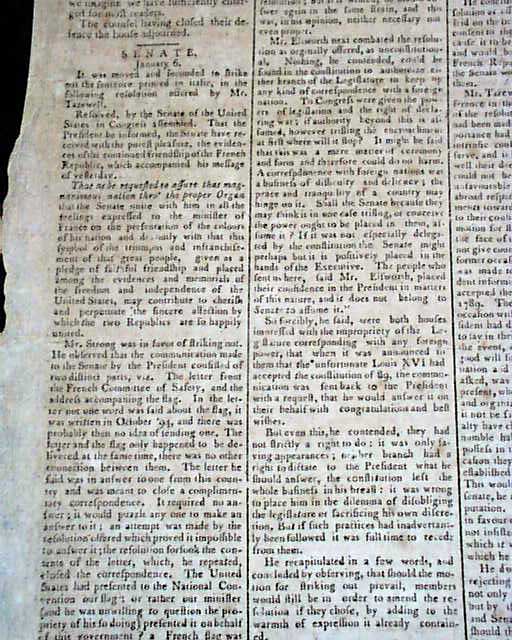
THE HERALD; A GAZETTE FOR THE COUNTRY, New York, Jan. 13, 1796 Much of pages 2 and 3 are taken up with reports from discussions in Congress.
Various news
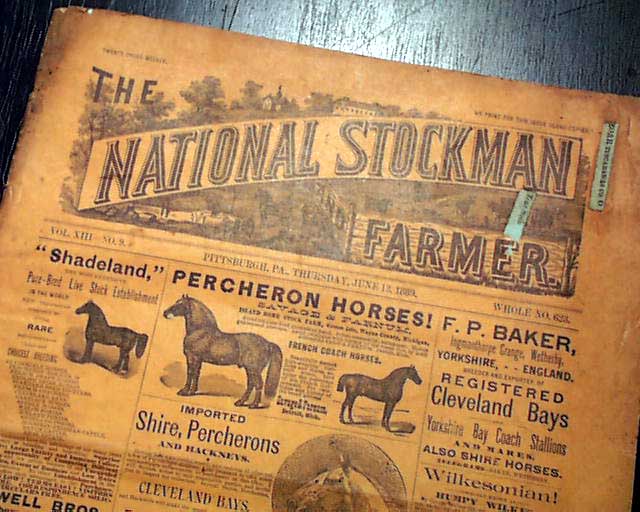
THE NATIONAL STOCKMAN & FARMER, Pittsburgh, Pennsylvania, June 13, 1889 This is not the typical sort of magazine we would offer, however this issue still
...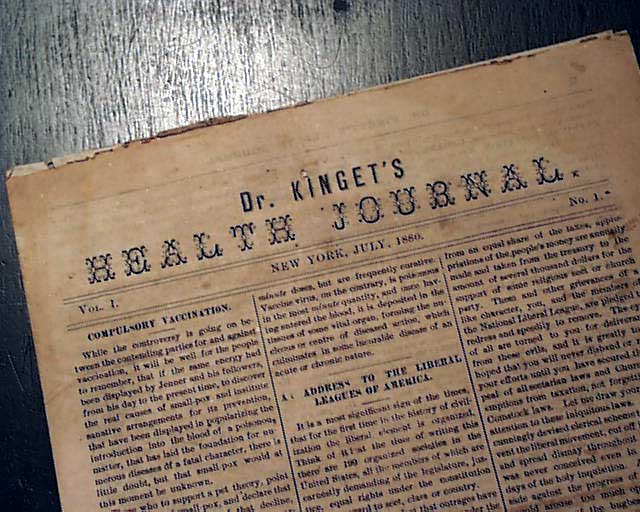
DR. KINGET'S HEALTH JOURNAL, New York, July, 1880 An interesting and rather rare paper obviously focused on health. It is the volume 1, number 1, and it is
...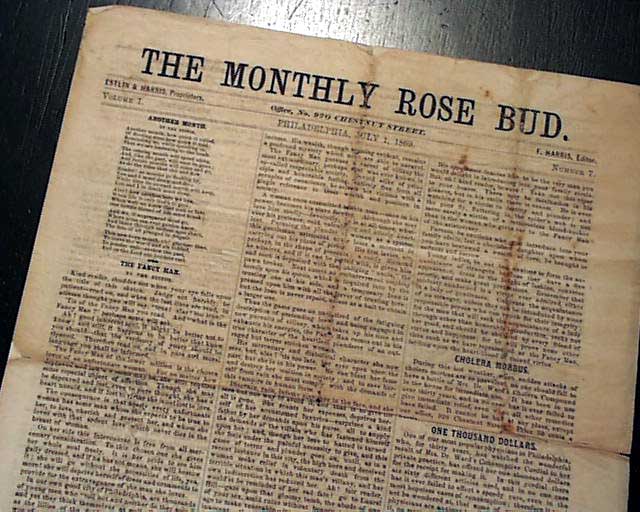
THE MONTHLY ROSE BUD, Philadelphia, July 1, 1869 An uncommon little newspaper with an eclectic mix of content, but it seems to focus on various
...