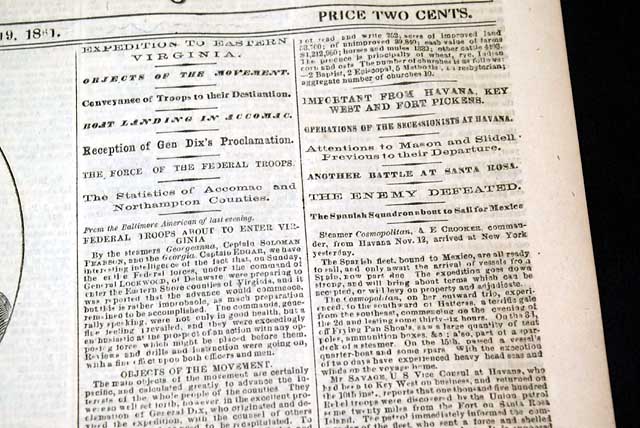
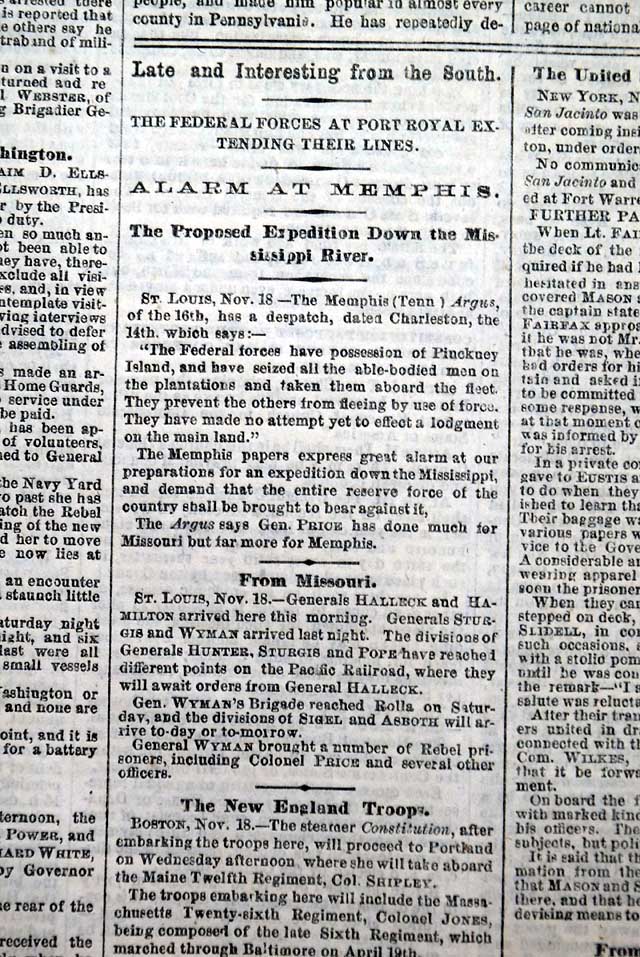
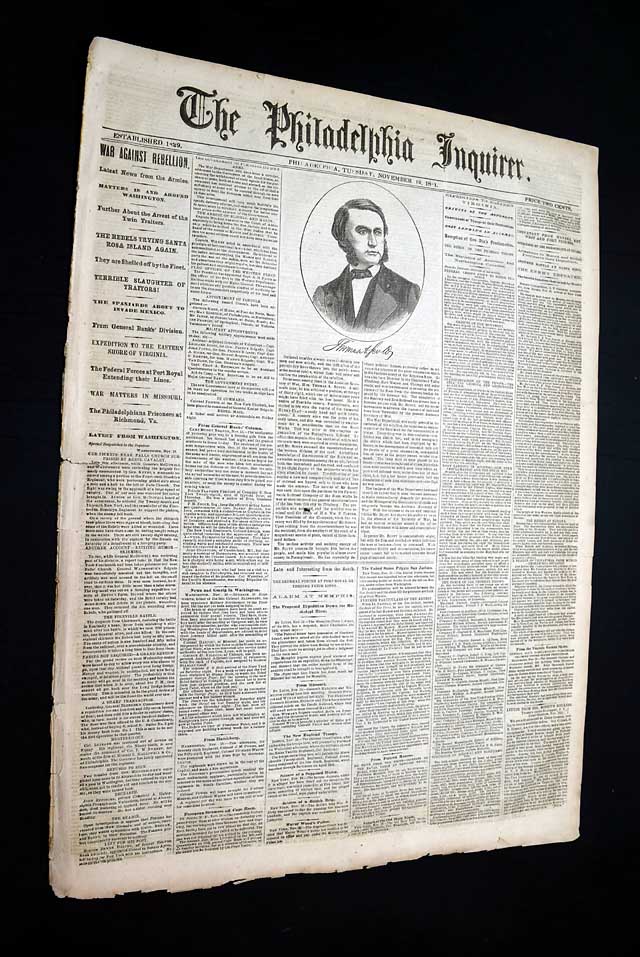
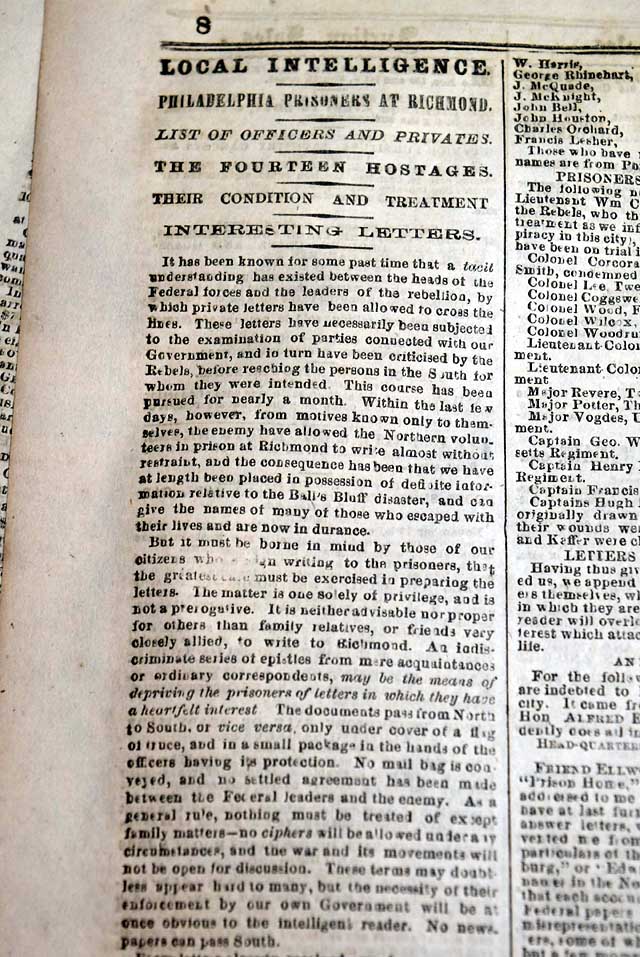
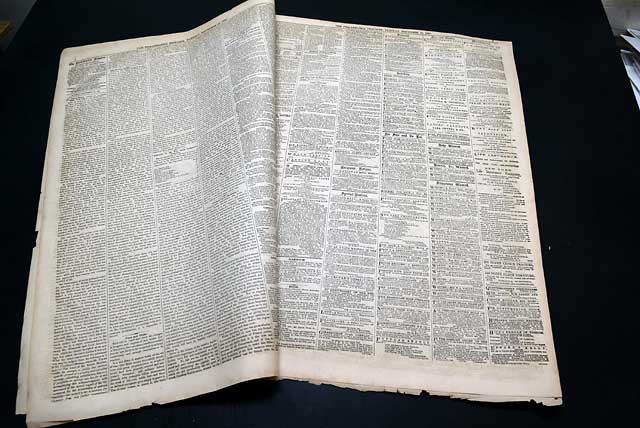
Front page print of industrialist Thomas A. Scott... Civil War reports...
THE PHILADELPHIA INQUIRER, Nov. 19, 1861
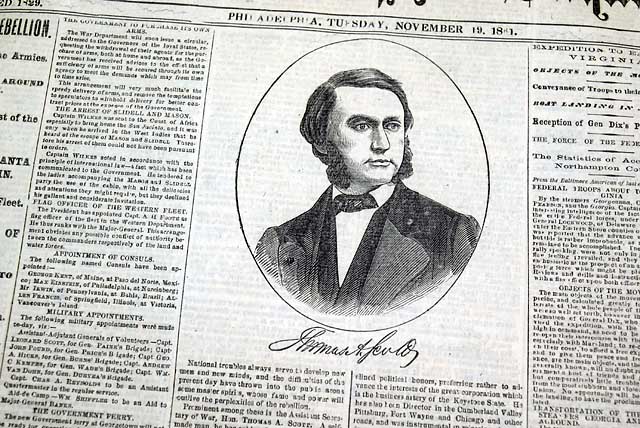
- Thomas A Scott illustration
- Architect of the Union cause
The front page features a print of "Thomas A. Scott", with a biographical sketch of him as well.
Scott was an American businessman, railroad executive, and industrialist. In 1861, President Lincoln appointed him to serve as U.S. Assistant Secretary of War, and during the American Civil War railroads under his leadership played a major role in the war effort.
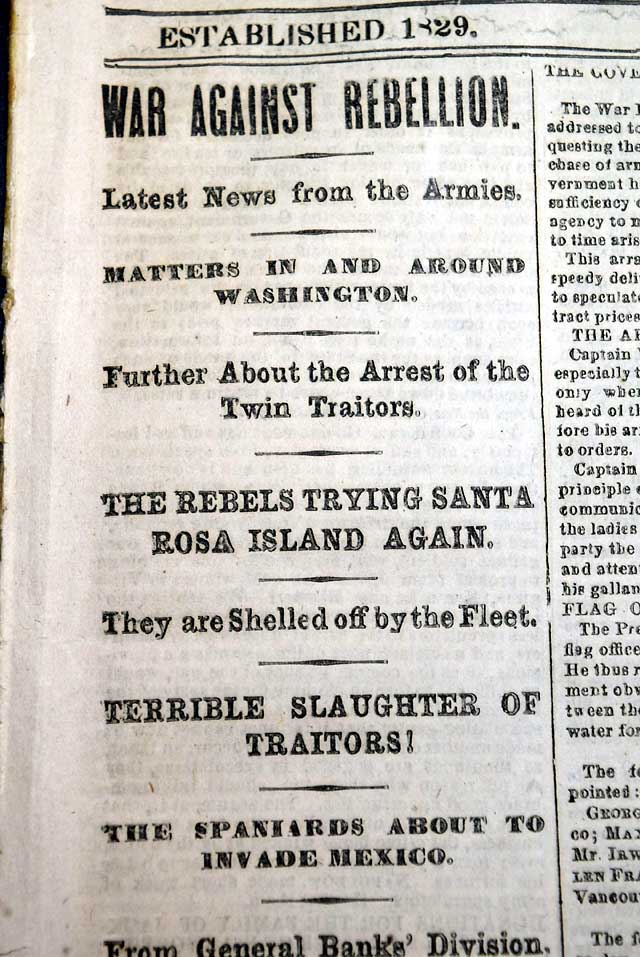
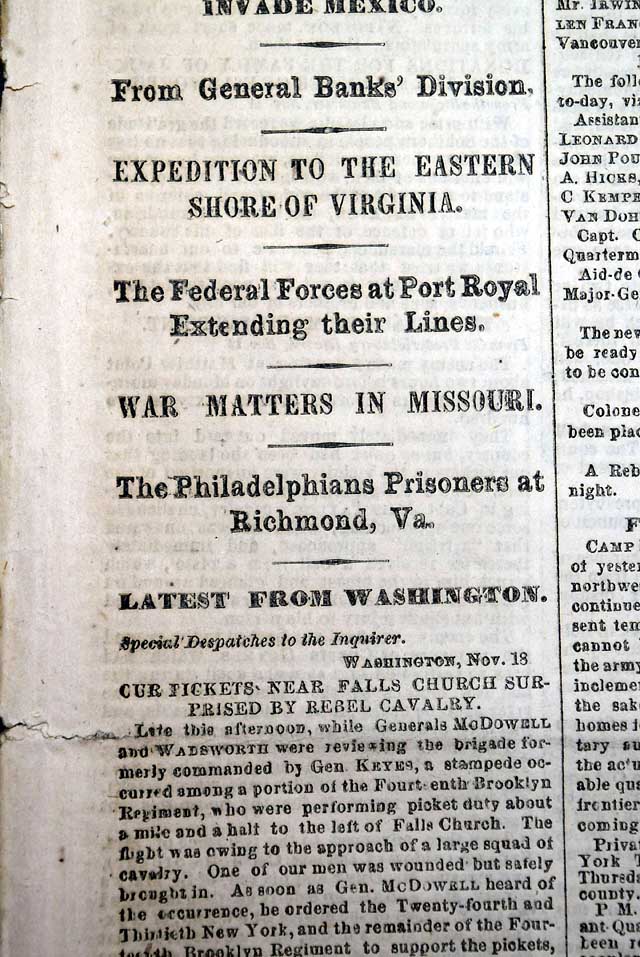
First column heads on the Civil War include: "WAR AGAINST REBELLION" "Latest News from the Armies" "Further About the Arrest of the Twin Traitors" "Rebels Trying Santa Rosa Island Again" "Terrible Slaughter of Traitors!" "War Matters In Missouri" and much more.
Eight pages, some margin wear, nice condition.
Background: In 1861, Thomas A. Scott emerged as the indispensable logistical architect of the Union war effort, bridging private industrial expertise with federal military power during the opening year of the American Civil War. Beginning the year as Vice President of the Pennsylvania Railroad, Scott corresponded with Simon Cameron in January to arrange President-elect Abraham Lincoln’s inaugural travel and subsequently helped orchestrate the covert rerouting and telegraph blackout through Baltimore in February to thwart an assassination plot. When war erupted in April following the attack on Fort Sumter, Pennsylvania Governor Andrew Curtin placed Scott in command of the state’s railroads and telegraphs, where—working alongside his young protégé Andrew Carnegie—he rapidly repaired sabotaged tracks and restored severed communication and troop-transport lines to Washington, D.C. Recognizing this vital achievement, Lincoln appointed Scott as the nation's first U.S. Assistant Secretary of War on August 3, 1861, putting him in charge of supervising all government railways and effectively running the daily operations of the War Department under Secretary Simon Cameron; amidst this transformative public service, Scott also rebuilt his personal life by marrying Ann Dike Riddle in Pennsylvania, cementing a year that established federal control over wartime transportation and laid the foundation for modern military logistics.
Item from last month's catalog - #371, released for October, 2026
Other issues you may like
§ related
THE PHILADELPHIA INQUIRER, Nov. 19, 1861 The front page features a print of "Thomas A. Scott", with a biographical sketch of him as well.
Scott was an
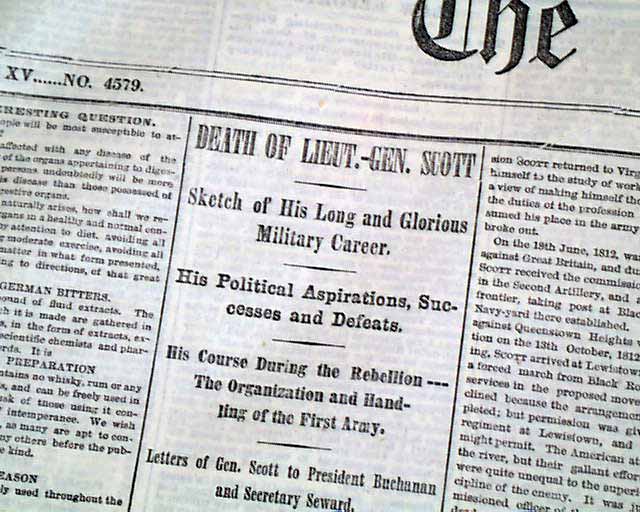
NEW-YORK TIMES, New York, NY, May 30, 1866
- General Winfield Scott death
- Post civil war original
This 8 page newspaper has one column headlines on the front
...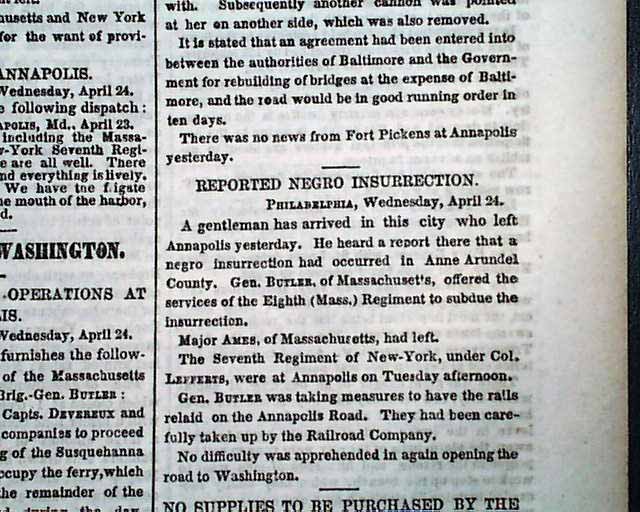
NEW YORK TIMES, April 25, 1861 Among the front page one column headlines are: "NEWS OF THE WAR" "Condition of Affairs at the National Capital" "The New
...
HARPER'S WEEKLY, New York, Aug. 31, 1861 Nice full front page print of: "General Lyons At the Battle of Springfield" showing him on horseback. Full pg: "Lt.
...