A plan to "Westernize" Indian children in Georgia...
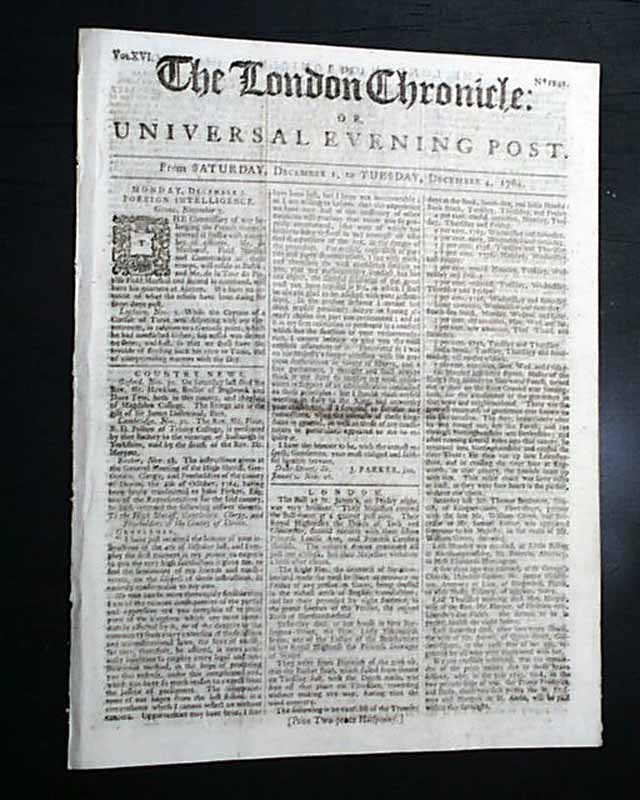
THE LONDON CHRONICLE, England, Dec. 4, 1764
- Reverend George Whitefield
- Southern Indians - children
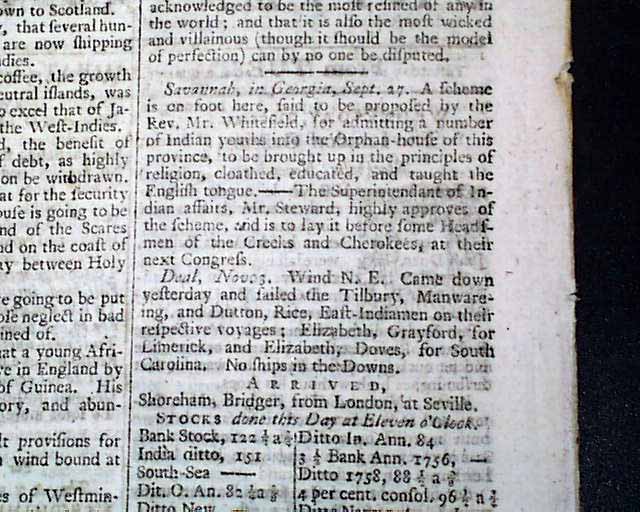
The back page has a report from Savannah, Georgia, noting: "A scheme is on foot here, said to be proposed by the Rev. Mr. Whitefield, for admitting a number of Indian youths into the orphan house of this province, to be brought up in the principles of religion, cloathed, educated and taught the English tongue. The superintendent of Indian affairs, Mr. Steward, highly approves of the scheme, and is to lay it before some headmen of the Creeks and Cherokees at their next Congress."
This is the famed Rev. George Whitefield, an Anglican cleric and evangelist who was one of the founders of Methodism.
Eight pages, 8 1/4 by 11 1/4 inches, nice condition.
Background: In a December 1764 issue of The London Chronicle, a report from Savannah, Georgia, highlights a colonial scheme proposed by the famed Great Awakening evangelist and Methodism co-founder Rev. George Whitefield to admit Native American youths into the Bethesda Orphan House, where they would be instructed in Christianity, clothed, educated, and taught English. The project received enthusiastic support from British Superintendent of Indian Affairs John Stuart (misspelled as "Steward" in the text), a pivotal official who sought to broker the idea to Creek and Cherokee leaders at an upcoming diplomatic Congress in the turbulent aftermath of the French and Indian War. Printed for an 18th-century imperial audience, this brief notice encapsulates the overlapping strategies of religious proselytization, cultural assimilation, and British frontier diplomacy aimed at securing peace and trade alliances along the Southern American borderlands.
Other issues you may like
§ related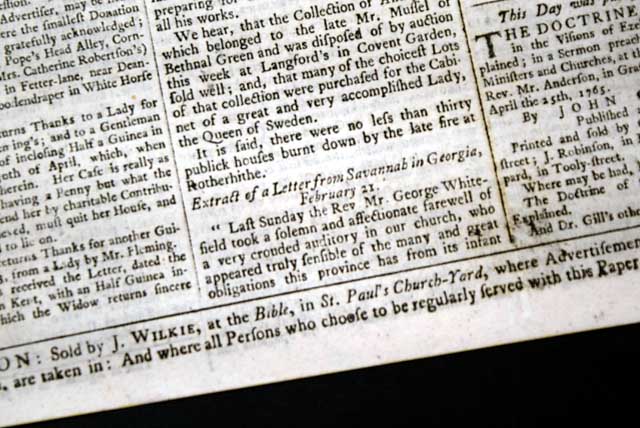
THE LONDON CHRONICLE, England, June 8, 1765
- Reverend George Whitefield
- Colony of Georgia return
The back page has an: "Extract of a Letter from Savannah in
...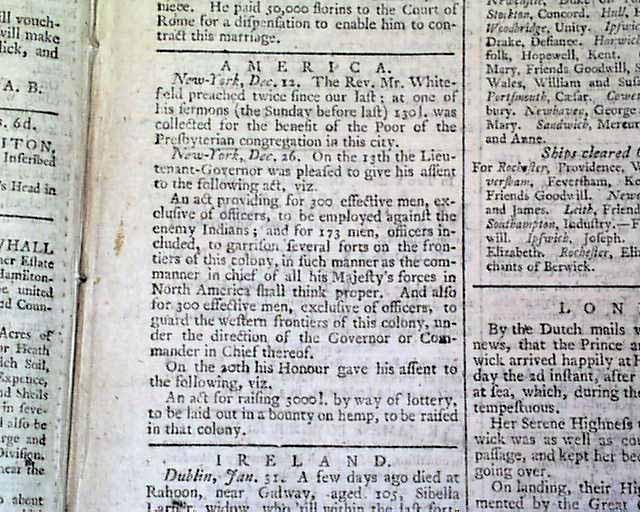
THE LONDON CHRONICLE, England, Feb. 11, 1764 The front page has an article beginning: "I beg a little room in your Chronicle for a few words on the
...
THE LONDON CHRONICLE, England, Oct. 4, 1764
- Fort Niagara - Native Americans - Indians
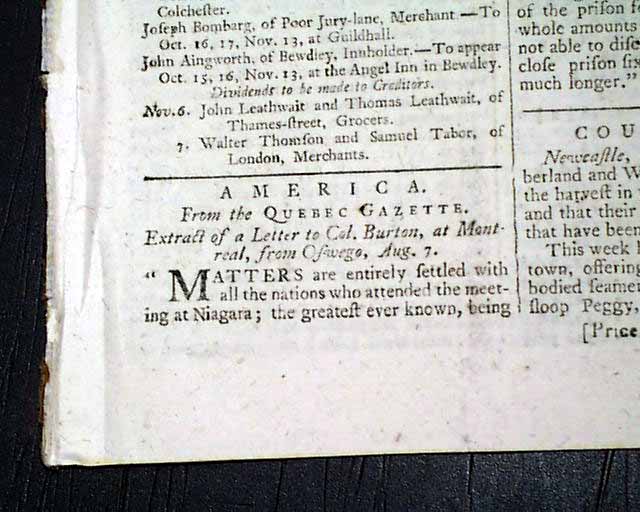
The front page has reports headed: "America - From the Quebec Gazette"
...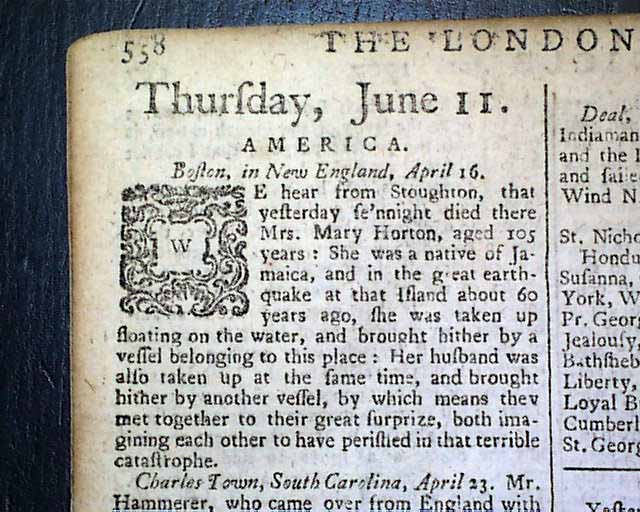
THE LONDON CHRONICLE, England, June 11, 1767 Inside has reports from Boston and Charleston headed: "America" (see) with reports datelined Boston and
...